Homeowners visit a stone and tile showroom in person before buying for a few consistent reasons. Natural stone, including granite, quartzite, and marble, has color, veining, and surface variation that screens compress and photography flattens. A slab that reads as neutral online may carry warmth, movement, or mineral complexity that only becomes clear when viewed under real lighting. Porcelain and ceramic tile have finish, texture, and scale properties that look different across an actual floor display than in a cropped product image. And when stone or tile is placed next to cabinet samples, flooring pieces, or paint chips from the actual space, combinations that seemed right on a screen sometimes need to be reconsidered.
These are the practical reasons why Carson Valley homeowners make the trip to Minden and the broader Carson Valley area before committing to a material, and why an in-person visit tends to change or confirm the decision in ways that online research alone cannot.
What Screens Cannot Show You About Stone and Tile
Digital photography compresses color, flattens texture, and can misrepresent scale. A marble slab with soft cream veining and a warm ivory background may look nearly white on a laptop screen. A quartzite with gold and rust movement may appear more uniform than it actually is in person. These discrepancies are not a failure of photography. They are a limitation of how screens render the depth and mineral complexity of natural stone.
Lighting conditions compound this further. The way a granite countertop reads in a north-facing kitchen with cool daylight is different from how it reads under warm pendant lighting above an island. No product photo can account for the specific lighting conditions of a particular home. Viewing a slab or tile sample under real showroom lighting, and then holding it against cabinet finishes or flooring samples brought from home, closes that gap in a way that is difficult to replicate with digital tools.
According to Use Natural Stone's guide on what to know when choosing natural stone, seeing natural stone collections in person at a showroom or via samples is an important step in understanding how materials may vary and how they might fit within a specific project. The guide notes that photos are helpful for inspiration but fall short when it comes to evaluating the full color range and surface character of a material.
Texture is another dimension that photographs consistently misrepresent. The difference between a honed finish and a polished one on the same marble is significant in person. One absorbs light and reads softly, the other reflects it and reads with more contrast. The same applies to the difference between a matte porcelain and a satin-finish ceramic. These distinctions matter when planning how a surface will read next to cabinetry, flooring, and wall color in a real space.
Why Seeing Natural Stone Slabs in Person Changes the Decision
Natural stone is not a uniform product. Each slab has its own combination of veining, mineral movement, tone variation, and surface character. Two slabs from the same quarry and the same variety can look noticeably different from each other. This is part of the appeal of natural stone, but it also means that selecting a material by name or by a small sample chip does not guarantee the actual slab will match expectations.
When a homeowner visits a showroom and views full slabs of quartzite countertop options or marble countertop selections standing upright as they would be fabricated, they are making a decision based on the actual material rather than a representation of it. The veining that appears subtle in a photo may be dramatic in person. The background tone that reads neutral on screen may carry warmth or coolness that changes how it pairs with other surfaces in the room.
As a natural stone fabricator writing for Use Natural Stone explains in their piece on what customers should know before using natural stone, examining a slab in person under real lighting, including looking across the surface at low angles, reveals surface characteristics that photography may not fully capture. The article notes that even the most beautifully photographed stone projects are shot under controlled conditions that do not reflect everyday viewing.
For homeowners considering marble outdoor kitchen countertops, seeing the material in person is particularly useful because natural stone reads differently in outdoor light than under interior conditions. The same slab can carry a completely different character when viewed in open daylight versus indoor showroom lighting, and that difference is only apparent when the material is seen directly rather than through a product image.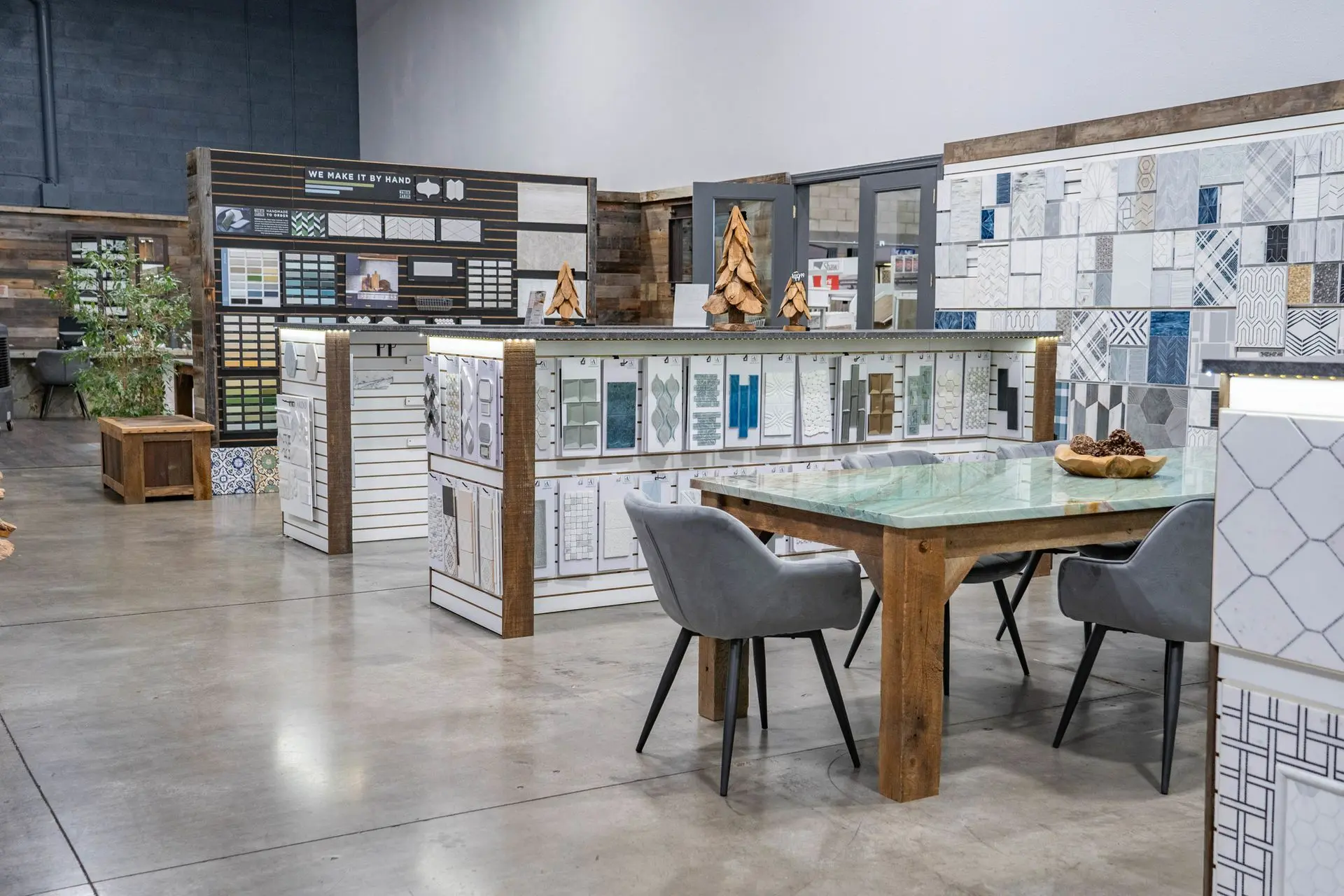
How Tile Decisions Benefit From an In-Person Visit at a Minden Showroom
Tile decisions carry the same limitations when made purely online. Format, finish, and grout interaction are all properties that read differently in person than in a product photo. A large-format porcelain tile laid across a floor looks different from a single tile photographed in isolation. The way grout lines read across a full wall is not something a sample chip communicates.
HGTV's guide on tile flooring options for kitchens and bathrooms notes that tile comes in a wide range of materials, from ceramic and porcelain to natural stone, each with distinct performance characteristics for floors and walls. Understanding those differences in context, by handling the tile, comparing finishes side by side, and evaluating weight and surface texture, is a step that an in-person visit makes possible in a way that online research does not.
At a showroom, tile can be viewed at scale. A format that appears bold and oversized in a photo may read as balanced and proportional when seen across a floor display. Conversely, a tile that seems subtle in a small product image may carry more texture or color variation than expected when viewed as a full installation. These discoveries happen in person, not on a screen.
For homeowners trying to understand the difference between marble, quartzite, and granite before making a countertop decision, the blog guides on types of marble, types of granite, and types of quartzite provide useful background reading before a visit, so time at the showroom can be spent evaluating specific options rather than learning general differences from scratch.
What Homeowners Can Do at a Showroom That They Cannot Do Online
An in-person visit accomplishes several things that online research cannot. Surfaces can be compared side by side under the same lighting conditions. Slab options can be evaluated at full scale rather than as cropped or compressed images. Cabinet door samples, flooring pieces, and paint chips can be held against stone and tile options to check whether combinations that looked good on a mood board also work in physical material.
A free design consultation provides an additional layer of support during that process. Rather than navigating the options alone, homeowners can work through material combinations with someone familiar with how different stones and tiles perform in specific applications. Natural stone surfaces can resist staining, but spills should still be cleaned promptly, and knowing which materials require more or less maintenance is the kind of practical guidance a consultation makes straightforward.
For trade professionals, contractors, and interior designers working on client projects, the trade account program provides a structured way to access the showroom's resources for commercial estimating, material sourcing, and project planning. The same principle applies: seeing materials in person, at scale, under real lighting, makes specification decisions more accurate and reduces the risk of mismatches between what was expected and what arrives on site.
Nova Tile and Stone's Minden location carries granite, quartzite, marble, porcelain, and ceramic tile, making it possible to compare surface materials across both countertop and tile categories in a single visit. That side-by-side access to actual materials, under real lighting and alongside other samples from the same project, is what makes the in-person visit a more reliable starting point than browsing from a screen.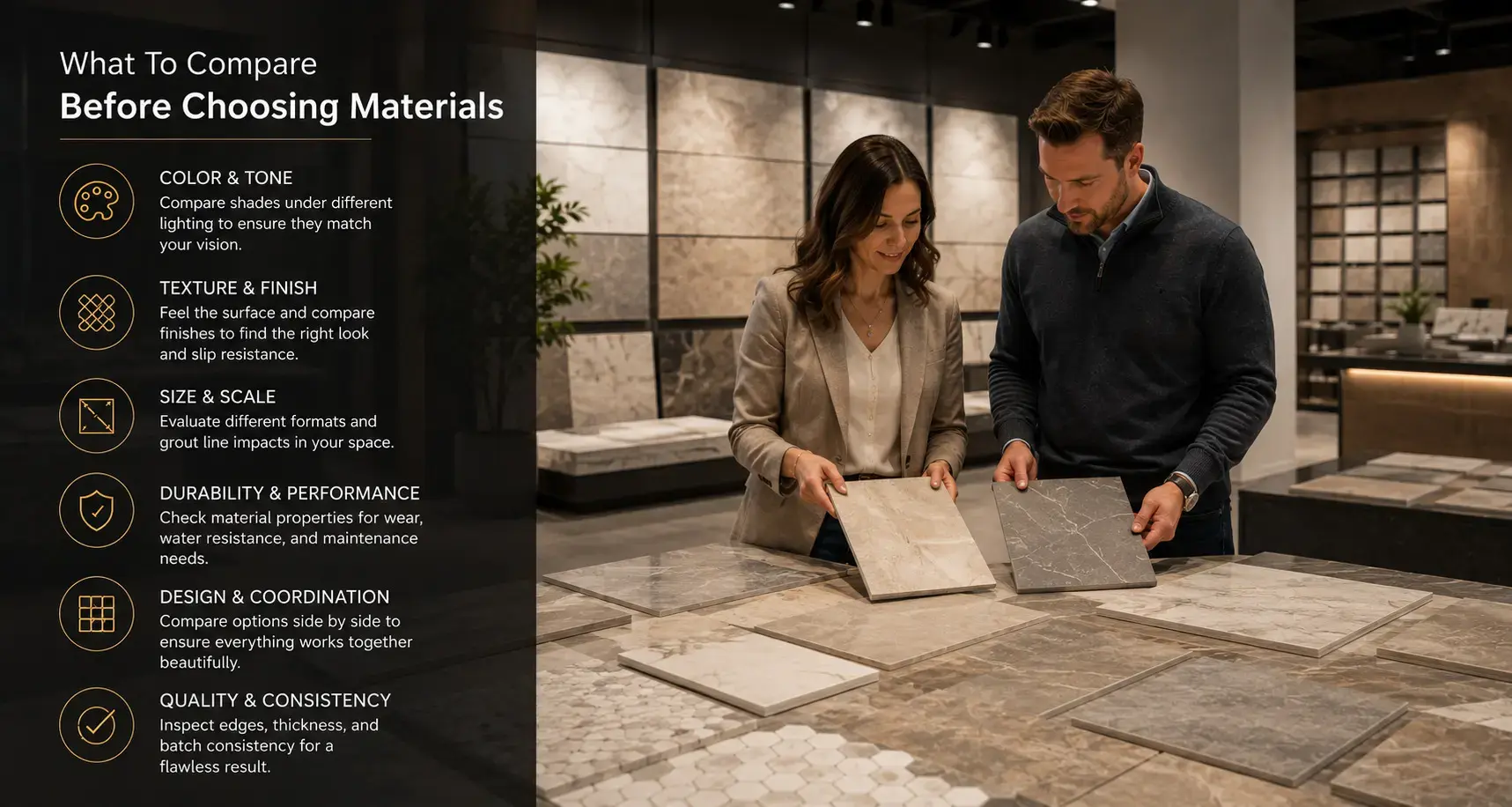
Conclusion
The decision to visit a showroom before choosing stone or tile is not about convenience. It is about accuracy. Natural stone has variation that photography may not fully capture. Tile has texture, scale, and finish properties that read differently in person than in product images. For a surface that will define the look and feel of a kitchen, bathroom, or outdoor space for years, the difference between choosing from a screen and choosing in person is significant.
Explore the full stone and tile collection to get a sense of what is available before planning your visit, and bring cabinet samples, flooring pieces, or paint chips along to make the most of the comparison.
Frequently Asked Questions
Natural stone has variation in veining, tone, and surface character that digital photography cannot fully represent. Screen displays compress color and flatten texture, which means the material a homeowner selects based on an online image may look noticeably different when viewed in real lighting conditions. Seeing the actual slab in person allows for a more accurate assessment of how the material will read in the specific space where it will be installed.
Bringing cabinet door samples, flooring pieces, or paint chip cards allows for direct comparison between the existing materials in your home and the stone or tile options available at the showroom. This side-by-side evaluation under real lighting conditions is one of the most useful things an in-person visit makes possible and significantly reduces the risk of selecting a material that does not work with the rest of the space.
Photos can give a general sense of tone and veining style, but the differences between granite, quartzite, and marble are more apparent in person. Granite tends to have a more granular mineral pattern. Quartzite often carries fluid veining that can reference marble visually but is a harder, denser metamorphic stone with different maintenance requirements. Marble has a distinctive translucency and softness to its veining that reads differently under natural light. Evaluating these materials side by side in a showroom makes the distinctions clear in a way that photos alone do not.
A trade account is designed for contractors, interior designers, architects, and other industry professionals who work on residential or commercial projects on behalf of clients. It provides access to resources such as commercial estimating support and material sourcing for job-site projects. For professionals who regularly specify stone and tile for client work, visiting a showroom and working through a trade account can make the material selection and procurement process more efficient.
It can make a significant difference, particularly for larger format tiles and natural stone tile varieties. Tile that appears to have subtle texture in a product photo may have more pronounced surface variation in person. Format size reads differently across a floor display than in a cropped image. Grout line width and color also affect how a tile installation reads overall, and these factors are easier to evaluate when viewing a tile at scale in a showroom setting rather than from a small chip or a product image.
Curious About Something Else?