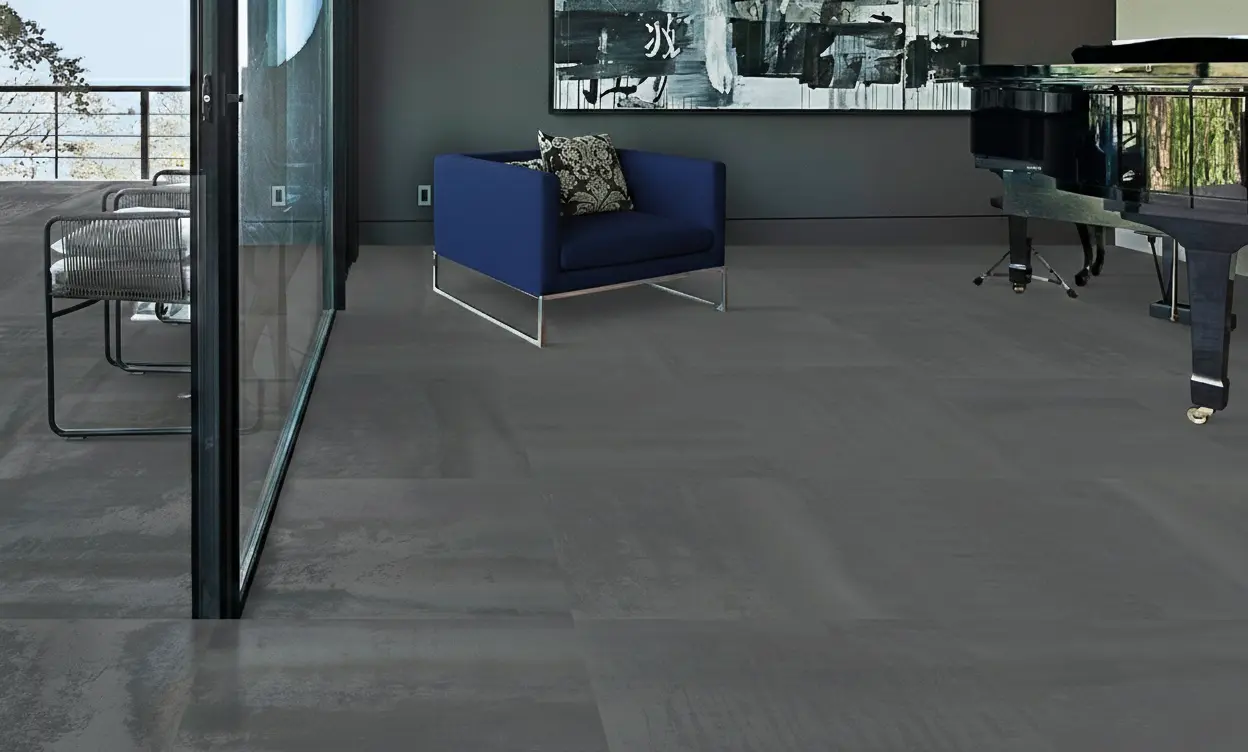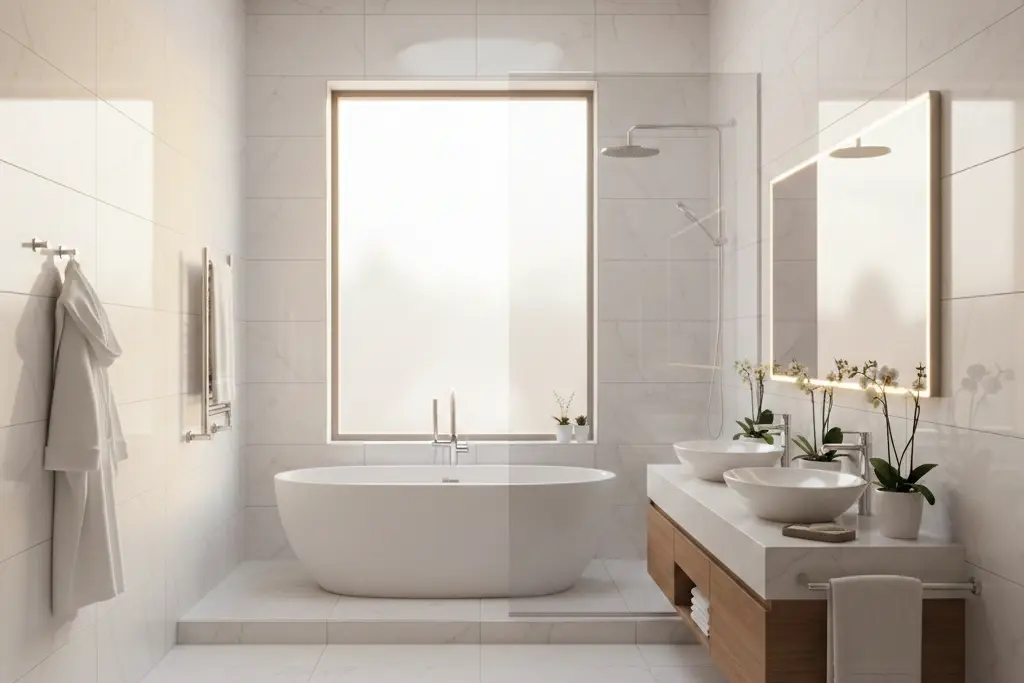
Porcelain tiles deliver a combination of design range and proven surface performance suited for kitchens, bathrooms, and outdoor living spaces. Produced through a kiln-fired process that drives moisture absorption below 0.5%, these tile surfaces resist staining, fading, and moisture without the ongoing maintenance demands of natural stone. Available in polished, honed, matte, and specialty finishes, porcelain tiles adapt to nearly any residential application, from high-traffic kitchen floors to bathroom walls, shower surrounds, and UV-exposed patio surfaces.
Porcelain Tile Specifications: Density, Finish Range, and Surface Performance
Porcelain tiles are produced through kiln-firing at temperatures exceeding 1,200°C, where refined feldspar and kaolin clay bodies fuse into a dense, vitrified surface. The higher firing temperature distinguishes porcelain from standard ceramic tile: it produces greater density, lower absorption, and stronger resistance to surface wear across residential applications.
Nova Tile and Stone offers tile designs in a wide range of colors, formats, and surface textures suited to projects across Northern Nevada and Northern California, with showrooms in Reno, Minden, Sacramento, and Fernley.
ISO 10545-3 measures the water absorption of ceramic tiles. Porcelain tile, with water absorption at or below 0.5%, is classified as impervious, making it suitable for both indoor and outdoor applications. This low absorption rate contributes to freeze-thaw resistance and long-term durability. In addition, ISO 10545-7 defines the method for determining abrasion resistance in glazed porcelain tiles, providing benchmarks for wear performance in high-traffic areas such as kitchens, bathrooms, and commercial spaces.
Property | Specification |
Mohs Hardness | 6–8 |
Standard Thickness | 6 mm – 12 mm |
Water Absorption Rate | ≤ 0.5% (ISO 10545-3) |
Polished finishes amplify light and create a reflective, formal aesthetic ideal for upscale kitchen and bathroom designs. Honed and matte options reduce glare, conceal watermarks more effectively, and provide improved traction in wet-area applications, making them practical for everyday use. Together, these ISO standards highlight porcelain tile’s balance of aesthetic versatility and technical compliance, reinforcing its role as a reliable choice for modern architectural surfaces.
Compared to natural stone, porcelain tile surfaces require no sealing and maintain consistent sizing across production runs. For a full reference on PEI wear grades, finish types, and size formats, the complete porcelain tile guide covers every specification category in detail.
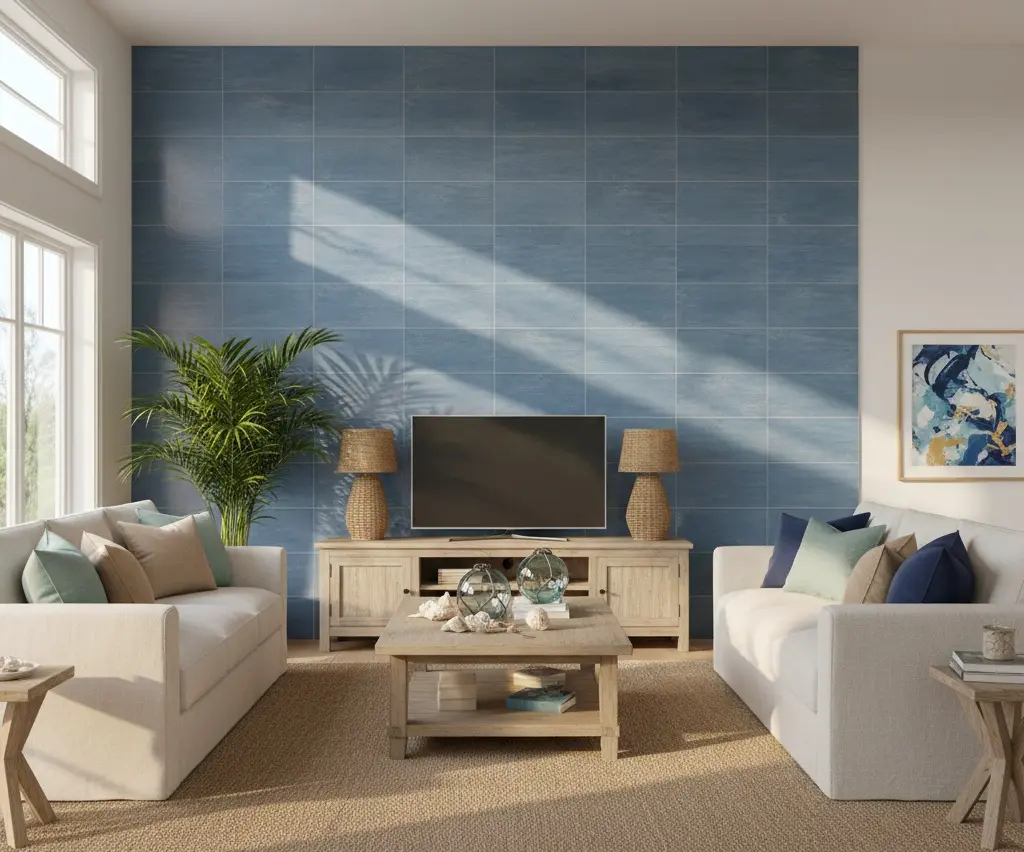 Conceptual rendering
Porcelain Tile Layout Options for Every Room and Surface
Large-format porcelain tiles, ranging from 24x24 to 48x48 inches, create a seamless appearance in open-plan kitchens and living areas with fewer visible surface joints. Elongated subway and stacked vertical formats bring height and visual structure to bathroom walls and kitchen backsplash designs.
Geometric formats, including hexagons and arabesque patterns, work well as bathroom floor and accent tile applications where pattern adds character without a full-wall commitment. Wood-look and concrete-look tile varieties extend the design range into outdoor spaces, pairing naturally with covered patios, landscaping materials, and garden furniture.
Herringbone and chevron orientations add movement to bathroom floors and kitchen backsplashes without requiring a different tile material. Browse all tile options at Nova Tile and Stone to find layouts and finishes suited to specific room dimensions and project timelines.
New Porcelain Tile Collection
New Porcelain Tile Inventory!
Why Porcelain Tiles Perform Across High-Traffic Residential Spaces
- UV stability: Porcelain retains surface color and finish under prolonged sun exposure, making it suitable for outdoor kitchens, uncovered patios, and pool surrounds where fading is a long-term concern.
- Water resistance: Moisture absorption at or below 0.5% meets the threshold for bathroom floors, shower walls, and kitchen surfaces subject to regular water exposure.
- Scratch and wear resistance: A Mohs hardness rating of 6 to 8 handles routine foot traffic and kitchen use; cutting boards are recommended on tile food prep areas to preserve the finish over time.
- Stain resistance: The vitrified surface repels oils, pigmented liquids, and common household acids without requiring a sealer application.
- No sealing required: Unlike natural stone, porcelain tiles need no periodic sealer application across kitchen, bathroom, or outdoor applications where low-maintenance performance is the design objective.
- Heat exposure: The material withstands moderate surface heat; trivets are recommended near cooking zones to avoid thermal stress over extended use.
Porcelain Tile as a Long-Term Residential Design Investment
Performance standards for porcelain tiles fall under the ISO 10545 series, which governs water absorption, stain resistance, breaking strength, and dimensional tolerances across production runs. ANSI A137.1, the American National Standard for Ceramic Tile, provides additional specification benchmarks applicable to this tile format in residential and light commercial projects. These standards help homeowners and designers evaluate tile performance across formats using objective criteria rather than manufacturer language alone.
2026 interior design trends show growing interest in natural materials, patterned tile surfaces, and ceramic finishes with warmth and depth. Porcelain tiles designed to replicate stone, concrete, and wood remain consistent performers across kitchen, bathroom, and outdoor applications, delivering the visual depth of premium materials with lower ongoing upkeep requirements.
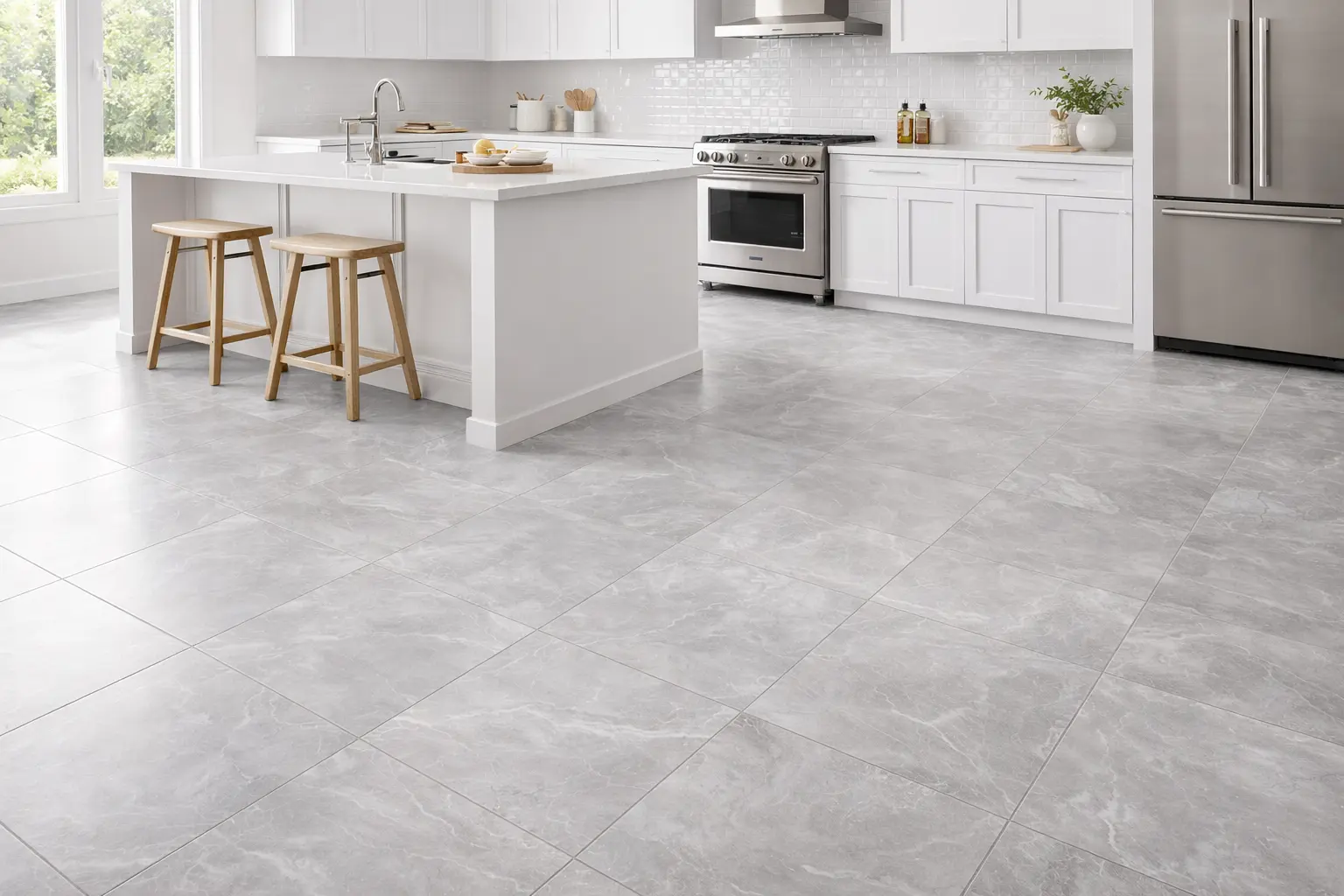 Conceptual rendering
Note: Some images on this page may be conceptual renderings created to illustrate design possibilities and may not depict actual installations.
Latest Articles Resources
Fresh Highlights from Our Team!
Frequently Asked Questions
Yes, porcelain tiles perform well outdoors. Their water absorption of 0.5% or less meets the freeze-thaw resistance requirements for exterior applications, and the vitrified surface holds color without UV degradation. Textured or matte finishes are preferred for walkable outdoor surfaces.
No, porcelain tiles do not require sealing. The kiln-fired vitrification process creates a surface dense enough to repel staining and moisture without periodic sealer application. This is one advantage porcelain holds over natural stone options.
Polished porcelain tiles have a high-gloss, reflective surface that amplifies light and suits formal kitchen or bathroom designs. Matte finishes reduce surface glare, conceal fingerprints and watermarks more effectively, and provide better traction in wet areas. Both finishes carry the same base durability.
Porcelain tiles offer more consistent sizing and do not require periodic sealing, unlike many natural stone options. Natural stone carries unique veining and variation that no manufactured tile can fully replicate. For kitchens where maintenance simplicity is a priority, porcelain tile surfaces offer a practical advantage.
For residential floor applications, porcelain tiles in the 10 mm to 12 mm range are commonly specified for durability and subfloor leveling tolerance. Thinner formats, typically 6 mm, are more commonly used for wall tiles and lighter-traffic areas.