Types of Granite
A close study of the world's most enduring countertop stone.
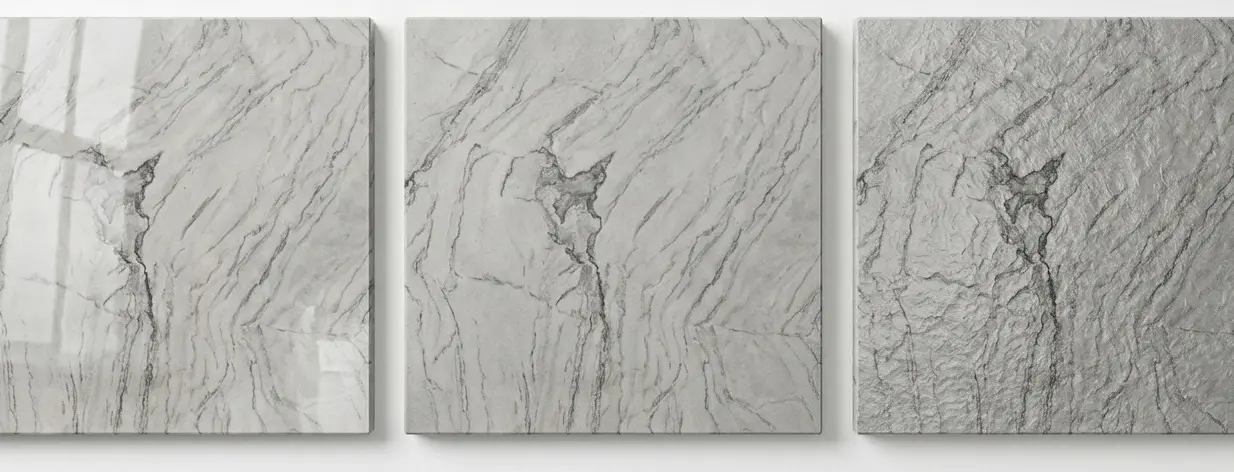 Conceptual rendering
Granite is classified by its dominant color family - white, black, pink, blue, and green - and each carries a mineral fingerprint that no two slabs share. This guide walks through every major variety, the rooms they belong in, and the small choices that separate a good selection from a great one.
5
COLOR FAMILIES
40+
NAMED VARIETIES
4
SHOWROOMS
∞
SLAB PATTERNS
— 01 — ON MATERIALS
Why Granite still holds the kitchen.
Granite is an igneous rock. It formed slowly, deep beneath the earth's crust, and that geological patience is what gives it properties few materials can match — a hardness that resists daily knife work, a tolerance for heat that lets a hot pan land without ceremony, and a pattern that took millions of years to compose.
When properly sealed, granite also resists moisture and staining. For a deeper look at stone countertop options, industry experts confirm granite holds its own against newer materials decade after decade.
/01
Exceptional hardness
Resists scratches from daily kitchen use better than marble or limestone.
/02
Heat tolerance
Set a hot pan directly on granite without scorching the surface.
/03
One-of-one patterns
Each slab forms over millions of years. No two pieces look identical.
/04
Long-term value
Granite countertops consistently boost resale appeal across markets.
— 02 — THE FIVE FAMILIES
A study in color.
Color is the quickest way to categorize granite, and each family opens up its own design directions. Below: the five most-specified families, with the named varieties worth knowing.
Hover any slab. The mood, the cabinetry it loves, the rooms it suits — all of it shifts the moment the color does.
FAMILY · QUARTZ - RICH
White Granite
Bright, luminous bases flecked with gray, silver, or gold. White granite pairs beautifully with dark cabinetry, drawing the eye to the countertop, and earns its place in smaller kitchens because the light surface multiplies whatever ambient light it gets.
01 / WHITE
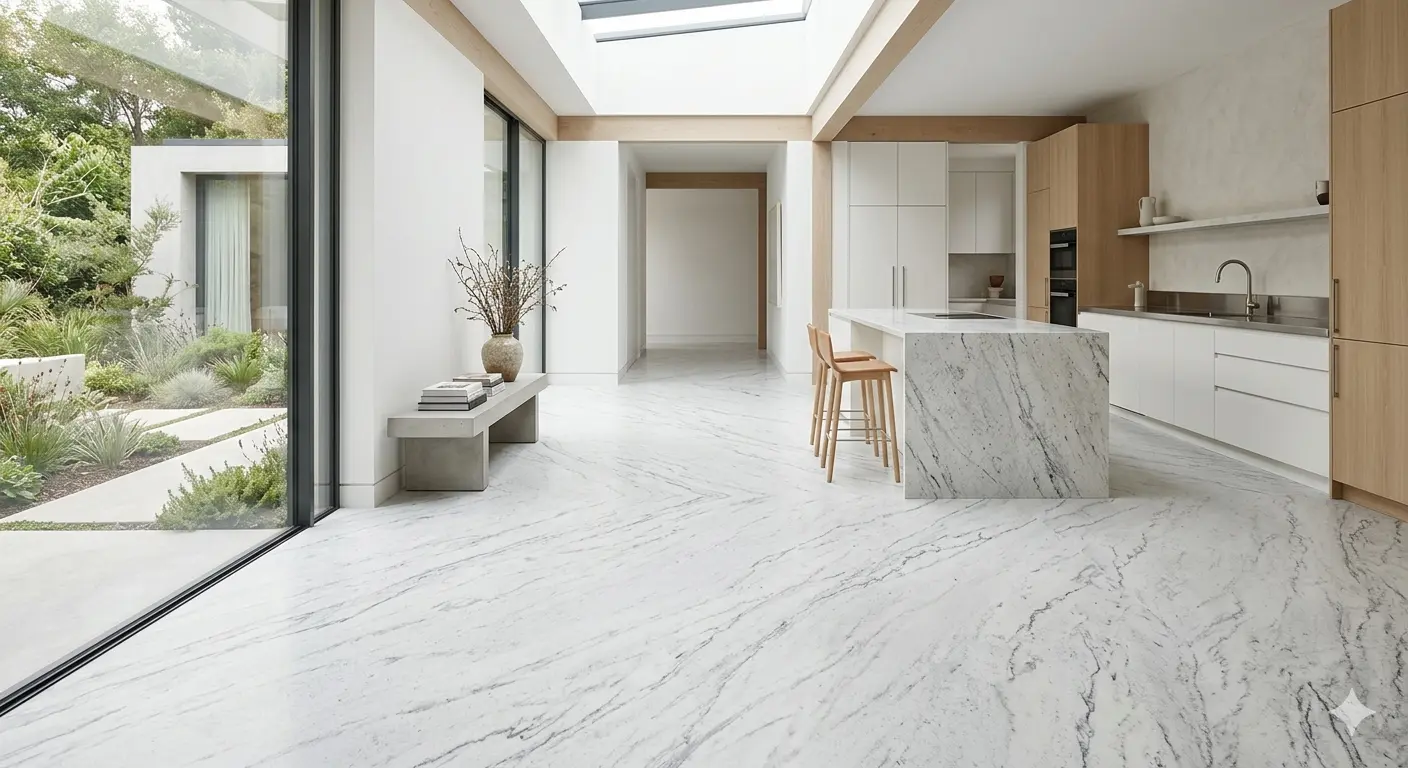
COLONIAL WHITE
ALASKA WHITE
RIVER WHITE
DESIGN NOTE
Pair with warm brass hardware and a neutral backsplash for a clean, modern kitchen that still feels inviting.
FAMILY · DENSE & DRAMATIC
Black Granite
Bold, anchored, and quietly theatrical. Absolute Black, Black Galaxy, and Titanium are the names that come up most often. The deep tone partners well with lighter cabinetry, stainless appliances, and minimalist fixtures — and it forgives water spots and minor stains better than lighter stones.
02 / BLACK
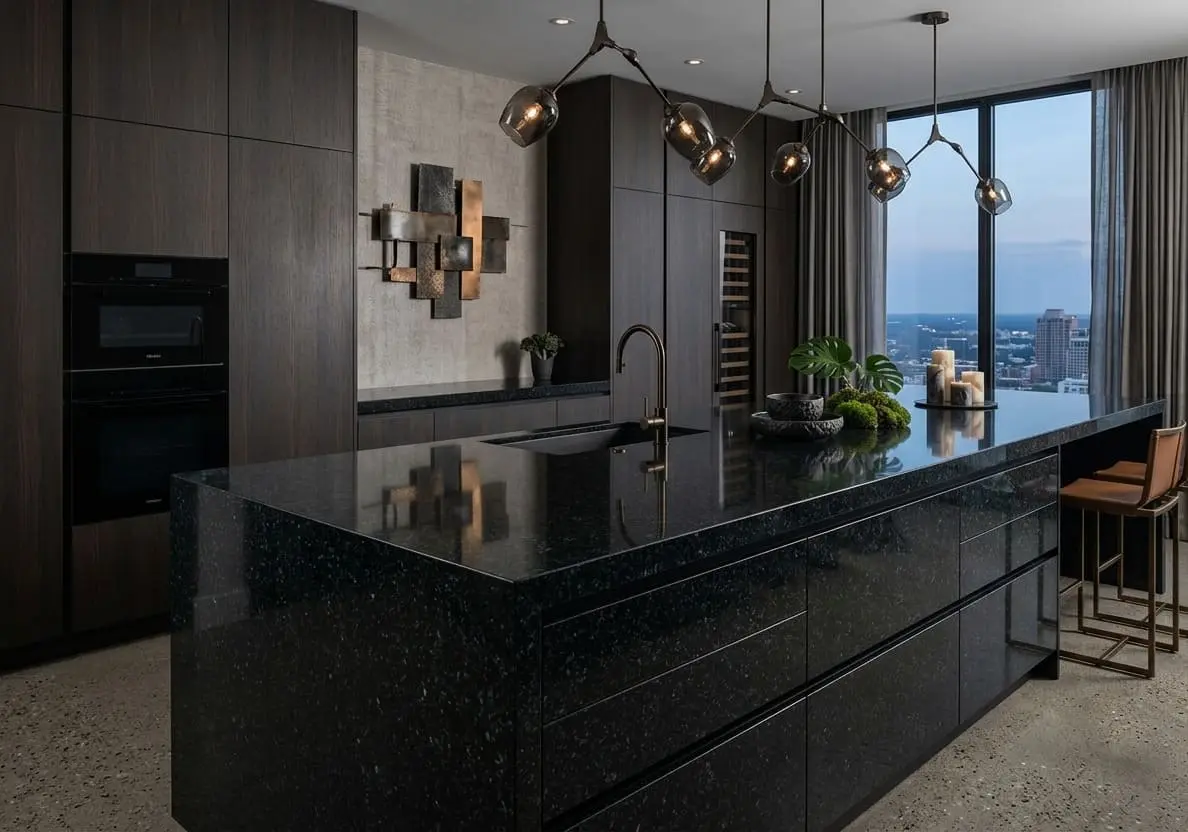
ABSOLUTE BLACK
BLACK GALARY
TITANIUM
DESIGN NOTE
Wrap it across a waterfall island to create a sculptural centerpiece in an open-concept living area.
FAMILY · FELDSPAR - RICH
Pink Granite
The warm hue comes from a higher concentration of potassium feldspar crystals. Tones range from soft blush to deep salmon — Rosy Pink, Salisbury Pink, Shivakashi — and the family adds warmth without overwhelming the room. Coordinates naturally with cream, taupe, and olive green.
03 / PINK
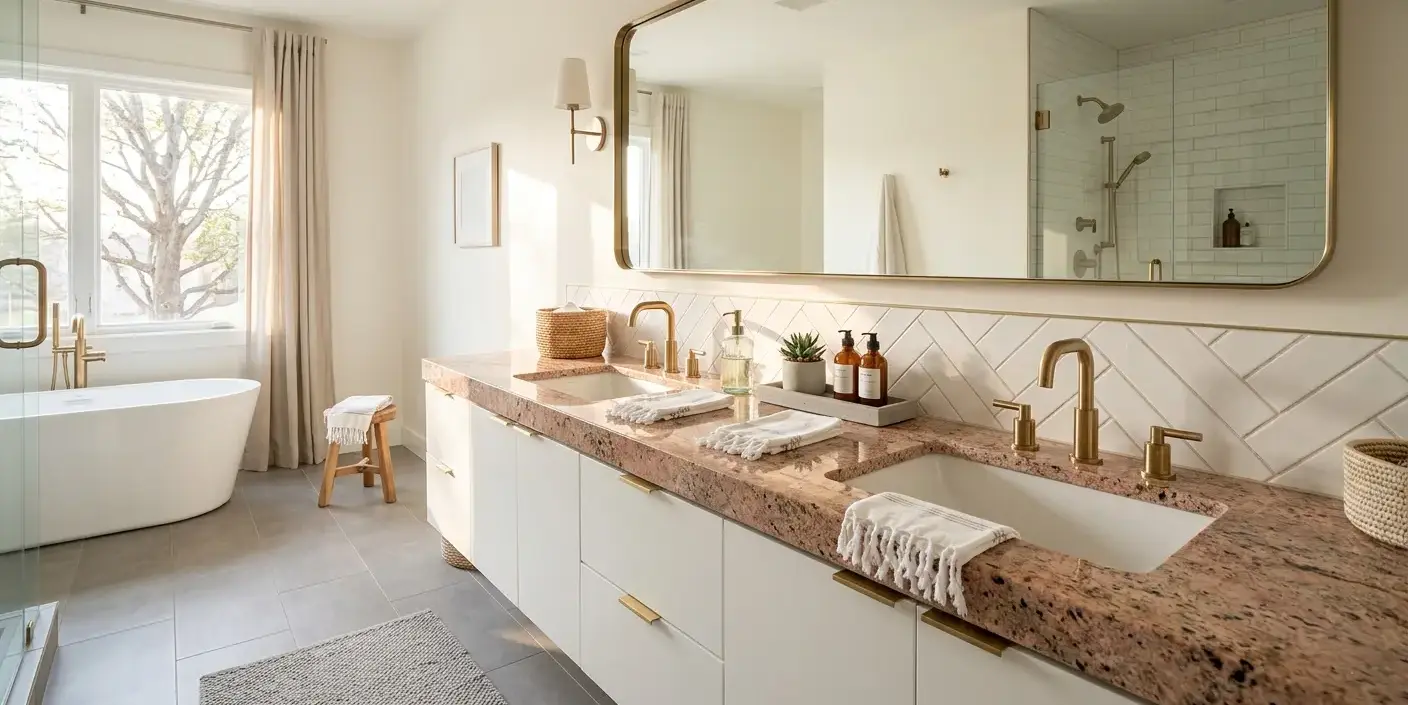
ROSY PINK
SALISBURY PINK
SHIVAKASHI
DESIGN NOTE
Install on a bathroom vanity alongside matte white tile for a spa-inspired retreat with subtle color.
FAMILY · RARE INCLUSIONS
Blue Granite
Among the rarest options on the floor. Blue Bahia, Azul Macaubas, and Volga Blue carry mineral inclusions that produce vivid blue against gray or white backgrounds. Reserve these slabs for statement work — powder rooms, bar tops, accent walls where the stone earns its prominence.
04 / BLUE
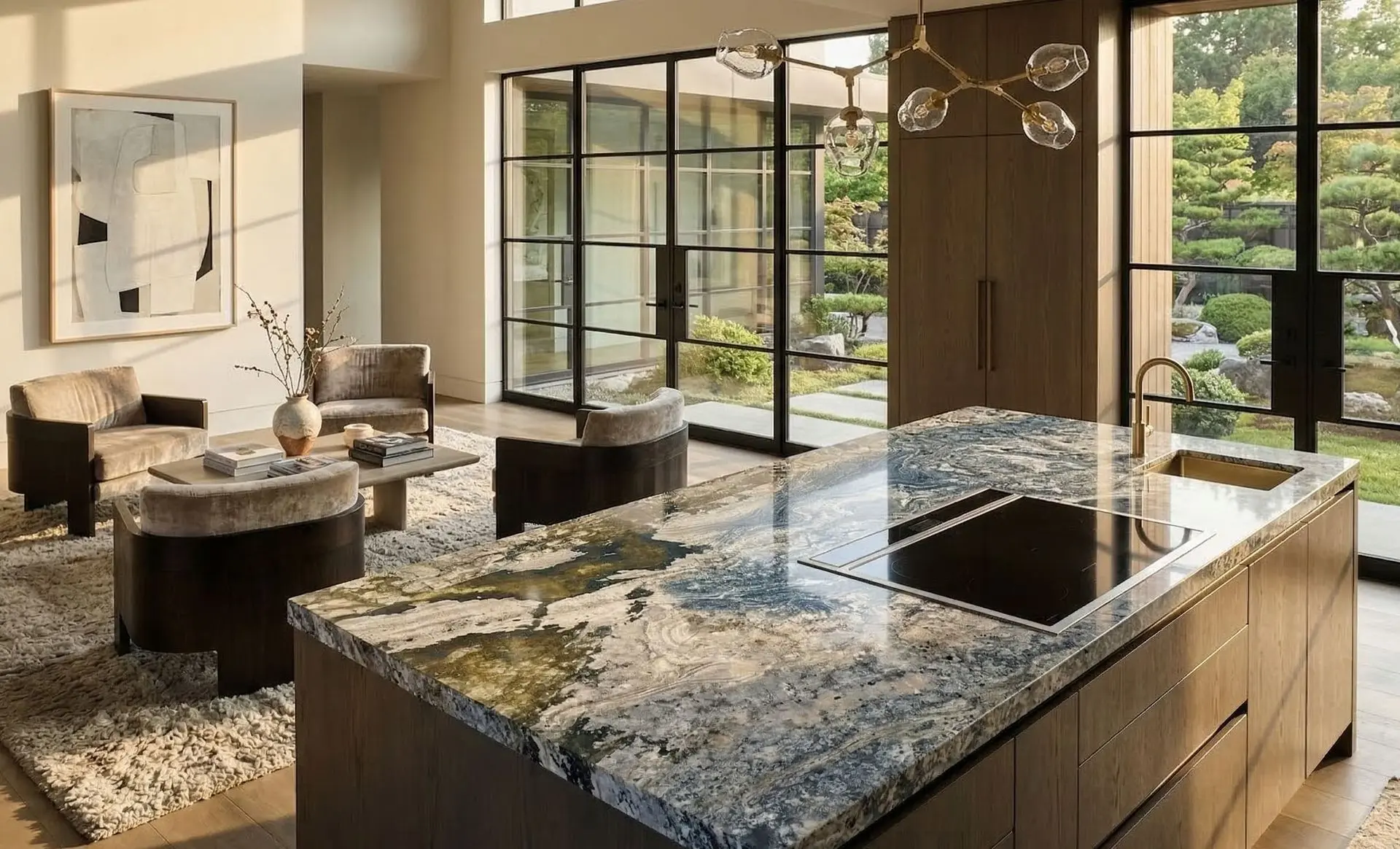
BLUE BAHIA
AZUL MACAUBAS
VOLGA BLUE
DESIGN NOTE
Backlight it on a wet bar accent wall to highlight the stone's translucent mineral deposits.
FAMILY · AMAZONNITE & EPIDOTE
Green Granite
From soft sage to deep emerald — Verde Butterfly, Seafoam Green, Tropical Green. The green tones come from minerals like amazonite and epidote, and the family brings an organic, earthy quality that pairs naturally with wood elements and warm metallics.
05 / GREEN
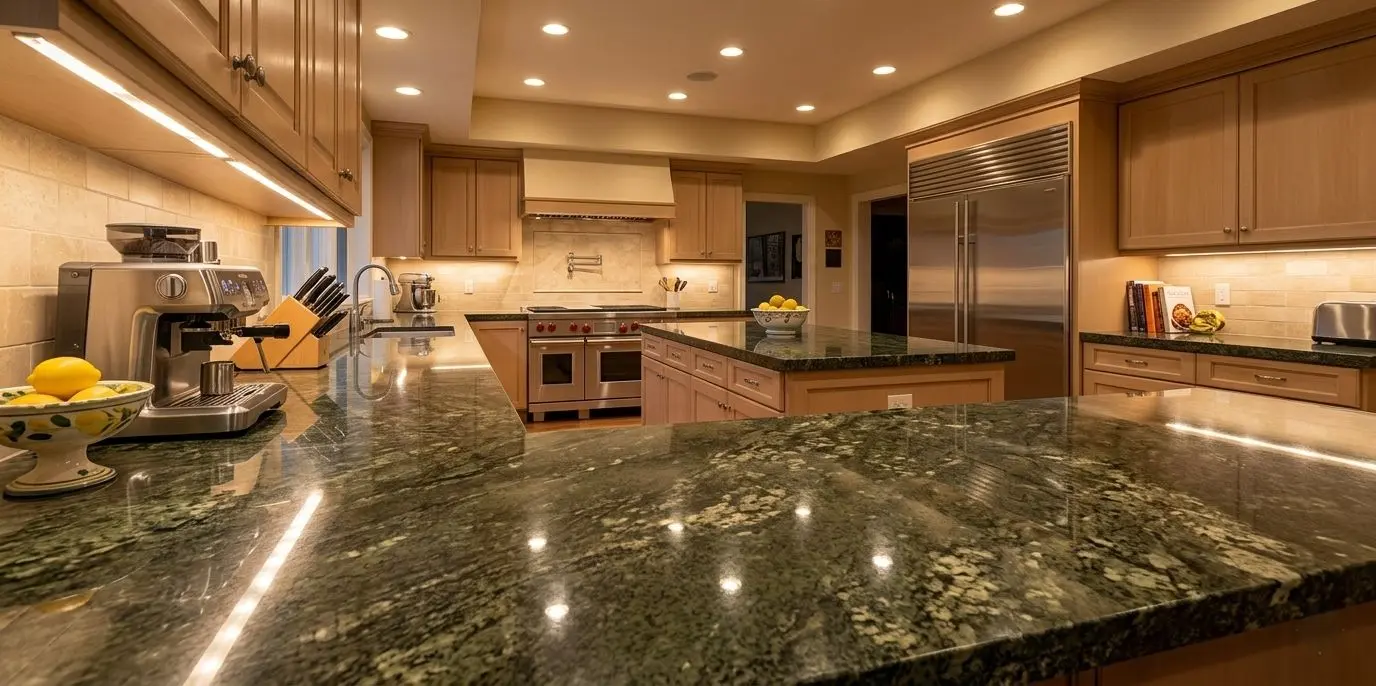
VERDE BUTTERFLY
SEAFOAM GREEN
TROPICAL GREEN
DESIGN NOTE
Combine with walnut cabinetry and aged brass pulls for a nature-inspired kitchen.
— 03 — AT A GLANCE
Five families, side by side.
TYPE | COMMON VARIETIES | BEST SUITED FOR | TONE & MOOD |
White Granite | Alaska White, River White | Small kitchens, bright spaces | Airy, modern |
Black Granite | Absolute Black, Black Galaxy | Islands, contemporary layouts | Bold, refined |
Pink Granite | Rosy Pink, Shivakashi | Bathrooms, traditional homes | Warm, inviting |
Blue Granite | Blue Bahia, Azul Macaubas | Accent walls, bar tops | Dramatic, rare |
Green Granite | Verde Butterfly, Seafoam Green | Kitchens, outdoor counters | Earthy, organic |
— 04 — THE HONEST LEDGER
What Granite gives, and what it asks.
For.+
| Against.—
|
— 05 — THE SELECTION
Five steps to the right slab.
Choosing a granite slab involves more than picking a color. Follow these steps to make a confident decision.
STEP/01
Define the direction.
Decide whether the countertop should blend with existing finishes or serve as the room's focal point. That choice narrows the color range immediately.
STEP/02
View full slabs in person.
Small samples rarely capture full veining and movement. Visit a stone showroom near you to see slabs at actual scale.
STEP/03
Evaluate the finish.
Polished granite reflects light and deepens color. Honed granite offers a matte look. Leathered granite adds texture and masks fingerprints. The Natural Stone Institute's finish guide covers these differences in detail.
STEP/04
Confirm the dimensions.
Measure your countertop area carefully. Large islands and L-shaped layouts may require book-matched slabs or multiple pieces with coordinated veining.
STEP/05
Ask about care.
quality impregnating sealer protects granite from moisture and staining. Proper cleaning methods extend the seal's life and keep the surface looking fresh.
— 06 — IN CLOSING
Choosing Granite that fits your vision.
Granite offers more variety than most homeowners realize. Whether you lean toward the crisp elegance of white granite, the commanding presence of black granite, or the rare beauty of blue granite, there is a natural stone slab that matches your goals. Pink granite adds warmth to transitional spaces, and green granite brings organic depth to nature-inspired kitchens.
Start with a clear vision, visit a showroom to see full slabs, and work with a knowledgeable team that can guide your selection. Browse available slabs to find the granite type that transforms your next project.
Before you choose
- Define the room's focal point
- View slabs at full scale
- Decide on polish, hone, or leather
- Confirm dimensions and book-matching
- Plan for sealing and long-term care




— 07 — NEED HELP?
Frequently Asked Questions
White granite and black granite lead in popularity. White varieties brighten the space, while black options deliver a sleek, contemporary look. Both categories include dozens of named varieties with different veining and crystal patterns.
Yes, blue granite typically costs more because it is rarer. Stones like Blue Bahia come from limited quarry sources in Brazil, and the mineral content that produces the blue color is uncommon. Budget-friendly alternatives include blue-toned quartzite.
Granite is porous, so sealing is recommended. Most homeowners apply an impregnating sealer once per year to prevent liquid absorption and reduce staining risk.
Granite performs well outdoors thanks to its resistance to temperature changes, UV exposure, and moisture. Darker varieties like black and green granite are popular for outdoor kitchens. The TCNA resource center offers guidance on exterior stone applications.
Polished granite has a reflective surface that enhances color depth. Honed granite has a matte finish that hides fingerprints more effectively. High-traffic kitchens often benefit from honed or leathered finishes, while formal spaces suit a polished look. Industry events like the International Surface Event showcase the latest finish trends.