Zermatt Quartzite Outdoor Stone
Zermatt Quartzite Outdoor Stone is a premium natural metamorphic stone rated 7 on the Mohs hardness scale and formally listed as suitable for outdoor use, floors, walls, fireplace surrounds, and UV-exposed environments in our material checklist. Quartzite earns outdoor suitability across that full range of applications through its metamorphic formation process, which produces a dense crystalline structure that resists surface abrasion, UV degradation, and moisture infiltration better than softer alternatives.
Sealing is still required for long-term outdoor performance, and finish selection should reflect the specific application and exposure conditions. Whether you are designing an exterior wall, outdoor kitchen countertop, a patio floor, or pool surround, Zermatt Quartzite Outdoor Stone brings the kind of geological credibility that manufactured outdoor surface materials and softer natural stones cannot match.
What Qualifies Quartzite as an Outdoor Stone
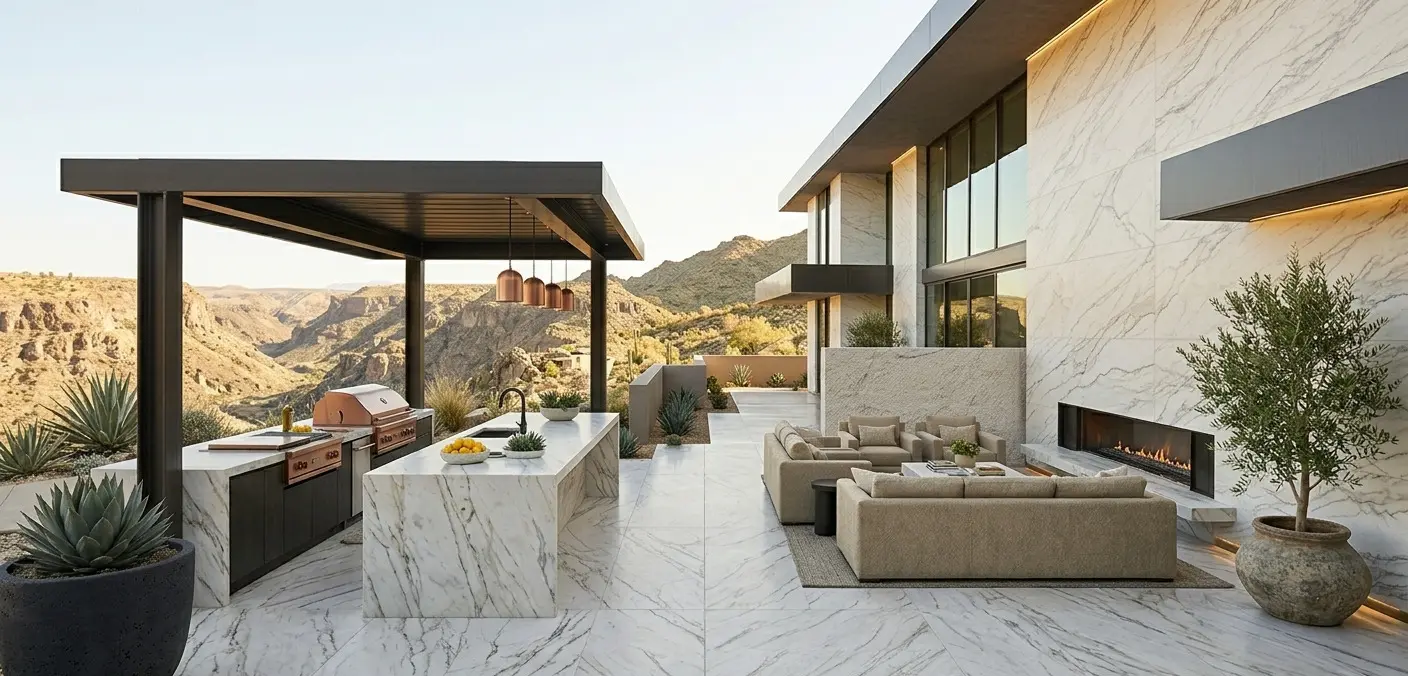
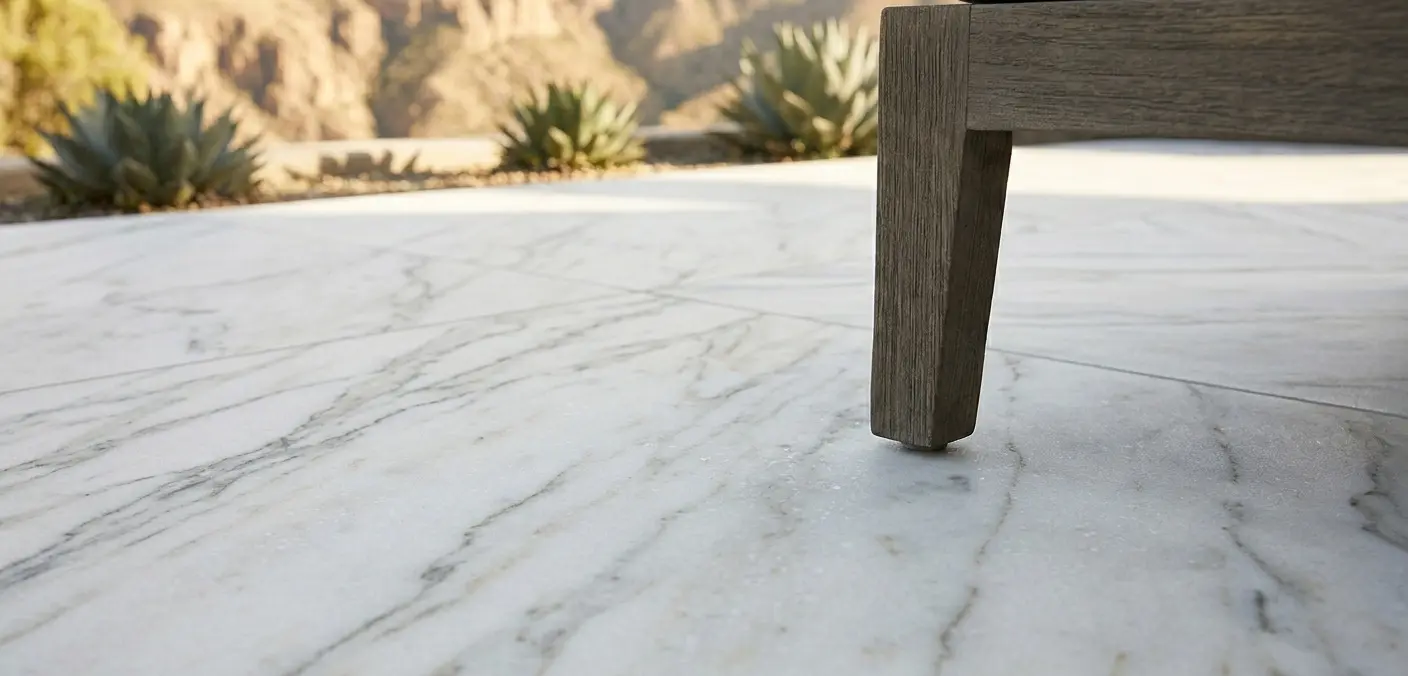
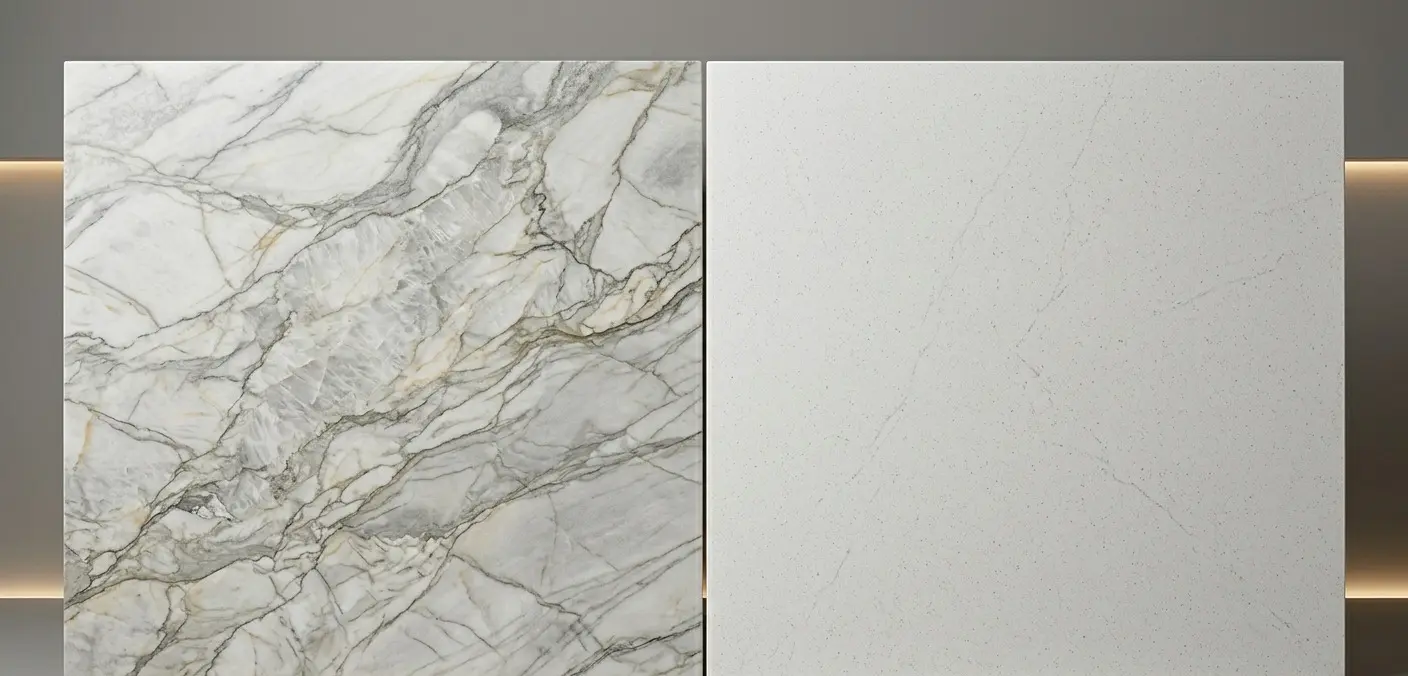
Not every natural stone belongs outdoors. Marble is formed from calcium carbonate, which etches and degrades under acidic rain, temperature cycling, and UV exposure over time. Travertine is highly porous and requires aggressive resealing in outdoor environments. Quartzite is fundamentally different. It forms when sandstone is transformed under extreme underground heat and tectonic pressure, creating an interlocking crystalline structure composed primarily of quartz, a mineral that does not react to acids and resists UV-induced surface changes in a way that calcium-based stones cannot.
It is worth understanding that quartzite is a natural stone, not to be confused with engineered quartz. According to Bob Vila's breakdown of quartz vs quartzite, the two materials are fundamentally different: engineered quartz is a manufactured product, while quartzite is a naturally occurring stone with its hardness built in by geology rather than process.
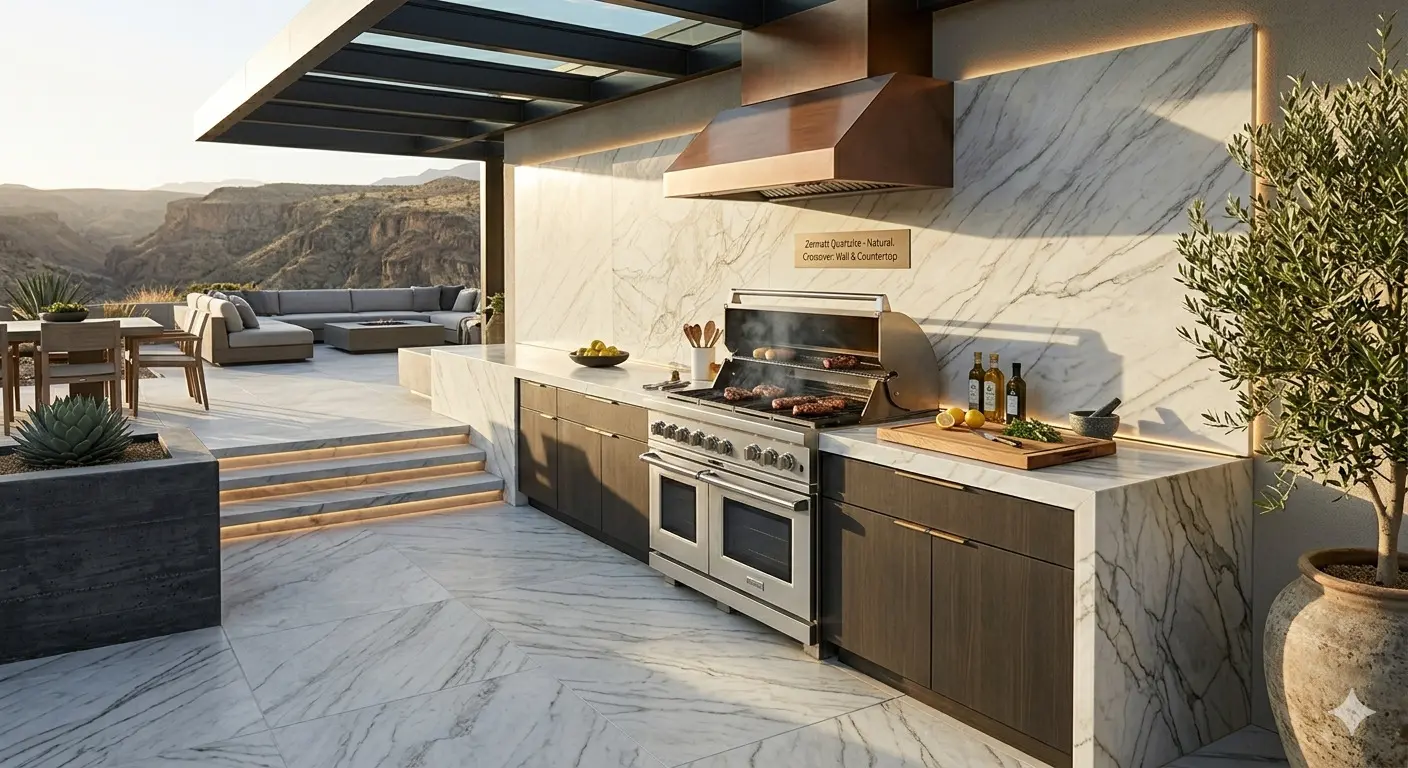
That distinction matters outdoors, where the material's structural integrity is tested by conditions that synthetic binders and resins are not designed to handle long-term. HGTV's guide on outdoor kitchen countertop options also confirms natural quartzite as one of the top-rated materials for demanding outdoor kitchen applications. Compared to tiled outdoor surfaces that require grout maintenance, quartzite slab format delivers an unbroken surface with no joints to crack, stain, or allow organic growth over time.
Where Zermatt Quartzite Outdoor Stone Performs
The full checklist suitability of Zermatt Quartzite Outdoor Stone spans outdoor use, floors, walls, and fireplace surrounds, which means it covers the complete range of surfaces an outdoor living space typically requires. The stone's natural tone and veining adapt to both formal architectural contexts and relaxed residential settings, and each slab carries its own unique mineral pattern shaped by geological forces. The sections below break down how the stone performs across the specific outdoor applications buyers most often plan around this material.
Outdoor Kitchen and Patio Applications
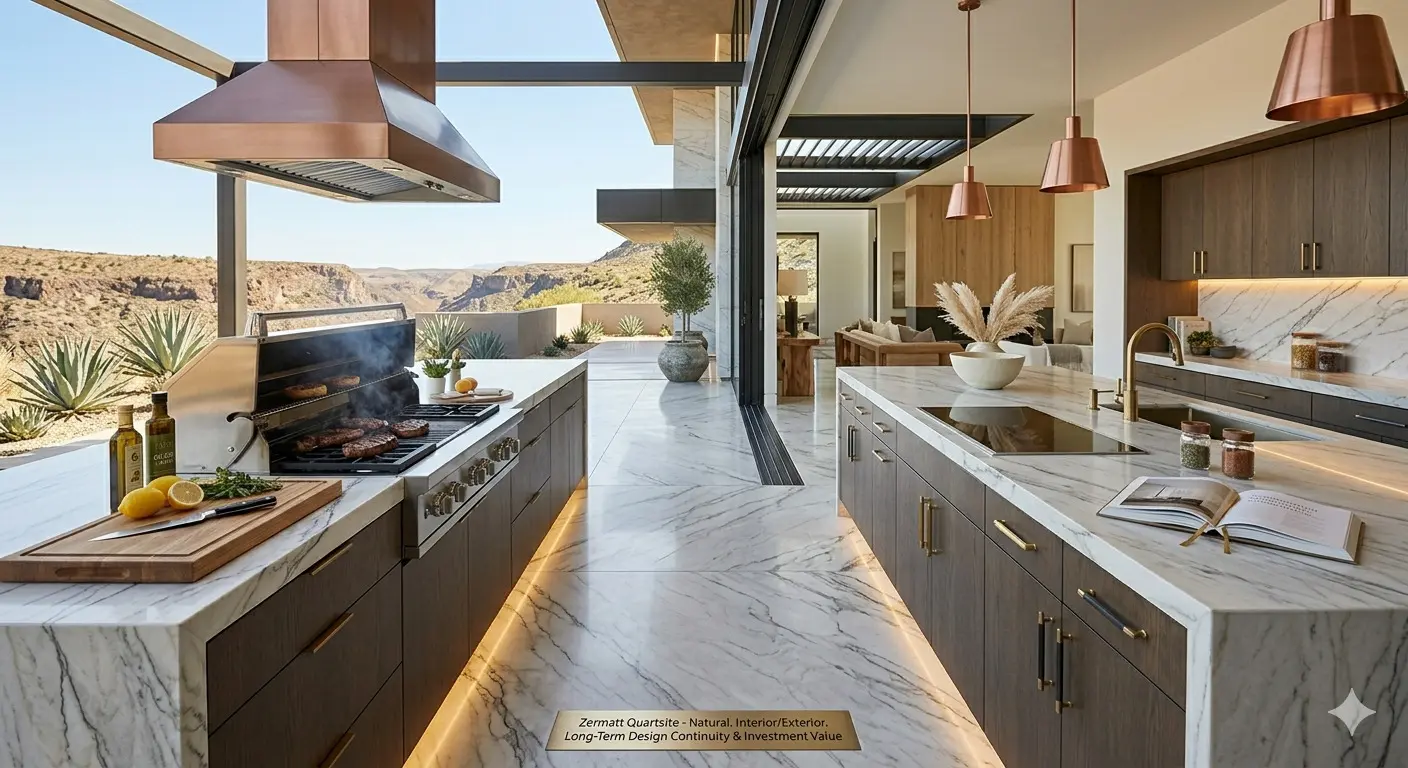
For outdoor kitchen countertops, Zermatt Quartzite is food-safe when sealed and handles proximity to grills and outdoor cooking zones well, though trivets should always be used to protect the sealant layer from sustained direct heat. For patio floors, a honed or leathered finish is the practical choice over polished because both provide better slip resistance underfoot in wet outdoor conditions.
Nova Tile and Stone, a trusted natural stone resource for homeowners across Northern Nevada and California, carries quartzite slabs viewable in person at four showroom locations in Reno, Sacramento, Minden, and Fernley. For buyers planning a connected outdoor kitchen alongside a patio project, the natural stone kitchen countertop page covers how natural stone performs on kitchen countertop surfaces.
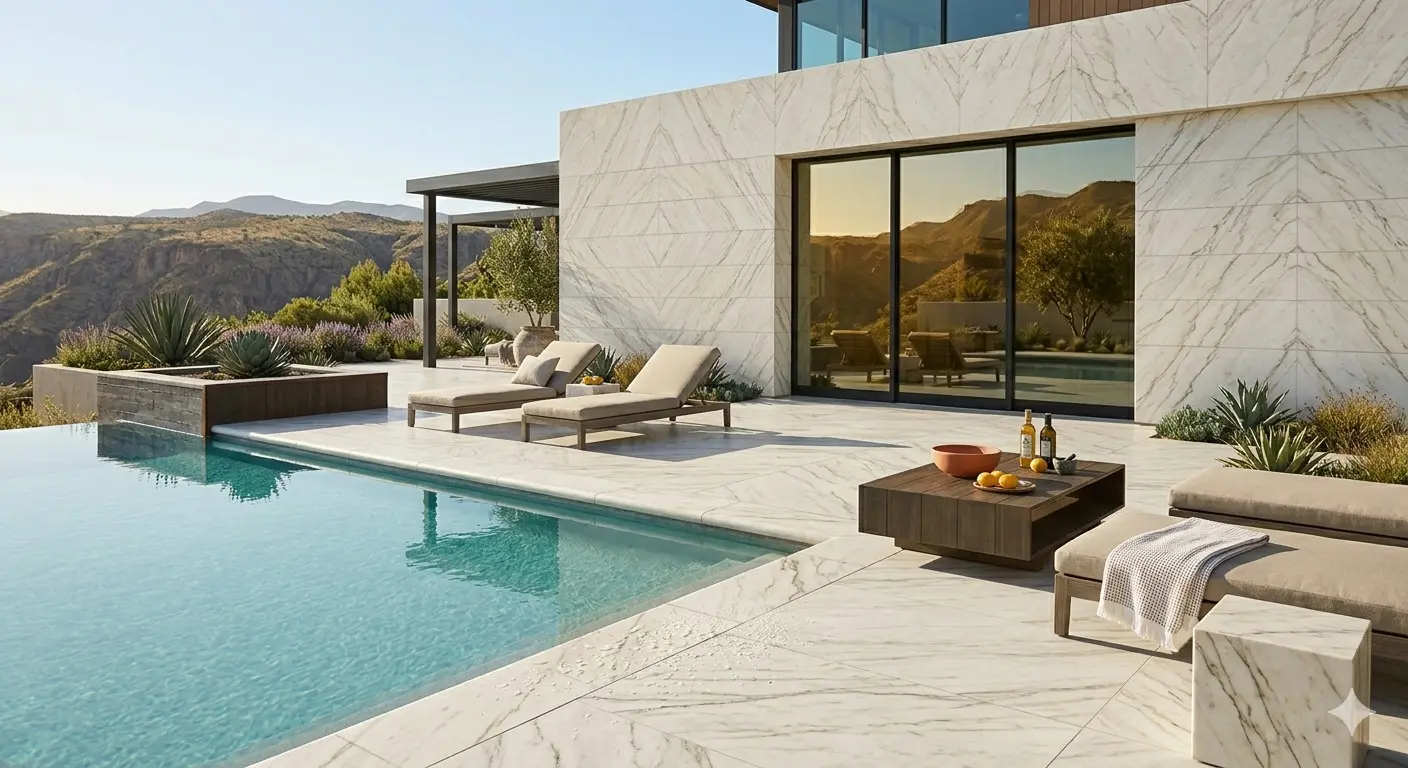
Exterior Walls, Pool Surrounds, and Fireplace Surrounds
Large-format slab panels on exterior walls create a seamless architectural surface without the grout-line maintenance that tiled cladding requires outdoors. For pool surrounds, the stone's moisture resistance is a clear advantage, though a honed finish is essential to provide safe, non-slip footing in wet zones.
For outdoor fireplace surrounds, quartzite is listed as suitable for fireplace applications in our material checklist and handles the radiant heat of an outdoor fireplace well, with sustained direct flame contact still best avoided. For design inspiration on pairing quartzite with other natural stone materials across an outdoor space, the blog post on pairing natural stone slabs offers practical guidance on combining quartzite with complementary materials for a layered outdoor design.
Learn More About Slabs
What Outdoor Stone Demands and How Quartzite Delivers
Outdoor surfaces are tested differently than interior ones. UV exposure, rain, temperature cycling, foot traffic, and the physical contact of outdoor furniture and equipment all place demands on a stone that indoor surfaces rarely face. Understanding these demands specifically helps buyers make better decisions about finish selection, sealing frequency, and long-term care before a project begins.
Outdoor Performance Benefits
- Outdoor use, floor, walls, and fireplace listed as suitable per master checklist, but correct finish and structural support must match each specific application type
- UV resistant per checklist, but performance may vary depending on finish and degree of direct sun exposure over time
- Scratch resistant at Mohs 7, but dragging heavy outdoor furniture or abrasive materials across the surface without protection is not recommended
- Moisture resistant by geological composition, but outdoor applications require sealing and more frequent resealing than interior surfaces
- Food-safe when sealed, making it a practical outdoor kitchen countertop surface, but a cutting board is always recommended for food preparation
- Seamless slab format eliminates grout lines that crack, stain, and collect organic debris on outdoor surfaces over time
Finish and Care for Outdoor Stone Surfaces
- Honed finish is the most practical choice for open-air outdoor surfaces because it is matte, slip-resistant, and ages gracefully under UV and weather exposure
- Leathered finish suits covered outdoor living areas and relaxed residential contexts where a textured, informal surface feel is preferred
- Clean regularly with mild soap and water; avoid acidic cleaners, bleach, and abrasive tools at all times
- Reseal on schedule, more frequently than interior surfaces; the Natural Stone Institute's care guide covers outdoor-specific sealing frequencies and maintenance approaches for natural quartzite surfaces
- For a quartzite-specific countertop resource, the quartzite countertop page covers how the material performs across countertop applications both indoors and outdoors
An Outdoor Stone Built to Age Well
Zermatt Quartzite Outdoor Stone is a long-term investment for any outdoor living project. Its Mohs 7 hardness, UV resistance, and natural moisture resistance give it a durability profile that softer outdoor stones and manufactured surface alternatives cannot match over time. The material resists fading, but finish selection and sealing frequency should always be planned around the specific outdoor environment rather than treated as a universal approach. For buyers also planning an indoor kitchen island alongside an outdoor stone project, the natural stone kitchen island page covers how natural stone performs in island-format kitchen applications, which is useful for projects where outdoor and indoor surfaces share the same material. Because every Zermatt Quartzite slab is geologically unique, the outdoor space built around this stone will carry a natural individuality that no manufactured product can replicate or replace.
Frequently Asked Questions
Quartzite is a natural metamorphic rock rated 7 on the Mohs scale, formed under extreme underground heat and pressure. That geological process gives it UV resistance, moisture resistance, and a hardness that softer outdoor stones like marble and travertine cannot match. It is formally listed as suitable for outdoor use, floors, walls, and fire place surrounds in our material checklist.
Yes. Quartzite is a naturally occurring metamorphic stone, while engineered quartz is a manufactured product made from ground quartz mixed with resins. Quartzite's hardness and UV resistance come from its geological formation, not from manufacturing processes, which makes it more appropriate for demanding outdoor applications.
Honed is the most practical choice for most outdoor applications because it is matte, slip-resistant underfoot, and ages more gracefully than polished under UV and weather exposure. Leathered works well for covered outdoor areas. Polished is better suited to sheltered outdoor spaces with limited direct weather contact.
Annual resealing is a reliable starting point, but heavily exposed outdoor surfaces like patio floors and pool surrounds may benefit from resealing every six to nine months. A water drop test confirms when a fresh application is needed.
Yes. The same material that performs outdoors transitions naturally to indoor kitchen countertops, bathroom vanities, and accent walls, making it a practical choice for buyers who want design continuity between their outdoor stone and interior surfaces.
See Zermatt Quartzite Outdoor Stone Slabs in Person
Visit any of our four showrooms in Reno, Sacramento, Minden, or Fernley to explore current slab inventory
and get expert guidance on the right finish and thickness for your outdoor stone project.
Visit a Showroom | View Slabs Online