There is something undeniably striking about a space that blends multiple textures, tones, and materials into one cohesive look. For homeowners and designers who want interiors that feel curated rather than catalog-standard, pairing marble with other natural stone slabs is one of the most rewarding design moves available.
Combining marble with complementary stones creates layered depth, visual contrast, and a timeless quality that single-material surfaces simply cannot replicate. Whether you are reimagining a kitchen island, refreshing a bathroom vanity, or selecting countertops for a new build, mixed-stone design opens a world of possibilities.
This guide walks you through why mixed-stone pairing works so well, how to apply it across key areas of your home, and which combinations deliver the most impact. By the end, you will have practical knowledge and fresh inspiration to bring a truly distinctive stone design to life.
Why Mixing Stone Varieties Elevates Every Surface in Your Home
Choosing a single stone for every surface is the safe route. However, safe does not always mean stunning. Layering different natural stones introduces contrast that makes each material stand out even more beautifully.
When designers pair marble with stones like quartzite, travertine, granite, or slate, they create visual tension that feels intentional and sophisticated. Each stone brings its own character, and together they tell a richer story about a space.
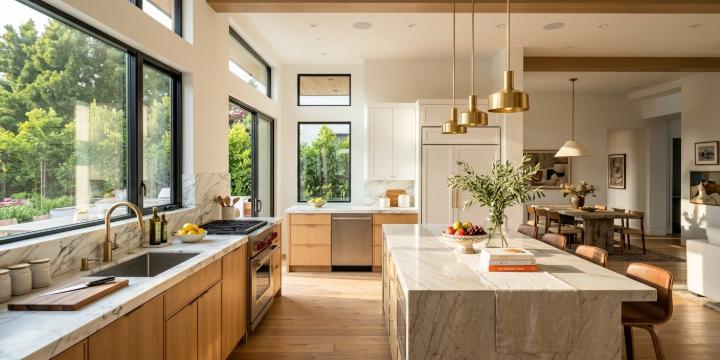
The Case for Mixed Stone in High-Traffic Areas
- Kitchen island countertops benefit enormously from the contrast. A honed marble top paired with a leathered quartzite base, for example, balances elegance with durability.
- Bathroom vanity tops in marble become even more refined when set against a slate or travertine wall cladding, adding warmth to the cool tone of the marble.
- Countertops throughout the home look more custom and intentional when the material choice shifts between rooms rather than repeating.
- Marble's subtle veining becomes more prominent when placed beside a stone with bolder grain patterns.
- Mixed stone surfaces also allow you to allocate premium materials where they matter most and use complementary stones in supporting roles.
Health, Safety, and Material Transparency
One important consideration when working with stone is understanding what the material is made of. Natural stone, unlike engineered alternatives, carries no synthetic binders or resins. This matters more than many homeowners realize. The CDC has highlighted concerns about engineered stone products related to silica dust exposure during fabrication.
Natural stone remains a transparent, time-tested choice backed by environmental and health product labels. Understanding what those labels mean for natural stone helps homeowners make informed decisions they can feel confident about long after installation.
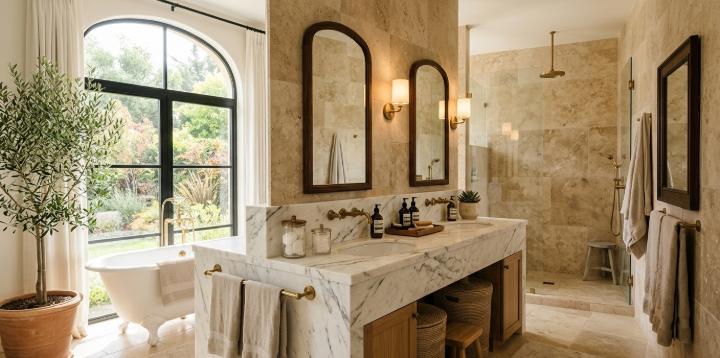
Design Ideas for Pairing Marble With Other Natural Stone Slabs
The art of combining marble with other stones is not guesswork. Certain pairings consistently deliver exceptional results, and knowing which combinations work gives you a solid starting point.
Marble and Quartzite: A Timeless Pairing
Quartzite is the ideal partner for marble. It offers similar elegance with greater resistance to etching and scratching. Use marble for the kitchen island surface where its veining becomes a focal point. Then introduce quartzite on the perimeter countertops for durability where prep work is heavy.
This pairing also works beautifully in bathrooms. A Calacatta marble vanity top beside a Super White quartzite feature wall creates a layered, spa-like environment that feels both luxurious and livable.
Marble and Travertine: Warm Meets Cool
Travertine brings an earthy warmth that contrasts perfectly with the cooler undertones found in most marble varieties. In a bathroom vanity setting, travertine floor tiles beneath a white or gray marble countertop create a grounded, organic aesthetic.
For a kitchen, travertine backsplash tiles behind marble countertops connect the stone palette to the overall room while keeping the veining of the marble as the star of the show.
Marble and Granite: Bold Contrasts That Work
Granite's dense, speckled surface makes a striking contrast to marble's flowing, linear veining. Using a dark absolute black granite for a kitchen island waterfall edge, while keeping marble on the upper surface, creates a dramatic two-tone effect.
Granite also works well in wet zones where marble may require more maintenance. According to guidance from Bob Vila on proper stone care, granite countertops handle moisture and daily use with minimal upkeep, making the combination both beautiful and practical.
Marble and Slate: Texture as the Design Element
Slate adds raw, matte texture that reads as a deliberate counterpoint to marble's polished finish. This contrast works especially well in open-plan spaces where the kitchen flows into a dining or living zone.
Use slate on accent walls or as a framing element around a marble-topped kitchen island. The rough surface of the slate makes the smooth, reflective quality of the marble feel even more refined by comparison.
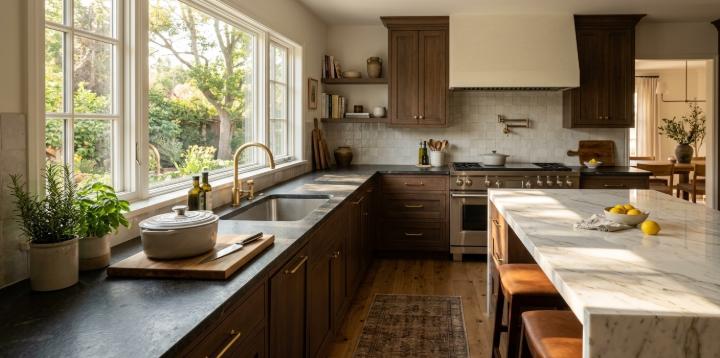
How to Plan Your Stone Pairing Like a Professional
Following a clear process transforms the inspiration stage into a confident design decision.
Step 1: Define Your Anchor Stone Choose the stone that will occupy the most visible or largest surface area. In most kitchens, this is the countertop. In bathrooms, it is often the vanity top. Marble is a strong anchor due to its visual presence.
Step 2: Identify Your Complementary Stone Look for a stone that shares at least one color tone with your anchor material but differs in texture, finish, or pattern intensity. This creates harmony without monotony.
Step 3: Confirm Finish Compatibility Polished marble pairs well with honed or leathered secondary stones. Mixing finishes adds depth without introducing visual chaos.
Step 4: Order Physical Samples Never finalize a stone pairing from digital images alone. Colors and veining read differently in your actual lighting conditions. Viewing samples side by side in your space is the only reliable method.
Step 5: Consult a Stone Specialist A stone professional can flag potential issues around porosity, maintenance compatibility, and installation requirements before any material is cut. This step saves significant time and cost.
Natural Stone Pairings: Quick Comparison
Pairing | Best Application | Maintenance Level | Visual Effect |
Marble + Quartzite | Kitchen island, bathroom vanity | Low to moderate | Elegant, seamless |
Marble + Travertine | Bathroom floors, backsplash | Moderate | Warm, organic |
Marble + Granite | Kitchen countertops, islands | Low | Bold, high-contrast |
Marble + Slate | Accent walls, feature zones | Low | Textured, dramatic |
Marble + Limestone | Flooring, vanity surrounds | Moderate to high | Soft, tonal |
Pros and Cons of Mixed-Stone Design
Pros:
- Creates a custom, designer-quality aesthetic
- Allows strategic use of premium materials in focal zones
- Adds texture, depth, and visual layering
- Makes each stone variety stand out more prominently
- Increases design flexibility across different rooms
Cons:
- Requires careful color and finish coordination
- More complex to source and match across batches
- Professional installation is strongly recommended
- Stone care requirements may vary between materials
- Higher initial planning time compared to single-material selections
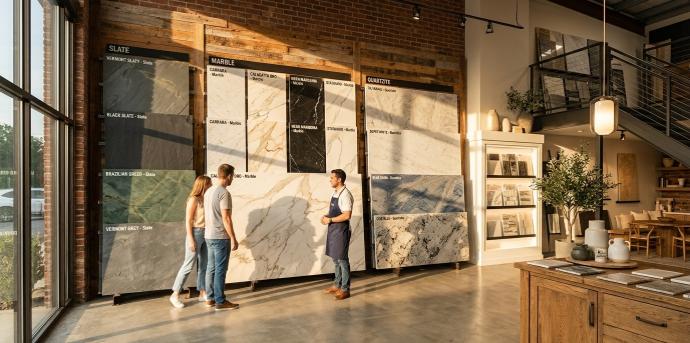
Finding the Right Stone Selection for Your Project
Knowing the right pairing is only half the equation. The other half is sourcing quality stone from a supplier who understands both the material and the design process.
Nova Tile and Stone offers an extensive selection of marble, quartzite, travertine, granite, and other natural stones, all available to view as physical slabs. Seeing the full slab before purchase is a significant advantage when planning a multi-stone design.
Their team supports both homeowners and trade professionals. If you work in design, contracting, or real estate development, their trade account program provides access to pricing, resources, and dedicated support tailored to professional project needs.
Shop Locally and See Slabs in Person
Digital browsing is a useful starting point, but there is no replacement for standing in front of a full slab and seeing how the material interacts with light. The shop local page connects you with nearby slab inventory so you can evaluate your options in person.
Locations in Reno, Minden, Fernley, and Sacramento carry a rotating selection of natural stone slabs across a range of price points and styles. Each showroom team can walk you through pairing options and answer material-specific questions on the spot.
Browse the full slab collection to get a sense of what is currently available, then visit in person to finalize your selection.
Conclusion
Pairing marble with other natural stone slabs is one of the most effective ways to create a space that feels genuinely unique. The key is intentionality. Choose materials that complement each other in tone while contrasting in texture or finish. Think about which surfaces need the most performance and which can carry the most visual drama.
From kitchen islands that anchor an open-plan space to bathroom vanity surfaces that define a personal retreat, the right stone combination transforms functional surfaces into design statements. The combinations covered here, marble with quartzite, travertine, granite, and slate, represent proven pairings that hold up both aesthetically and practically.
Ready to start building your mixed-stone vision? Explore your options here and connect with a stone specialist who can help you move from inspiration to installation with confidence.
Frequently Asked Questions
Can you mix different natural stones in the same room?
Yes. Mixing natural stones in the same room is a widely used design technique. The key is choosing materials that share at least one complementary color tone. Varying the finish or texture between stones adds depth without creating visual conflict.
Is marble a good choice for kitchen countertops?
Marble works well in kitchens when it is properly sealed and maintained. It is best placed on surfaces that see lighter prep activity, such as a kitchen island used primarily for serving or display. Pairing marble with a more durable stone on the main prep area countertops is a practical and elegant solution.
What stone pairs best with white marble?
Quartzite is widely considered the best companion for white marble. It closely mimics marble's appearance while offering greater resistance to etching. Travertine is another strong option, particularly in warm-toned spaces. Dark granite also creates a dramatic and sophisticated pairing.
How do you maintain two different stone surfaces in the same space?
Most natural stones share similar basic care requirements. Sealing both surfaces regularly and avoiding harsh chemical cleaners protects both materials. Always check the specific care recommendations for each stone, as porosity levels vary. Consulting your stone supplier at purchase provides the best maintenance guidance.
Do mixed stone designs cost more than single-stone designs?
Mixed stone designs do not necessarily cost more. Strategically using premium stones like marble in focal areas while incorporating more affordable complementary stones in secondary zones can actually reduce overall material costs. Planning the layout carefully with a stone specialist helps balance the budget effectively.