Zermatt Quartzite Exterior Wall Stone
Natural Stone With the Density to Perform Outside
Quartzite is one of the hardest naturally occurring stones available, and that hardness is what separates it from softer cladding alternatives like marble, limestone, or travertine on exterior wall surfaces. According to This Old House's stone overview, quartzite consistently ranks among the most durable natural stone options precisely because of its metamorphic formation process.
On exterior wall applications, its UV resistance is a practical advantage over materials that fade or degrade under prolonged sun exposure. Its moisture resistance reduces the risk of surface penetration from rain and condensation, though sealing is still necessary and must be maintained on a schedule appropriate for outdoor conditions. The Natural Stone Institute's care guide covers outdoor stone sealing and maintenance routines that apply directly to exterior quartzite wall surfaces.
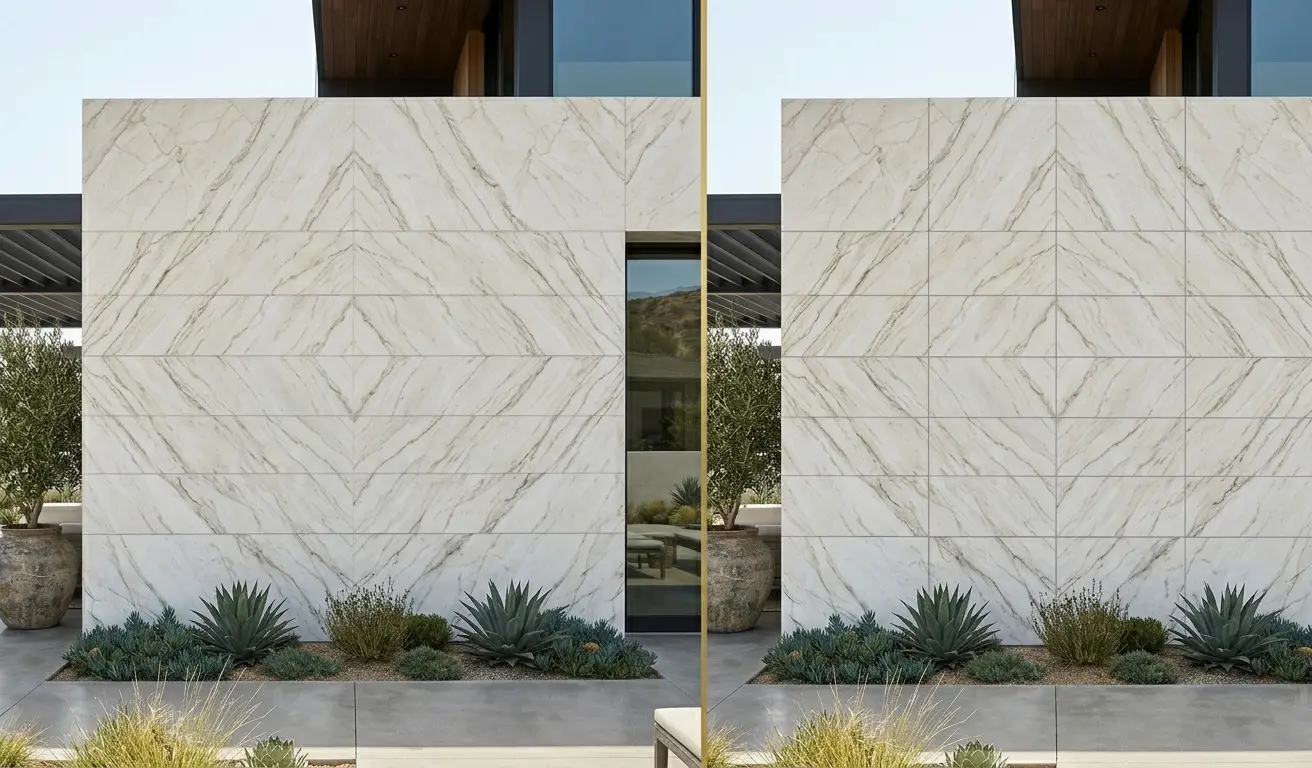
Compared to tiled exterior wall systems, which depend on grout lines susceptible to cracking, weathering, and debris accumulation over time, a full slab cladding surface eliminates those joints across the facade. That continuous stone surface holds its architectural character year-round without the ongoing grout maintenance that tiled systems require.
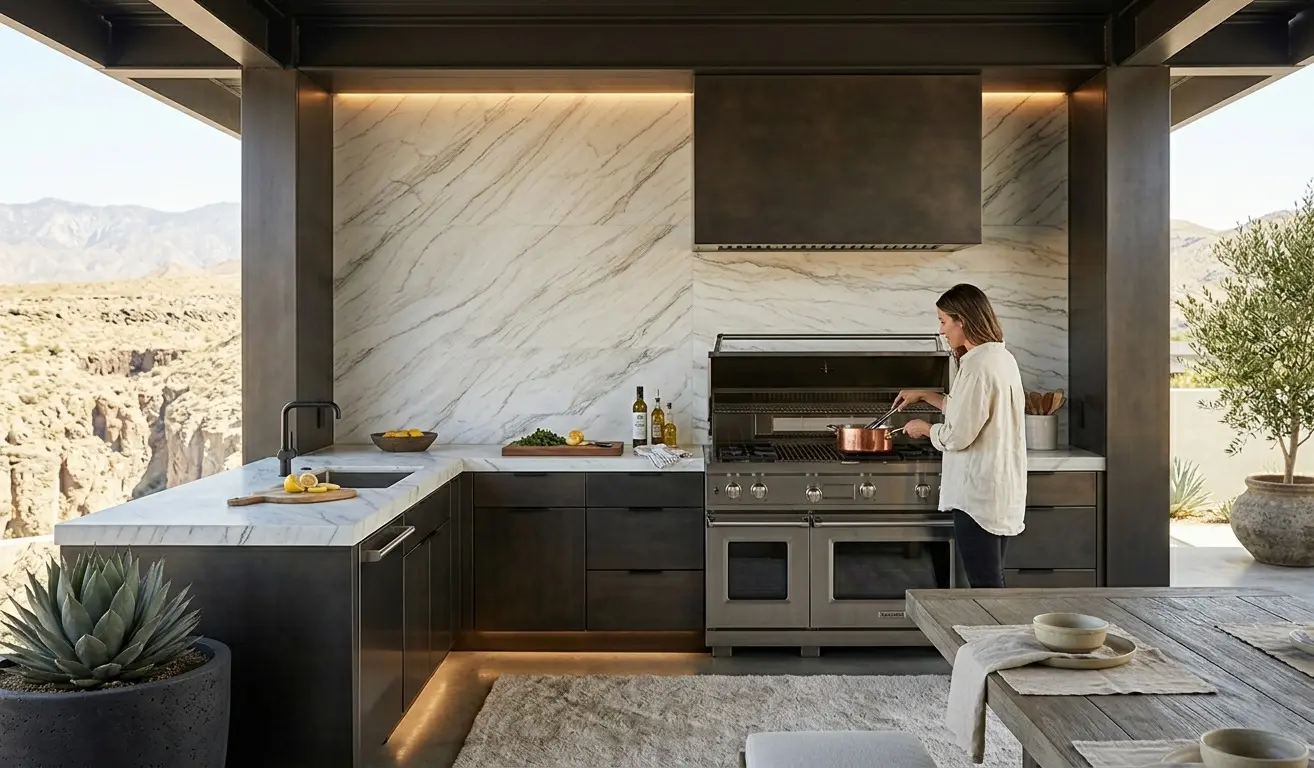
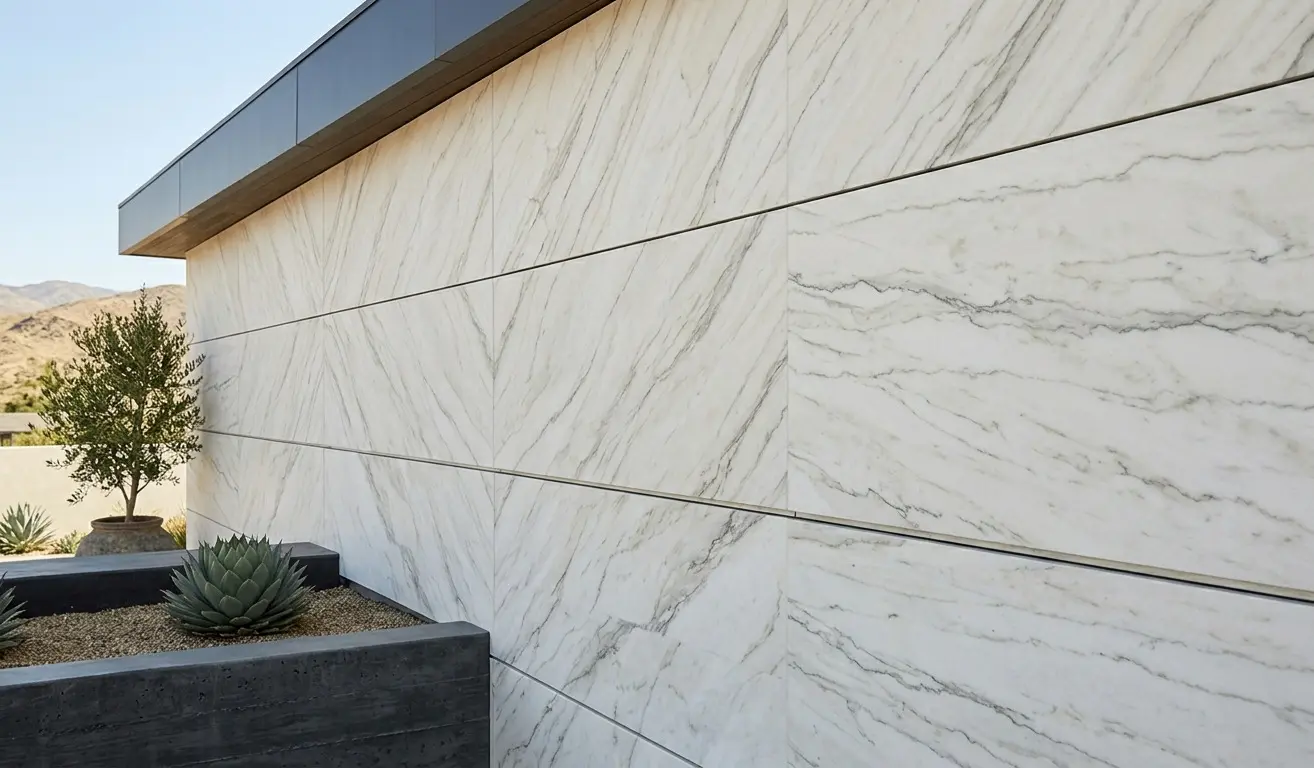
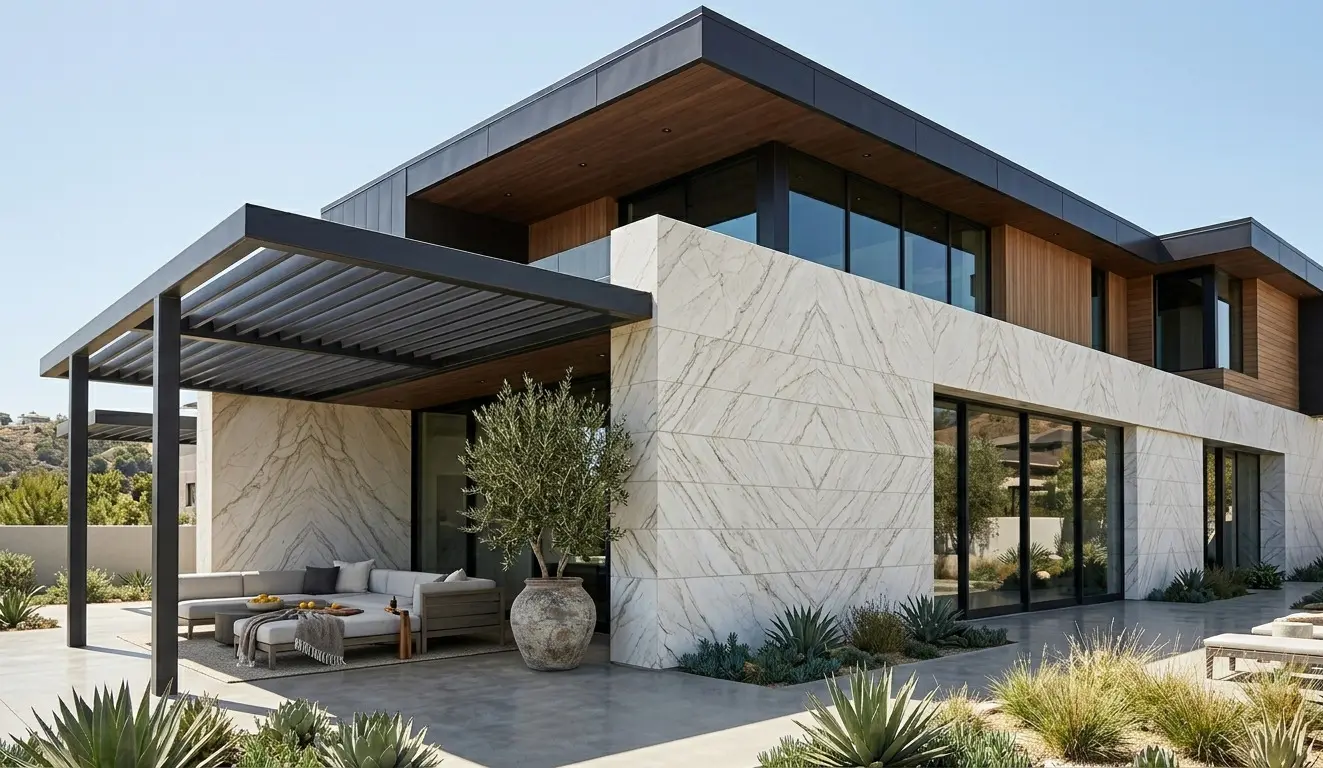
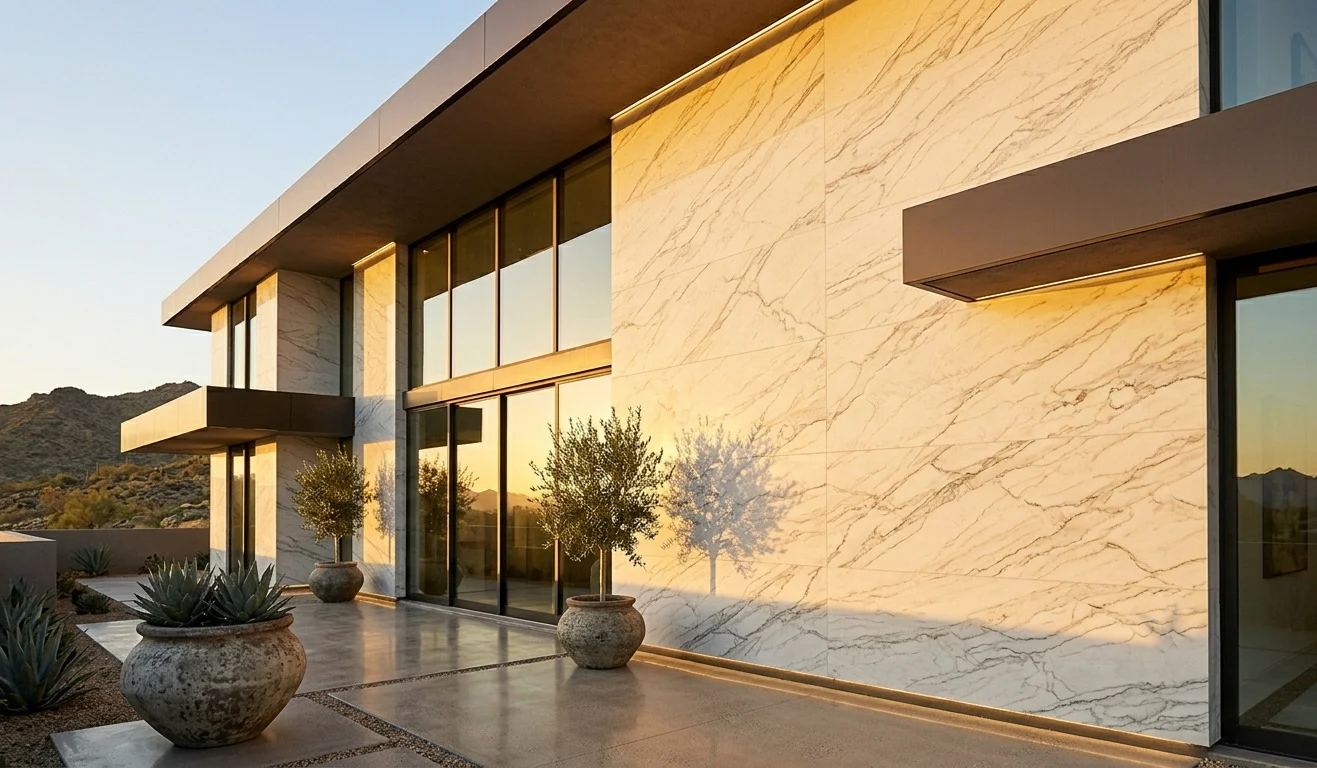
Exterior Wall Performance: Practical Benefits of Zermatt Quartzite Exterior Wall Stone
Zermatt Quartzite Exterior Wall Stone is a strong natural stone, but its long-term performance depends on the right finish choice, correct sealing frequency for outdoor conditions, and routine cleaning that respects the stone's surface. Outdoor wall surfaces experience different stresses than interior ones, including direct UV, seasonal temperature changes, and rain contact, so the practical notes below are specific to exterior vertical applications. Each benefit listed here is balanced against the maintenance habits that protect the material over time.
Material Performance on Vertical Outdoor Surfaces
- UV resistant per master checklist, but performance may vary by finish and level of direct sun exposure over time
- Walls listed as suitable in the material checklist, but correct structural backing must match slab weight and dimensions
- Scratch resistant at Mohs 7, but abrasive cleaning tools should still be avoided on the stone surface
- Moisture resistant by geological composition, but outdoor applications require periodic resealing on a weather-appropriate schedule
- Suitable for outdoor use, but finish selection for UV-exposed versus shaded exterior surfaces should be evaluated individually
Care and Finish Notes
- Honed finish ages most gracefully on exposed exterior walls, managing weathering marks without the glare that polished surfaces show outdoors
- Leathered finish adds surface texture that conceals everyday outdoor marks and suits relaxed architectural contexts
- Easy to clean with mild soap and water, but acidic or abrasive cleaners should always be avoided
- Each slab is unique, so reviewing the full slab in person before selecting exterior wall panels is always recommended
Exterior Stone That Holds Its Value Through Every Season
Zermatt Quartzite Exterior Wall Stone is a long-term architectural investment. Its natural density and Mohs 7 hardness mean it does not chip or degrade easily, and its UV resistance preserves its surface tone across years of sun exposure. Choosing the right finish for the specific outdoor environment is critical; Fine Homebuilding's natural stone guide provides a thorough breakdown of how polished, honed, and leathered finishes each behave in outdoor and high-exposure applications.
The material resists fading, but direct sun exposure should still factor into finish selection and sealing frequency planning. Quartzite's geological uniqueness means no two exterior wall installations will ever look identical, and that individual character adds permanent design value to any facade it covers.
For buyers wanting to understand the full scope of natural stone slab use across both interior and exterior applications, the blog post what are slabs is a useful starting point. For those also planning an interior natural stone surface alongside an exterior wall project, the natural stone countertop page covers how quartzite and other natural stones perform on horizontal slab surfaces.
Frequently Asked Questions
Yes. Quartzite is listed as suitable for walls and outdoor use in our material checklist. At Mohs 7, it resists surface abrasion, handles UV exposure, and withstands outdoor moisture better than softer natural stones. Proper sealing and correct finish selection are essential for sustained exterior wall performance.
Honed and leathered finishes both perform better than polished on exterior walls. They age more gracefully, manage outdoor weathering marks effectively, and avoid the glare that polished surfaces produce under direct sun. Polished works best in covered or sheltered exterior wall applications.
More frequently than interior surfaces. Annually is a reliable baseline, but walls in high-sun or high-rain environments may need resealing every six to nine months. A water absorption test will confirm when a fresh application is needed.
Yes. The same material transitions naturally from exterior wall cladding to interior kitchen countertops, bathroom vanities, and backsplash walls, which is a practical choice for projects where design continuity across both interior and exterior surfaces is a goal.
A full slab eliminates grout lines that crack, weather, and collect debris on exterior wall surfaces over time. Slab cladding requires less ongoing maintenance, holds its surface integrity longer, and delivers a far stronger visual result across a large outdoor wall area.
Clad Your Exterior With Stone That Lasts
Explore Zermatt Quartzite slabs in person at any of our four showrooms and let our design team help you select the right finish and panel configuration for your exterior wall project.
or
Visit one of our showrooms:
Reno | Minden | Fernley | Sacramento