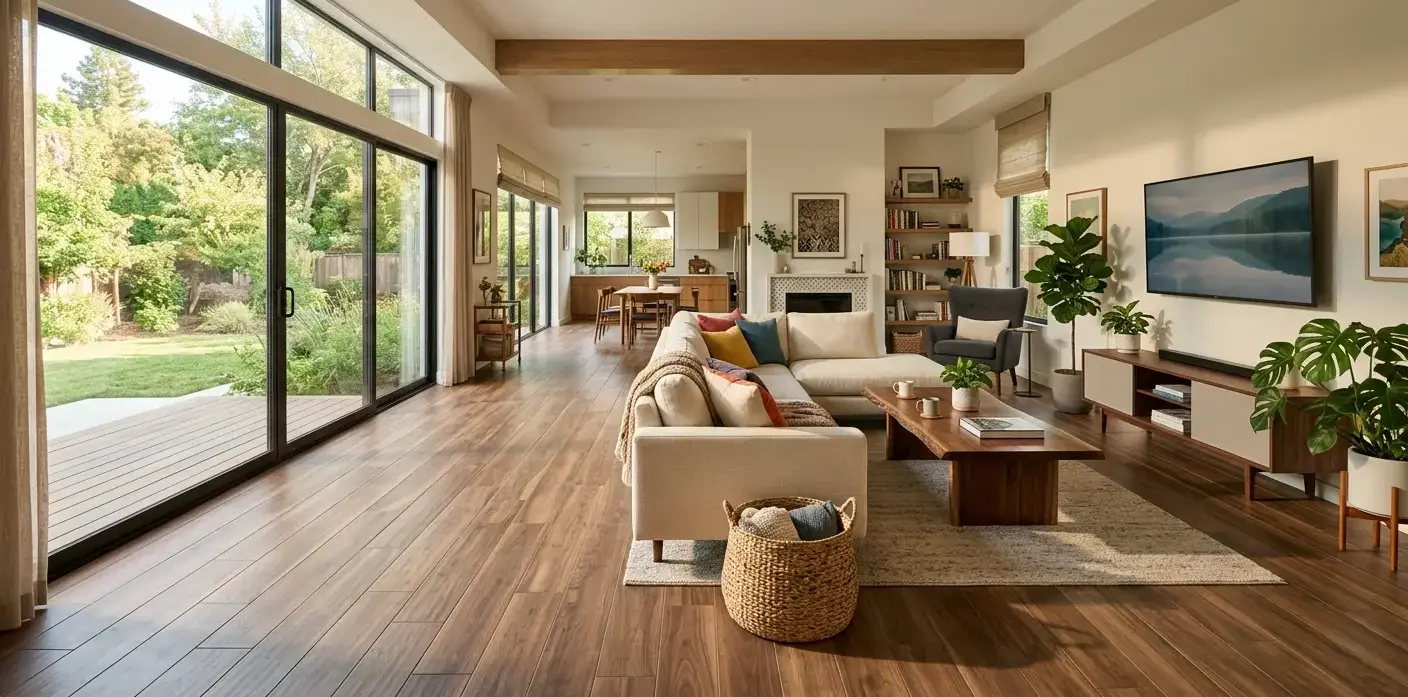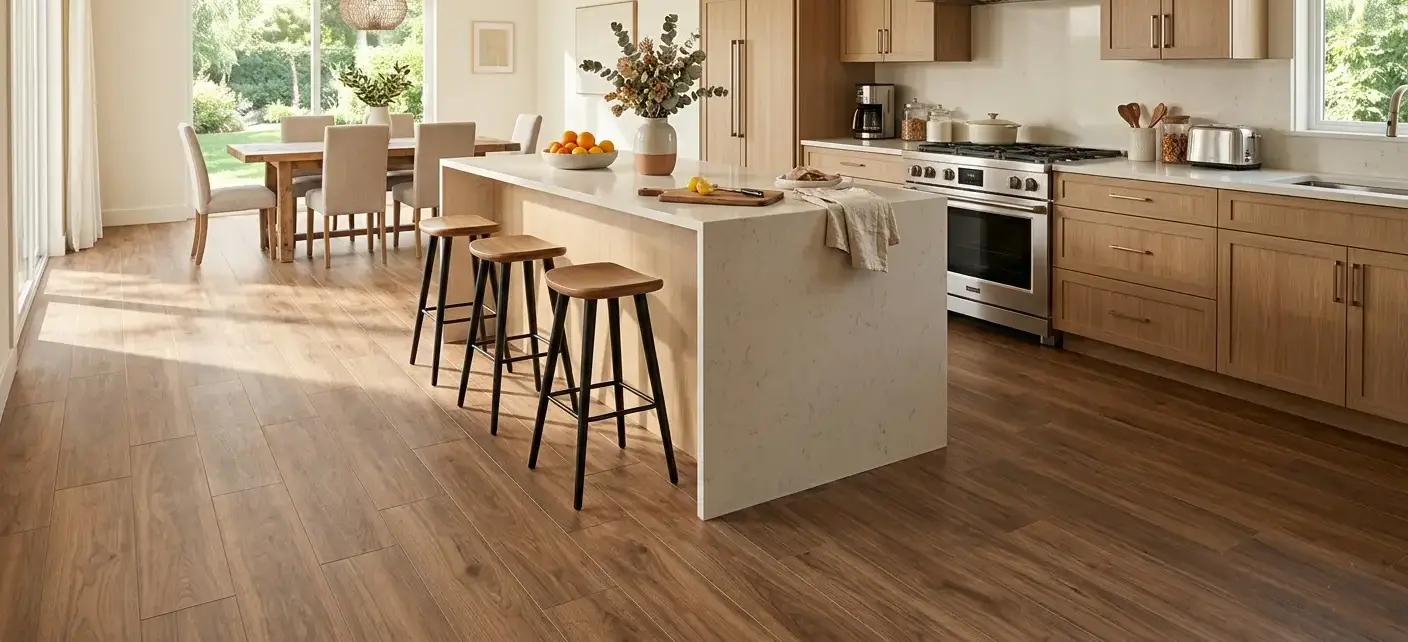
Wood plank porcelain tile delivers the warmth of natural hardwood to kitchens, bathrooms, and living rooms, free from hardwood's moisture sensitivity. This warm walnut format features a matte textured surface, a realistic linear grain pattern, and subtle greige undertones that complement neutral and earthy palettes. Available in plank dimensions from 6"×24" to 8"×48", wood plank porcelain tile suits compact bathroom floors and expansive kitchen layouts alike. A curated selection is available at Nova's tile shop, serving residential and trade clients across four Northern Nevada and California locations.
Warm Walnut Plank Porcelain: Tile Profile and Technical Specifications
Property |
Specification
|
Material | Porcelain |
Surface Finish | Matte Textured |
Primary Color | Warm Walnut Brown |
Secondary Undertone | Greige (Warm Gray-Brown) |
Mohs Hardness | 6–7 |
Water Absorption | ≤0.5% (ISO 10545-3) |
Standard Thickness | 10–12mm |
Standard Sizes | 6"×24", 6"×36", 8"×48" |
Quality Standards | ISO 10545, ASTM C373 |
This wood plank porcelain tile is manufactured from a refined blend of kaolin clay, feldspar, and silica, kiln-fired at temperatures exceeding 2,200°F to produce a fully vitrified surface with near-zero water absorption. Leading production regions include Italy, Spain, and Brazil, where advanced digital printing technology replicates authentic wood grain at high resolution with natural knot patterns and grain variation.
The walnut colorway sits in the warm medium-brown range, with greige undertones that bridge brown and gray palettes. This tonal balance pairs well with off-white cabinetry, white countertop surfaces, and brushed nickel or matte black fixtures. Standard plank sizes typically range from 6"×24" to 8"×48", with a 10–12mm body thickness suited for both floor and wall tile applications.
Compared to natural hardwood, wood plank porcelain tile resists moisture and dimensional change in humid environments. For a full side-by-side evaluation of porcelain against other flooring options, the porcelain tile flooring guide from Nova Tile and Stone covers key considerations in detail.
Latest Product Collection
Discover What’s New in Our Inventory!
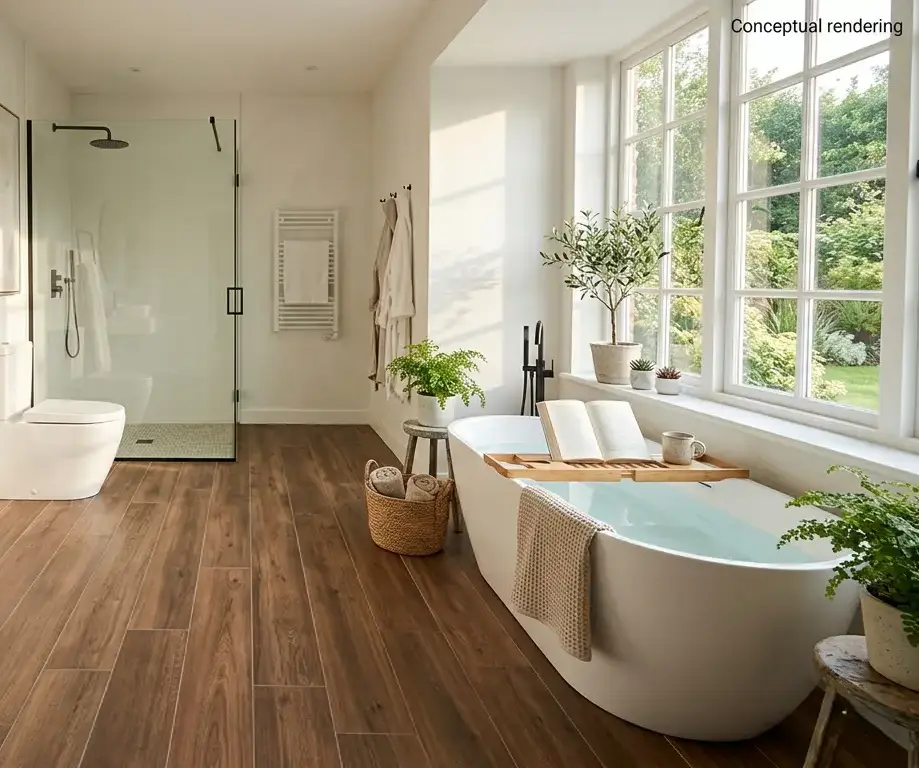
 Conceptual rendering
Layout Options and Room Pairings for Wood Plank Porcelain Tile
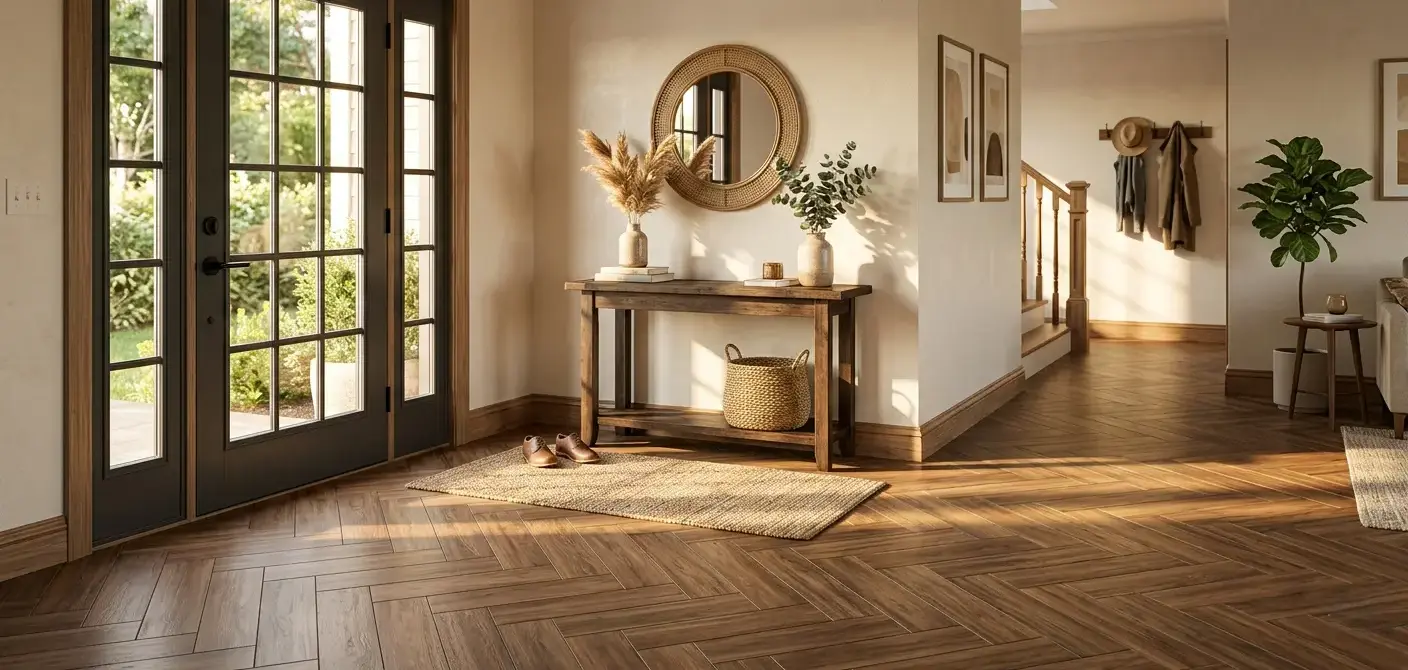
The plank format supports a range of tile layouts, each producing a distinct visual result. A horizontal staggered offset, either 1/3 or 50%, most closely replicates the look of traditional hardwood and works well across kitchen floors and living room surfaces. Vertical layouts on bathroom walls can raise perceived ceiling height in compact spaces. Herringbone and chevron patterns add formality and visual texture, making them popular in entryway and master bath applications.
In kitchen spaces, a horizontal offset floor layout anchors open-plan areas and provides grounding contrast to countertop and cabinet surfaces above. In bathrooms, pairing horizontal plank flooring with a coordinating bathroom vanity countertop in natural stone adds tonal depth while keeping a cohesive, layered aesthetic.
For living rooms, large-format 8"×48" planks with narrow grout lines create a seamless hardwood-like appearance across wider areas. Frost-rated wood plank porcelain tile also performs in covered outdoor tile designs where appropriate drainage and slip resistance have been specified.
Why Wood Plank Porcelain Tile Performs in High-Use Spaces
Functional advantages that make this format suitable for kitchens, bathrooms, and similar tile surfaces include:
- Moisture resistance: A water absorption rate of 0.5% or less under ISO 10545-3 makes wood plank porcelain tile suitable for wet-area flooring and wall applications when correctly specified.
- Surface hardness: A Mohs rating of 6–7 resists routine scratching, though cutting boards remain advisable in food preparation areas.
- Fade tolerance: The fired digital-print surface retains color under typical UV exposure conditions, making frost-rated wood plank porcelain tile a viable choice for covered outdoor tile areas.
- Low maintenance: Routine sweeping and pH-neutral mopping maintain surface appearance; unlike natural stone, unsealed porcelain does not require periodic resealing under standard residential conditions.
- Matte anti-slip texture: The textured surface provides traction in wet areas, though specific anti-slip coefficient ratings should be confirmed for high-moisture environments.
- Hygienic composition: Non-porous porcelain resists moisture-related bacteria and surface staining more reliably than porous natural materials under normal use conditions.
- Radiant floor heating compatibility: The dense tile body conducts and retains heat efficiently through normal heating cycles without dimensional degradation.
Long-Term Investment Value of Wood Plank Porcelain Tile
Porcelain tile manufactured to ISO 10545 and ASTM C373 standards meets verified performance benchmarks: water absorption at or below 0.5%, surface hardness of Mohs 6–7, and resistance to thermal cycling that supports decades of service under residential conditions when maintained appropriately. These standards govern fired body performance, and products meeting them tend to hold structural integrity longer than lower-density alternatives.
The TCNA tile standards reference framework establishes industry benchmarks for ceramic and porcelain tile performance, providing design professionals and homeowners a reliable basis for evaluating specification choices.
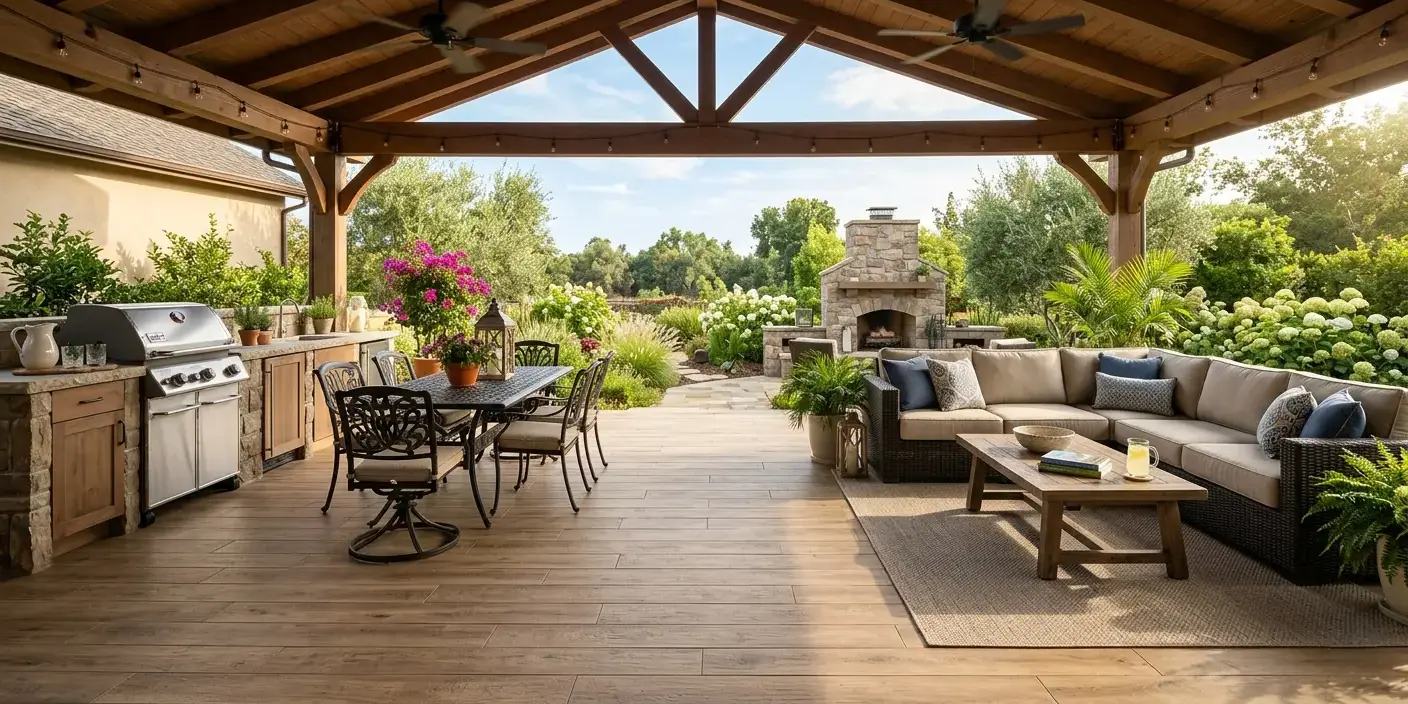 Conceptual rendering
The warm walnut wood plank porcelain tile format also delivers design longevity alongside material durability. The matte wood-grain aesthetic suits contemporary, transitional, and rustic interiors without dating quickly. Unlike natural hardwood, which may require refinishing every several years, porcelain surfaces hold their appearance without cyclical restoration costs when routine care guidelines are followed.
Designers and homeowners can review current tile selections in person at local Nova showrooms in Reno, Minden, Sacramento, and Fernley.
Recent Publications
Fresh Company Highlights!
Frequently Asked Questions
Yes, wood plank porcelain tile is well-suited for bathroom floors. Its water absorption rate of 0.5% or less meets the performance threshold for wet-area use, and a matte textured finish provides practical traction. Suitable grout selection and waterproofing measures support long-term performance in these environments.
Porcelain tile rated for frost resistance and slip resistance is appropriate for outdoor applications, including patios, outdoor kitchens, and covered walkways. Not all wood plank porcelain tiles carry outdoor ratings, so confirming the specific product's frost resistance and slip coefficient before purchasing is important.
Wood plank porcelain tile offers greater moisture resistance, harder surface durability, and lower ongoing maintenance than natural hardwood. Hardwood provides a warmer underfoot feel and can be refinished. Porcelain cannot be refinished but will not warp, swell, or degrade in humid environments the way wood can.
Routine sweeping to remove debris and mopping with a pH-neutral cleaner are sufficient for most wood plank porcelain tile applications. Avoid abrasive cleaners and harsh chemicals that can dull the surface finish over time. Unlike natural stone, unsealed porcelain does not typically require periodic resealing under standard residential conditions.
A narrow grout line, typically 1/16" to 1/8", best replicates the seamless appearance of natural wood planks. Rectified tile edges allow for tighter grout spacing. Grout color matching the tile's secondary undertone tends to create the most cohesive, natural-looking result.