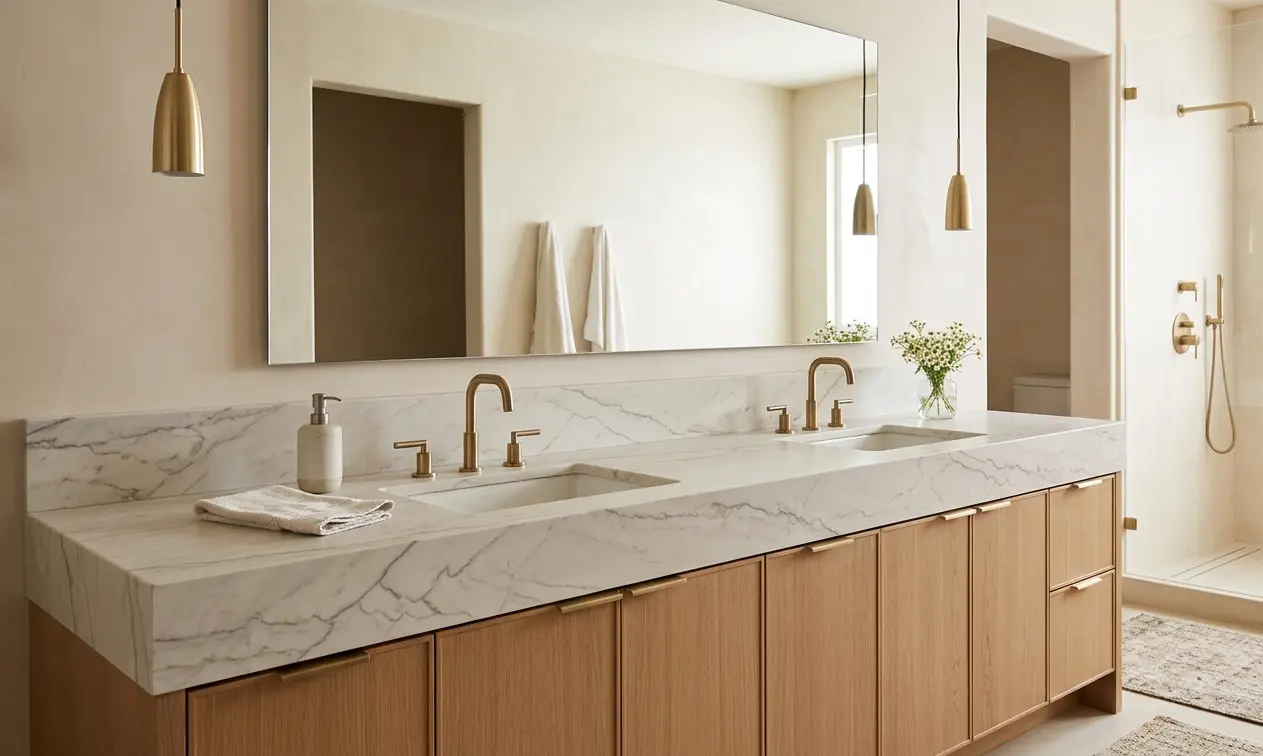
A bathroom vanity countertop is a horizontal surface
installed on top of a vanity cabinet in a bathroom, used to support a sink and
provide workspace for daily grooming routines. Natural stone slabs, including
marble, granite, quartzite, dolomite, and travertine, are commonly selected for
this application because of their visual depth and long service life when
properly maintained. The material, finish, and edge profile each contribute to
how a stone vanity surface performs and how it looks over time, with each slab
carrying natural variation in tone, veining, and movement.
Our team carries a
wide range of natural stone options to suit different design goals and
maintenance expectations. For projects where engineered stone is a better fit,
our engineered
stone countertop options are also available for review.
Natural stone options commonly used for vanity surfaces include marble, granite, quartzite, dolomite, and travertine, each with different characteristics in terms of porosity, hardness, and sensitivity to moisture and cleaning products.
A bathroom vanity countertop is a horizontal surface installed on top of a vanity cabinet, used to support a sink and provide workspace for daily grooming routines.
Why do homeowners choose natural stone for a bathroom vanity countertop?
Most natural stone used on a vanity surface benefits from sealing, though the frequency and type of sealer will vary by material, and sealing does not make the stone completely impervious to staining or etching.
How to Match a Stone to Your Vanity Application
Selecting a stone for a bathroom vanity involves balancing
aesthetics with practical considerations for the space. Marble is a popular
choice for vanity surfaces, valued for its refined appearance and range of
tonal options, but it requires consistent sealing and prompt attention to
spills since it is porous and can absorb moisture over time. Granite can
perform well in bathroom settings when properly sealed and maintained, but
sealing is still recommended, particularly where water exposure is frequent.
Quartzite can be a strong candidate for vanity use, but it is not
maintenance-free and still benefits from sealing and careful upkeep. Dolomite
is another option that can work well in bathroom settings, though it shares
some sensitivity characteristics with other porous stones and should be
maintained accordingly. Our bathroom countertop
page covers a broader overview of material options for the space, and our team
is available to help identify which stone aligns best with the specific
application. Guidance on selecting the right finish for any natural stone
surface is also available through resources like this overview on stone finishes.
Note: Some images on this page may be conceptual renderings created to illustrate design possibilities and may not depict actual installations.
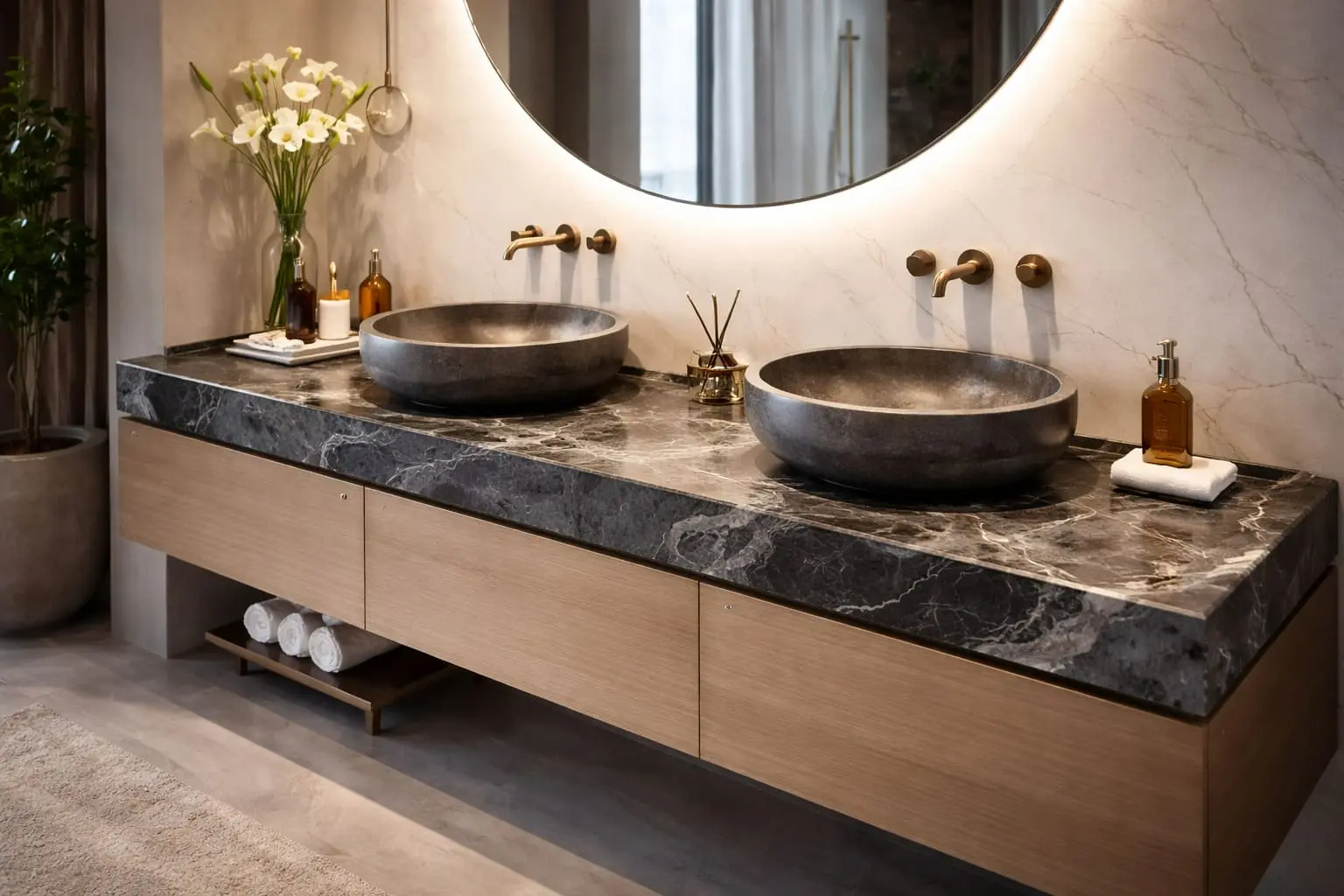
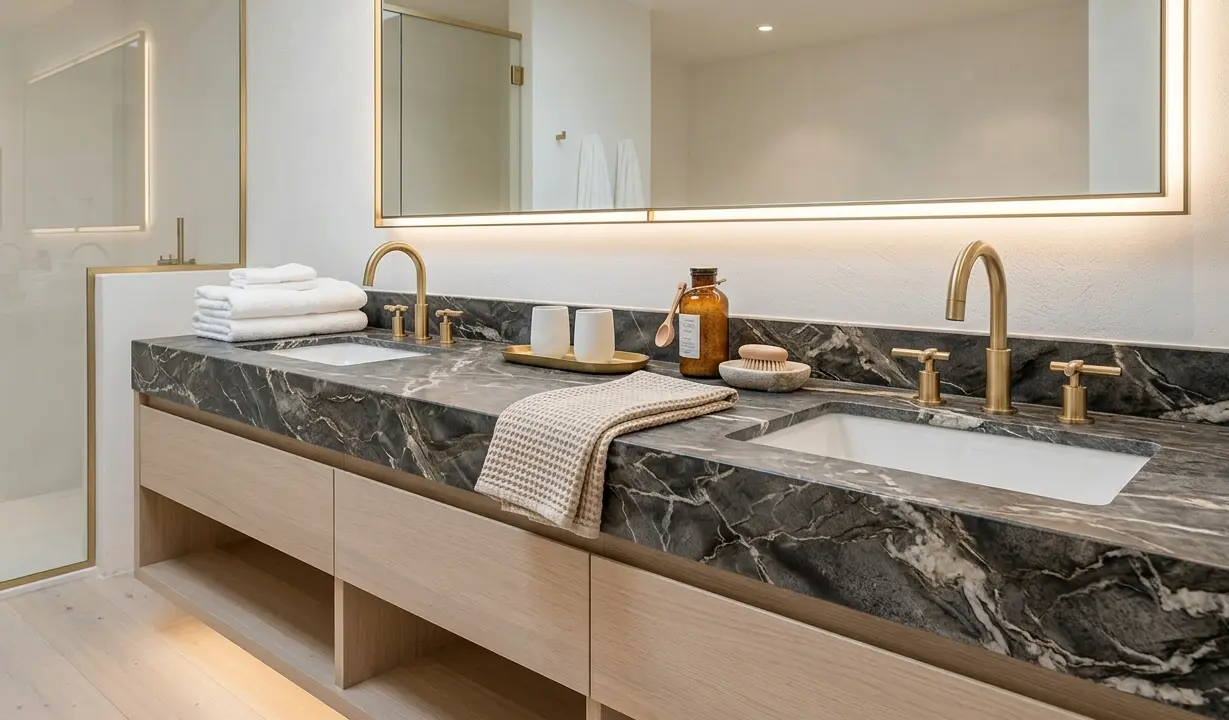
What to Expect from Natural Stone in a Bathroom Setting
A vanity surface in the bathroom sees daily contact with
water, soap, cosmetics, and grooming products, so understanding how a stone may
perform in that environment is important before committing to a material. Stone
can be a lasting surface option, but how well it holds up depends on the
specific material selected, the finish, and how consistently the surface is
sealed and maintained. Polished finishes tend to show water spots and smudging
more readily, while honed and leathered finishes can be more forgiving in
high-contact areas, though each has its own care requirements.
Stone surfaces
can handle normal daily use well, but standing water should not be left on the
surface for extended periods, particularly with more porous materials. Edges
and corners on any stone surface can be vulnerable to chipping if impacted, so
extra care in those areas is worthwhile. Our team recommends reviewing the Natural Stone Institute's care guidance for a thorough understanding of what proper
maintenance involves for different stone types.
Explore more on our blogs!
Keeping Your Stone Vanity Surface in Good Condition
Keeping a natural stone vanity surface in good condition over time comes down to consistent, gentle maintenance. The following practices apply across most natural stone materials used in vanity applications:
- Wipe up water, soap, and product spills promptly, particularly with porous stones like marble and dolomite.
- Use a pH-neutral cleaner formulated for natural stone. Abrasive cleaners and harsh chemicals can damage the finish and compromise the sealing over time.
- Reseal the surface on a schedule appropriate for the specific material. Our team can help determine a suitable sealing interval based on the stone selected.
- Avoid placing sharp objects directly on the surface. Scratching is possible depending on the material and finish, and using a tray or protective surface for grooming tools is a reasonable precaution.
- Standing water near the sink basin should be dried regularly, as prolonged moisture exposure can affect both the stone and any underlying materials.
- Avoid placing heavy concentrated loads on unsupported sections of the surface, particularly near the sink cutout.
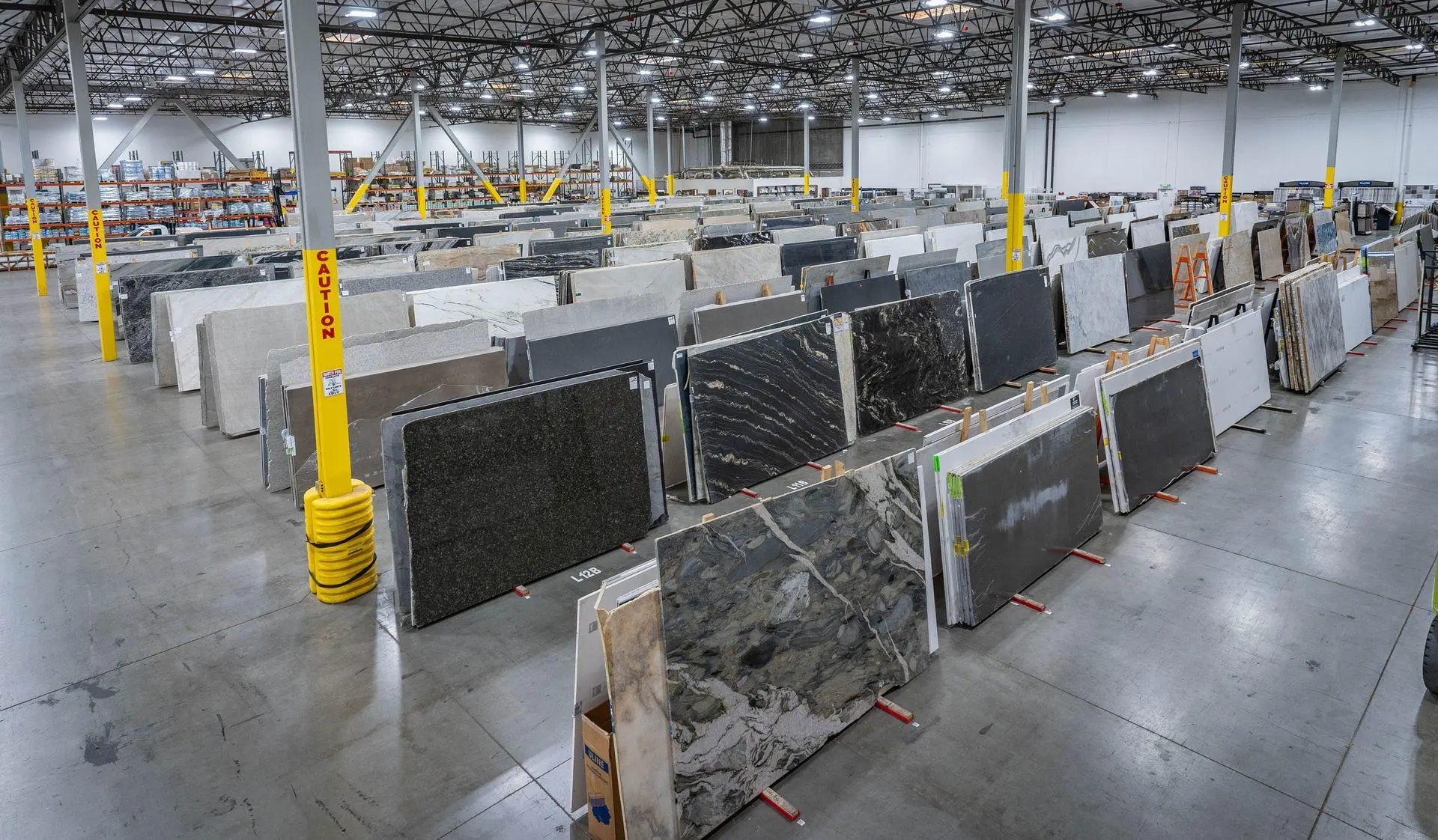
For a full look at available slab options, our slab inventory is a good starting point for exploring what is currently in stock. The Natural Stone Institute event calendar is also a useful resource for staying connected with industry education and stone care workshops.
Frequently Asked Questions
Several natural stone options can work well for bathroom vanity use, including marble, granite, quartzite, dolomite, and travertine. Each material has different characteristics in terms of porosity, hardness, and sensitivity to moisture and cleaning products. The best choice depends on the design direction, the amount of daily use the vanity will see, and how much maintenance is practical for the household. Our team can help narrow down the options based on the specific project.
Most natural stone used on a vanity surface benefits from sealing, though the frequency and type of sealer will vary by material. More porous stones like marble and dolomite generally require more attentive sealing schedules, while denser options like granite and quartzite may need resealing less often. Sealing can help reduce moisture absorption and makes the surface easier to clean, but it does not make the stone completely impervious to staining or etching, so prompt cleanup of spills remains important.
Yes, store pickup is available at all four showroom locations. A properly rated truck and A-frame are required to safely transport natural stone slabs. Our team will assist with loading at the time of pickup. Scheduling an appointment in advance is recommended to ensure the slabs are ready upon arrival.
Yes, slab delivery is available to any of the 48 contiguous U.S. states. Natural stone slabs require special handling and are securely strapped to an A-frame and loaded onto a dedicated truck for transport. Delivery is made directly to a fabricator's address, and the receiving facility must have a forklift and slab boom or clamp available for unloading. Contact the team directly for a custom freight quote based on delivery location.
Submitting a quote request is simple. Our slab quote request page allows you to share project details so our team can follow up with pricing and availability. For questions about stone selection or to learn more about how our team works with homeowners, interior designers, and contractors, visit our about us page for background on our history and approach since our founding in 2005.
Looking for immediate assistance?
We'd love to hear from you! If you have any questions, feedback, or need assistance, please feel free to reach out to us using the contact details provided. Our team is here to help and will respond as soon as possible. Thank you for getting in touch!
(Available Mon-Fri 7:30am - 4:00pm PST)
Unlike most customer service lines, ours connects you with real people.
When you call, just press 1 for online shopping support, or 2 for local shopping support!
Phone
RENO
12835 Old Virginia Rd Suite 24, Reno, NV 89521