MATERIAL OVERVIEW
What makes porcelain a practical choice for wet-area surfaces
The density of porcelain means moisture is less likely to penetrate the surface, but grout joints still need proper sealing to prevent water from getting behind the installation. Unlike some other materials, porcelain generally does not require surface sealing, though maintenance needs vary depending on the finish, grouting, and level of daily use in the space.
The color in many porcelain products runs through the body of the material rather than sitting only on the surface. This means minor wear over time tends to be less visible, though no surface is entirely immune to scratching. Our team recommends using a cutting board or protective layer when handling sharp objects near tiled areas, particularly around vanity ledges. The ANSI standards maintained by the Tile Council of North America outline performance benchmarks for wet-area installations, and porcelain tends to meet those requirements consistently. For a full breakdown of how products are tested and rated, the TCNA porcelain tile certification resource is a useful reference.
PERFORMANCE CONSIDERATION
How porcelain holds up in everyday bathroom use
Porcelain tends to handle moisture and cleaning demands well over time, but performance depends on how the material is selected, installed, and maintained. It is known for being resistant to surface staining in many cases, but heavily pigmented products or prolonged exposure to standing water can still cause discoloration, particularly in grout joints that have not been sealed. Our team always highlights the importance of sealing grout after installation in any wet environment.
The material can handle a reasonable level of heat exposure, but our team recommends placing trivets or heat pads under warm items near tiled surfaces to reduce the risk of thermal shock, particularly with larger format installations where temperature variation can be more pronounced. Porcelain is also considered reasonably resistant to fading in many settings, though UV stability can vary by product, and spaces with significant natural light may benefit from a specification confirmed for that condition. According to recent guidance on flooring innovation and surface performance, proper installation and substrate preparation are among the most significant factors in long-term results. Abrasive cleaners and harsh chemical products should be avoided, as they can wear down the finish with repeated use.
FINISH & SIZE
Choosing the right finish and format for your space
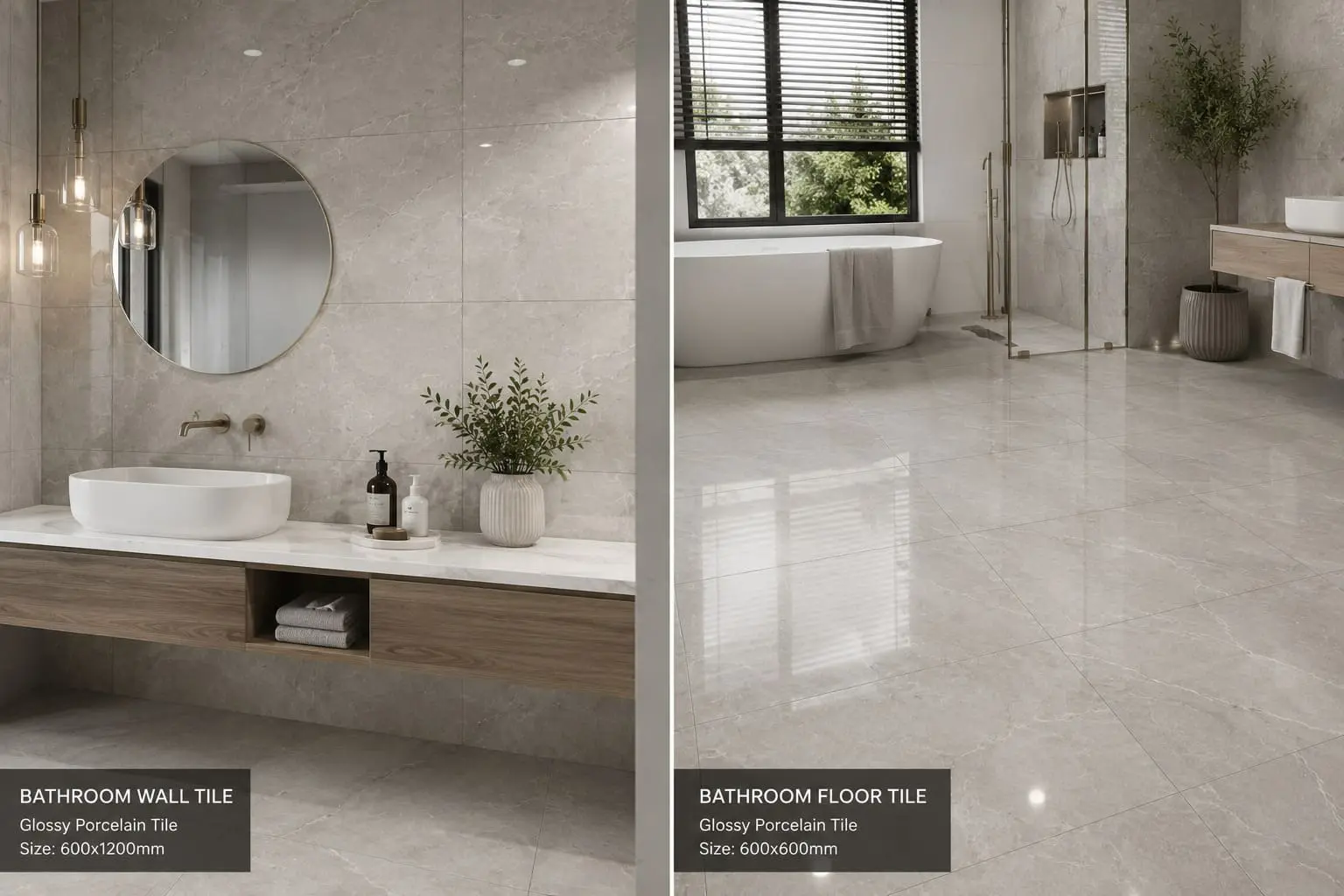
Finish selection for porcelain tiles in a bathroom is guided by the surface type and how the space will be used. Our team considers moisture exposure and foot traffic before making a recommendation. For floors, a matte or textured finish is generally the better choice because it tends to provide more grip underfoot when wet, though no finish removes the need for care on wet surfaces. For walls, a polished or satin finish can reflect light and make a smaller room feel more open, and it tends to be easier to wipe clean. Our porcelain shower tile and porcelain floor tiles for bathroom pages are a good starting point, particularly for wet wall and floor applications.
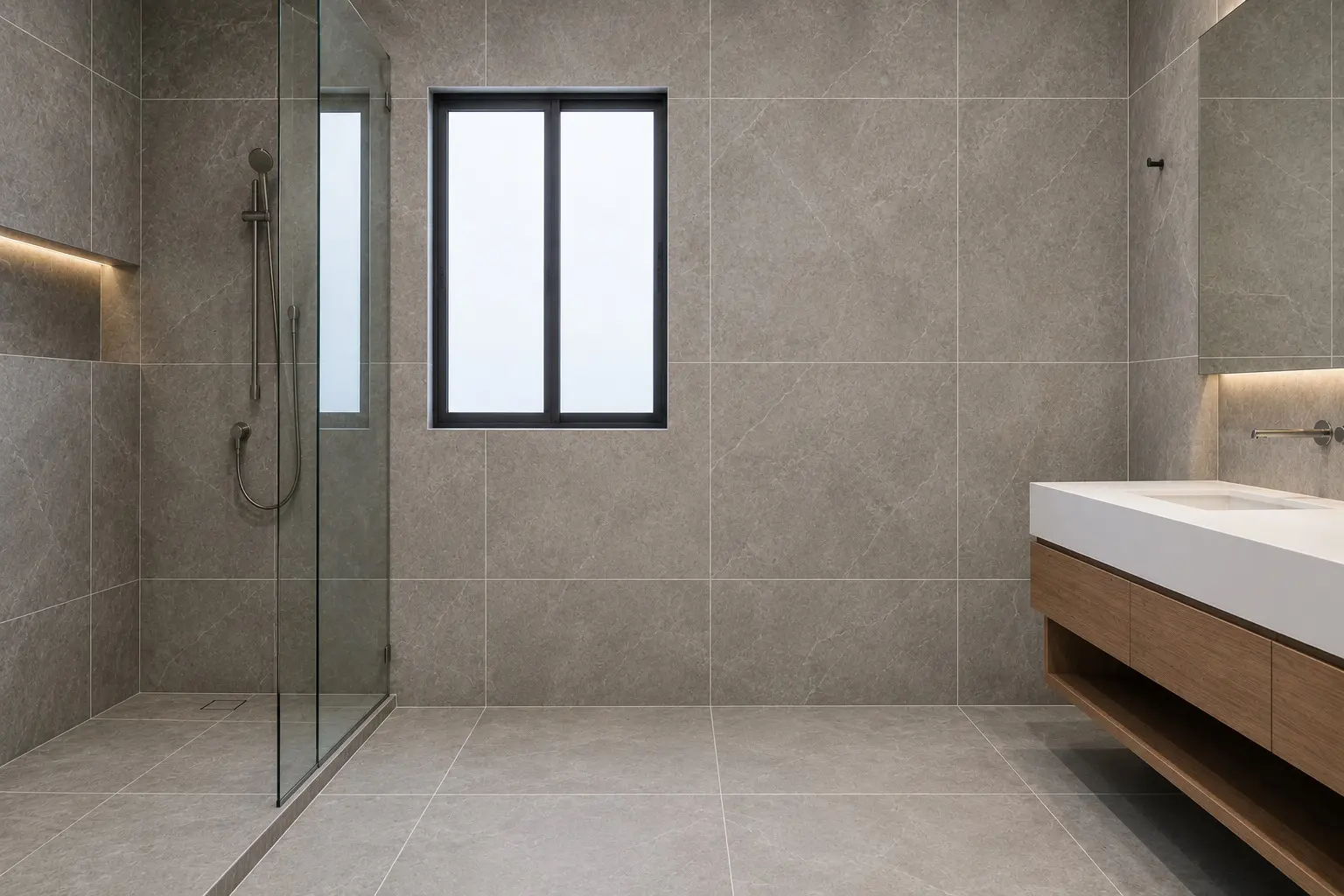
Format also shapes how a space reads visually. Smaller mosaic formats suit shower floors and curved surfaces well because they follow the drainage slope more easily. Larger formats, such as 12x24, tend to reduce visible grout lines on floors and walls, which can make a room feel less busy and easier to maintain over time. Orientation can further shift the character of a finished space without requiring a different material altogether.
Floor
Matte or textured finish
Tends to provide more grip on wet floors. Recommended for shower bases and main floor areas where foot traffic and moisture are regular factors.
Wall
Polished or satin finish
Reflects light on vertical surfaces and is generally easier to wipe clean. Well suited to shower walls, vanity surrounds, and feature walls.
CARE & MAINTENANCE
Keeping porcelain bathroom tile in good condition over time
Routine upkeep is generally manageable, but a few consistent habits make a meaningful difference to the long-term appearance of the installation.
- Seal grout joints after installation and plan to Sealing needs vary by product, use, and sealer, follow the supplier's care instructions and reseal grout as needed, particularly in heavily used spaces.
- Clean regularly with a pH-neutral product, as abrasive cleaners and harsh chemicals can wear down the finish and affect the surface appearance with repeated use.
- Wipe up standing water promptly, particularly around grout joints and edges, because prolonged exposure can affect the grout and the substrate beneath.
- Use trivets or heat pads under warm items placed near tiled surfaces to reduce the risk of thermal shock, particularly with larger format installations.
- Avoid steel wool, scouring pads, or abrasive tools. A soft cloth or non-abrasive sponge is sufficient for most cleaning tasks.
- For floors with textured or grip finishes, a grout brush can help clean surface detail without causing damage. Our team recommends checking product-specific care guidance, as needs can vary by finish and tile body type. Visit our tile and stone showroom for personalized advice.
Note: Some images on this page may be conceptual renderings created to illustrate design possibilities and may not depict actual installations.