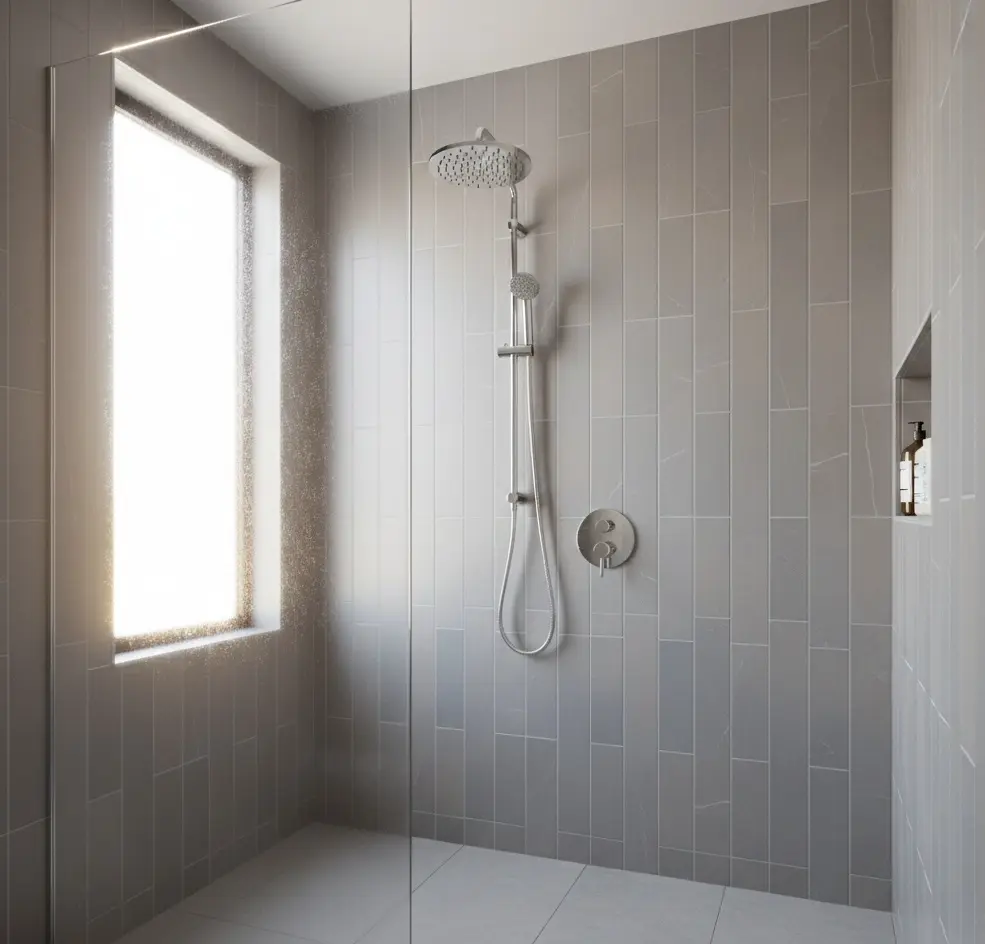
Porcelain tile is a dense, low-absorption ceramic material commonly used on shower walls and floors. It is made from refined clay fired at high temperatures, which reduces its water absorption rate and makes it resistant to moisture, staining, and general wear. These properties make it one of the most widely specified tile types for wet area applications, and you can read a full breakdown of the material in our complete guide to porcelain tile.
For shower floors, matte and textured finishes provide traction when wet. For shower walls, polished or glossy finishes are common because slip resistance is less of a concern on vertical surfaces. Porcelain tile is available in multiple formats, including small mosaic sizes suited to sloped shower floors and larger formats such as 12x24 that work well on walls and reduce visible grout lines.
This page covers finish and size selection for shower applications, grout considerations, color and pattern options, and how to order samples before committing to a full purchase.
What Makes Porcelain Suitable for Showers
Porcelain is made from refined clay fired at high temperatures, producing a tile that absorbs very little water. This low absorption rate is one of the key reasons porcelain shower tile is commonly specified for wet areas by designers and contractors. The Tile Council of North America maintains ANSI standards for tile installation that outline performance requirements for wet area applications, including showers. Unlike some other tile materials, porcelain does not require sealing on its surface, though grout joints typically do.
Porcelain tile is available in a range of finishes. Matte and textured finishes are often preferred for shower floors because they provide more grip underfoot when wet. Polished or glossy finishes tend to work better on shower walls, where slip resistance is less of a concern and the reflective surface can make a smaller shower feel more open. Because color and pattern in many porcelain tiles run through the body of the tile rather than sitting only on the surface, the appearance holds up well over years of regular use.
Sizes and Formats for Shower Applications
Porcelain tile used in a shower space comes in a wide range of sizes, which affects both the visual result and the installation process. Smaller formats such as 3x6, 4x8, and mosaic tiles are common on shower floors because they conform more easily to the slope required for drainage. Larger format tiles such as 12x24 or 24x24 are increasingly popular on shower walls and reduce the number of grout lines in the space. You can browse the full range of available formats in our online tile shop.
The format you choose affects the amount of grout in the finished installation. More grout lines mean more surface area to clean and maintain, which is worth factoring in when selecting tile size. Tile orientation also plays a role in the overall look. A standard horizontal layout reads as traditional, while a vertical stack or herringbone pattern can give the same tile a noticeably different character.
Finish, Color, and Pattern Options
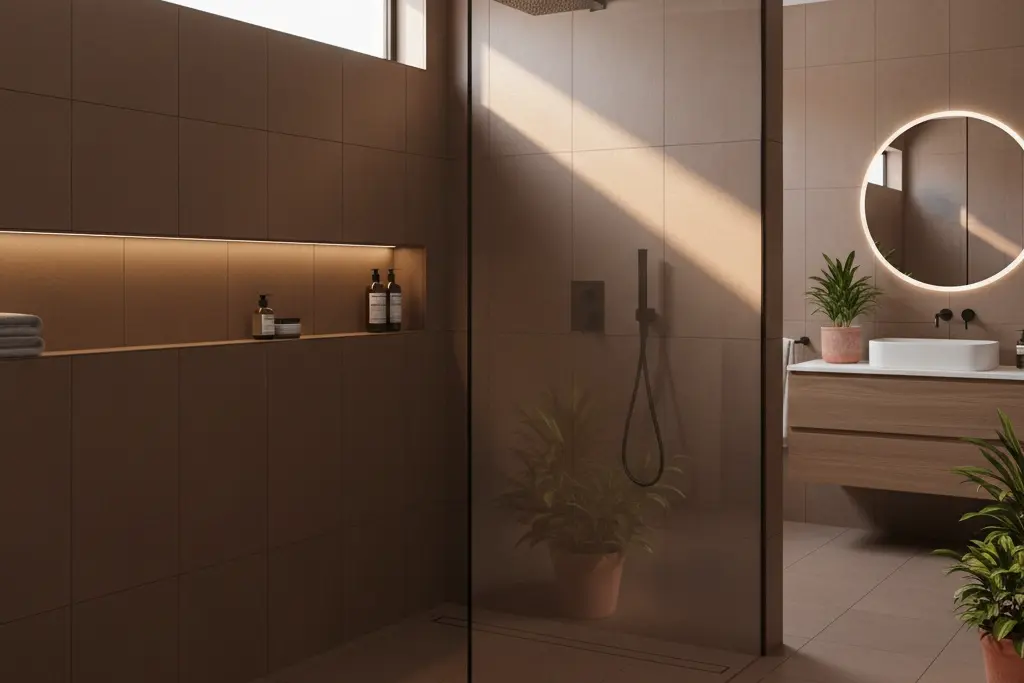
Porcelain tile is produced in a broad range of colors, patterns, and surface textures. Stone-look porcelain is a common choice for showers because it brings visual character without the maintenance requirements of natural stone. The Onyx 12x24 porcelain tile is one example, available in both matte and polished finishes and well suited to shower wall applications. For a more textured surface, the Contemporary Slate 12x24 porcelain tile comes in a grip finish that works well on shower floors where traction matters.
For smaller format applications, the Mozart 6-inch hexagon porcelain tile offers a marble look in a mosaic-friendly size that suits both shower floors and accent walls. Solid colors and concrete-look tiles are also widely used for a cleaner, more contemporary appearance. Wood-look porcelain is another option for those who want that aesthetic in a wet area without the limitations of real wood.
At our Home Design Centers in Reno, Sacramento, Minden, and Fernley, our team offers free design consultations to help you work through finish, format, and layout options for your specific project. You can also book a free design consultation online before visiting a showroom.
Grout Selection and Long-Term Maintenance
Grout plays a larger role in a shower installation than many buyers expect. The color, width, and type of grout used alongside your porcelain shower tile will affect both the appearance and the upkeep of the finished space. Narrow grout joints with a close-matched grout color tend to give a more seamless look, while contrasting grout draws attention to the tile layout.
In shower applications, grout joints should be sealed after installation to reduce moisture penetration and prevent staining. The Tile Council of North America's porcelain tile certification standards provide a useful reference for understanding how porcelain products are tested and rated for performance in demanding environments. Epoxy grout is an alternative that offers strong resistance to moisture and staining without periodic resealing, though it requires more careful installation.
Frequently Asked Questions
Porcelain tile is a widely used option for showers because of its low water absorption rate. Its dense composition makes it well suited for wet environments on both walls and floors.
Matte and textured finishes are generally preferred for shower floors because they provide more traction when wet. Polished finishes are better suited to shower walls where slip resistance is less of a concern.
Smaller tiles such as mosaics or 3x6 formats are commonly used on shower floors because they follow the slope toward the drain more easily. Larger formats such as 12x24 work well on shower walls and reduce the number of visible grout lines.
The tile surface itself does not typically require sealing. However, grout joints in a shower should be sealed to prevent moisture penetration and staining over time.
Yes. Our $1 sample program lets you try tile before committing to a full order. Samples are cut to order and all samples ship free, so you can evaluate the tile in your space before purchasing.
Note: Some images on this page may be conceptual renderings created to illustrate design possibilities and may not depict actual installations.
Fresh Insights from Our Blog
Try a Sample Before You Order
Before placing a full tile order, it helps to see how a tile looks in your actual space under your lighting conditions. Our tile and stone showrooms carry a wide selection you can view in person, and our $1 tile sample program lets you order samples to evaluate at home first. Samples are cut to order so they accurately represent the product you will receive. All samples ship free, so you can order several options and compare them side by side before making a final decision.