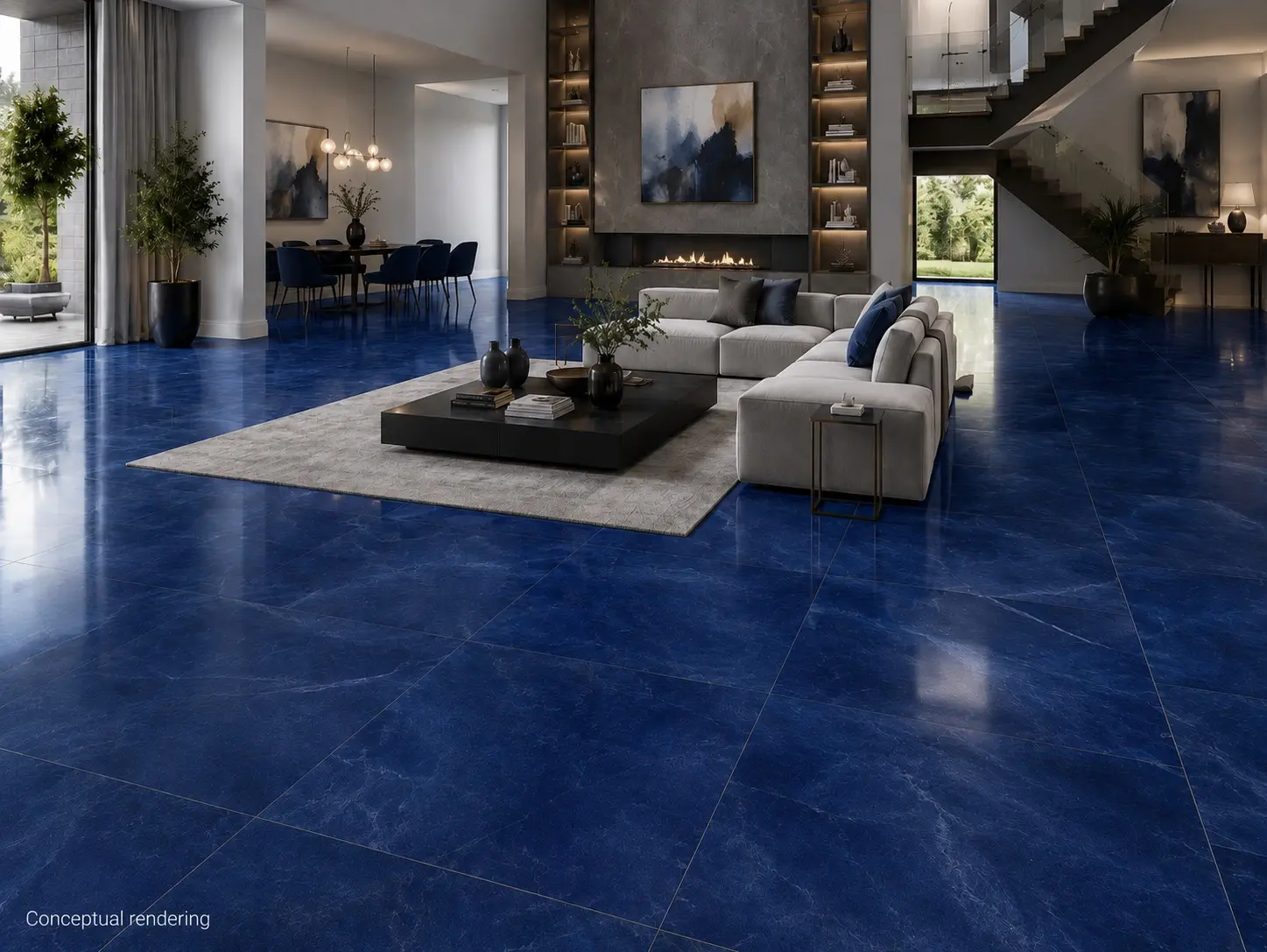
What Is Cobalt Porcelain Tile?
Cobalt porcelain tile is a hard, moisture-resistant floor and wall tile distinguished by its deep, saturated blue color, available in matte, polished, and textured finishes for bathrooms, kitchen backsplashes, accent walls, and floor installations. The color is bonded into the glaze during firing, making it resistant to fading, chipping, and shifting with regular cleaning and daily use. Because porcelain meets a water absorption rate of 0.5% or less per ANSI A137.1, it is suitable for wet areas including showers, bathroom floors, and outdoor surfaces in freeze-thaw climates.
It is available in formats ranging from small mosaic tiles to large field formats (12x24 and above), and it works across traditional, transitional, and contemporary interiors. For a broader overview of the material, the Nova Tile and Stone porcelain tile guide covers specifications, finishes, and installation considerations in full.
Where Cobalt Porcelain Tile Works Best
Cobalt porcelain tile suits a wide range of residential and light commercial settings, from high-humidity wet areas to dry accent surfaces. Its color intensity and material durability make it equally effective as a full-coverage field tile or a single statement surface in an otherwise restrained room.
Bathroom Walls and Floors
This material is a natural fit for bathroom walls, where its low water absorption and color saturation can transform a utilitarian space into a designed environment. A full cobalt wall behind a freestanding tub creates a jewel-box effect without the fragility of hand-painted tile. For bathroom floors, ANSI A137.1 requires tile intended for wet interior floors to have a dynamic coefficient of friction (DCOF) value of 0.42 or higher, measured per ANSI A326.3. Matte and textured-surface cobalt tiles generally achieve this more readily than high-gloss finishes.
Kitchen Backsplash
The kitchen backsplash is one of the most effective placements for cobalt tile in a residential interior. Because backsplash installations are vertical, load-free surfaces, the format is forgiving, which means even smaller mosaic formats or intricate geometric patterns are structurally sound. Cobalt against white or light gray cabinetry creates high-contrast color blocking; against natural wood tones, it reads more layered and grounded. A 3x6 or 4x8 subway format in cobalt delivers the classic appeal of traditional blue-and-white kitchens, while larger-format tiles in a stacked or offset pattern bring a more contemporary result.
Accent Walls and Feature Surfaces
Used as an accent, the tile does not need to cover an entire room to make an impression. A single fireplace surround, a recessed niche in a shower, or a wainscot panel in an entryway provides enough surface area for the color to register. These partial installations suit clients who want the visual weight of cobalt without committing to a fully saturated room, letting the tile stand out against surrounding materials rather than compete with them.
Floor Installations
On floors, it is appropriate for both residential and light commercial use, provided the PEI (Porcelain Enamel Institute) rating of the selected tile aligns with the traffic level. Per ASTM C1027, PEI ratings apply to glazed tiles only. PEI 3 covers most residential floor applications; PEI 4 is recommended for high-traffic residential areas such as entryways and kitchens, and for light commercial use. In either setting, cobalt on the floor anchors a room with color that reads as intentional rather than decorative, and it is particularly effective in entryways, mudrooms, and open-plan kitchen and dining areas where the floor is a primary visual surface.
Note: Some images on this page may be conceptual renderings created to illustrate design possibilities and may not depict actual installations.
Why Choose Cobalt Porcelain Tile
Low Water Absorption
Per ANSI A137.1, porcelain tile must achieve a water absorption rate of 0.5% or less, classifying it as impervious, which is the highest density rating for ceramic tile. This makes it resistant to staining, mold growth, and moisture-related damage over time, which is why it tends to hold up in environments where lower-density materials may degrade or require frequent resealing.
Design Versatility
Cobalt is not a single shade. Across different product lines, the tile spans from bright, highly saturated navy-adjacent blues to deeper tones with gray or indigo undertones. Finish options, including polished, matte, satin, and textured, extend the range of design possibilities from a single color family. A polished cobalt tile reads differently against white marble-look surfaces than a matte cobalt tile reads against warm wood-look floors, giving the same color category a broad range of design expressions. For projects that call for a softer contrast, taupe porcelain tile and blush porcelain tile are available as complementary neutral options.
Built to Last
The tile is a dense, hard-wearing surface material that holds up under the demands of both residential and light commercial use. Its low porosity means it resists cracking and moisture penetration over time, and cobalt porcelain tile typically does not require sealing, helping it maintain its appearance across high-traffic floors and splash-prone bathroom walls without the upkeep that softer or more porous materials often demand.
Colorfast Performance
The cobalt pigment in porcelain tile is bonded within the glaze during the kiln process, which means the color is stable at a structural level rather than sitting on the surface. Over years of use, cobalt porcelain in this color family tends to hold its depth and saturation more reliably than painted ceramic finishes and hand-applied decorative coatings, which are surface treatments where visible wear at grout lines, corners, and high-contact zones can appear within the first few years of installation.
Care and Maintenance
Cobalt porcelain tile is among the lower-maintenance flooring and wall surfacing materials available. Routine care generally requires pH-neutral cleaning products and regular removal of surface debris.
A damp mop or microfiber cloth is sufficient for porcelain tile surfaces. Avoid acidic cleaners such as vinegar-based solutions or grout-etching products, which can dull the layer over time and compromise grout integrity. Abrasive scrubbing pads are not recommended on polished or satin finishes, as they can introduce micro-scratches that accumulate and reduce reflectivity.
Grout lines require separate attention. Sealing the grout at installation and resealing every one to two years, depending on traffic levels and cleaning frequency, helps prevent staining and simplifies long-term maintenance. The tile body itself does not require sealing for glazed products.
Periodic inspection of the installation, particularly at movement joints, transitions, and areas subject to moisture cycling, allows early identification of any grout cracking or tile lippage before minor issues progress to larger repairs.
Frequently Asked Questions
Yes. Look for a DCOF value of 0.42 or higher per ANSI A137.1, and note that matte and textured-finish options typically meet this threshold more readily than polished surfaces.
In glazed porcelain tile, the pigment is bonded within the glaze during firing rather than applied to the surface, making it resistant to UV exposure, cleaning agents, and everyday wear. Under normal conditions, the color is unlikely to fade or shift noticeably over time.
White or light gray grout maximizes contrast and suits geometric and backsplash layouts, while a closely matched grout tone creates a more unified, monolithic surface. Charcoal or dark grout is a third option that grounds the installation without drawing attention to individual tile joints.
Yes, provided the product carries a freeze-thaw rating suitable for climates with sub-freezing winters. Confirm this rating with a Nova showroom specialist before specifying it for any exposed exterior surface.
Common options range from mosaic formats (1x1, 2x2, 2x4) and subway formats (3x6, 4x8) to larger field formats (12x24, 24x24) for floors and walls. Format availability varies by product line; a Nova showroom specialist can confirm current inventory.
Browse Our Collection
Shop Cobalt Tile at Nova Tile and Stone
Nova Tile and Stone carries a curated selection of porcelain tile, including cobalt options in a range of formats and finishes. Our showroom specialists can help you match the right product to your application, whether you are evaluating slip-resistance ratings for a bathroom floor, selecting a format for a kitchen backsplash, or planning a feature wall. Browse current porcelain tile options in our online shop.
Visit us at one of our four showroom locations: Reno, Sacramento, Minden, or Fernley. Our team is available Monday through Friday, 7:30 AM to 6:00 PM, and Saturday, 9:00 AM to 3:00 PM.