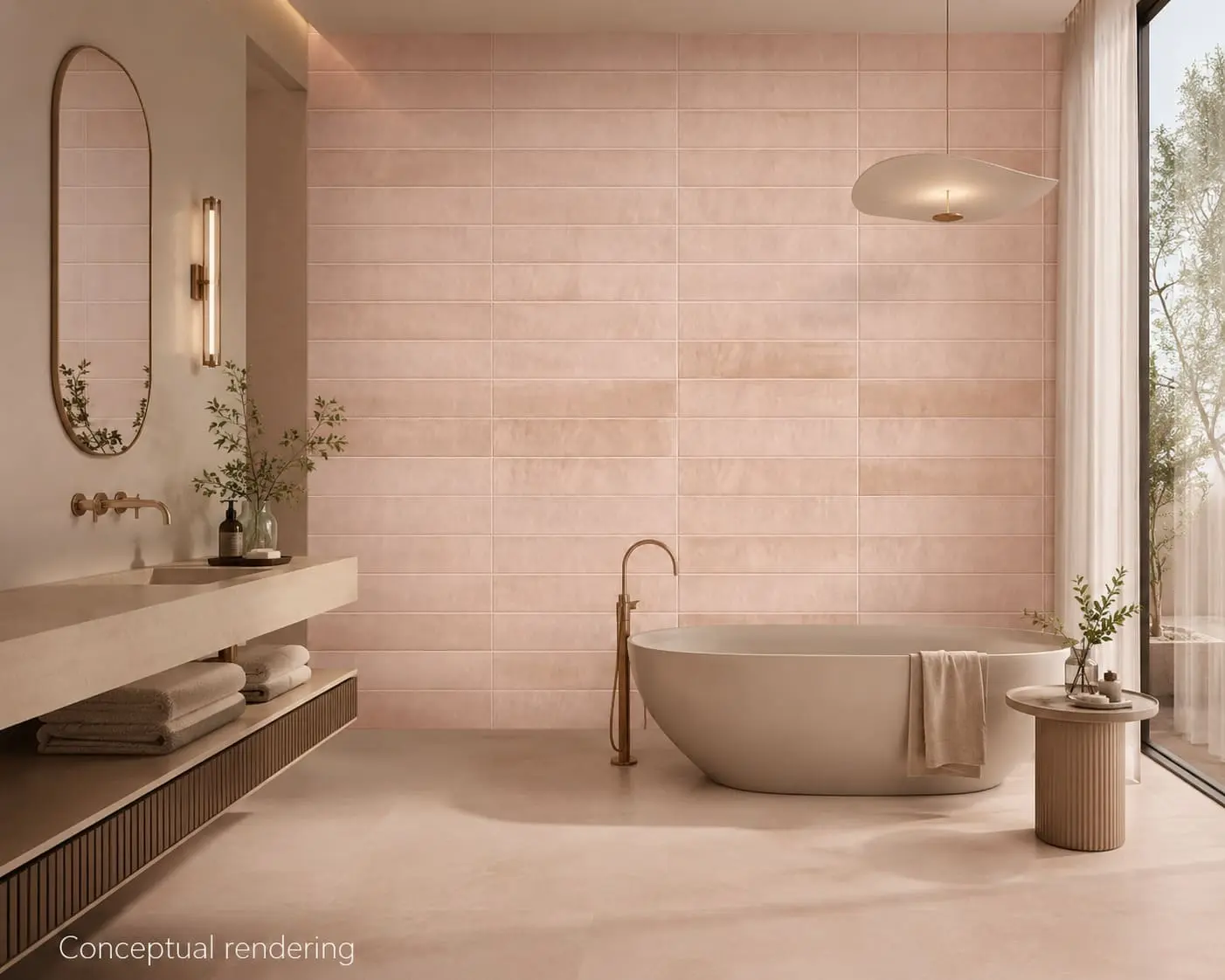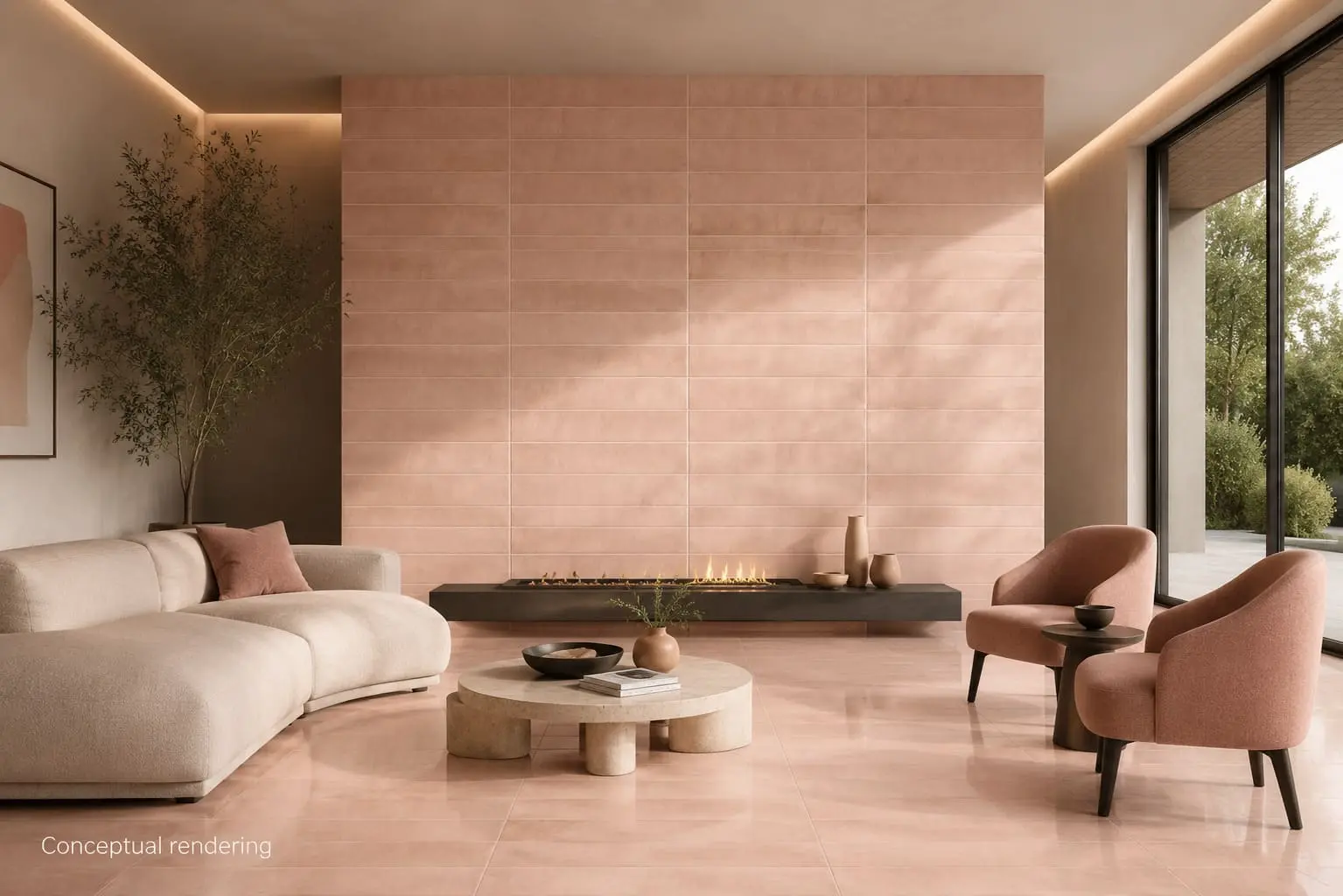
Blush porcelain tile is a glazed porcelain tile in soft pink to warm dusty mauve tones, depending on glaze formulation. The color is produced by pigments fired into the glaze at 1,200–1,400°C, making it highly resistant to fading from light exposure or routine cleaning. Like all porcelain tile meeting ANSI A137.1, it has a water absorption rate of 0.5% or less as measured by ASTM C373, and a minimum breaking strength of 250 lbf per ASTM C648. The glazed surface is impermeable, so blush porcelain tile generally does not require sealing and is well suited to wet environments without surface treatment.
Nova Tile and Stone carries blush porcelain tile, a soft pink tile suited for bathroom, kitchen, and living space applications, at showrooms in Reno, Sacramento, Minden, and Fernley.
Applications for Blush Porcelain Tile
Bathroom walls and shower surrounds.
On shower walls and behind vanities, the tone reads as a soft neutral in natural light and shifts slightly warmer under incandescent lighting. The low-absorption glaze is designed to perform in consistently wet environments without sealant, making it a practical choice for full-height shower walls and wet area cladding.
Kitchen backsplashes
A blush backsplash pairs well with both white and warm-toned cabinetry. Against white cabinets, it reads as a deliberate color accent that keeps the kitchen feeling airy. Against warm wood tones or greige cabinetry, it deepens the palette without adding visual noise. The glazed surface wipes clean easily since oils and food residue are unlikely to penetrate the tile body under normal conditions.
Accent walls and feature panels
As a wall tile, blush porcelain is well suited to full-height feature applications. A floor-to-ceiling blush wall in a bedroom creates a quiet focal point without competing with furnishings. In an entryway, a blush tile panel gives the space a considered, finished look that other wall materials rarely deliver at a comparable price point.
Floor applications
For level interior floors walked on when wet, ANSI A137.1 requires a minimum wet DCOF of 0.42, measured per ANSI A326.3. Matte porcelain tile and textured finishes are more likely to meet this threshold than polished versions, making them the more practical choice for floor installations. For shower floors and other barefoot wet areas, ANSI A326.3 classifies these as Interior Wet Plus, with a generally accepted minimum wet DCOF of 0.50. Confirm the product's declared use category before specifying for these installations.
Why Choose Blush Porcelain Tile
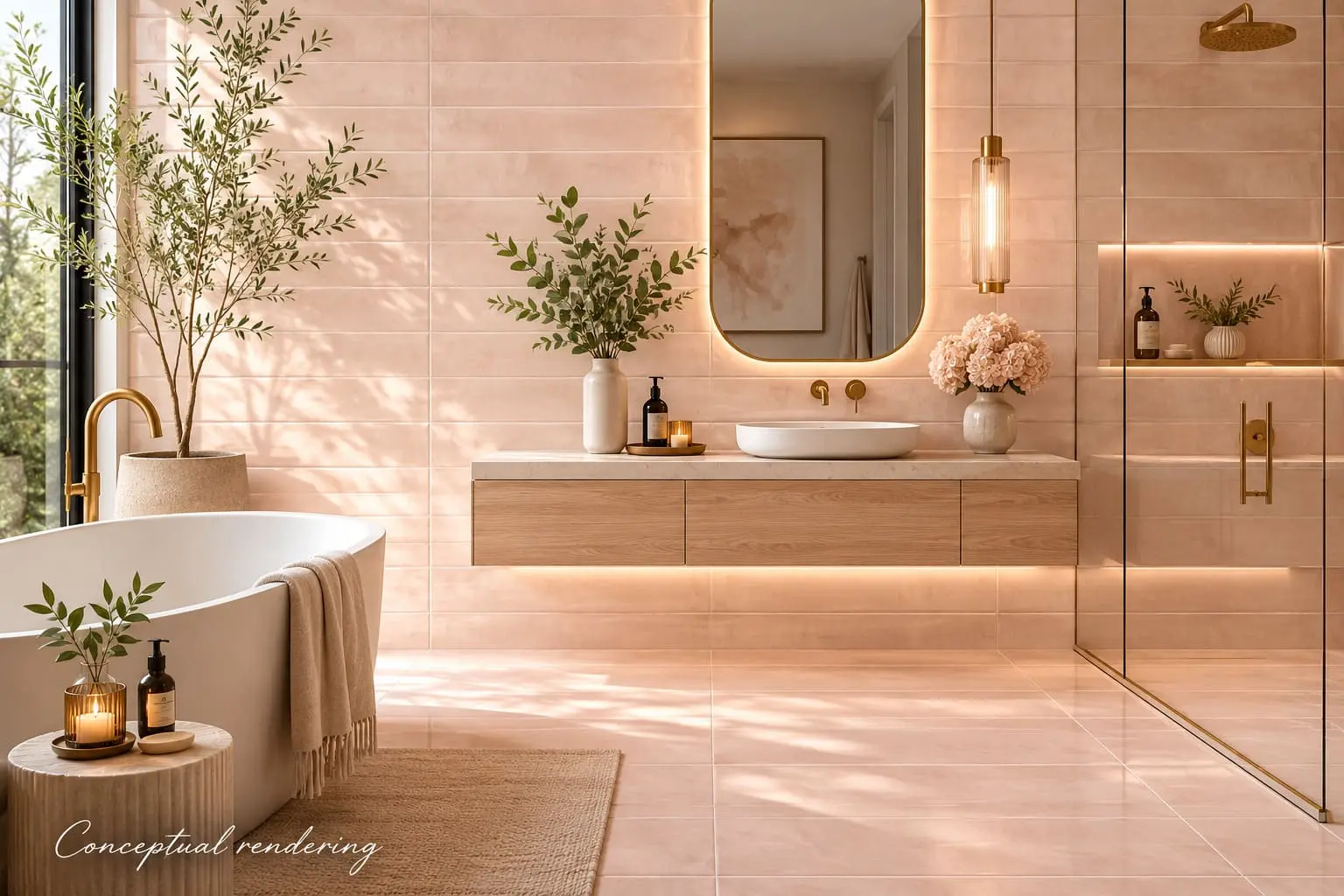
Color that reads as a neutral. Blush sits at the intersection of pink and warm beige, which means it behaves more like a neutral than a statement color in most rooms. It lightens small spaces, adds warmth to white-dominant palettes, and reads as intentional without demanding attention. This makes it more versatile than bolder tile colors while still contributing more character than a plain white or gray.
Durable construction. The dense, vitrified body produced during high-temperature firing gives blush porcelain tile strong resistance to impact and heavy foot traffic. Vitrification also makes it frost-resistant when tested per ASTM C1026, which is relevant for covered outdoor installations in climates that experience freeze-thaw cycles. Setting systems for exterior tile applications should meet the requirements outlined in the TCNA exterior installation guidelines.
Low maintenance. Unlike natural stone, glazed blush porcelain typically does not require periodic sealing. The impermeable glaze resists staining and moisture penetration, making it a lower-maintenance option than marble or unsealed travertine in comparable applications.
A well-established design direction. Blush has moved beyond trend into a sustained palette presence. Major decor brands have featured blush tones as key color choices in recent years, and tile manufacturers have expanded their collections in this color family to reflect consistent demand.
Note: Some images on this page may be conceptual renderings created to illustrate design possibilities and may not depict actual installations.
Care and Maintenance
Sweep or vacuum regularly to prevent grit from abrading the glaze over time. For mopping floors or wiping down walls, use a pH-neutral tile cleaner diluted per the manufacturer's instructions. Avoid acidic cleaners such as vinegar-based products, as the tile glaze itself is highly resistant but repeated acid exposure can degrade grout joints.
Steel wool, abrasive pads, and powdered scouring cleansers should also be avoided on the tile surface, as aggressive abrasion can dull the finish over time. For stubborn stains, a diluted hydrogen peroxide solution applied with a soft cloth is generally effective without damaging the surface. Grout joints are more porous than the tile body and are typically where discoloration first appears. Apply a penetrating grout sealer at installation and reapply as needed depending on traffic and moisture exposure, as recommended by the Tile Council of North America.
Select the Ideal Porcelain Tile for Your Home
Frequently Asked Questions
Yes, with the right product specifications. ANSI A137.1 requires a minimum wet DCOF of 0.42 for level interior floors walked on when wet, measured per ANSI A326.3. Matte and textured finishes are more likely to meet this threshold than polished versions. For shower floors, ANSI A326.3 classifies these as Interior Wet Plus, with a generally accepted minimum wet DCOF of 0.50. Confirm the product's declared use category with the Nova team before purchase.
No. The glaze layer is impermeable and resists moisture, staining, and bacterial growth without additional treatment. Grout joints, however, require a penetrating sealer applied at installation and reapplied as needed depending on traffic and moisture exposure.
Unlikely in most cases. The high-temperature firing process makes the color highly resistant to fading from light exposure or routine cleaning. In most cases, what appears as fading in older tile installations is surface buildup or grout discoloration rather than a change in the tile itself.
Warm greige and soft taupe grout keep the overall palette cohesive. Bright white grout creates a cleaner contrast that suits modern or minimal installations. For a tonal, seamless look, a blush or pale rose grout minimizes the appearance of grout lines. The right choice depends on the room's palette and the visual weight you want the installation to carry.
It can be used in covered or sheltered outdoor installations in many climates. Porcelain tile with a water absorption rate below 0.5% per ASTM C373 has very low porosity, and frost resistance can be verified through ASTM C1026 freeze-thaw cycling tests. For any outdoor installation, the setting system should follow TCNA exterior installation guidelines to support long-term adhesion and performance.
Looking for immediate assistance?
Give us a call!
775-374-6682
(Available Mon-Fri 7:30am - 4:00pm PST)
Unlike most customer service lines, ours connects you with real people.
When you call, just press 1 for online shopping support, or 2 for local shopping support!