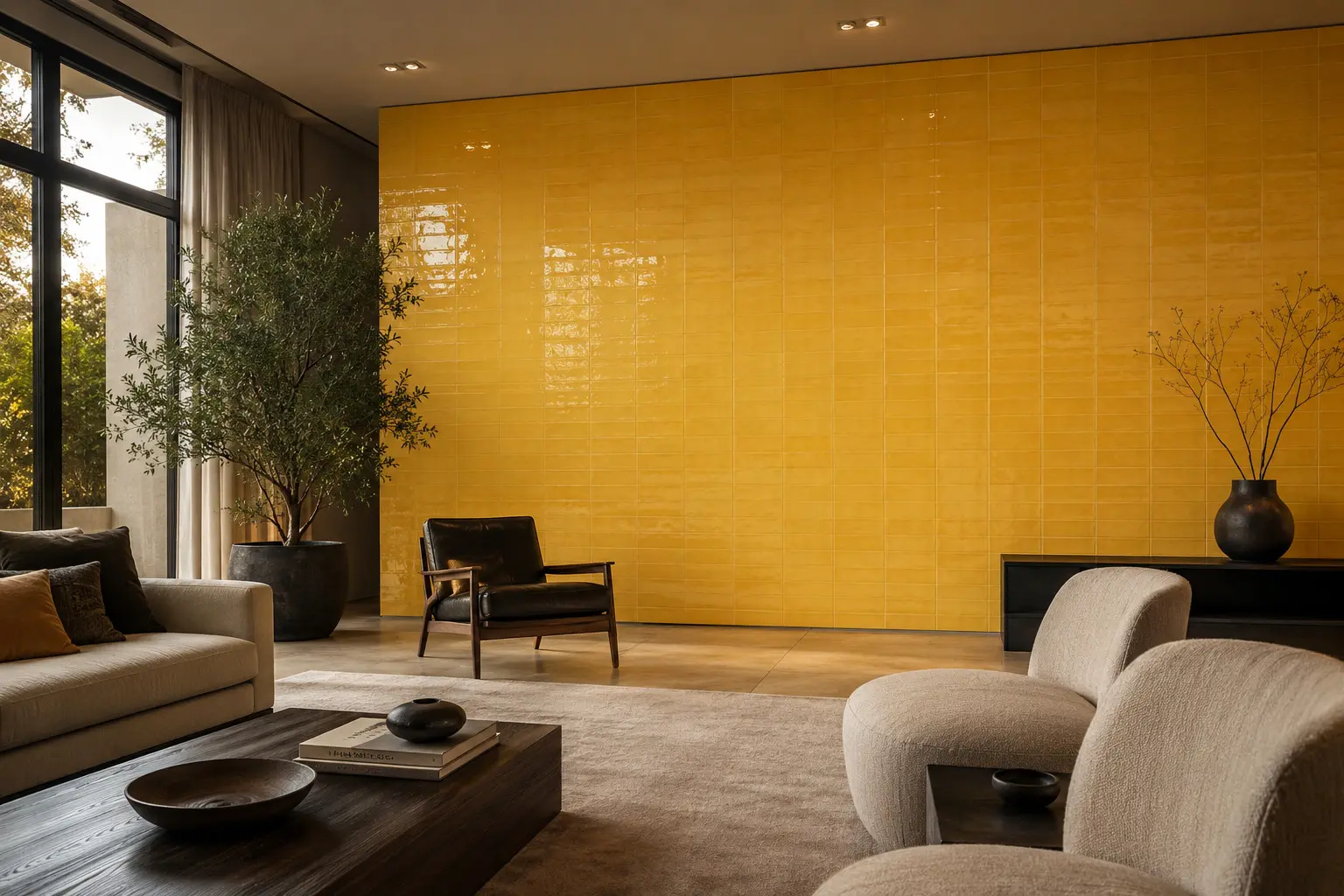
Yellow porcelain tile is an engineered tile with a warm, light-catching tone that ranges from soft butter and pale straw shades to deeper golden and mustard hues. It is suitable for indoor and outdoor use across floors, walls, and fireplace surrounds, carries UV resistance for sun-exposed settings, and is available in polished, honed, leathered, and specialty finishes. Because yellow is one of the more light-sensitive tile colors, the tone can shift noticeably depending on the light source, reading crisp and bright in daylight and taking on a richer, more golden quality under warmer evening light.
The tone you are looking for
Warm.
Bright.
Grounded.
The tile is made from refined clay fired at high
temperatures, producing a dense surface with low water absorption that holds up
well in high-use areas. Because it is an engineered material, the color is
consistent from piece to piece, which makes it easier to work with across
larger installations without noticeable variation between tiles. Our team
recommends reviewing physical samples in the actual space before finalizing a
selection, as screen representations of warm yellow tones can shift considerably
from the real tile. If you are new to the material, our complete
guide to porcelain tile covers finish types, applications, and care in full
detail.
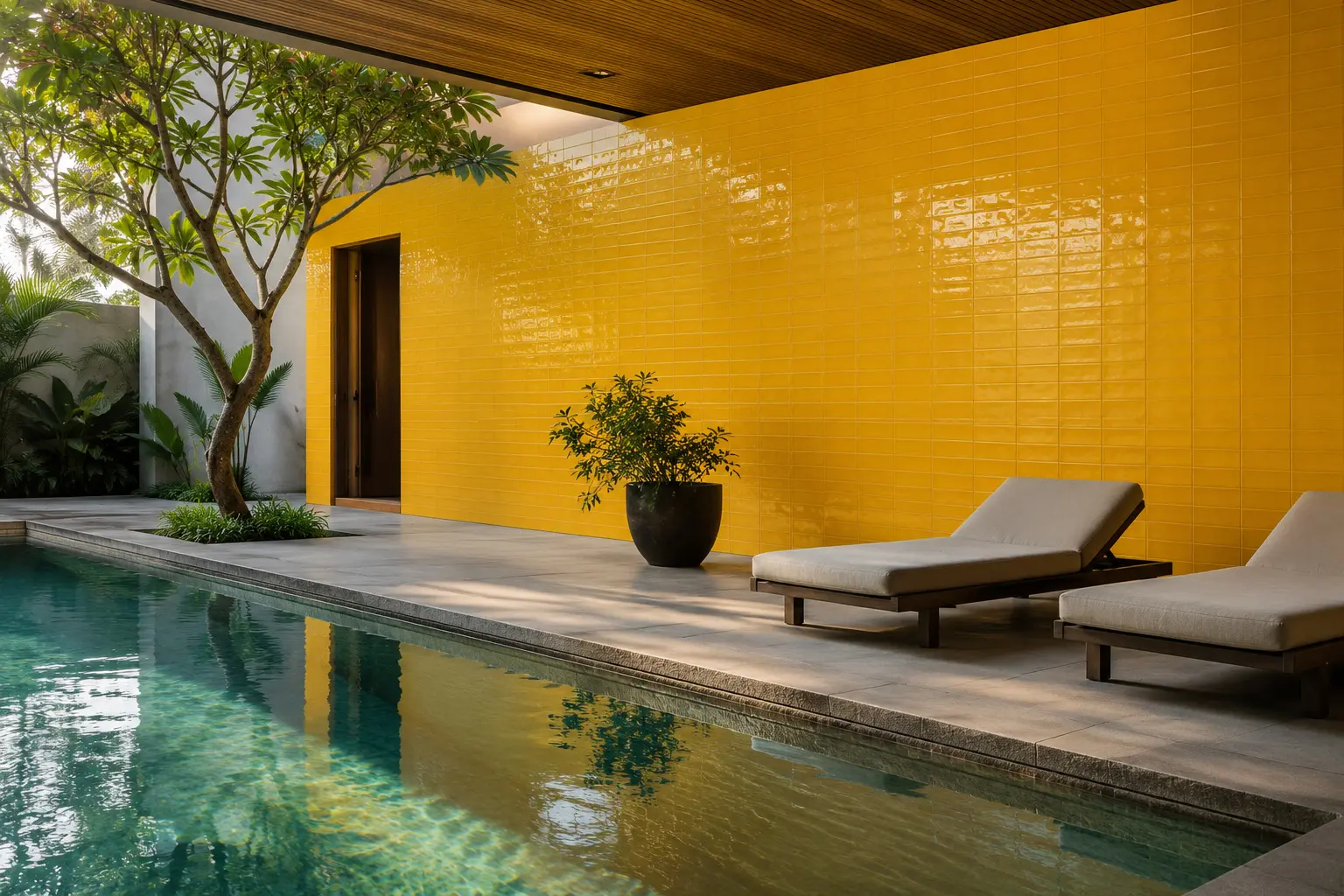
A Tone That Warms Every Room It Enters
The warm tone in this material comes from ceramic pigments integrated into the body or applied through a glaze layer during production. The result is a surface where the color holds consistently across each piece, which makes it practical for larger floor or wall installations where variation between pieces would be noticeable.
Lighter yellow and butter shades tend to make smaller rooms feel more open and airy, pairing well with white grout, warm wood tones, and soft linen or stone accents. Deeper golden and mustard shades carry more presence and work well as a feature wall, a bathroom accent, or a floor that anchors the rest of the space. Both directions pair naturally with matte black hardware, terracotta, and natural fiber textures, giving designers and homeowners a wide range of directions to work with.
The finish also shapes how the color lands in the room. A polished finish intensifies the yellow tone and gives it a reflective, almost luminous quality. Honed and leathered finishes settle the color down and add surface texture that can make the surface feel more grounded and less formal. For those considering wet area applications, our pages on porcelain tile for shower walls and porcelain tiles for bathroom cover finish and installation considerations worth reviewing before selecting.
UV Resistance
Yellow tones are among the more light-sensitive colors in the porcelain range, making UV resistance a particularly relevant factor here. The surface can hold up in outdoor or sun-exposed settings, but performance can still vary by specific color, finish, and exposure conditions. Prolonged direct sun exposure should be factored into the installation plan for any outdoor application.
Moisture Resistance
Porcelain has low water absorption, making it a practical choice for wet and humid areas. Standing water should still be cleaned up promptly, as prolonged exposure can affect grout lines and surrounding installation materials over time.
Surface Hardness
Porcelain is a dense, hard material that resists everyday surface wear well, but edges and corners can chip under impact. On a warm tone like yellow, chips or deep scratches are more visible than on neutral tiles, so proper substrate preparation and careful installation are worth prioritizing.
Slip Resistance
Slip resistance depends on the finish selected. Matte and textured finishes offer better grip underfoot, particularly in wet areas. Polished finishes may be more slippery when wet, so finish selection matters for floor and bathroom applications where moisture is present.
Heat Resistance
The surface handles normal ambient heat well, but trivets or heat pads are recommended when placing hot items directly on it, as thermal shock can still cause cracking in some cases.
Indoor & Outdoor Use
The tile is suitable for both interior and exterior applications, but the installation must match the intended use. For outdoor settings, the substrate, grouting, and drainage design all contribute to how well the tile holds up over time.
What to Expect From Yellow Porcelain Tile
For a warm, vivid color like yellow, performance factors
carry extra weight. Any surface dulling, fading, or wear tends to show more
noticeably on saturated warm tones than on neutral options, so understanding
what affects the surface over time is worth doing before installation.
Products
that meet ANSI industry standards have been evaluated for key performance characteristics
and can be a useful reference when comparing options.
Looking to get more out of your budget? Our team occasionally offers tile at reduced prices through our overstock sale. Stock changes regularly, so it is worth checking if yellow porcelain tile options are currently available.
What Dulls a Warm Tone and How to Prevent It
Porcelain is relatively low-maintenance, but preserving a warm yellow tone requires attention to the type of cleaners used. Certain products can dull or shift the surface in ways that are more noticeable on warm, saturated colors than on neutral options. Understanding the porcelain tile certification standards that apply to your specific selection can also help inform how it should be cleaned and maintained long term.
- Sweep or dry mop regularly to remove fine grit and debris. Abrasive particles underfoot are one of the most common sources of surface dulling on polished yellow tile.
- Clean with a pH-neutral cleaner and warm water. Avoid harsh chemicals, bleach-based products, and abrasive cleaners, as these can affect the finish and dull the warm tone over time.
- On glazed yellow tile, avoid oxidizing or bleach-based cleaners specifically. These can gradually strip the vibrancy from warm pigments, making the tile look faded or off-tone, particularly on polished finishes.
- Clean up spills promptly, especially anything acidic such as citrus, vinegar, or cleaning agents not intended for porcelain surfaces. While the material is generally resistant to staining, prompt cleanup remains a good practice.
- For polished finishes, hard water residue and soap film can build up and mute the warm tone over time. A soft microfiber cloth and a streak-free cleaner help keep the surface clear and the color bright.
- Avoid steel wool, scouring pads, or abrasive scrubbers. These can scratch the surface and are particularly visible on warm, light-reflective finishes.
- For outdoor installations, inspect grout joints periodically. Cracked or eroded grout allows moisture to reach the substrate, which can affect the integrity of the installation over time.
- Use trivets or heat pads when placing hot items near the surface. Direct contact with very hot objects is not recommended even on heat-resistant porcelain.
- In high-traffic entry areas, place mats or rugs to reduce abrasive material being tracked onto the tile surface.
Contractors and interior designers can apply for a trade account to access dedicated support and pricing.
Frequently Asked Questions
Yes, yellow porcelain tile is suitable for outdoor applications and carries UV resistance, which helps it hold up in sun-exposed settings. Because yellow is a light-sensitive tone, UV resistance is especially worth confirming for any outdoor installation. Performance can still vary by specific color, finish, and local exposure conditions, so our team recommends confirming that the tile and installation method are appropriate for the intended outdoor environment before moving forward.
For bathroom floors, a honed or textured matte finish is generally the more practical choice. Matte and textured surfaces offer better slip resistance when wet compared to polished finishes. A polished yellow tile can work well for bathroom walls or accent areas where moisture underfoot is not a factor. Our team can help you evaluate the right finish based on your specific bathroom layout and how the tile will be used.
Standard porcelain tile generally does not require sealing because of its low water absorption. Some specialty and textured finishes may benefit from a sealer depending on the application and the manufacturer's guidance. Grout joints are typically sealed regardless of the tile material to help prevent staining and moisture intrusion. Our team can advise on whether sealing is recommended for the specific tile and finish you select.
Yes. Our team is happy to assist with in-store pickup at any of our four showroom locations across Nevada and Northern California. We recommend scheduling an appointment in advance so our team can confirm availability, have your order ready, and walk you through the tile selections in person.
Yes, yellow porcelain tile can be shipped. Tile is a heavy and fragile material, so our team works with freight carriers experienced in handling flooring products to help ensure orders arrive in good condition. Shipping timelines, rates, and logistics can vary depending on order size and destination. We recommend contacting our team directly for a shipping quote and to confirm lead times for the specific tile you are ordering.
Read our blogs for more information!
Our team has been serving homeowners, interior designers, and contractors since 2005. Book an appointment at one of our four showroom locations. You may also find industry resources through the International Surface Event.
Follow us on social media to stay up to date on new arrivals, inspiration, and what is happening in our showrooms.