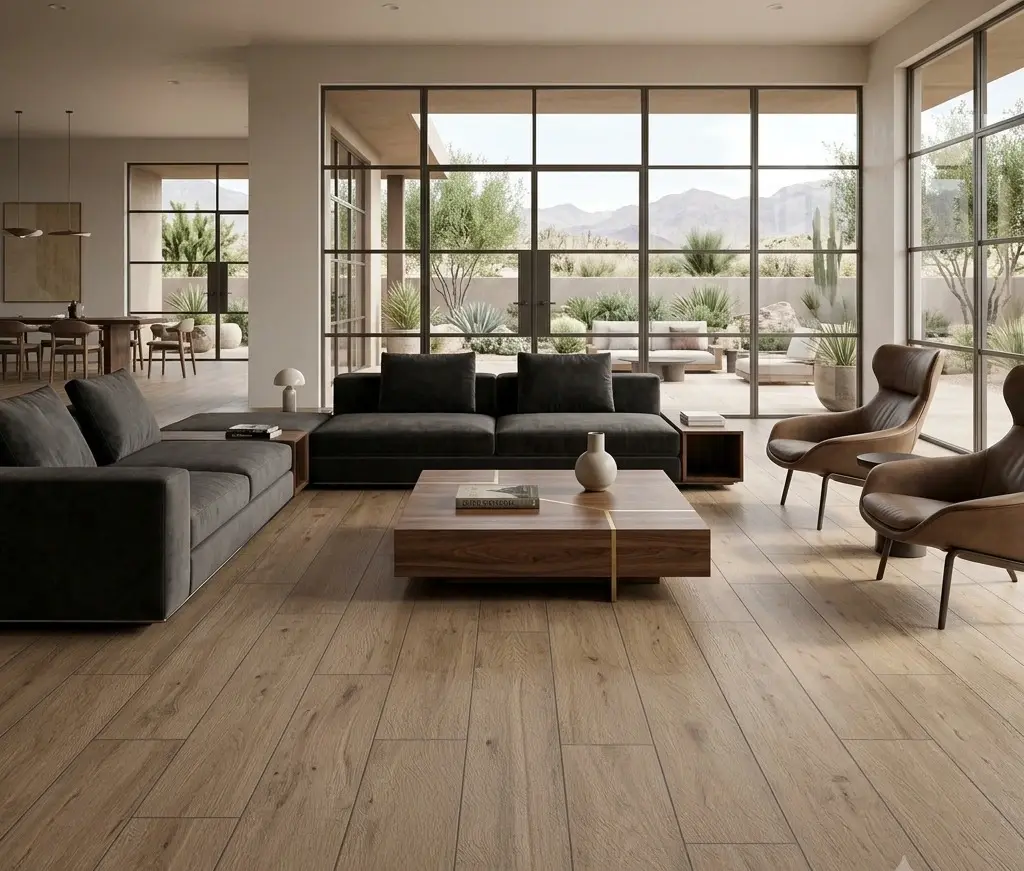
Wood look porcelain tile combines the visual character of natural hardwood with the durability and moisture resistance that porcelain provides. At Nova Tile and Stone's Home Design Centers, homeowners and designers choose it for floors and walls in kitchens, bathrooms, living rooms, and outdoor spaces where real wood would be impractical or require regular upkeep. The result is a surface that reads as warm and organic while performing like tile.
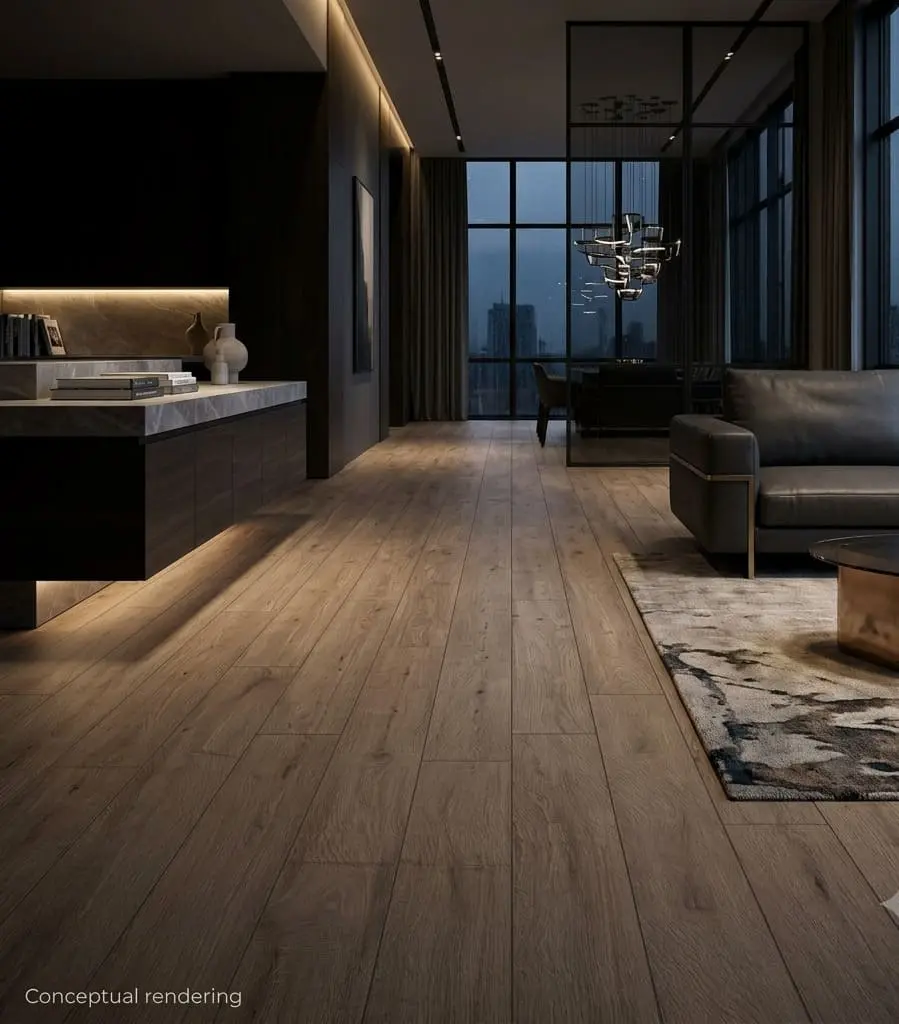 Conceptual rendering
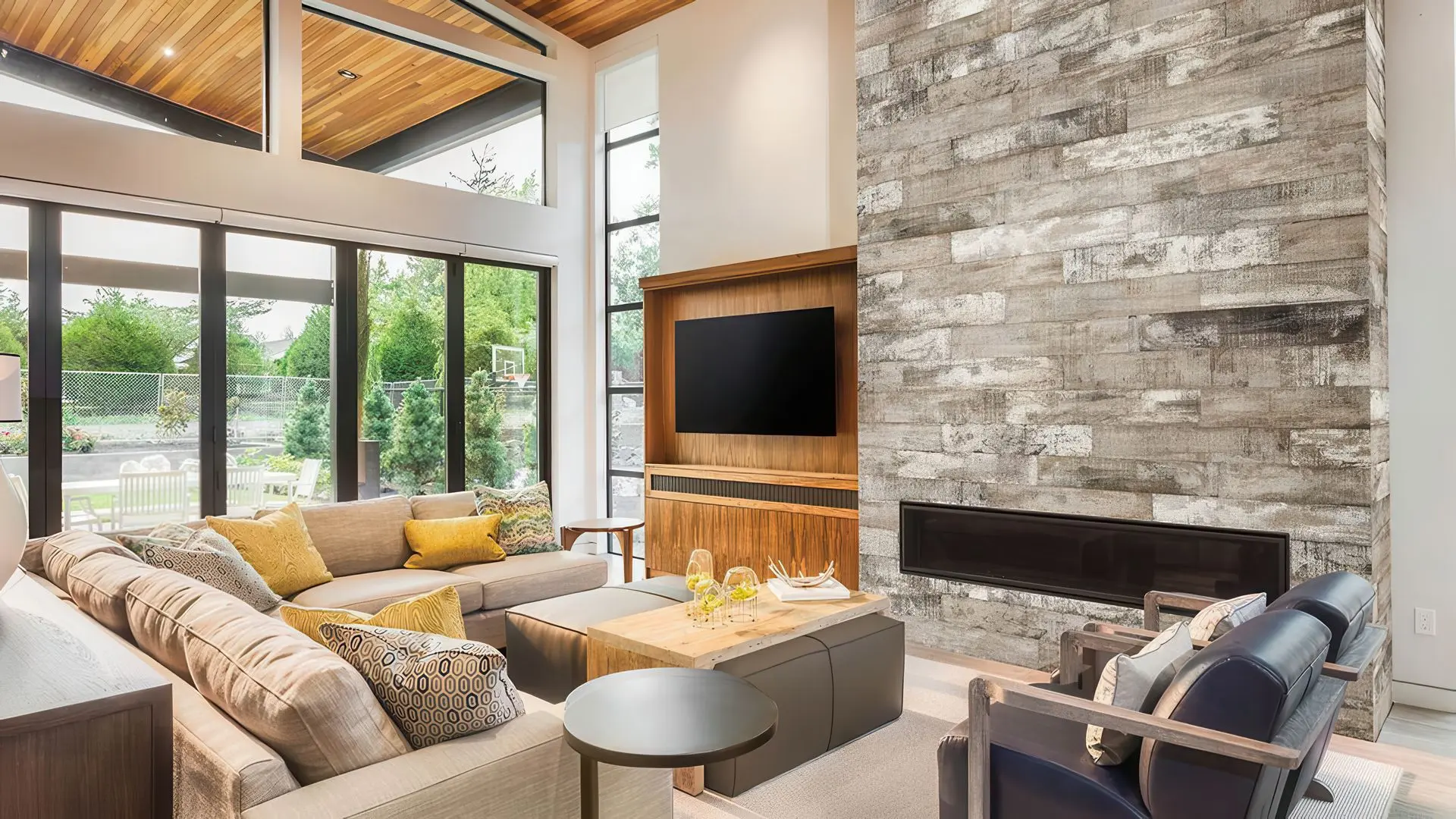 Conceptual rendering
How Wood Look Porcelain Tile Is Made
Modern inkjet printing technology transfers detailed wood grain patterns directly onto the tile surface before firing. The texture, color variation, and knot patterns seen on real planks are reproduced at a level of realism that has improved significantly over the past decade. Because the pattern is fired into a porcelain body, it does not fade, peel, or wear unevenly the way surface coatings on other materials can.
Porcelain is made from dense clay fired at high temperatures, producing a material with a water absorption rate of less than 0.5%. Products that meet this threshold qualify for porcelain tile certification through the Tile Council of North America, which tests and verifies density, water absorption, and other physical properties. That density is what makes wood look porcelain tile a suitable choice for wet areas where real hardwood cannot safely go.
Where Wood Look Porcelain Tile Works Well
The applications for this material are broad. In kitchens, plank-format tiles run continuously across the floor and into adjacent rooms for a cohesive look that is easy to mop. Our kitchen tile collection includes several wood look options sized and finished for food preparation and high-traffic areas. In bathrooms, the same tile can cover both the floor and a feature wall without concern about moisture damage. Living rooms and open-plan spaces work well with larger format planks that reduce grout lines and create the impression of a continuous wood floor.
Because porcelain tile is frost-resistant when properly specified, certain wood look products are also suitable for covered outdoor areas such as patios and entryways. Not all porcelain carries a frost-resistance rating, so confirming the product specification before installing outdoors is an important step. Installation requirements for exterior applications are covered under ANSI standards for tile installation, which define performance thresholds for slip resistance, substrate preparation, and environmental exposure.
Sizes, Finishes, and Installation Patterns
Wood look porcelain tile is produced in a range of sizes. Narrow plank formats such as 6x24 or 8x48 closely match the proportions of traditional hardwood boards. Wider formats like 12x48 work well in open floor plans where larger tiles reduce the number of grout lines visible across the surface. If you are exploring other large-format porcelain options alongside wood look, our onyx look porcelain tile in 12x24 is available in both matte and polished finishes.
Finishes range from matte to lightly textured. Matte and textured surfaces are generally preferred for floors because they reduce glare and provide better slip resistance underfoot. Polished finishes are less common in wood look tile but do appear in wall applications.
Installation patterns affect the final appearance. Running bond, or offset, is the most common choice and closely matches how real hardwood is laid. Herringbone and chevron patterns introduce more visual movement and are used in entryways and bathrooms where the floor is a focal point. For rooms where a contrasting floor texture complements the wood look, our slate look porcelain tile offers a natural or grip finish in the same 12x24 format.
Maintenance and Cleaning
Porcelain does not require sealing, conditioning, or refinishing. Routine maintenance involves sweeping or vacuuming to remove abrasive debris, followed by damp mopping with a pH-neutral cleaner. Avoid wax-based products or oil soaps, which leave residue on tile surfaces and can dull the finish over time.
Grout lines require periodic attention. Sealing grout after installation and resealing every year or two keeps the lines from absorbing stains, particularly in kitchens where spills are frequent.
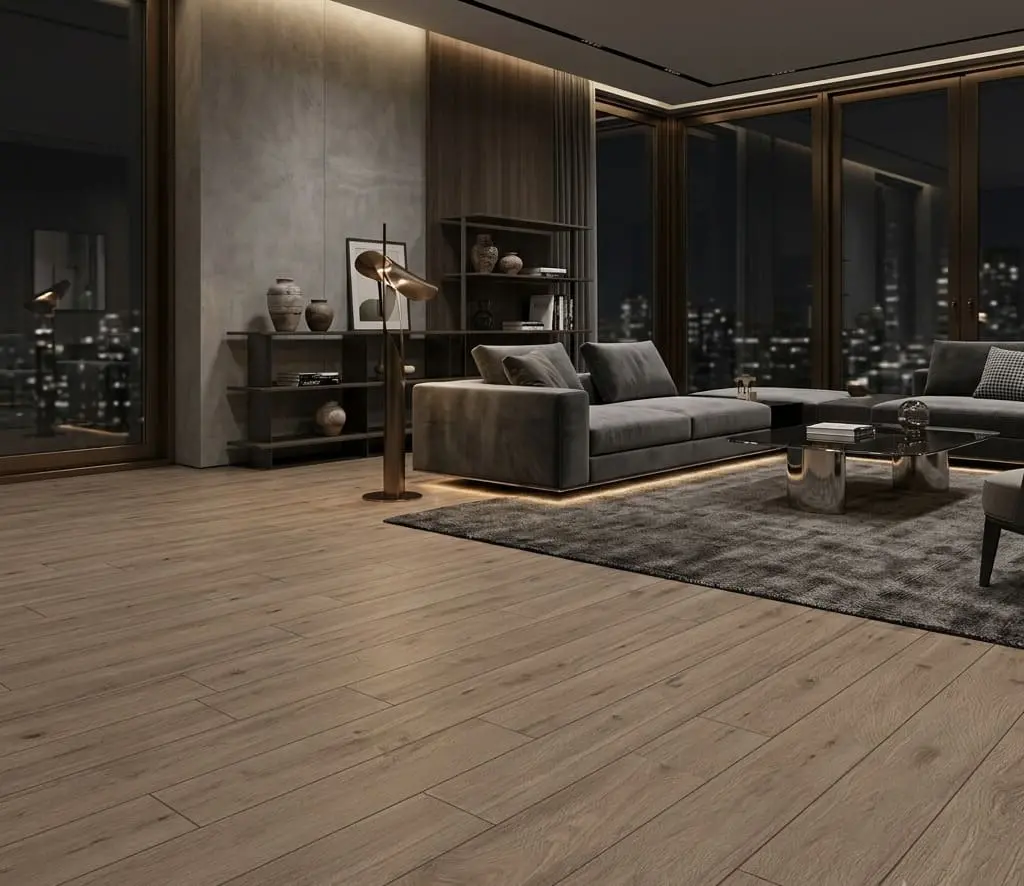 Conceptual rendering
Shop Wood Look Porcelain Tile at Nova Tile and Stone
We carry wood look porcelain tile across a range of plank sizes, tones, and finishes. Free design consultations are available at our Home Design Center showrooms in Reno, Sacramento, Minden, and Fernley, where you can view tile in full-sized displays before making a decision. For online shoppers, browse our full tile collection and order $1 samples with free shipping so you can see how a tile reads in your space before placing a full order.
Frequently Asked Questions
Wood look porcelain tile is suited for bathroom floors. Its water absorption rate of less than 0.5% means moisture from showers and wet feet does not penetrate the tile surface. Choosing a matte or textured finish provides better slip resistance in wet conditions compared to a polished surface.
Some wood look porcelain tile products carry a frost-resistance rating that makes them suitable for covered outdoor installations such as patios and entryways. Not all products in this category are rated for outdoor or freeze-thaw exposure. Always check the product specification sheet to confirm the intended use before installing outdoors.
Wood look porcelain tile does not require the sealing, sanding, or refinishing that natural hardwood needs over time. Routine care is limited to sweeping and damp mopping with a pH-neutral cleaner. Real hardwood is also susceptible to moisture damage and warping in humid environments where porcelain is not.
A narrow grout joint between 1/16 inch and 1/8 inch is typically used for wood look plank tile to maintain the appearance of continuous boards. Rectified tile, which is cut to a more precise dimension after firing, supports tighter joint widths. Your installer can confirm the appropriate joint size based on the specific product's tolerances.
Yes. We offer $1 samples with free shipping so you can evaluate how the tile looks in your space before placing a full order. Samples are cut to order so the finish and texture you receive matches the actual product.