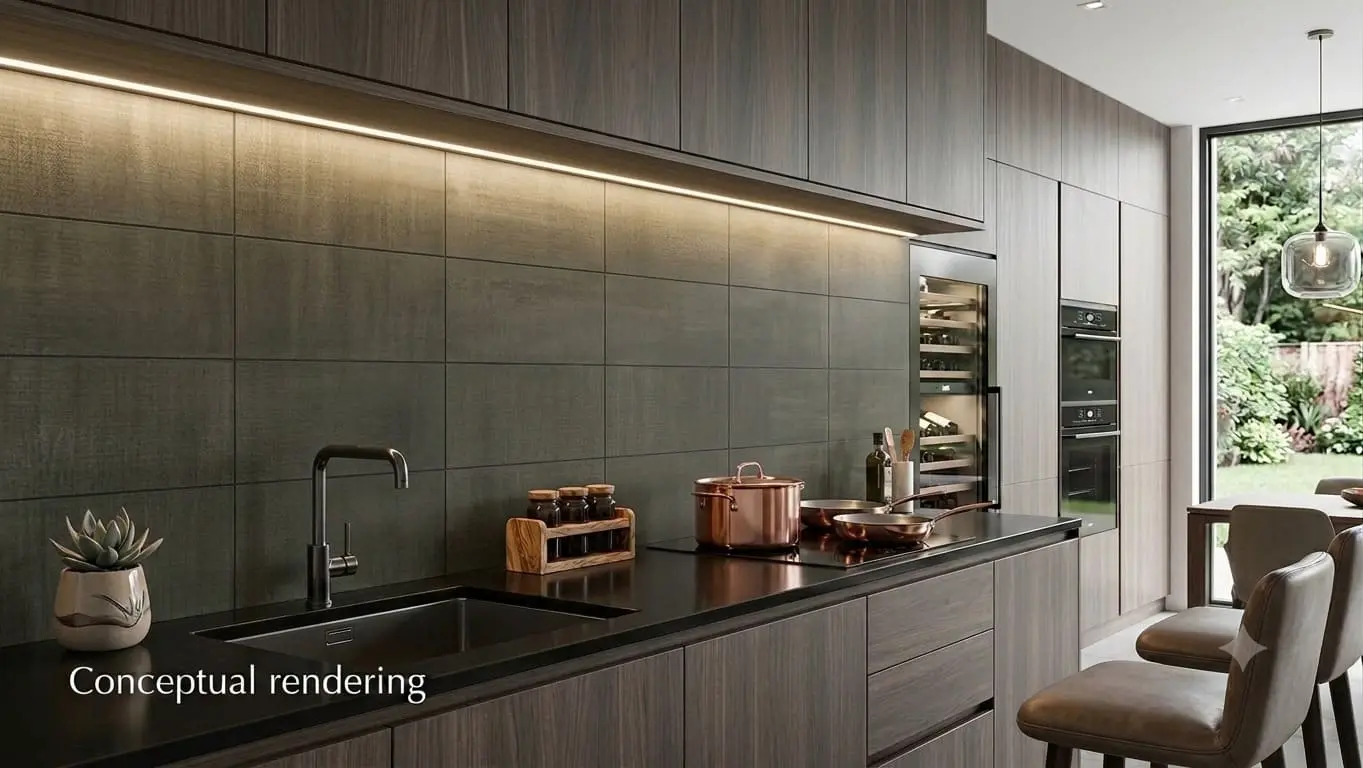
Why Porcelain Tiles Work for Kitchens
Porcelain tiles for kitchen use are a ceramic tile category defined by a water absorption rate of 0.5% or less, as specified by ANSI A137.1. Produced from a refined clay body, typically a mixture of kaolin, feldspar, and quartz, they are pressed and fired at temperatures between 1,200 and 1,250°C, producing a dense, vitrified surface that resists moisture and staining. For more on how porcelain is classified, the TCNA porcelain tile certification resource is a useful reference.
Compared to ceramic tile, which typically absorbs between 3% and 7% water, porcelain tends to perform better in kitchens where spills, steam, and condensation are common. It is commonly used on floors, walls, and backsplashes, and is available in matte, polished, and textured finishes, ranging from small mosaics to large-format panels. For homeowners planning a kitchen renovation, our complete guide to porcelain tiles covers the full range of formats and finishes.
Porcelain Tiles for Kitchen Floors, Walls, and Backsplashes
On kitchen floors, porcelain tile is known for holding up well under continuous foot traffic and everyday impact. Matte and textured finishes tend to offer better traction than polished surfaces in wet conditions, and large-format tiles can help reduce grout lines, simplifying maintenance. See our porcelain kitchen floor tiles for floor-rated options.
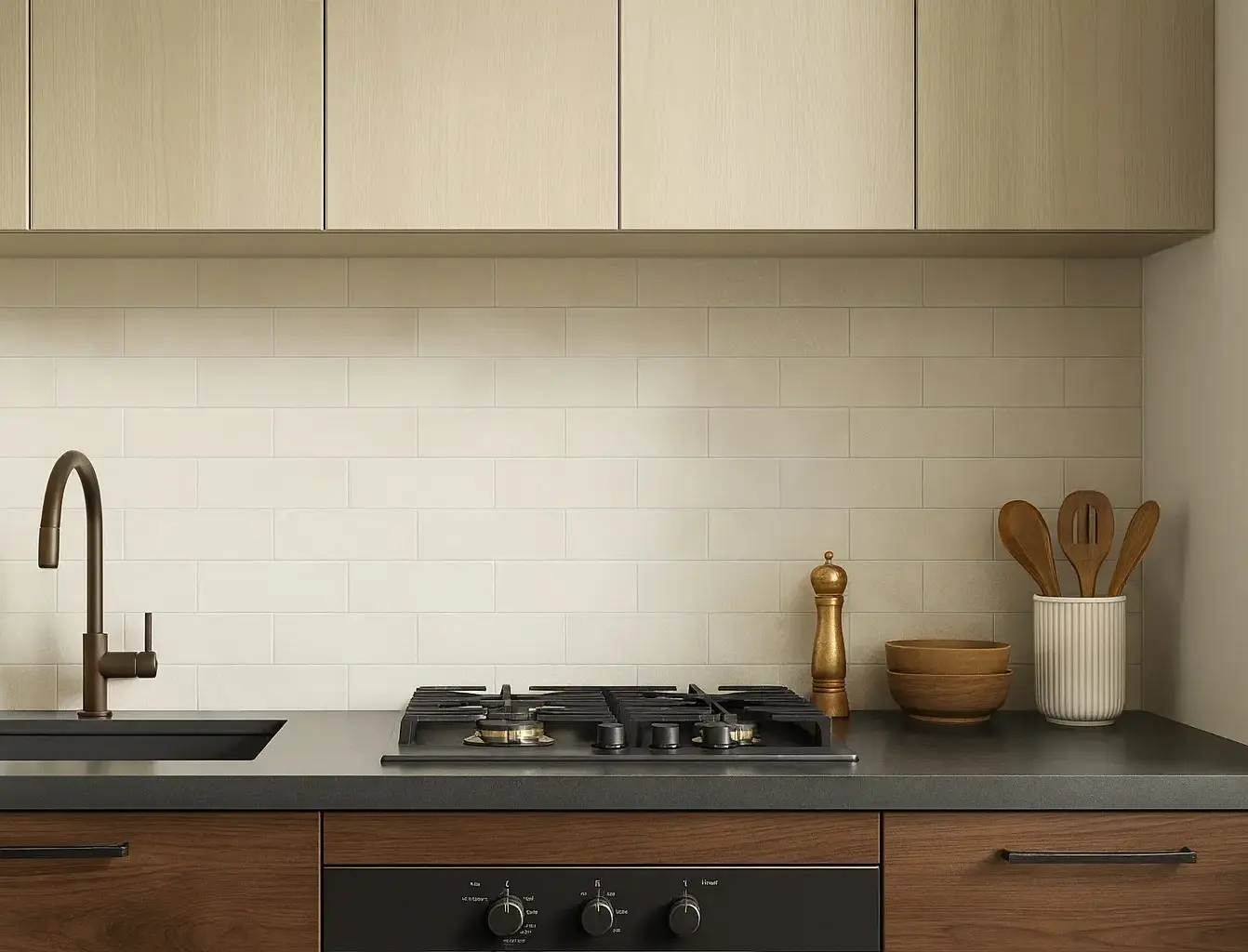
For kitchen backsplash tile, glazed porcelain is the more common choice, as its smooth, non-porous coating can help resist staining from grease, steam, and food splatter. Unglazed porcelain offers a natural matte appearance that may suit rustic or industrial kitchen designs. Subway tiles, large panels, and mosaic formats all work well in this application. Porcelain kitchen wall tiles also suit island bases and feature walls, and continuing the same tile into an adjacent dining area can help create a cohesive open-plan layout. Visit our showroom locations in Sacramento, Reno, Minden, or Fernley to see these applications in person.
What Makes Porcelain Tile a Smart Kitchen Choice
Kitchens place higher demands on surface materials than most other rooms. Porcelain tile is known for addressing those demands across four key areas.
01
Stain Resistance
The vitrified surface can help prevent cooking oils, sauces, and acidic liquids from penetrating the tile body, making spills easier to clean before they cause lasting marks.
02
Moisture Resistance
With a water absorption rate of 0.5% or less, porcelain is less likely to swell, warp, or stain from steam, condensation, or wet mopping compared to more porous tile types.
03
Durability
The dense tile body is known for resisting scratches from cookware and maintaining its surface quality under sustained use, though performance can vary by product and installation conditions.
04
Design Range
Porcelain kitchen tile is available in a wide range of finishes, sizes, and surface patterns, offering flexibility across kitchen design styles from modern to traditional.
Porcelain Kitchen Tile Care and Maintenance
Porcelain tile is generally considered low-maintenance. The tile body itself typically does not require sealing, but the cement-based grout joints are porous and can absorb grease and food residue without protection. For active kitchen floors, resealing grout annually is a commonly recommended guideline. Epoxy grout is a non-porous alternative that generally does not require periodic resealing. For routine cleaning, sweeping daily and mopping weekly with a pH-neutral cleaner is sufficient. Avoid acid-based products, including vinegar and citrus cleaners, as these can degrade grout over time. Installation and maintenance practices can reference the ANSI standards published by the TCNA.
Find the Right Porcelain Tile for Your Space
Frequently Asked Questions
Porcelain is widely considered a strong option for kitchen floor tile. Its water absorption rate of 0.5% or less means spills are less likely to penetrate the surface, and its dense body holds up well under the foot traffic and impact that kitchen floors typically face. Matte and textured finishes tend to offer better traction in wet conditions than polished surfaces.
Tile size is best chosen in proportion to the room's dimensions and the intended look. Large-format tiles, such as 24x24 inches or bigger, can help reduce grout lines for a cleaner appearance. Smaller formats, including 12x12, subway, and mosaic tiles, tend to suit backsplash walls and more compact kitchens. As a general principle, the tile should be proportionate to the room to avoid a layout dominated by cut pieces at the edges.
The porcelain tile body itself typically does not require sealing, as its vitrified surface resists moisture and staining. The cement-based grout joints, however, are porous and can absorb grease and cooking residue without protection. For active kitchen floors, resealing grout annually is a commonly recommended guideline. Epoxy grout is a non-porous alternative that generally does not require periodic resealing.
Glazed porcelain is the more common kitchen backsplash choice, as its smooth, non-porous coating can help resist staining and is generally easy to clean. Unglazed porcelain also works and tends to suit rustic or industrial kitchen styles. Subway tiles, large panels, and mosaic formats are all practical options.
Ceramic tile has a water absorption rate typically between 3% and 7%, while porcelain absorbs 0.5% or less. That difference tends to be most significant on the floor, where porcelain's lower absorption and greater hardness can make it more resistant to spills, moisture, and daily impact. Ceramic is often considered a practical choice for kitchen walls and backsplashes where conditions are less demanding.
Curious about something else?
Curated Trends & Perspectives
Explore Porcelain Tiles at Nova Tile and Stone
Visit a Nova Tile and Stone showroom in Sacramento, Reno, Minden, or Fernley to explore our porcelain tile range in person. Our team can help you find the right format, finish, and style for your kitchen renovation, whether you are tiling a floor, a backsplash, or the whole kitchen.