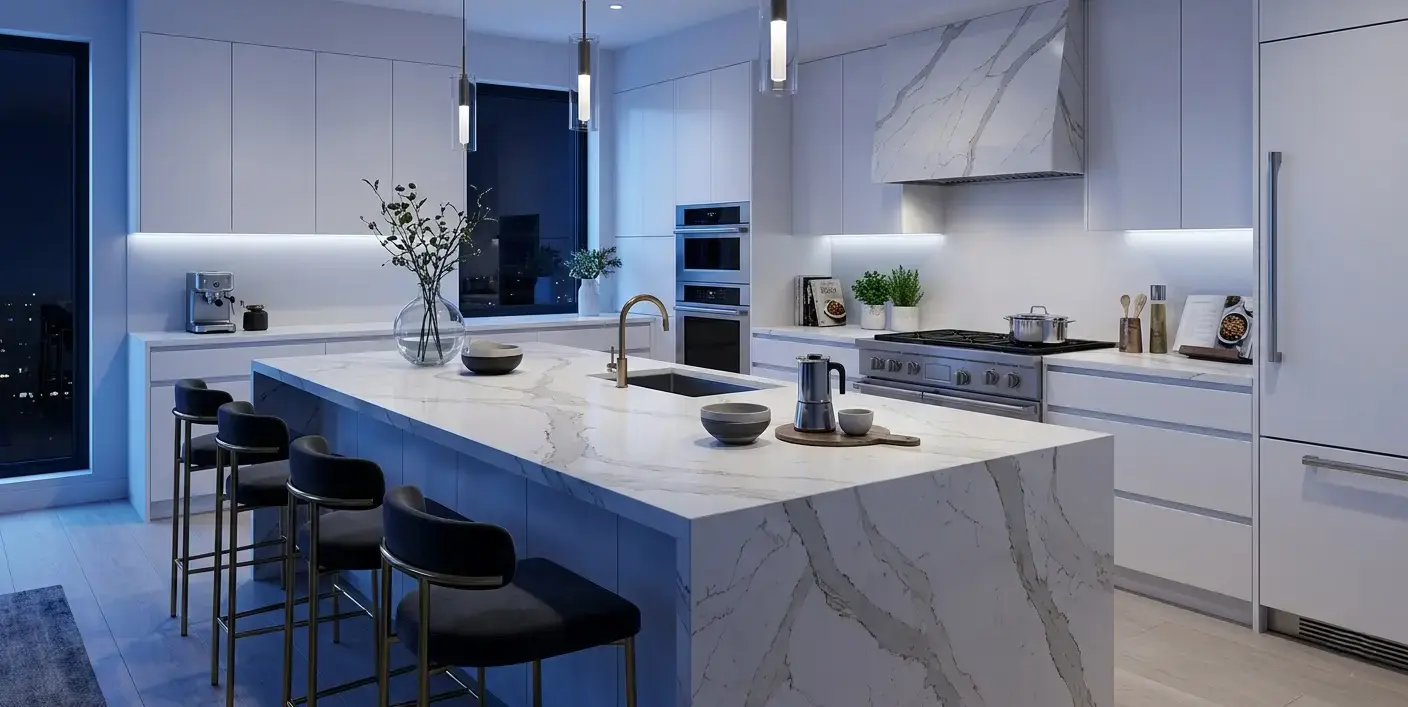
A white marble slab used as a kitchen island brings classic stone surfaces into the heart of the home. Available in polished, honed, leathered and specialty finishes, white marble features bold gold and gray veining across a luminous white field, a pattern characteristic of premium Calacatta and Statuario varieties. Suitable for kitchens, bathrooms, and living room accent walls, these natural stone slabs transform an island into a striking focal point while delivering functional workspace with proper care and sealing.
Calacatta and Statuario: White Marble Slab Characteristics Worth Knowing
Calacatta marble originates primarily from the Apuan Alps quarries in Carrara, Italy, the same mountain range that has supplied sculptors and architects with premium stone for centuries. Statuario, quarried from adjacent zones in the same region, presents a brighter white ground with similarly dramatic veining. Both varieties represent the most commercially recognized white marble varieties for high-end kitchen island designs.
Property |
Specification
|
Material | Natural Marble (Calacatta / Statuario) |
Mohs Hardness | 3–4 |
Standard Thickness | 3/4 in (2 cm) / 1-1/4 in (3 cm) |
Water Absorption (ASTM C97) | 0.20%–0.40% |
Finish Available | Polished, Honed, Leathered, Specialty |
Standard Slab Size | 55 in × 110 in (approx.) |
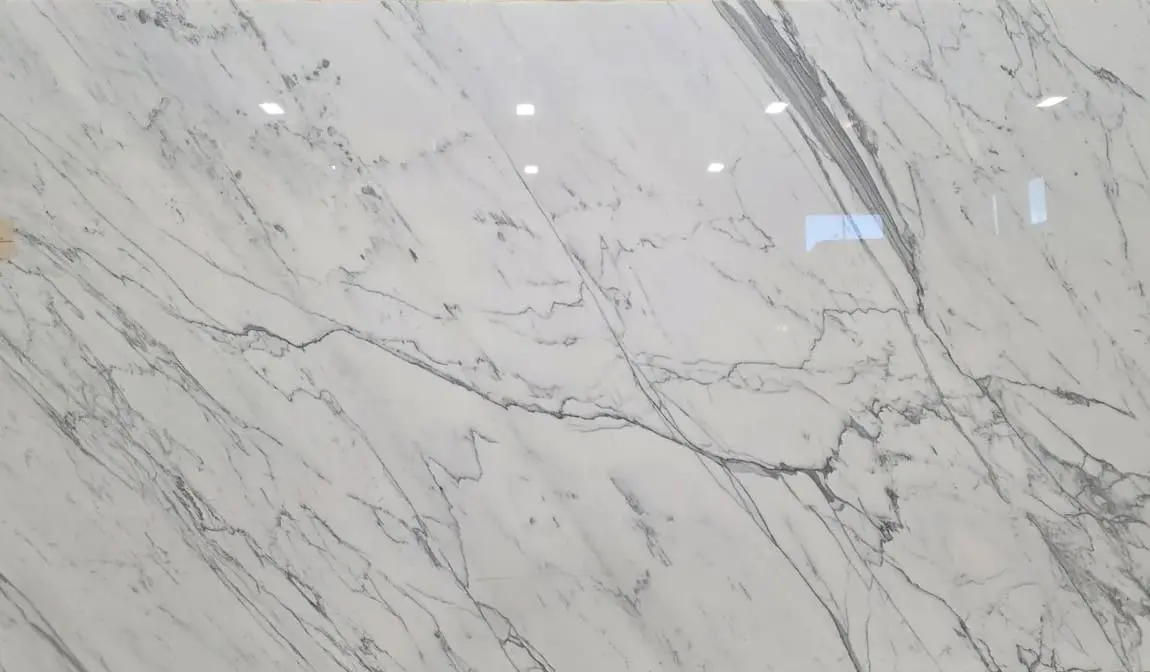
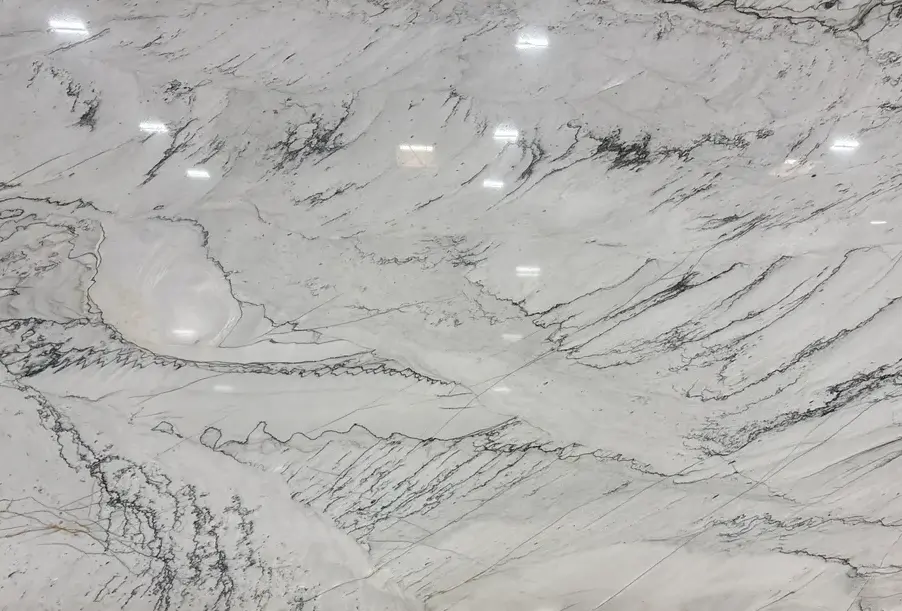
The polished finish is the most requested option for white marble kitchen island applications. It amplifies the depth of veining and reflects ambient light evenly, making smaller kitchens feel more open. Browse Nova Tile and Stone's live slab inventory to compare current Calacatta and Statuario selections in person or online.
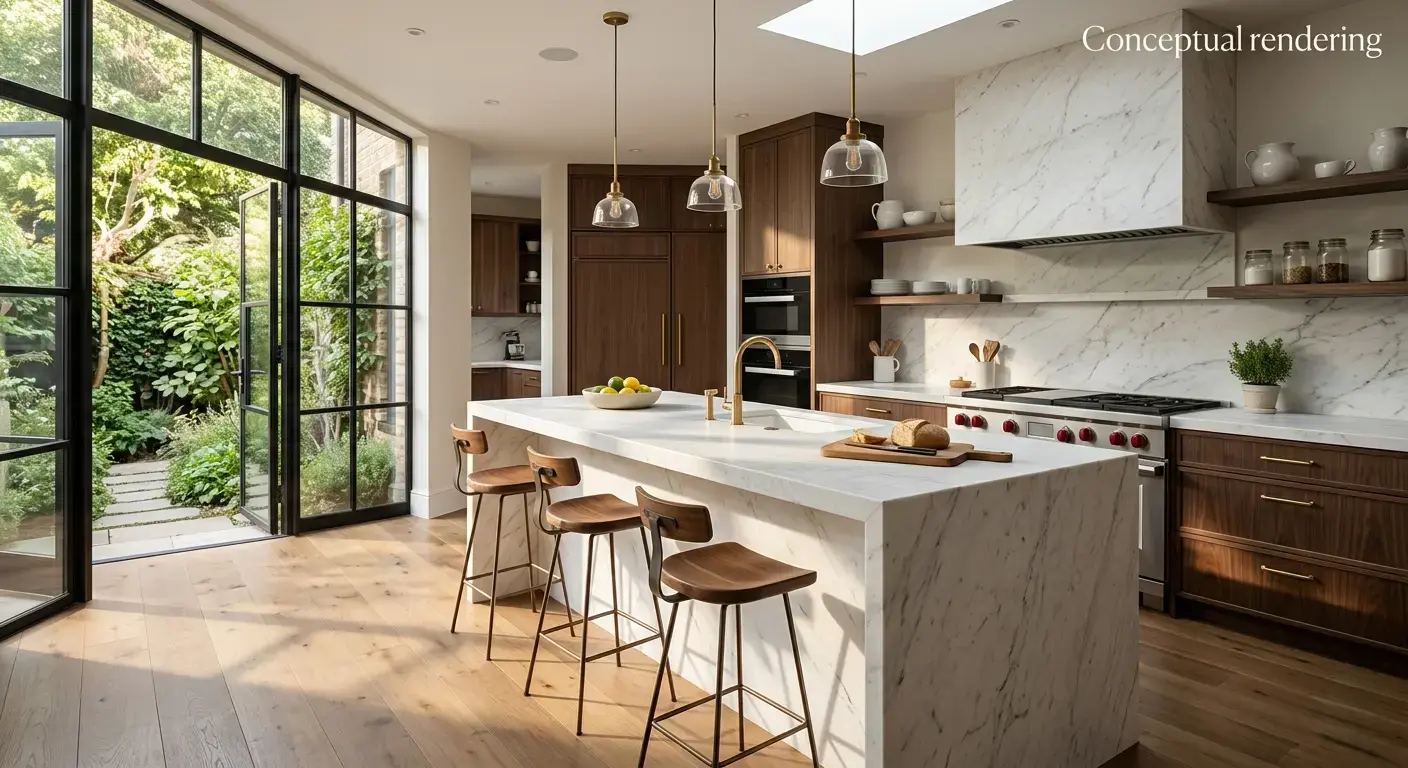 Conceptual rendering
Kitchen Island Designs That Work With White Marble Stone Surfaces
White marble's neutral base and bold veining integrate naturally across a range of kitchen island designs. The polished surface pairs well with both warm-toned cabinetry (natural oak, walnut) and cool palettes (white shaker, charcoal gray). Veining that runs edge-to-edge across a waterfall island creates a continuous visual line that designers often specify for open-concept layouts.
Bookmatched slabs, where two sequential slabs are mirrored along a shared axis, produce a symmetrical pattern ideal for oversized islands or double-sided kitchen layouts. A single full slab works equally well for a standard white marble kitchen island without bookmatching. For bathroom vanity applications, the same white marble slab translates directly, as covered in Nova Tile and Stone's vanity countertop guide.
Wall cladding applications benefit from vertical slab orientation, which draws the eye upward and creates a continuous stone surface from countertop to backsplash without grout interruption.
Functional Advantages of White Marble for Kitchen Islands
The white marble kitchen island surface offers several functional advantages worth considering before finalizing material selection.
- Heat tolerance with conditions: Marble withstands moderate heat but is not thermal-shock proof; trivets protect the surface from hot cookware.
- Natural coolness: The stone surface remains cooler than ambient room temperature, making it practical for pastry work and baking prep.
- Unique veining per slab: No two slabs are identical; each island presents a one-of-a-kind stone pattern.
- Light amplification: The polished white surface reflects overhead and pendant lighting, reducing the need for supplemental task lighting.
- Versatility across uses: The same slab material extends to bathroom vanity countertops, fireplace surrounds, and accent wall cladding.
- Sealing extends protection: With periodic sealing, the surface resists staining and liquid absorption, though prompt spill cleanup remains essential.
Understanding common care pitfalls for stone surfaces helps preserve the finish long-term. The Nova Tile and Stone blog post on natural stone countertop mistakes outlines the specific errors that accelerate surface wear.
Why a White Marble Kitchen Island Is a Long-Term Stone Investment
Specifying a white marble kitchen island slab is a decision that carries generational design value. Marble has been used in prestigious architectural interiors for thousands of years, and its presence in residential kitchens consistently correlates with elevated property perception among appraisers and buyers. ASTM C503/C503M, the standard specification for marble dimension stone, establishes physical property requirements used to evaluate marble for building applications, including compressive strength, flexural strength, abrasion resistance, density, and absorption. Marble slabs that meet ASTM C503 benchmarks are generally considered suitable candidates for countertop and cladding applications when properly fabricated and installed. Additional guidance on ANSI standards and tile and stone installation practices can be found through resources such as the TCNA ANSI Standards Center.
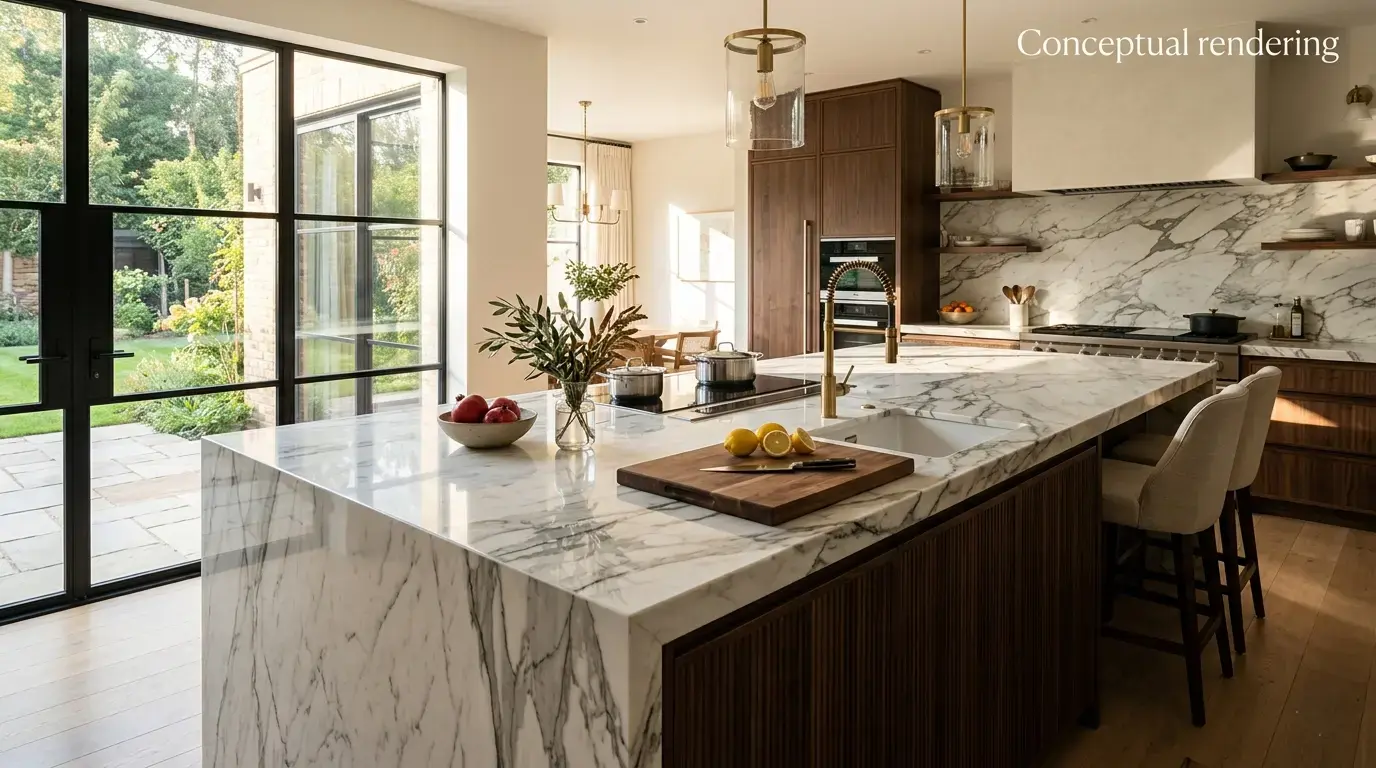 Conceptual rendering
ASTM C97 governs water absorption testing for dimension stone; white marble varieties with absorption rates under 0.40% perform well in kitchen environments when sealed according to manufacturer guidance. The polished finish reduces the micro-porosity of the exposed surface, providing an additional layer of protection between sealant applications.
Unlike painted or laminated surfaces, a white marble kitchen island slab does not degrade uniformly over time; with proper care, the character of white marble deepens rather than diminishes. Nova Tile and Stone's premium stone surfaces are sourced with quality and longevity in mind, with multiple showroom locations available for hands-on slab review before any purchase decision.
Frequently Asked Questions
Polished white marble is practical when maintained correctly. The surface requires periodic sealing to resist staining and prompt cleanup of acidic spills like citrus juice, wine, or vinegar, which can etch the polished finish. With consistent care, it performs reliably in active kitchens.
Calacatta marble features a brighter white background with bolder, more dramatic veining in gold and gray tones. Carrara marble presents a softer, more uniform gray-white field with subtler veining. Calacatta is generally the more statement-making choice for kitchen island designs, while Carrara suits applications where restraint is preferred.
Yes. White marble is porous at the micro level and should be sealed before use and re-sealed periodically, typically once every one to two years depending on use intensity and the specific sealer applied. Sealing reduces the risk of liquid absorption and staining without altering the appearance of the polished surface.
Yes. Marble slabs are available in full sizes that accommodate waterfall edge fabrication, where the stone continues vertically down the side of the island. Bookmatched slabs allow the veining pattern to mirror across the horizontal and vertical faces for a seamless visual effect.
Polished is the most popular finish for white marble kitchen islands because it enhances veining, deepens color, and is generally easier to clean. Honed creates a matte appearance that can make minor scratches and etching less noticeable. Leathered and specialty finishes add texture and a more distinctive look where available. The best choice depends on the desired appearance, maintenance preferences, and how the kitchen is used.
Curious About Something Else?