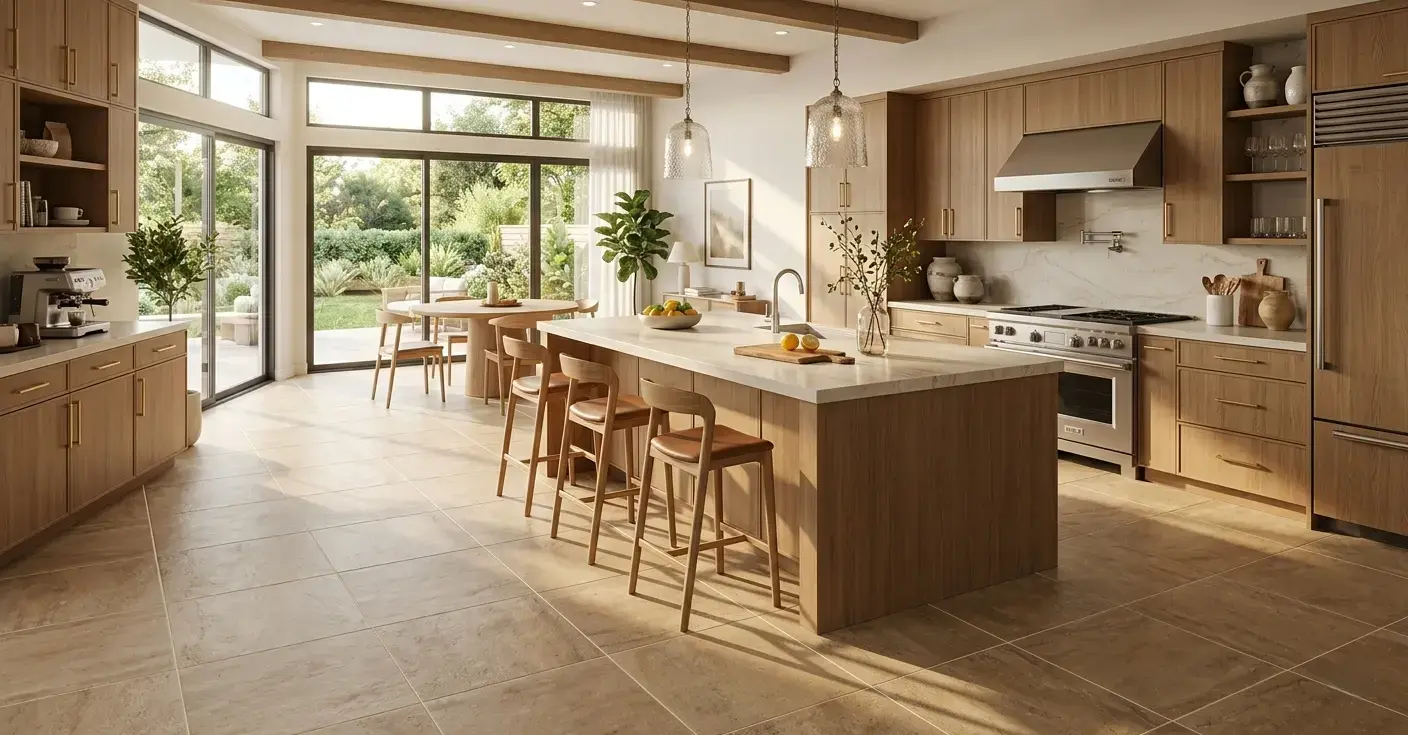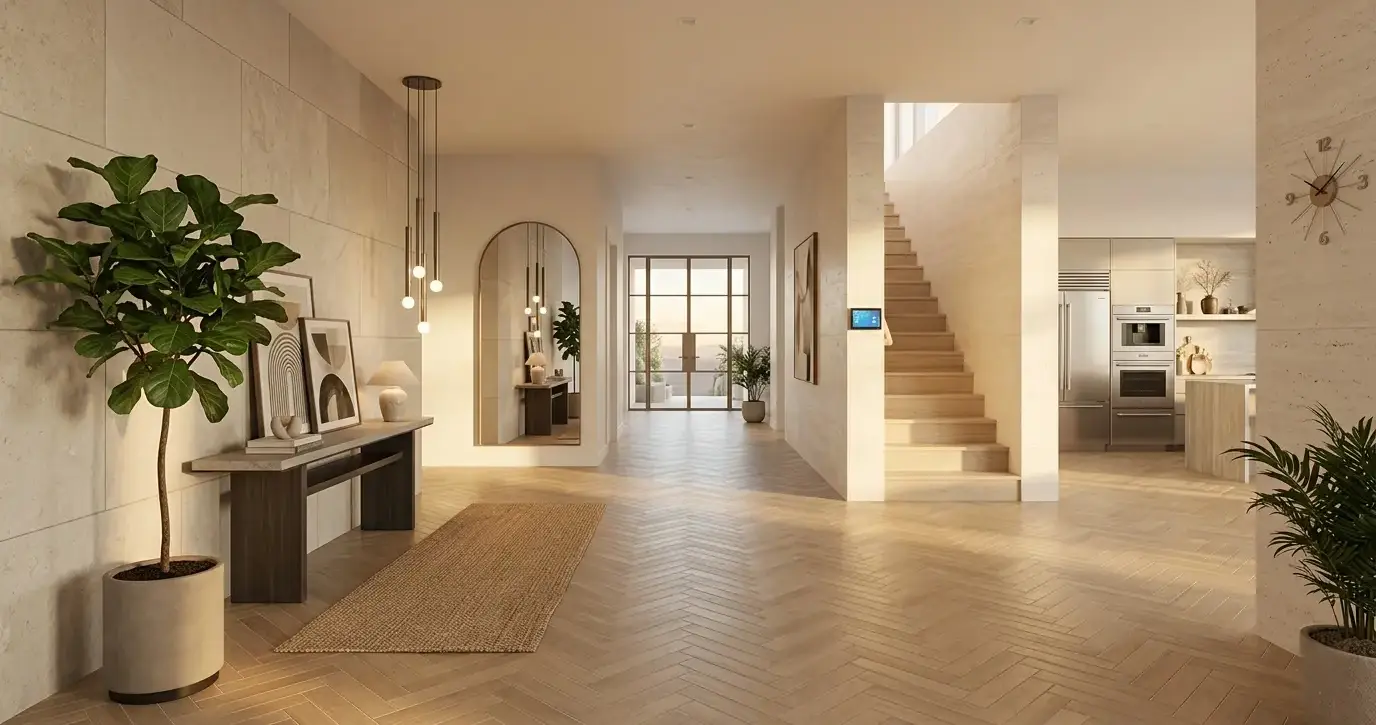
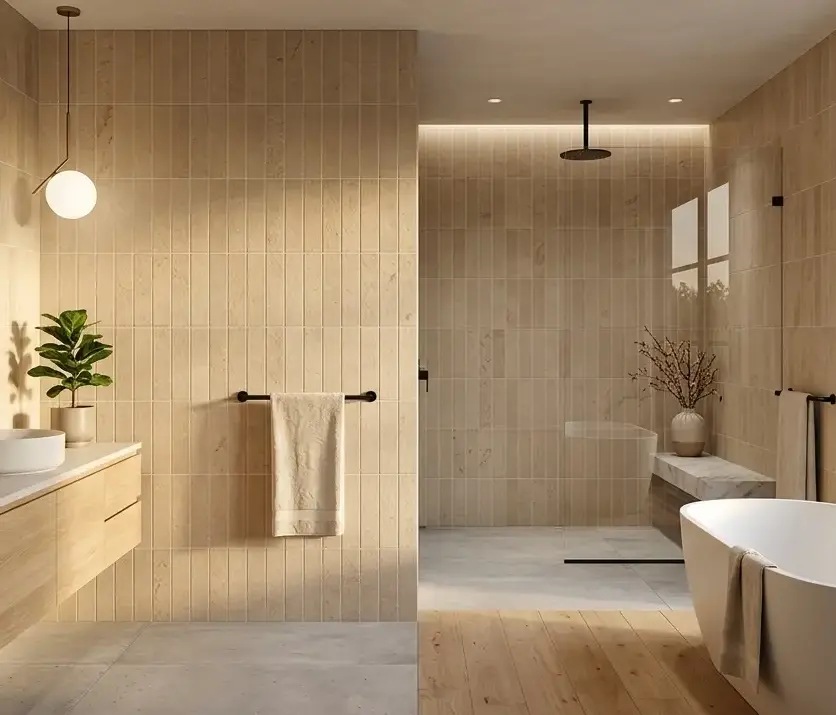
Tan porcelain tile translates the warmth of natural sandstone into a durable, low-maintenance surface suited to kitchens, bathrooms, and living room designs. Fired from refined clay at temperatures exceeding 1,200 degrees Celsius, this tile achieves water absorption at or below 0.5% per ASTM C373, meeting the threshold for true porcelain classification. A matte finish draws out soft ivory undertones and subtle linear veining, anchoring the color between earthy and refined. Whether grounding an open-plan living room floor or framing bathroom walls with stone surface character, tan porcelain tile brings performance durability and visual cohesion to residential spaces.
Material Data: Tan Porcelain Tile
Classified as true porcelain, this tile is formed by firing refined clay at extreme heat, fusing clay and silica into a vitrified, near-impermeable body. The result resists moisture and staining more effectively than standard ceramic alternatives, making tan porcelain tile a practical choice for kitchen floors, bathroom walls, and living room applications that see regular household use.
The matte finish reduces surface glare in naturally lit rooms and conceals everyday smudging better than polished surfaces, though consistent cleaning remains necessary to preserve its appearance long term. Warm ivory secondary tones and naturalistic linear veining give this tile a composed stone surface depth that reads cleanly across transitional, contemporary, and minimalist interior styles.
The table below outlines the material and performance profile for this variation. Client-supplied data is required for all pending fields before the associated benefit claims can be published. The complete porcelain guide covers PEI grades, finish categories, and size formats in depth. Industry craft and material performance benchmarks for ceramic and porcelain tile are maintained by the TCAA tile standards organization.
Specification
|
Value
|
Reference Standard
|
Material | Porcelain | |
Primary Color | Warm Ivory*
| |
| Water Absorption
| ≤ 0.5% | ASTM C373 |
Typical Thickness | 8 mm (floor grade) | |
PEI Rating | Contact us for full spec sheet | ASTM C1027 |
DCOF (Wet Floor) | Contact us for full spec sheet | ANSI A326.3 |
Mohs Hardness | Contact us for full spec sheet | |
Breaking Strength | Contact us for full spec sheet | ASTM C648 |
Edge Type | Contact us for full spec sheet | |
 Conceptual rendering
Stone Layouts for Home Interiors
The neutral tan palette functions as a design anchor across multiple interior styles. On a kitchen floor, a straight-set or offset horizontal layout with warm ivory grout creates a cohesive stone surface that pairs with both white painted and wood-tone cabinetry. The low-sheen matte finish keeps visual weight grounded, particularly in kitchens with strong pendant or under-cabinet lighting where glossy tile can create unwanted reflection.
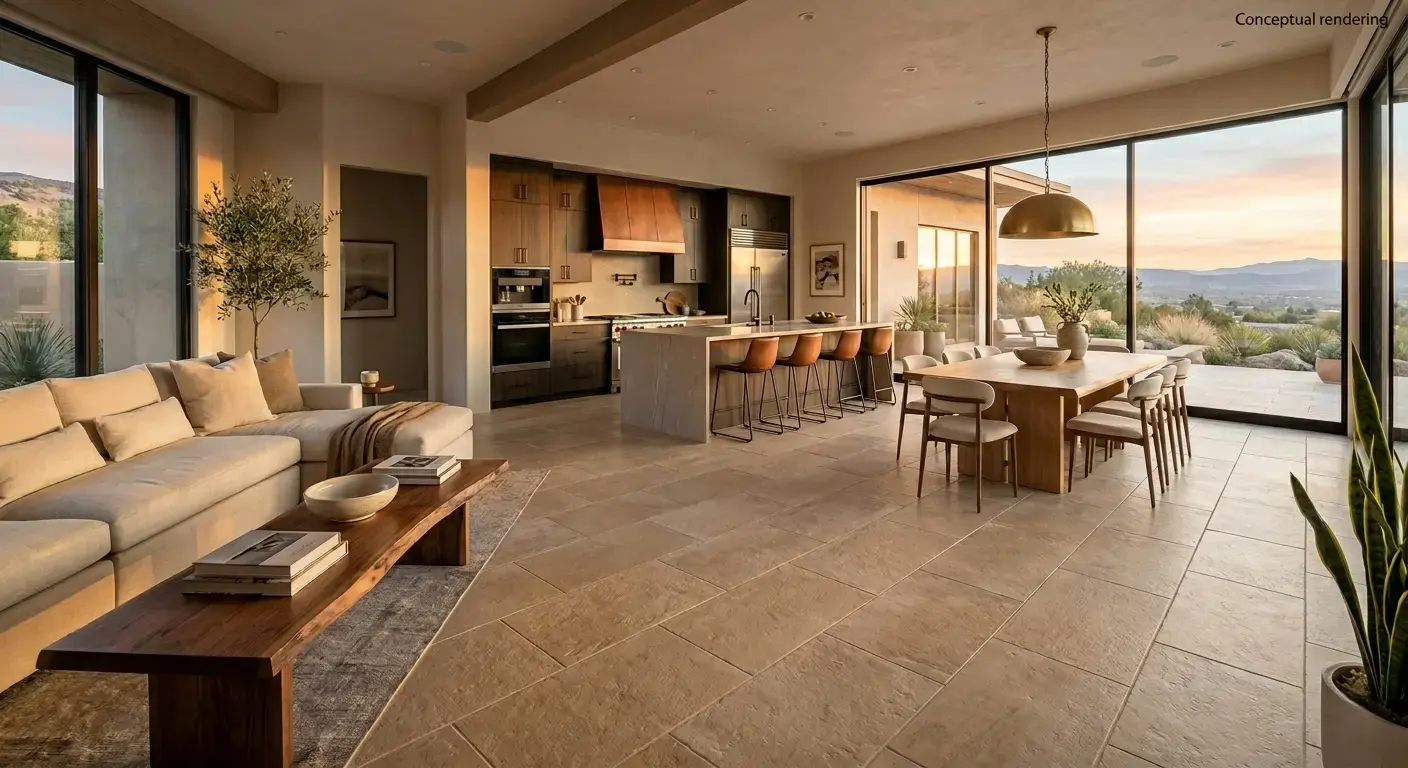
Bathroom applications benefit from vertical stacking on wall surfaces, where a floor-to-ceiling stone surface effect increases the perceived scale of the room without the fragility or upkeep demands of real travertine. In living room designs, large-format tan porcelain tile in a wide-offset brick-joint pattern adds textural depth across open-plan floors without competing with furniture or accent walls.
A herringbone layout at a residential entryway creates a strong visual impression at a high-impact transition zone while remaining versatile enough to carry multiple adjacent palettes. With over 50,000 tile designs in the catalog, Nova Tile and Stone offers free design consultations that help homeowners evaluate layout options across every room before settling on a final pattern direction.
 Conceptual rendering
Functional Advantages of Tan Porcelain Tile in Residential Spaces
- Moisture resistance backed by material density: Water absorption at or below 0.5% per ASTM C373 limits moisture penetration through the tile body in kitchen and bathroom environments, though grout joints still benefit from periodic maintenance.
- Stain resistance from a dense, vitrified body: The porcelain composition restricts the penetration of household oils, liquids, and kitchen grease into the tile interior, though prompt cleanup after spills contributes to sustained surface quality.
- Color stability throughout the tile: Tan pigmentation runs through the body during manufacturing, so edge cuts and minor chips show minimal contrast compared to surface-printed ceramic alternatives.
- Broad design compatibility: The tan-and-ivory palette coordinates with white, gray, greige, and warm wood finishes, reducing the need for redesign when other room elements are updated.
- Low routine maintenance demands: A pH-neutral cleaner and damp mop cover typical daily care for matte porcelain, making tan porcelain tile practical in active households, with consistent upkeep preserving appearance over time.
Finish-specific care methods for matte and other porcelain surfaces are covered in the porcelain care guide on the Nova Tile blog. Tan porcelain tile formats and color variants are available to shop the collection online, with home delivery to qualifying areas.
Explore Our Latest Porcelain Tile Ideas
Tan Porcelain Tile as a Durable, Timeless Investment
Tan porcelain tile's durability rests on measurable physical properties. ASTM C373 governs water absorption; a confirmed result at or below 0.5% demonstrates a vitrified body that resists efflorescence, mold growth, and moisture damage under normal residential conditions, with periodic grout sealing supporting overall surface longevity.
ASTM C648 governs breaking strength for floor-grade tile; values confirmed above 250 lbs support heavy residential traffic claims, but that figure is pending for this product and the claim is held until supplied. ANSI A326.3 governs Dynamic Coefficient of Friction testing; a DCOF at or above 0.42 is required before any wet-area slip-resistance claim can appear in this content, and that value is also pending.
The tan-and-ivory stone surface palette resists short-term design trends. Earth-toned porcelain tile performs consistently across transitional, contemporary, and Scandinavian-influenced interiors, preserving relevance through ownership changes and future renovations. As a family-owned, direct tile importer with showrooms across Northern Nevada and California, Nova's founding story reflects a commitment to accessible quality tile and personalized service.
Frequently Asked Questions
Tan porcelain tile suits bathroom walls in non-submerged applications. Water absorption at or below 0.5% per ASTM C373 means the tile body resists moisture from steam and splashing. A matte finish provides stone surface depth for wall areas adjacent to wet zones while minimizing reflective glare.
A warm ivory or soft greige grout integrates most naturally with tan porcelain tile, allowing stone surface veining to read as a continuous field. Darker grout colors emphasize individual tile boundaries and create a gridded pattern effect rather than blending with the overall surface.
Tan porcelain tile is a strong candidate for kitchen floors given its low water absorption and stain-resistant body. Traffic-level guidance depends on the PEI rating per ASTM C1027, which is pending for this variation. Once confirmed, traffic-level guidance will be updated on this page.
Porcelain uses refined clay fired at higher temperatures than ceramic, producing water absorption at or below 0.5%. In kitchen, bathroom, and living room floors, that density advantage translates to more durable long-term performance, though both materials require regular cleaning to maintain appearance.
A wide-offset brick-joint or large-format straight-set layout works well in an open-plan living room. Both patterns reduce grout-line interruption and allow the stone surface character of tan porcelain tile to read across the floor as a unified field rather than a repeating grid.