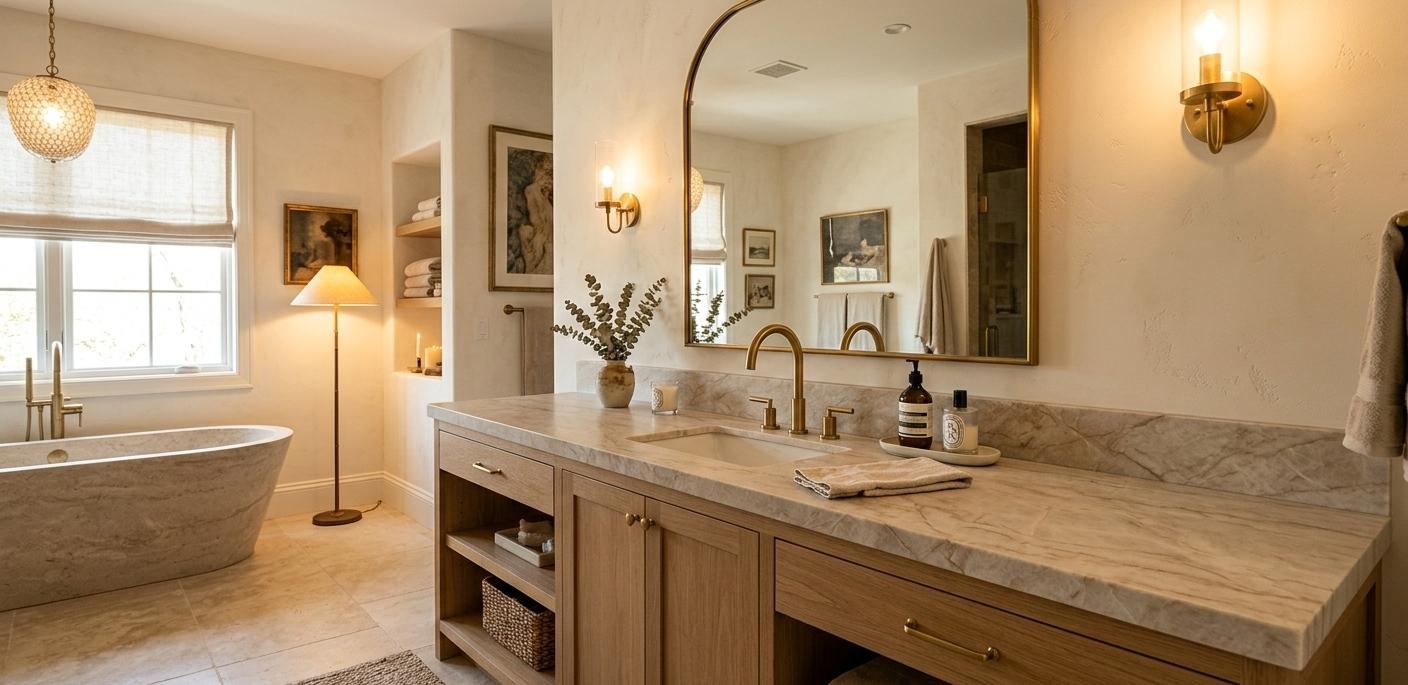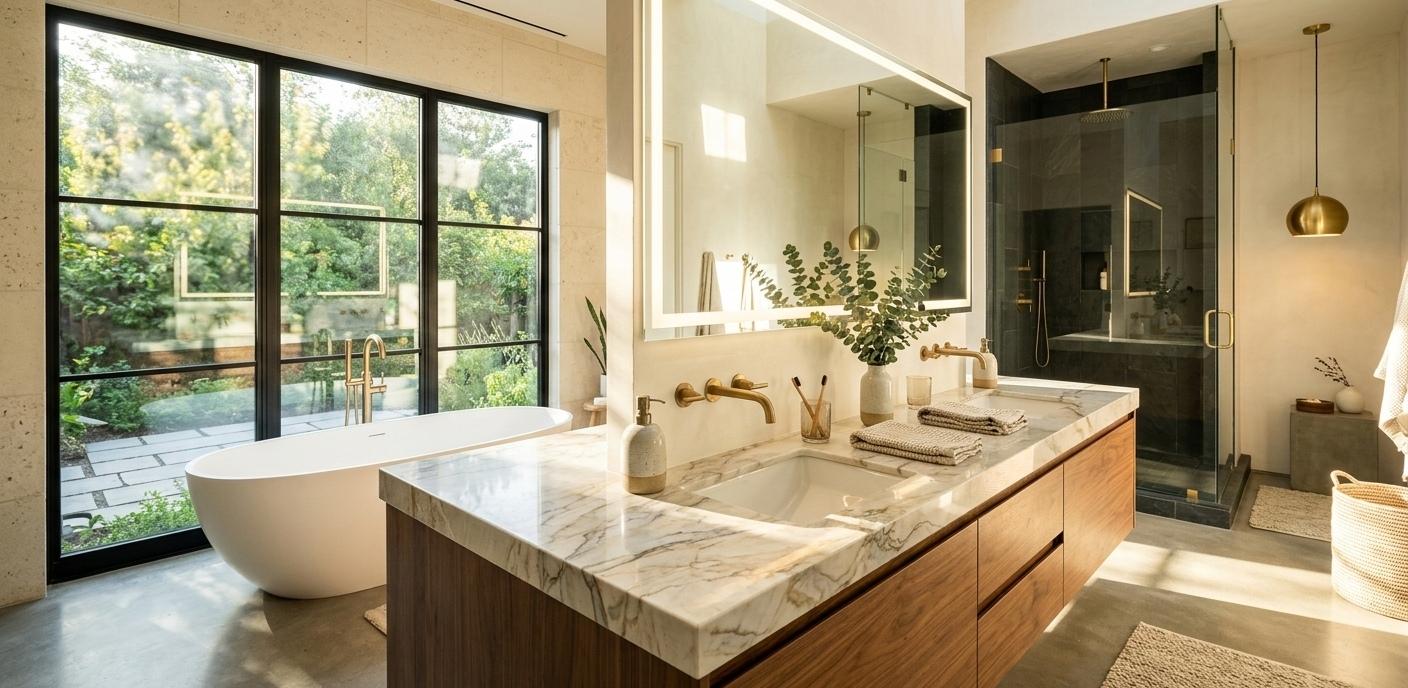
Taj Mahal Quartzite countertop is one of the most sought-after natural stone surfaces available today. Quarried from metamorphic rock, it features a warm cream-to-white base with soft gold and taupe veining that flows naturally across each slab. Available in polished, honed, and leathered finishes, this stone is ideal for kitchen islands, countertops, and bathroom vanities in both modern and transitional spaces. If you are looking for a surface that combines luxury with long-term practicality, this is an excellent choice.
What Makes Taj Mahal Quartzite the Right Stone for Your Project
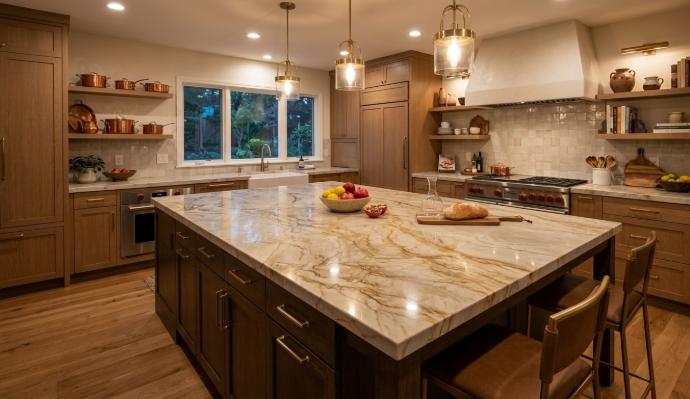
Taj Mahal Quartzite is a natural metamorphic stone noted for its exceptional hardness and resistance to heat and scratching, outperforming many marble alternatives. The large slab format means fewer seams across wide surfaces, making it ideal for kitchen island tops and continuous vanity runs.
Its distinctive veining pattern delivers visual depth that standard granite cannot replicate, and its neutral palette coordinates with both dark cabinetry and bright, airy design schemes. Unlike marble, quartzite does not etch easily from acidic spills, making it a more forgiving choice for active cooking spaces. At Nova Tile and Stone's natural stone slab collection, you can browse full inventory and view slabs in person at any of four showroom locations.
Why This Stone Delivers More Than Just Good Looks
- Heat resistance: Quartzite withstands kitchen temperatures without warping or discoloring
- Scratch resistance: Harder than marble, it handles daily use without surface wear
- Low etching risk: Naturally more acid-resistant than limestone-based stones
- Unique veining: No two slabs are identical, giving your surface a one-of-a-kind look
- Versatile finish options: Polished, honed, and leathered suit a wide range of design styles
Three Finishes, Endless Design Directions for Your Taj Mahal Quartzite Countertop
The polished finish brings out the stone's natural luster and deepens the contrast of its gold veining, perfect for a formal kitchen or a spa-style primary bathroom. A honed finish softens the reflectivity, offering a matte, velvety look that works especially well in transitional and farmhouse-style kitchens.
The leathered finish adds subtle texture and dimension, reducing the appearance of fingerprints while maintaining a contemporary feel. Whether your priority is drama, softness, or texture, one of these three surface treatments will align with your design direction. For layout inspiration tailored to your space, Nova Tile and Stone's free design consultation service pairs you with an expert who can help you select the right finish and edge profile.
Inventory changes frequently, and availability can shift quickly as slabs are selected for projects. For the most accurate availability, contact the Nova Tile and Stone team, then visit a showroom to view and select your slab in person
A Long-Term Investment in Natural Stone Value
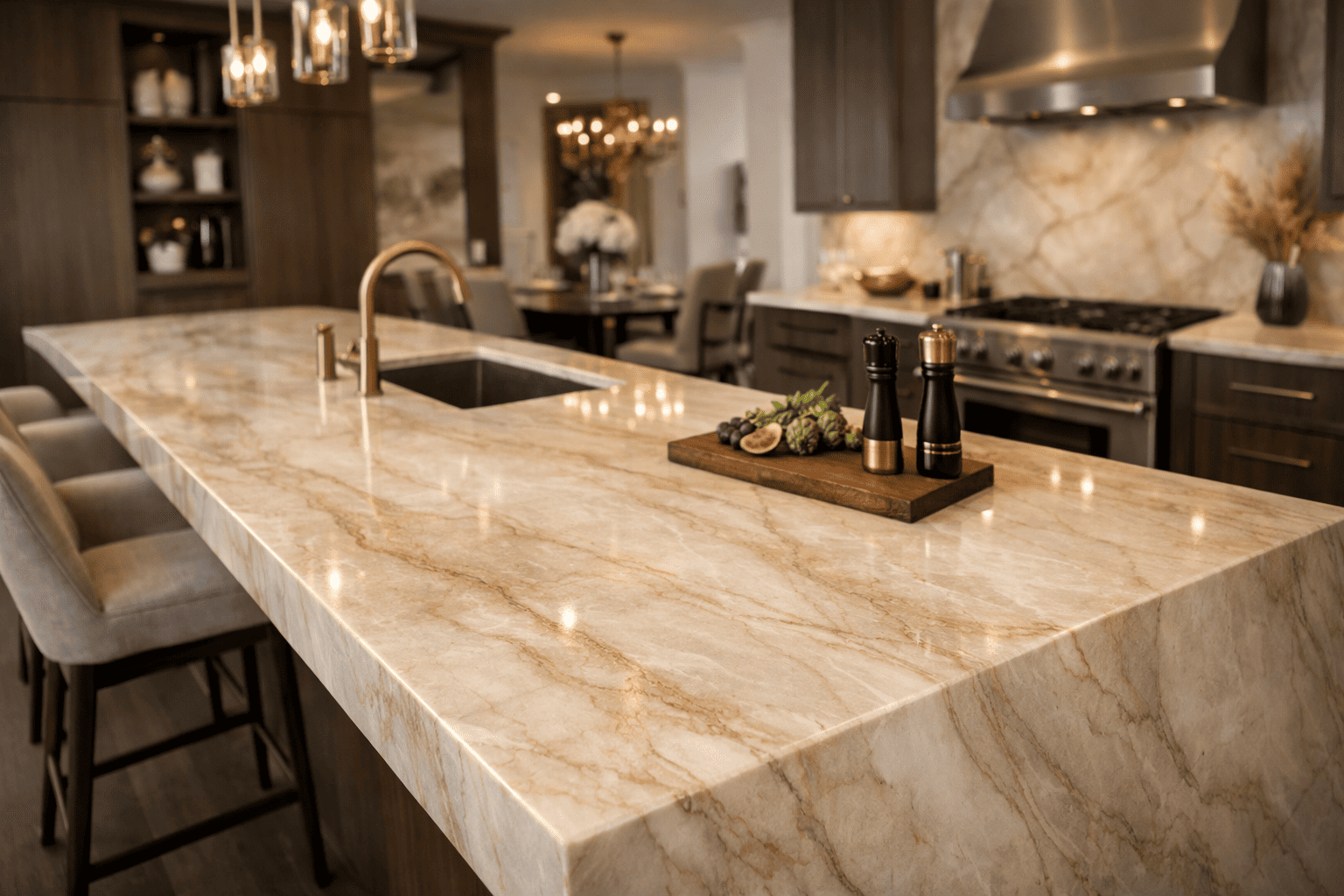
Natural quartzite surfaces have consistently held their appeal in high-end residential design because the material does not go out of style. Few surfaces hold their appeal the way Taj Mahal Quartzite does. Installed in a kitchen or bathroom, it becomes a lasting design anchor that buyers notice and designers consistently reference. Its durability means refinishing or replacement is rarely necessary, keeping the total cost of ownership low over time.
Paired with expert guidance from Nova Tile and Stone's premium natural stone expertise, the right slab selection can elevate an entire room and hold its value through multiple market cycles. For additional context on how quartzite compares with other stone options, the team's blog post How Do Quartzite Slabs Compare To Other Stone Countertops? is a useful resource.
Frequently Asked Questions
Taj Mahal is genuine quartzite, a metamorphic stone formed from quartz-rich sandstone under intense heat and pressure. It has a naturally lighter, creamier base than many quartzite varieties, which sometimes causes confusion with marble, but its hardness and acid resistance confirm its quartzite classification.
Honed and leathered finishes tend to perform better in high-traffic kitchens because they conceal everyday smudges and micro-scratches more effectively than a high-polish surface. Polished works beautifully in lower-traffic bathroom vanity applications.
Yes. Like most natural stones, it benefits from periodic sealing to reduce porosity and protect against staining. The frequency depends on usage and the sealer product used, typically once every one to two years for kitchen surfaces.
Absolutely. Its large slab format and consistent veining make it ideal for island tops where visual continuity across a wide surface matters. The warmth of the gold and taupe tones also works well as a central focal point in open-plan kitchens.
Natural quartzite offers unique veining patterns that engineered quartz cannot fully replicate. It is also heat-resistant in ways that some quartz composites are not. The trade-off is that natural stone requires sealing, while engineered quartz is virtually maintenance-free. For those prioritizing authenticity and visual character, quartzite is typically the preferred choice.