Quartzite is a natural metamorphic rock countertop material formed when quartz-rich sandstone is subjected to intense heat and pressure beneath the Earth's crust. It is harder than granite and marble, resistant to scratching and etching, and available in a wide range of colors including white, gray, pink, blue, and green. It is commonly used for kitchen countertops, bathroom countertops, bar tops, and backlit feature walls. This slab requires periodic sealing depending on its porosity level and is best cleaned with warm water, neutral soap, and a soft cloth.
At Nova Tile and Stone, we carry a curated selection of quartzite slabs across our showrooms in Reno, Sacramento, Minden, and Fernley, ready to be fabricated into beautiful, long-lasting countertops. If you're considering quartzite for your home, this guide covers everything you need to know, from its natural properties and applications to care requirements and how it compares to granite, quartz, and marble.
What Is Quartzite?
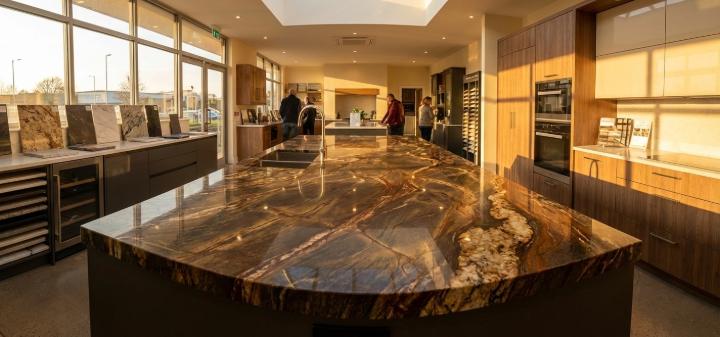
Quartzite is a naturally occurring mineral that forms when quartz-rich sandstone undergoes intense heat and pressure deep beneath the Earth's crust. This process recrystallizes the individual sand grains along with the silica binding them together, producing a metamorphic rock with a powerful interlocking quartz network. This crystalline lattice is so incredibly dense that fractures break through the quartz grains themselves rather than along their boundaries, a sign of remarkable structural strength. Because of this strength and beauty, many designers and builders choose premium quartzite slabs from Nova Tile and Stone for countertops, flooring, and wall applications.
What Are the Natural Properties of Quartzite?
Colors of Quartzite
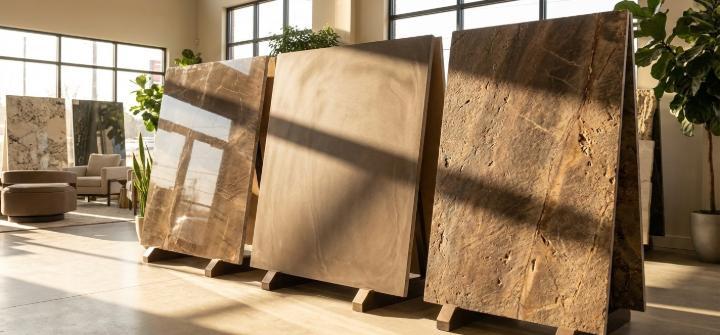
In its natural state, quartzite typically ranges from white to gray. However, varying concentrations of hematite during formation can produce rich pink, red, or purple tones. Other minerals absorbed throughout the formation process can also result in blue, orange, brown, green, or yellow variations, giving quartzite a truly unique color spectrum. Homeowners exploring these variations can browse available selections through our local natural stone showroom inventory to see the full range in person.
Translucent Quartzite
The extreme heat and pressure quartzite endures during formation occasionally produces a naturally glassy, translucent finish. This is a rare and extraordinary quality. Many homeowners take advantage of this trait by installing backlighting behind translucent quartzite, creating a warm, dramatic glow reminiscent of stained glass. If you're considering this feature for your home, the complete guide to natural stone countertops offers helpful insights on design, durability, and installation considerations.
The Applications of Quartzite
Quartzite Countertops
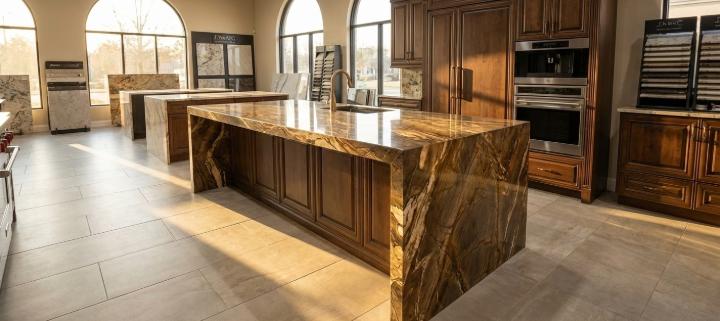
Quartzite is most commonly used in bathroom and kitchen countertops, though its versatility extends well beyond those applications. Its exceptional durability means that whatever you create with it is built to stand the test of time. For builders, fabricators, and designers interested in sourcing premium material, you can apply for a natural stone trade account to access exclusive trade benefits and pricing.
Backlit Quartzite Walls
If you're fortunate enough to source translucent quartzite, backlighting it will completely transform the look and feel of any room. The natural veining becomes dramatically highlighted, turning the surface into an instant focal point. The best part, you don't need bright or direct lighting to achieve this effect. Even a subtle light source is enough to bring translucent quartzite to life. Backlit quartzite wall art, in particular, makes an unforgettable design statement.
Quartzite Bar Tops
Quartzite is equally stunning as a bar top material, and the effect becomes even more striking when paired with backlighting.
How To Care for Your Quartzite
Once your quartzite countertops are installed, proper care will keep them looking their best for years to come.
Porosity levels in quartzite can vary depending on the degree of metamorphosis the stone underwent. More porous varieties, such as White Macaubas and Calacatta Macaubas, benefit greatly from sealing, particularly around high-exposure areas like the sink. Today's modern sealants can protect your stone for up to two years, with premium options lasting as long as 10 years, and some even backed by stain removal warranties. For additional professional recommendations, you can review the Natural Stone Institute’s stone care guidelines.
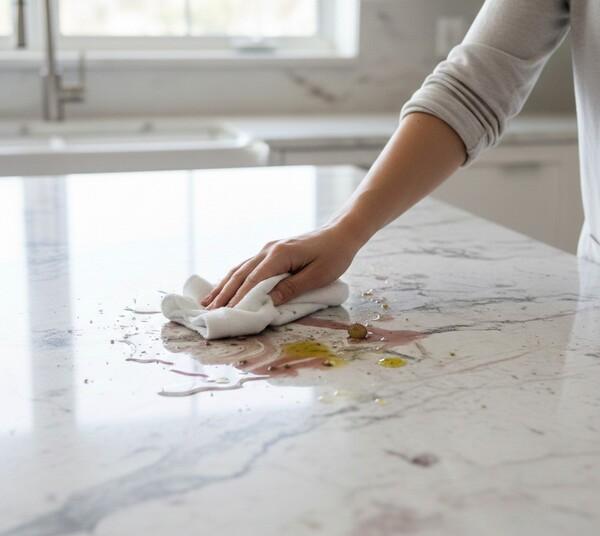
For daily cleaning, promptly wipe up spills and use a soft cloth with warm water and a few drops of neutral soap to keep surfaces clean and residue-free.
Regardless of how high your quartzite scores on the Mohs hardness scale, always use a cutting board. Countertops that are too hard will dull and damage your knives, while softer surfaces can be scratched by them, neither outcome is ideal.
Although quartzite resists chipping due to its hardness, avoid forceful impacts or dropping heavy objects onto the surface. Even the most durable stone can chip or crack under extreme force. If you're planning a new project, you can request a custom slab quote for your quartzite project to ensure you select the right material and finish for your space.
What Is the Difference Between Quartzite and Other Stones?
Understanding how quartzite compares to other popular countertop materials will help you make a more confident decision.
Quartzite vs. Granite
Granite has long dominated the countertop market, but quartzite outperforms it in hardness. Granite scores around 6.5 on the Mohs hardness scale, making quartzite significantly more resilient and longer-lasting when properly maintained.
When it comes to porosity, granite has a slight edge. While both materials may require sealing, quartzite typically needs to be resealed more frequently than granite, which can go longer between applications. If you’d like to compare materials in person, you can schedule a showroom appointment with our design specialists to explore your options side by side.
Quartzite vs. Quartz
Confusing quartz with quartzite is one of the most common mistakes shoppers make, but these are very different materials. Quartz is an engineered product, manufactured by pulverizing quartz minerals and combining them with cement-based resin binders to form slabs.
Quartzite, by contrast, is 100% natural, formed entirely within the Earth through heat and pressure.
They also differ in hardness. Quartzite is slightly harder than quartz and significantly more resistant to scratching and etching. A quick way to tell them apart: attempt to scratch the surface. A scratch indicates quartz; no mark means quartzite.
Quartzite vs. Marble
Marble is another timeless countertop option that's often confused with quartzite due to visual similarities. However, marble scores only around 3 on the Mohs hardness scale, making quartzite far more durable by comparison. Marble is also highly susceptible to etching, a process where calcite in the stone reacts with acidic substances and creates a dull, damaged-looking surface. Quartzite, on the other hand, is resistant to etching, making it a far more practical choice for busy kitchens and bathrooms.
For homeowners and professionals interested in expanding their knowledge of natural stone materials and industry trends, the Natural Stone Institute event calendar provides valuable educational opportunities and upcoming industry events.
Conclusion
Quartzite is more than just a beautiful countertop material, it's a long-term investment in your home's style and functionality. Formed through one of nature's most intense processes, it delivers a level of hardness, durability, and visual appeal that few other stones can match. Whether you're upgrading your kitchen countertops, designing a statement bathroom, or creating a backlit feature wall, quartzite rises to the occasion with stunning results.
At Nova Tile and Stone, we're proud to offer a curated selection of quartzite slabs across our showrooms in Reno, Sacramento, Minden, and Fernley. Our team is ready to help you find the right slab, finish, and fabrication approach to bring your vision to life. Visit Nova Tile and Stone’s official website today and discover why so many homeowners are making quartzite their countertop material of choice.
Frequently Asked Questions
Is quartzite a good material for kitchen countertops?
Yes, quartzite is an excellent choice for kitchen countertops. Its high score on the Mohs hardness scale makes it highly resistant to scratching, and its natural density gives it the strength to withstand the demands of a busy kitchen. With proper sealing and routine cleaning, quartzite countertops can maintain their beauty and performance for decades.
Does quartzite need to be sealed?
It depends on the specific variety. Quartzite porosity can vary based on the degree of metamorphosis the stone underwent. More porous types, such as White Macaubas and Calacatta Macaubas, will benefit from sealing, especially around the sink area. Modern sealants offer protection ranging from two to ten years, with some backed by stain removal warranties. Your fabricator will be able to recommend the best sealing schedule for your specific slab.
How is quartzite different from quartz countertops?
Despite the similar names, quartzite and quartz are very different materials. Quartzite is a 100% natural metamorphic rock formed within the Earth through heat and pressure. Quartz countertops, on the other hand, are engineered products made by combining pulverized quartz minerals with cement-based resin binders. Quartzite is also slightly harder than quartz and more resistant to scratching and etching. To tell them apart, try scratching the surface, quartz will show a mark, while quartzite will not.
Can quartzite countertops etch or stain?
Quartzite is naturally resistant to etching, which gives it a significant advantage over marble and other calcite-based stones. However, some porous quartzite varieties can absorb liquids if left unsealed, potentially leading to staining. Sealing your countertops as recommended and wiping up spills promptly will greatly minimize the risk of staining and keep your surfaces looking pristine.
How do I clean quartzite countertops on a daily basis?
Daily care for quartzite countertops is straightforward. Use a soft cloth dampened with warm water and a few drops of neutral, pH-balanced soap to wipe down the surface. Avoid harsh chemical cleaners or abrasive scrubbing pads, as these can degrade the sealant over time. Always clean up spills as soon as they occur to prevent any potential absorption, especially on porous varieties.