Red Quartzite
Red Quartzite Slabs for Kitchen Countertops and Statement Bathroom Vanities
Red Quartzite is a natural stone that brings genuine warmth and visual boldness to any surface it covers. Formed through the metamorphic transformation of sandstone under intense geological pressure, it carries rich red, burgundy, rust, and terracotta tones driven by iron oxide minerals embedded during the stone's formation. No two slabs look alike, which makes it one of the more distinctive choices available for modern kitchen countertops, luxury bathroom vanities, and feature walls where a neutral stone simply would not have the same impact.
This material rates at Mohs 7 or above on the hardness scale, placing it among the most durable natural stones used in residential surfaces. It is available in polished, honed, and leathered finishes, each of which changes how the red tones read in different lighting and environments. At Nova Tile and Stone's slab showrooms, you can see current inventory in person at four locations and evaluate the actual slab before making any decisions.
A Stone That Works in More Spaces Than You Might Expect
Red Quartzite tends to be associated with bold, maximalist spaces, but it is more versatile than that impression suggests. The warmth of its red and rust tones works naturally alongside dark wood cabinetry, warm white plaster walls, and metal accents in bronze or aged brass. It also creates compelling contrast when paired with cooler tones like slate blue or deep forest green cabinetry, where the warm stone becomes the deliberate counterpoint.
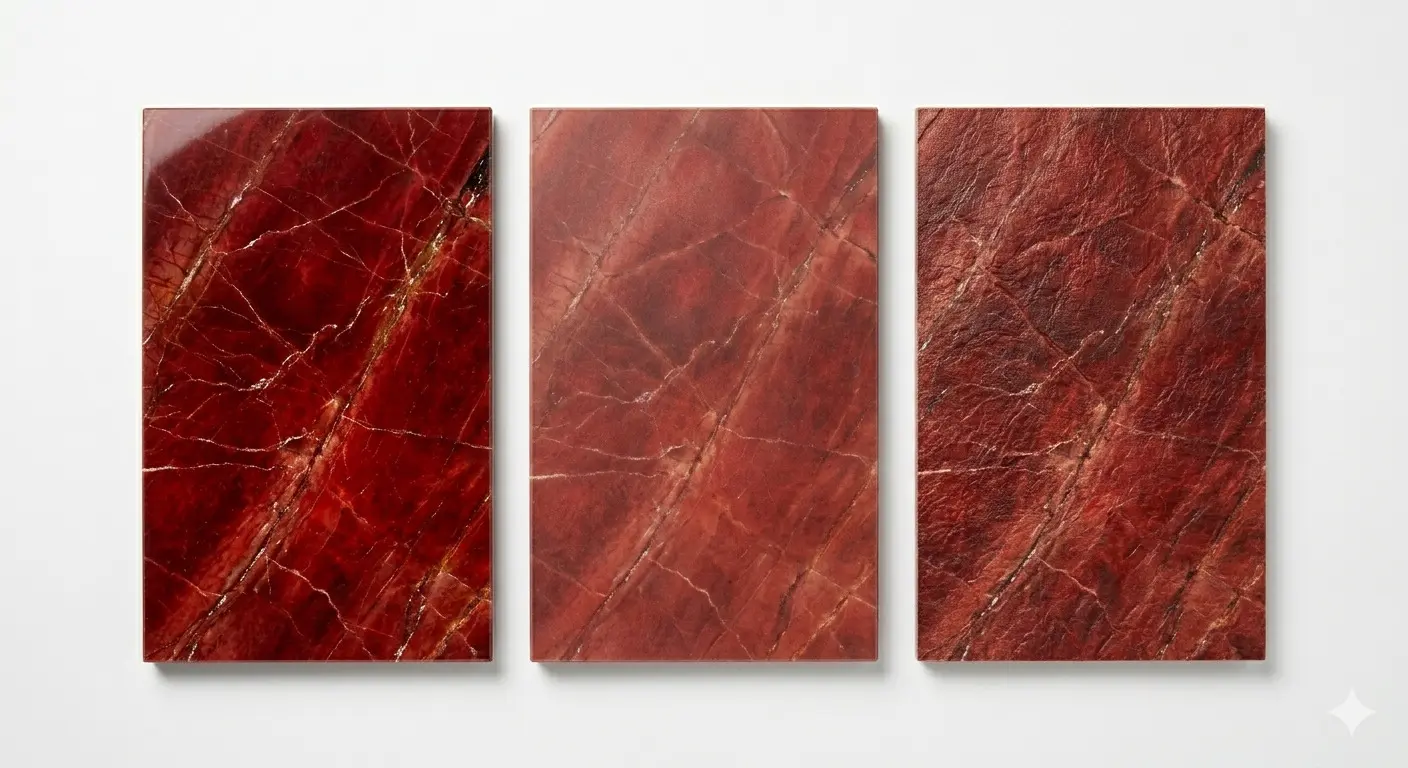
The finish choice shapes how assertive or restrained the stone appears in any given space. Polished finish amplifies the red tones and makes veining more vivid and reflective. Honed finish softens the overall reading and gives the stone a more matte, grounded quality that suits kitchens and casual living spaces well. Leathered finish adds a tactile texture that conceals fingerprints and minor surface contact better than polished, which is worth considering for countertop surfaces with heavy daily use.
Finish and Layout Options Worth Knowing
For floor use, honed finish is strongly preferred over polished because polished surfaces increase slip risk when wet. A straight lay emphasizes the stone's natural color field and lets the veining carry the design. Bookmatching two slabs on a bathroom wall creates a symmetrical red-and-rust composition that reads as fully intentional rather than incidental. If you are near our Sacramento location, the Sacramento showroom carries current slab inventory you can evaluate in person before committing.
Where Red Quartzite Makes the Strongest Design Statement
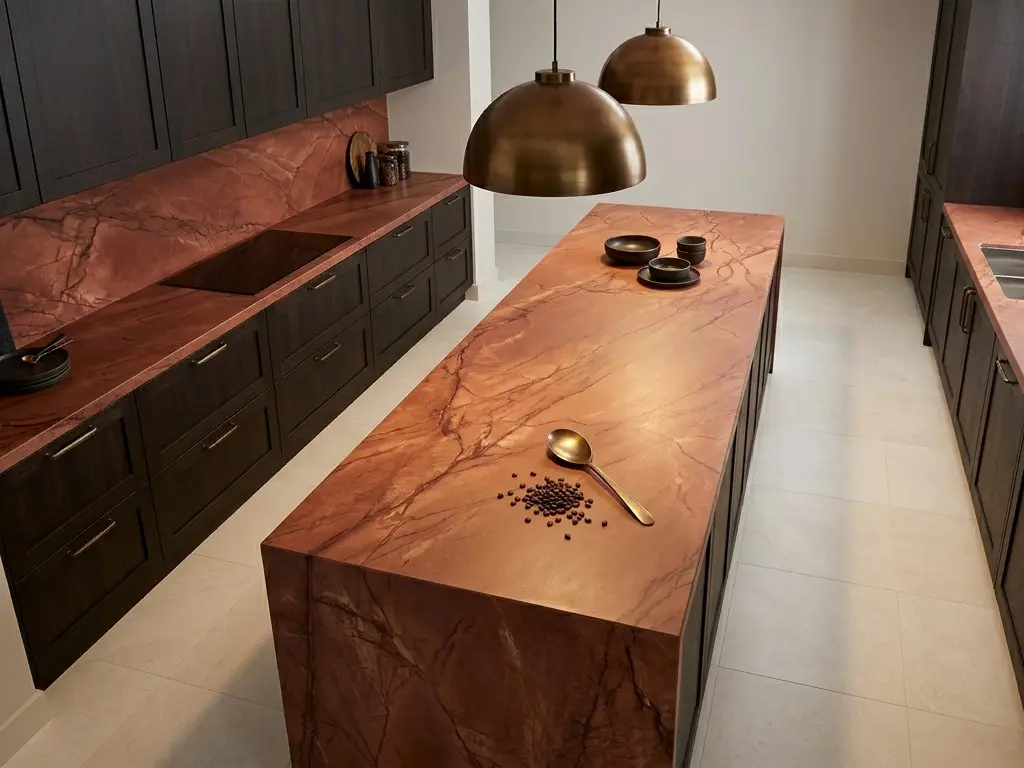
- Kitchen countertops and islands: Red Quartzite works especially well on kitchen islands where the countertop is the visual anchor of the room. The warm red tones contrast naturally against white or dark cabinetry. Honed or leathered finish is preferred for kitchen countertops because it performs better under daily use than polished.
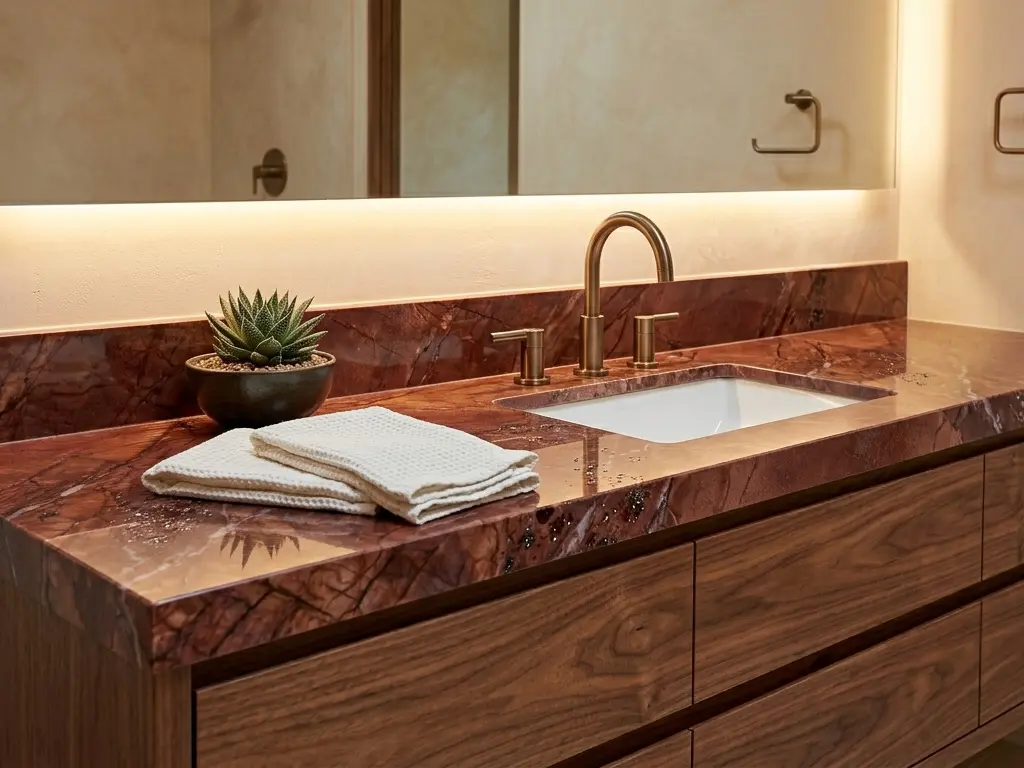
- Bathroom vanities: A polished Red Quartzite vanity top creates an immediate focal point in any bathroom. It pairs naturally with brushed bronze, oil-rubbed bronze, or warm gold fixtures. The stone is moisture resistant when sealed, making it a practical as well as beautiful vanity surface.
- Fireplace surrounds: The warm red tones of this stone make it a natural fit for fireplace surrounds, where the visual warmth of the material reinforces the room's mood. Heat resistance is strong, but direct contact with open flame surfaces should always be avoided.
- Accent walls and feature panels: Vertical slab installation in a dining area or bedroom feature wall uses the stone's warmth to define the space without the maintenance concerns of a countertop environment.
Durable, Warm, and Built to Perform Over Time
Red Quartzite earns its place at the premium end of natural stone not just because of its appearance but because of what it delivers in daily residential use. The following benefits reflect real performance data aligned with the material's natural properties.
Before selecting a finish and planning your care routine, the Natural Stone Institute's care guidance is a thorough and reliable resource covering sealing schedules, appropriate cleaning products, and long-term maintenance for quartzite surfaces specifically.
Practical Benefits
- The slab is durable with Mohs 7+ hardness, but consistent care and periodic sealing will protect its surface quality over the long term.
- The surface is highly scratch resistant, but cutting directly on it is not recommended; always use a cutting board.
- The material is moisture resistant when sealed, but standing water should not remain on the surface for extended periods near seams and edges.
- The stone is suitable for high-use kitchen countertops, but very hot cookware placed directly on the surface can still cause thermal shock.
- The slab is UV resistant, but sustained direct sunlight may affect the red tones differently depending on finish type and slab tone intensity.
- The surface is suitable for food preparation, but a cutting board should always be used to protect both the stone and your tools.
- Honed and leathered finishes handle kitchen contact better than polished, which shows water spots and acidic etching more readily.
- The material performs well in humid environments like bathrooms, but regular sealing is still required to maintain moisture resistance.
- Avoid abrasive cleaners; pH-neutral products extend the life of the sealant and the stone surface.
The Quartzite Kitchen Island page is a useful reference for seeing how quartzite slab surfaces hold up on islands specifically, where countertop wear tends to be heaviest.
Why Red Quartzite Can Be a Strong Long-Term Surface Choice
Very few natural stones combine visual boldness with the kind of structural hardness that Red Quartzite delivers. Most warm-toned stones in this color range, including travertine and some softer granites, rate significantly lower on the Mohs scale and require considerably more ongoing maintenance. Red Quartzite gives you the warmth and visual richness of a statement stone with the durability of one of the hardest natural materials available for residential use.
The slab resists fading, but prolonged exposure conditions should still be evaluated for each placement. The material is built for lasting use, though the specific application, finish selection, and sealing schedule should always be considered together as part of a long-term care plan.
From a home value perspective, natural quartzite surfaces consistently register as premium finish materials among buyers and real estate appraisers. This Old House's countertop guide confirms that natural stone slab countertops remain among the highest-return surface choices in kitchen and bathroom renovations.
For more planning guidance on natural stone slab edge choices, which become especially important for a stone as visually bold as this one, the Nova Tile and Stone blog post The Complete Guide To Countertop Edge Profiles For Natural Stone is a practical read that covers every common edge style and what each delivers.
Red Quartzite Brings Mohs 7 Plus Durability to Warm-Toned Kitchen Countertops
Red Quartzite is a fully natural stone, not to be confused with engineered quartz products that sometimes carry similar names. The quartzite classification means it has undergone complete metamorphic recrystallization, producing a surface that is denser and significantly harder than marble, granite, or travertine. For kitchen countertops specifically, that hardness advantage is meaningful. Scratches, chips, and daily impact that would mark softer stones have far less effect on a Mohs 7 surface.
The slab format also delivers something that standard tile layouts simply cannot. Where grout lines in a tiled surface cut the visual field into small, repeating units, a continuous quartzite slab lets the natural movement of red and burgundy tones travel uninterrupted across the full countertop or wall panel. That visual continuity is particularly striking with a stone as tonally rich as Red Quartzite. The Quartzite Kitchen Countertop page provides a broader look at how quartzite performs across kitchen applications if you are still narrowing down your material choice.
For a well-researched external comparison of quartzite against other natural and engineered stone types, the guide to stone tile types and finishes from Carved Stone Creations covers the material distinctions clearly and is worth reading before finalizing a selection.
Learn more from our slab topics
Frequently Asked Questions
Red Quartzite is a fully natural metamorphic stone with a Mohs hardness rating of 7 or higher, which is significantly harder than red travertine or most colored marbles. Its red tones come from natural iron oxide minerals formed during the stone's geological development, not dyes or coatings. That hardness and natural origin are its primary advantages over softer warm-toned alternatives.
Yes, with the right finish and maintenance routine. Honed or leathered finish is recommended for kitchen countertops because both handle daily use better than polished finish. Sealing every 6 to 12 months maintains moisture resistance, and avoiding direct placement of hot cookware protects the surface from thermal shock.
No, the two finishes read quite differently. Polished finish makes the red tones more vibrant and the veining more reflective. Honed finish produces a softer, more matte version of the same stone that reads as slightly more understated. Leathered adds texture that enriches the tactile quality of the stone without significantly muting the color.
It performs well for bathroom vanities when properly sealed. The stone is moisture resistant and its warm tones pair naturally with bronze, brass, and warm gold fixtures. Polished finish is common for vanities because the bathroom environment involves less daily impact than a kitchen countertop. Standing water near faucets and along edges should be wiped up promptly regardless of finish type.
It is less common than white or gray stones, which is part of its appeal. Because fewer homeowners choose it, a Red Quartzite countertop or vanity top creates an immediately distinctive space. The trade-off for its rarity is that slab availability may vary, making it worth visiting a showroom to view current inventory before planning around a specific lot.