Quartzite Kitchen Island
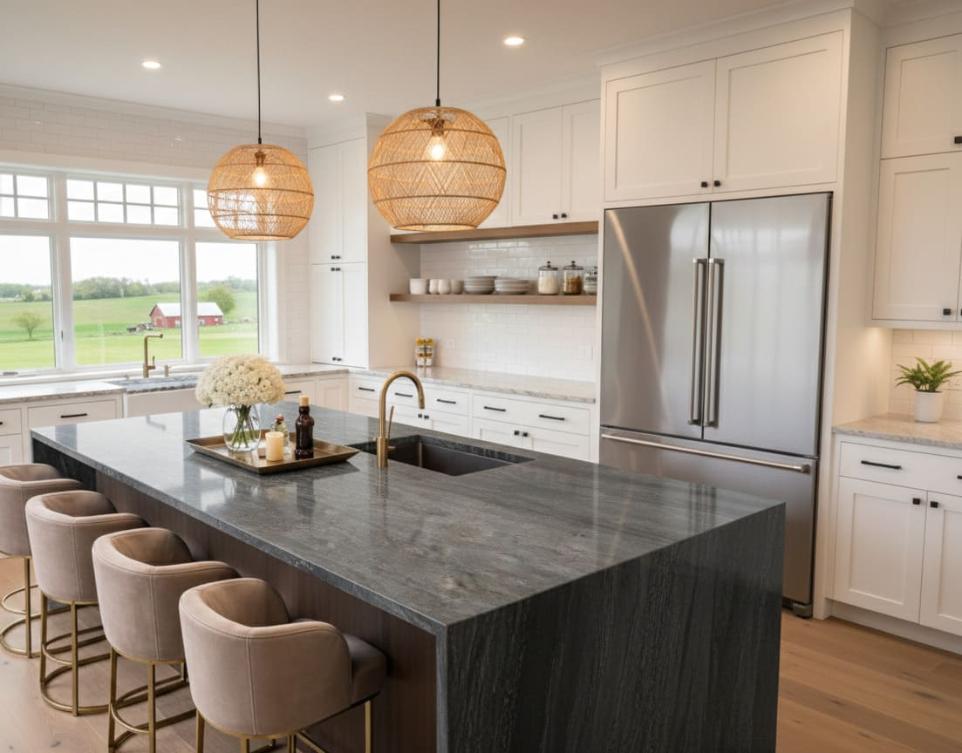
Quartzite is a natural metamorphic stone formed when sandstone is transformed by heat and pressure over millions of years. Many homeowners choose a quartzite kitchen island for its one of a kind veining and the balance it brings between visual impact and everyday performance. The stone is dense and resilient, with strong scratch resistance and solid heat tolerance for busy kitchens. With proper sealing, it stays practical for daily cooking and food prep while keeping the authentic look of a true natural stone slab.
View Our Premium Slabs
If you want the island to look intentional from every angle, selecting the exact slab matters. Look at current quartzite slab inventory, then narrow by tone, veining style, finish, and thickness. Many projects use 2 cm or 3 cm slabs depending on the design and edge profile. Popular quartzite looks often include Taj Mahal, Mont Blanc, and Adamantium, each with its own patterning and finish options, from polished to honed or leathered.
Why Choose Quartzite for Your Kitchen Island?
This natural stone ranks 7 on the Mohs hardness scale, making it harder and more scratch-resistant than granite (which ranks 6-6.5).
This exceptional durability means your island can withstand daily food preparation, hot cookware placement, and potential impacts without showing wear.
The stone's low-porosity nature, when sealed appropriately, resists bacteria growth and minimizes liquid absorption, making it exceptionally hygienic for food preparation surfaces.
These performance characteristics make it ideal for high-traffic environments where both function and longevity matter.
Design Versatility of Quartzite Kitchen Island
Quartzite works across a wide range of kitchen styles because the color spectrum runs from clean whites and soft grays to warmer neutrals and gold accents. It pairs well with modern cabinetry, natural woods, and classic farmhouse layouts, and it also supports design details like waterfall sides, mitered edges, and custom profiles. For islands with wide spans or dramatic veining, plan seam placement and vein direction with your fabricator early so the finished piece reads as one continuous design.
Beyond its durability, this metamorphic stone delivers striking visual appeal:
Distinctive Aesthetics
Flowing veins and crystalline sparkle in colors from pristine whites to warm grays and dramatic golds
Style Versatility
Complements contemporary minimalist spaces and traditional farmhouse designs with equal elegance
Premium
Varieties
Sea Pearl, Taj Mahal, and Super White offer unique patterns from subtle to dramatic
Design Flexibility
Accommodates beveled edges to waterfall installations for customized visual impact
Maintenance and Longevity Considerations
Protecting your investment requires straightforward
maintenance practices. The stone needs sealing every 1-2 years to maintain
optimal stain resistance and performance. Daily cleaning requires only mild
soap and water, avoiding harsh chemicals that might compromise the sealant.
This natural material offers better resistance to acidic substances than marble, though prompt cleanup of spills remains advisable. Professional installation ensures proper support for the stone's weight and seam placement that minimizes visibility while maximizing structural integrity, delivering long-term value that won't require replacement as design trends evolve.
Frequently Asked Questions
Yes, this stone ranks 7 on the Mohs hardness scale compared to granite's 6-6.5 rating, making it more resistant to scratching and wear in high-use environments.
Yes, quartzite handles heat well and can withstand hot cookware placed directly on the surface under normal cooking conditions. To protect the sealant and extend the life of your finish, using a trivet or hot pad is a good everyday habit.
Most quartzite islands need resealing once every one to two years. The exact frequency depends on how heavily the surface is used and the natural porosity of your slab. Denser varieties may go longer between applications.
Not when properly sealed. Quartzite's naturally low porosity gives it good resistance to common kitchen spills like wine, oil, and citrus juice. Keeping up with a regular sealing schedule ensures that protection stays intact over time.
Quartzite is 100% natural stone formed through geological processes over millions of years, while quartz countertops are engineered products combining approximately 90-95% crushed natural quartz with polymer resins and pigments.
Planning and Logistics
Seeing slabs in person makes decision making easier, especially when you’re matching cabinets, flooring, and backsplash. You can visit Nova Tile and Stone showrooms in Reno, Sacramento, Minden, and Fernley to compare available quartzite slabs and finishes before fabrication.
For slab pickup, bring a properly rated truck and A-frame, and the team can assist with loading. Delivery is also available across the 48 contiguous U.S. states, with slabs strapped to an A-frame and shipped to your fabricator’s address. Your fabricator should have a forklift and a slab boom or clamp on site for safe unloading.