A countertop edge profile is the shaped finish applied to the visible edge of a stone slab. It affects the style, safety, durability, and ease of cleaning of your countertop. The seven most common countertop edge profiles are:
- Straight edge: clean, modern, architectural
- Eased edge: softened square corners, modern and chip-resistant
- Bullnose: fully rounded, traditional and family-friendly
- Half bullnose: rounded on top, flat on bottom, transitional
- Beveled edge: angled cut, adds dimension and definition
- Ogee: S-shaped curve, ornate and traditional luxury
- Waterfall edge: countertop material continues vertically down the island sides
Choosing the right edge profile depends on your kitchen's design style, how busy your household is, and the type of stone you select. Simple profiles like eased and straight edges suit modern kitchens and are easiest to maintain. Decorative profiles like ogee and waterfall edges create a high-end statement but require more fabrication precision and cleaning attention.
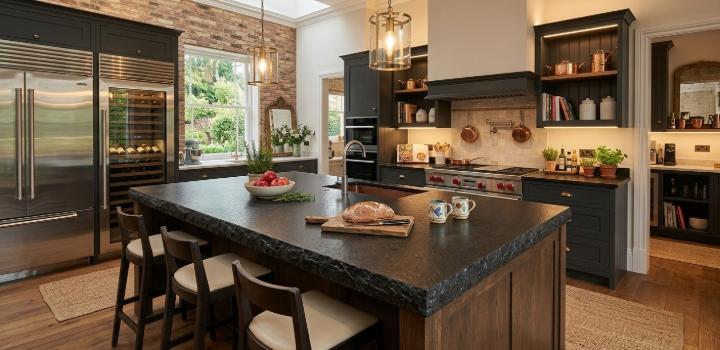
Why Countertop Edge Profiles Matter More Than You Think
A countertop edge is more than a finishing detail. It functions as a design statement and a practical feature rolled into one. The edge profile you select influences several key areas of your kitchen or bathroom. According to This Old House's guide to stone countertops, the finishing details of a stone installation, including edge treatment, are what separate a good remodel from a great one.
Style and Visual Impact
The edge you choose helps establish the overall personality of your space. The right profile can make a kitchen feel traditional and timeless, modern and minimal, bold and architectural, or warm and family-friendly. Changing just the edge profile on the same slab can produce a completely different aesthetic outcome.
Safety
Rounded edge profiles reduce the risk of bumps and injuries, which is especially relevant in homes with children or in high-traffic kitchens where people are constantly moving around the island.
Durability
Some profiles are more vulnerable to chipping than others. Sharp square edges, while visually clean, are more susceptible to corner damage. Rounded profiles distribute impact more evenly and tend to hold up better over time.
Cleaning and Maintenance
The shape of the edge determines how easy it is to wipe down your countertops daily. Some profiles trap crumbs and grease in their grooves, while others allow for quick, effortless cleaning.
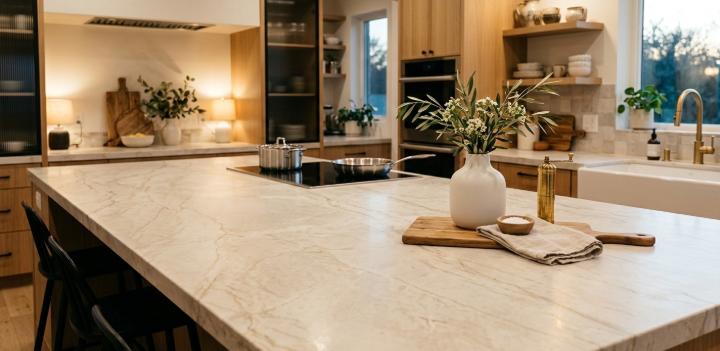
The Most Popular Countertop Edge Profiles
Below are the most common edge profiles offered by stone fabricators. Your available options may vary depending on the slab thickness and material you select. Browsing our full slab selection in person is one of the best ways to see how different edge profiles interact with specific stone patterns and finishes.
1. Straight Edge (Square Edge): Clean and Modern
The straight edge is one of the most widely chosen profiles in kitchens today. It delivers a crisp, architectural look with a slightly softened top corner. This profile works beautifully with flat-panel cabinetry and contemporary design schemes.
Best for modern and minimalist kitchens, quartz countertops with clean linear patterns, and homeowners who prefer a sleek, no-fuss aesthetic. The straight edge is timeless, works with nearly any stone material, and is easy to wipe clean. The one consideration is that sharper corners can be more prone to chipping and are less forgiving in households with young children.
If you love the modern look but want added durability, ask about an eased edge, which softens the square corners slightly without sacrificing the contemporary feel.
2. Eased Edge: The Practical Modern Choice
The eased edge closely resembles a straight edge, but the corners are gently rounded to improve both durability and comfort. It is one of the most versatile profiles available, making it a popular choice across a wide range of kitchen styles.
Best for busy family kitchens, rental properties, and homeowners who want clean modern lines without the chipping risk of a true square edge. It is chip-resistant, low maintenance, and transitions well into both casual and refined interiors. When paired with engineered stone materials like quartz, the eased edge delivers one of the easiest surfaces to maintain in a working kitchen. The tradeoff is that it lacks the dramatic presence of more decorative profiles.
3. Bullnose Edge: Classic, Soft, and Family-Friendly
The bullnose edge features a fully rounded profile from top to bottom, giving countertops a softer, more traditional appearance. It has been a popular choice in residential kitchens for decades and continues to serve homeowners who prioritize safety and warmth in their design.
Best for traditional kitchens, homes with children, warm granite and marble selections, and high-traffic family environments. The bullnose is the safest edge profile available since it eliminates sharp corners entirely. It also does a better job of concealing minor chips along the edge. The rounded shape can feel less contemporary in more modern kitchen designs, and crumbs may have a tendency to roll toward the floor rather than staying on the surface.
4. Half Bullnose: A Balanced Classic
The half bullnose is rounded on the top edge and flat on the bottom, offering a softer profile than a straight edge while maintaining a cleaner finish than a full bullnose. It sits comfortably between traditional and transitional styles.
Best for homeowners who want a classic look without going fully ornate, and for transitional kitchens that blend modern and traditional elements. The half bullnose is timeless, slightly easier to clean than a full bullnose, and carries a modest modern quality that the full bullnose lacks. It does not deliver the sharp, defined edge that modern kitchens typically call for.
5. Beveled Edge: Crisp and Refined
A beveled edge features an angled cut along the top edge of the countertop, adding subtle architectural detail without crossing into full ornamental territory. The angle catches light in a way that gives the countertop additional dimension.
Best for transitional kitchens, bright spaces that benefit from edge definition, and homeowners who want visual interest without an elaborate profile. The bevel adds character, can make countertops appear thicker than they are, and helps conceal fingerprints along the edge. The one practical consideration is that the angled groove can collect crumbs over time.
6. Ogee Edge: High-End Traditional Luxury
The ogee edge is one of the most decorative profiles available. It features an S-shaped curve that adds a sense of grandeur and craftsmanship to the countertop. This profile is commonly found in luxury traditional kitchens and formal dining spaces.
Best for detailed cabinetry with crown molding, marble countertops and statement islands, and homeowners designing a traditional or high-end aesthetic. The ogee looks premium and custom, adds visible dimension to even simple stone slabs, and pairs naturally with classical architectural details. As Fine Homebuilding notes in their guide to natural stone countertops, decorative edge profiles like ogee work best when they complement the architectural details already present in the space. The grooves also require more attention during cleaning to prevent grease and crumb buildup.
7. Waterfall Edge: The Modern Statement Piece
The waterfall edge is not a traditional profile in the narrow sense. It is a design approach where the countertop material continues vertically down the sides of an island or peninsula, creating an unbroken visual flow from the top surface to the floor. When executed well, a waterfall edge transforms an island into a sculptural focal point.
Best for modern and luxury remodels, kitchens featuring bold-veined quartzite or dramatic stone slabs, and homeowners who want their island to serve as the centerpiece of the room. A waterfall edge elevates the entire kitchen, protects island cabinetry from scuffs and impact, and works especially well with striking natural stone patterns. The tradeoffs are higher material cost due to the additional slab required, and the need for experienced fabrication to ensure vein matching is executed correctly.
When planning a waterfall edge with a heavily veined stone, always discuss vein matching with your fabricator before the slab is cut.
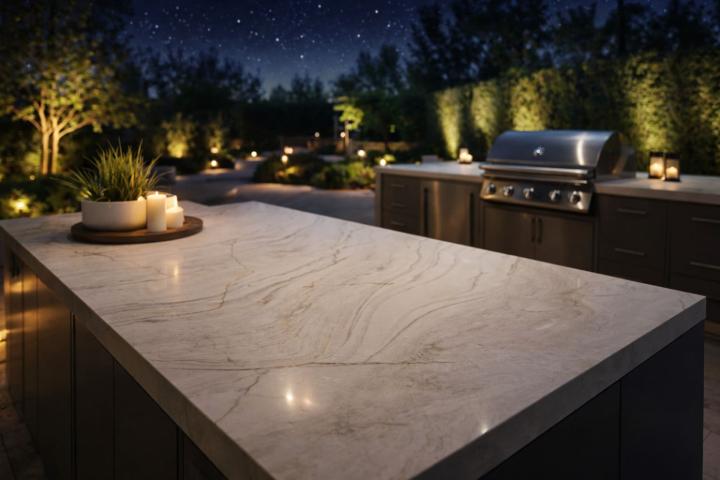
How Edge Profiles Shape the Feel of Your Kitchen
The edge you select communicates a design language throughout the entire space. Here is a quick guide to matching edge profiles with your kitchen's overall style.
For a modern kitchen, straight, eased, and waterfall edges all reinforce clean, contemporary design without introducing unnecessary ornamental detail. For a warm and traditional kitchen, bullnose, half bullnose, and ogee profiles bring in the softness and craftsmanship that classic interiors call for. For transitional kitchens that blend both worlds, the eased, half bullnose, and beveled edge profiles offer balance between modern restraint and traditional warmth.
Practical Considerations Homeowners Often Overlook
Beyond style, a few functional factors should inform your edge selection.
Households with children benefit from rounded profiles like bullnose or eased edges that eliminate sharp corners and reduce the risk of injury. Stone type matters too: quartzite, granite with heavy movement, and thinner countertop builds are more prone to corner chipping, so softer edges offer more protection. More decorative profiles like ogee require additional cleaning attention since the grooves trap crumbs and grease over time. If you want your countertops to appear thicker and more substantial, beveled, ogee, and laminated edges create that illusion effectively without requiring a thicker slab.
How to Choose the Right Edge Profile
Work through these four questions before making your final decision.
First, what style is your kitchen: modern, traditional, or transitional? Second, how busy is your household and do you have children who might run into the island? Third, do you want your countertop to blend into the background or make a statement? Fourth, is your stone bold and dramatic or understated and simple? Bold stone tends to benefit from a simpler edge that lets the material speak for itself, while a plainer stone can carry a more decorative edge that adds personality to the installation.
If you are still weighing your options, shopping local and viewing full slabs in person makes it much easier to visualize how a given edge profile will interact with your chosen material.
Conclusion
The countertop edge profile is one of the most impactful finishing decisions you will make in a kitchen or bathroom remodel. It influences the overall style of the space, how comfortable and safe the surfaces are to use every day, and how well the countertop holds up over time. Whether you prefer the timeless simplicity of a bullnose, the architectural precision of a straight edge, or the dramatic visual impact of a waterfall island, the right profile should reflect both how you live in your kitchen and the design vision you are working toward.
As a direct stone importer, our team carries a full selection of natural stone and engineered stone slabs across our showrooms in Reno, Minden, Sacramento, and Fernley. We offer free design consultations to help you select the right material for your project. Visit us in person to view full slabs and find the stone that works best with the edge profile you have in mind.
Frequently Asked Questions
What is the most popular countertop edge profile?
The eased edge and straight edge are currently the most popular choices in residential kitchens. Both deliver a clean, modern look that pairs well with contemporary cabinetry and works across a wide range of stone materials. The bullnose remains a top choice for traditional and family-focused kitchens.
Which countertop edge profile is the safest for homes with children?
The bullnose edge is the safest option because it eliminates sharp corners entirely with its fully rounded profile. The eased edge is a close alternative, offering a slightly softened corner that is significantly safer than a true square edge while still maintaining a modern appearance.
Does the edge profile affect how easy the countertop is to clean?
Yes. Simpler profiles like eased and straight edges are the easiest to wipe down because they have no grooves or curves to trap debris. Decorative profiles like ogee require more attention since the S-shaped curves can collect crumbs and grease over time.
Can any edge profile be applied to any stone material?
Most edge profiles can be used with common countertop materials like granite, marble, quartzite, and quartz. However, the slab thickness and the hardness of the material can limit certain options. Thinner slabs may not support highly decorative profiles, and some stones are more prone to chipping along intricate cuts. Always confirm available edge options with your fabricator based on the specific slab you select.
Does the waterfall edge require a special type of slab?
Yes. A waterfall edge requires enough material from a single slab to cover both the horizontal countertop surface and the vertical side panels. This means vein matching becomes a critical part of the selection process, particularly with heavily patterned stones like quartzite or marble. Working with a knowledgeable stone supplier ensures the slab you choose has sufficient material and the right pattern flow for a seamless result.