Porcelain tile in purple tones is an engineered,
high-temperature-fired tile available for floors, walls, fireplaces, and
outdoor surfaces in both residential and commercial settings. Purple porcelain
tile spans a wide range of color tones, from soft lavender and dusty mauve
through mid-range violet and plum to deep eggplant and rich jewel tones. Each
shade and finish produces a different visual effect, making it a flexible
choice for accent features and full-surface use.
Our team works with
homeowners, designers, and contractors across Nevada and Northern California to
help find the right tile for each project. To learn more about our background
and showrooms, visit our home page. You can find more information about our full tile range on our porcelain tile page.
Color, Tone, and What Purple Does in a Space
Purple sits where red and blue meet, producing a range of
effects depending on the shade and finish selected. Lighter tones such as
lavender and lilac can add a sense of openness and calm, making them well
suited to living areas, entryways, and accent walls where a soft, airy quality
is the goal. Mid-range tones like dusty mauve and muted violet work well in
spaces that call for warmth without the intensity of a saturated hue.
Deeper
shades such as plum, eggplant, and royal purple carry visual weight and are
often used as statement features on fireplace surrounds, feature walls, or
floor inlays where contrast is an intentional design choice. In polished
finishes, purple porcelain reflects light and amplifies color depth, which can
make even a single accent surface feel rich and considered. In matte and honed
finishes, the same tones read as more understated and work well across larger
surface areas without overpowering a room. Our complete
porcelain tile guide covers finishes, sizes, and technical specifications.
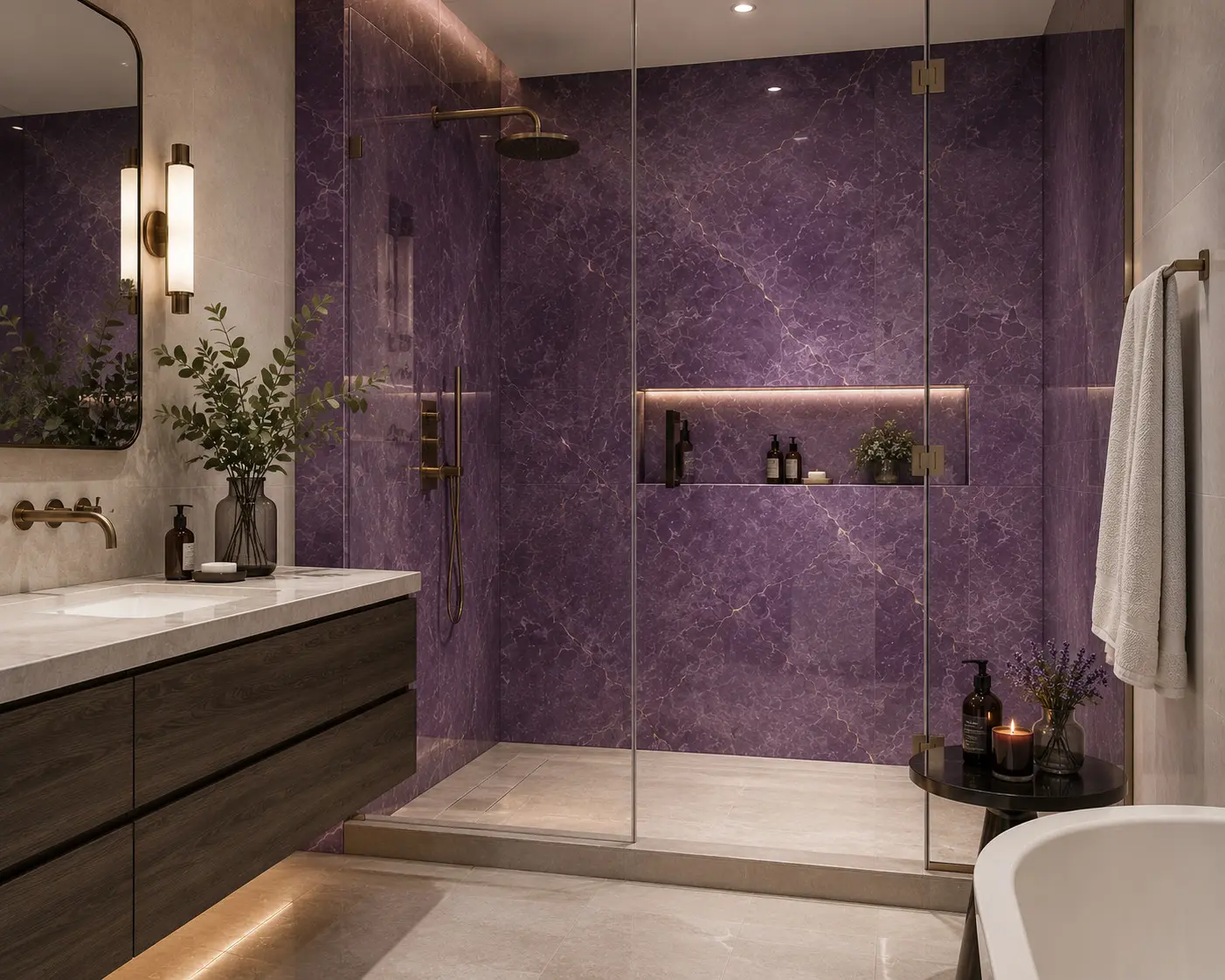
Note: Some images on this page may be conceptual renderings created to illustrate design possibilities and may not depict actual installations.


Living Room
Shower Walls
Kitchen
Bedroom

Where Purple Porcelain Tile Can Be Used
As an engineered tile, porcelain in purple tones is suited to a broad range of applications, but finish and format selection matter for each setting.
On floors, matte and textured finishes are generally the practical choice because they offer better grip underfoot, particularly in areas that may get wet. In the US, ANSI A326.3 is the test method for measuring DCOF, while ANSI A137.1 is the ceramic tile product standard that sets the 0.42 minimum for interior floors expected to get wet. Checking the DCOF value on the tile's data sheet is recommended when selecting any floor tile. Polished purple porcelain can work on floors in areas where the surface remains consistently dry and foot traffic is minimal, but matte and textured formats are generally the safer specification for floors in active spaces.
On walls, this tile performs well across a range of interior applications including living areas, entryways, accent walls, and fireplace surrounds. Large-format tiles in deep purple tones create a near-seamless surface with minimal grout lines, while smaller mosaic formats in lighter lavender tones add texture and dimension to accent surfaces. The glaze or finish on wall tiles can carry the full depth of purple tones without the slip resistance constraints that apply to floor tile selection.
For outdoor use, porcelain tile used in exterior applications should carry a frost-resistance rating confirmed on the tile's data sheet or manufacturer specifications. Porcelain with water absorption at or below 0.5 percent, as referenced by TCNA porcelain tile certification standards, typically meets this threshold, though low water absorption alone does not automatically guarantee frost resistance for every product. Porcelain is UV resistant, meaning the color can hold up well under prolonged sun exposure, though performance may vary by specific product, finish, and installation conditions. Our team references ANSI A108 installation standards when advising on exterior tile installations. Architects and design professionals can find additional specification resources through the International Surface Event design program.
Check out our porcelain tile products
Care & Maintenance
Sweep or vacuum regularly to remove grit and debris before it can scratch the tile surface under foot traffic.
Damp-mop floors with a pH-neutral cleaner diluted in warm water and rinse thoroughly to avoid leaving a residue that dulls the finish.
Avoid abrasive scourers, steel wool, and harsh chemical cleaners, as these can scratch polished and honed finishes and affect color appearance over time.
Avoid acid-based cleaners and ammoniated products, as these can damage grout joints and the tile surface depending on finish.
The tile itself does not typically require sealing, as the fired porcelain surface is non-porous, but grout joints in wet areas should be sealed with a penetrating grout sealer and resealed periodically based on exposure.
For outdoor installations, pressure washing at a moderate setting can remove moss and weathering from textured surfaces, and a seasonal biocide treatment can help manage organic growth on shaded or damp areas.
Frequently Asked Questions
This tile is available across a wide range of tones, from soft lavender and lilac to mid-range mauves and dusty violets, through to deep plum, eggplant, and rich royal purple. The tone, finish, and format all influence how the color reads in a space. Our team can help you explore available shade options during a showroom visit.
Yes. Porcelain tile in purple tones is suitable for both floors and walls, but the right finish matters depending on the application. Matte and textured finishes are generally recommended for floors where slip resistance is a priority, while polished and honed finishes work well on walls and fireplace surrounds where the reflective quality of the finish can enhance the color depth.
Porcelain tile can be suitable for outdoor use when the specific product carries a confirmed frost-resistance rating and an appropriate slip resistance rating. Confirming both on the tile's data sheet before specifying for any exterior use is recommended.
Porcelain tile is UV resistant, which means the color can remain reasonably stable under sun exposure over time, though prolonged exposure conditions, finish type, and specific product characteristics can all influence long-term color performance. Color is fired into the tile body or glaze at extreme temperatures, which can contribute to color stability when properly selected and maintained. Checking the manufacturer's full specification for the product is recommended.
Our team is available to help you explore tile options for your project, and you can book an appointment at your nearest showroom to get started. You can also find more information about our onyx look porcelain tile options on our marble look porcelain tile page, which includes deep-toned formats that pair well with purple tones in a space.