What Makes Porcelain Wall Tiles the Ideal Surface Choice
Per ASTM C373, impervious-grade porcelain absorbs less than 0.5% water by weight. This threshold supports moisture-resistant performance on wet interior walls throughout kitchens, bathrooms, and laundry areas.
When an individual product's spec sheet confirms that absorption rating, impervious-grade porcelain wall tile is also a viable option for exterior facade cladding in climates where freeze-thaw cycling is a design consideration.
Wall-format porcelain tiles are produced at standard thicknesses between 8mm and 10mm, balancing manageable wall loading with the structural rigidity needed for precise, long-term results.
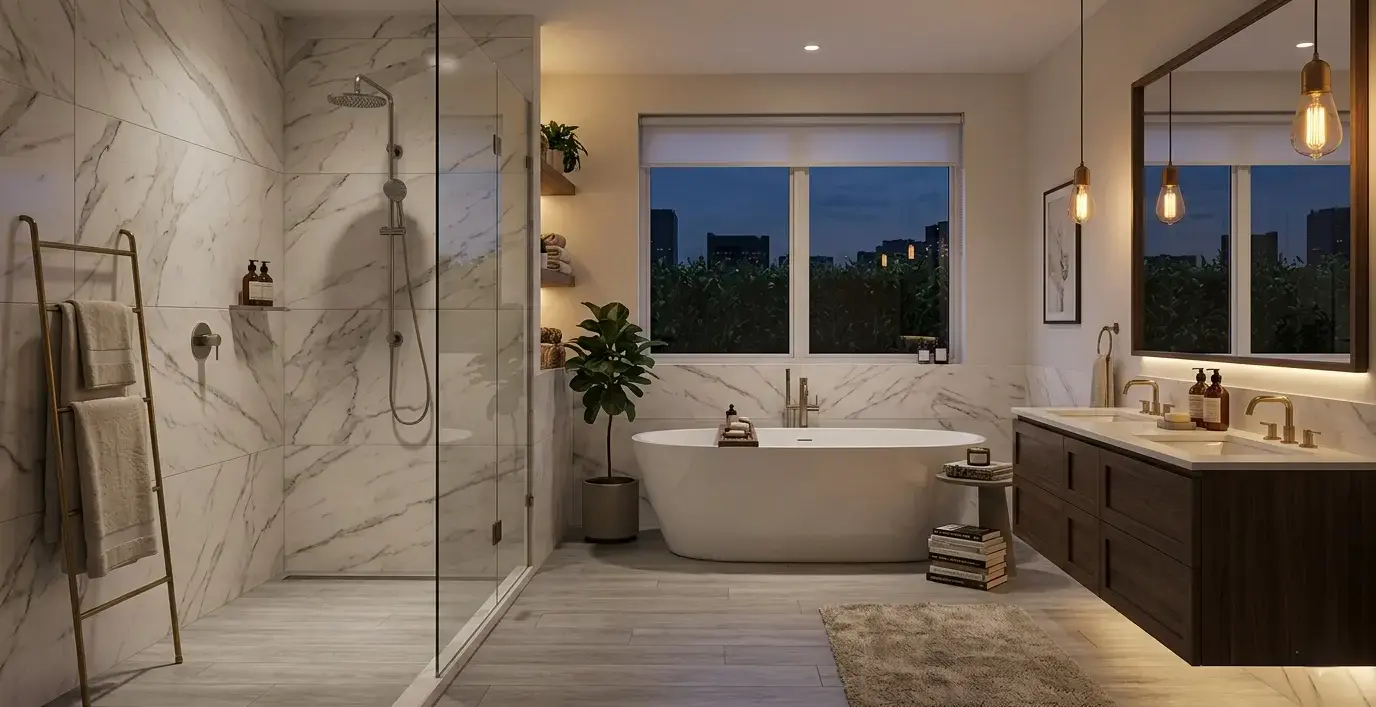
Marble-look veining is the most requested decorative pattern for porcelain wall tiles. Calacatta-inspired bold veins and softer Carrara-style patterns are both widely available across the category, alongside solid-tone collections in white, gray, and warm earth tones.
Property | Typical Value |
Reference / Note
|
Water Absorption | ≤ 0.5% | ASTM C373 (impervious grade); verify per product spec sheet |
Standard Thickness | 8–10 mm (approx. 3/8 in.) | Typical wall tile; confirm per product listing |
Mohs Hardness |
7-8 | Individual product data required; not available for this listing |
Edge Type | Verify per product spec sheet | Required for grout joint planning before specifying |
PEI Rating | Group I (wall use typical) | ASTM C1027; Group I tiles are not rated for floor traffic |
Our Latest Porcelain Tile Collection
Check out what's new in our inventory!
Layout Options and Color Combinations for Every Wall Application
Porcelain wall tiles adapt to a wide range of layout patterns, letting the same tile read differently depending on orientation and format.
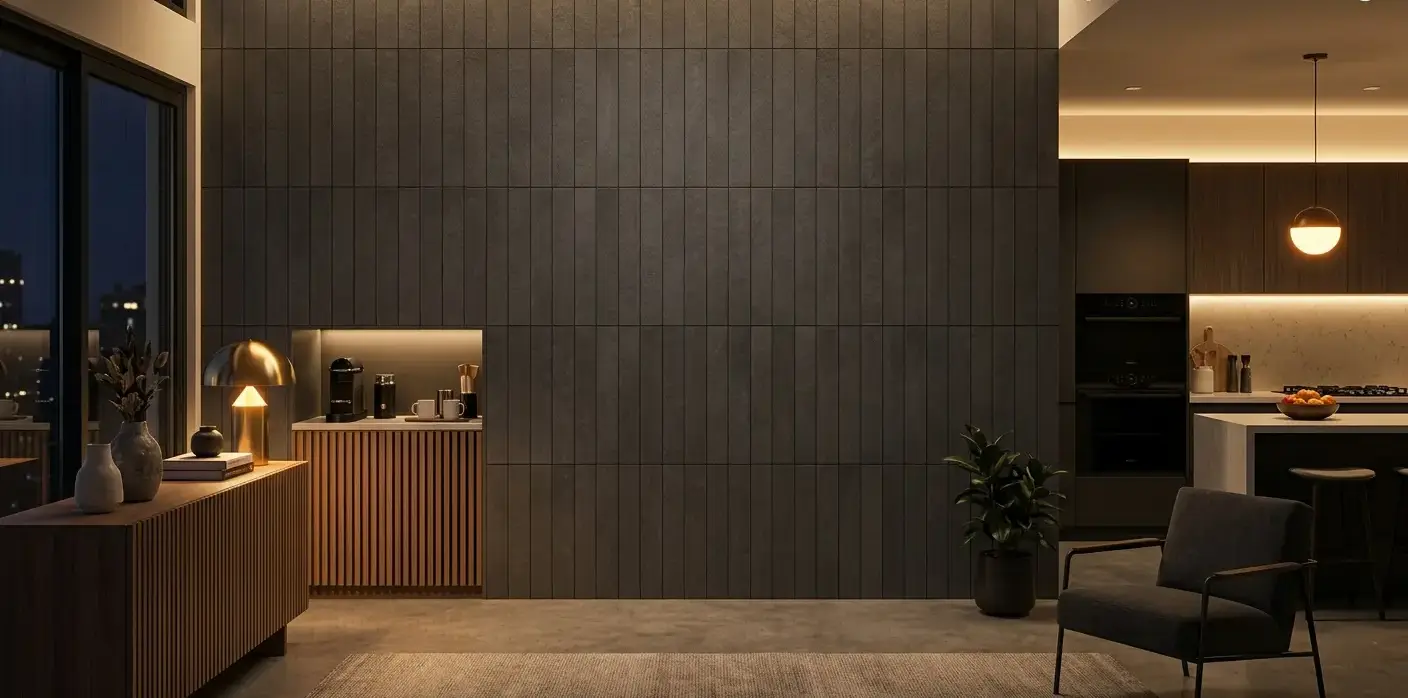
Horizontal stack bond, the classic approach behind the subway tile aesthetic, works across kitchen backsplashes and bathroom walls with consistent results. Vertical stack layouts draw the eye upward and are a reliable technique in rooms with lower ceilings, adding perceived height without changing the tile itself.
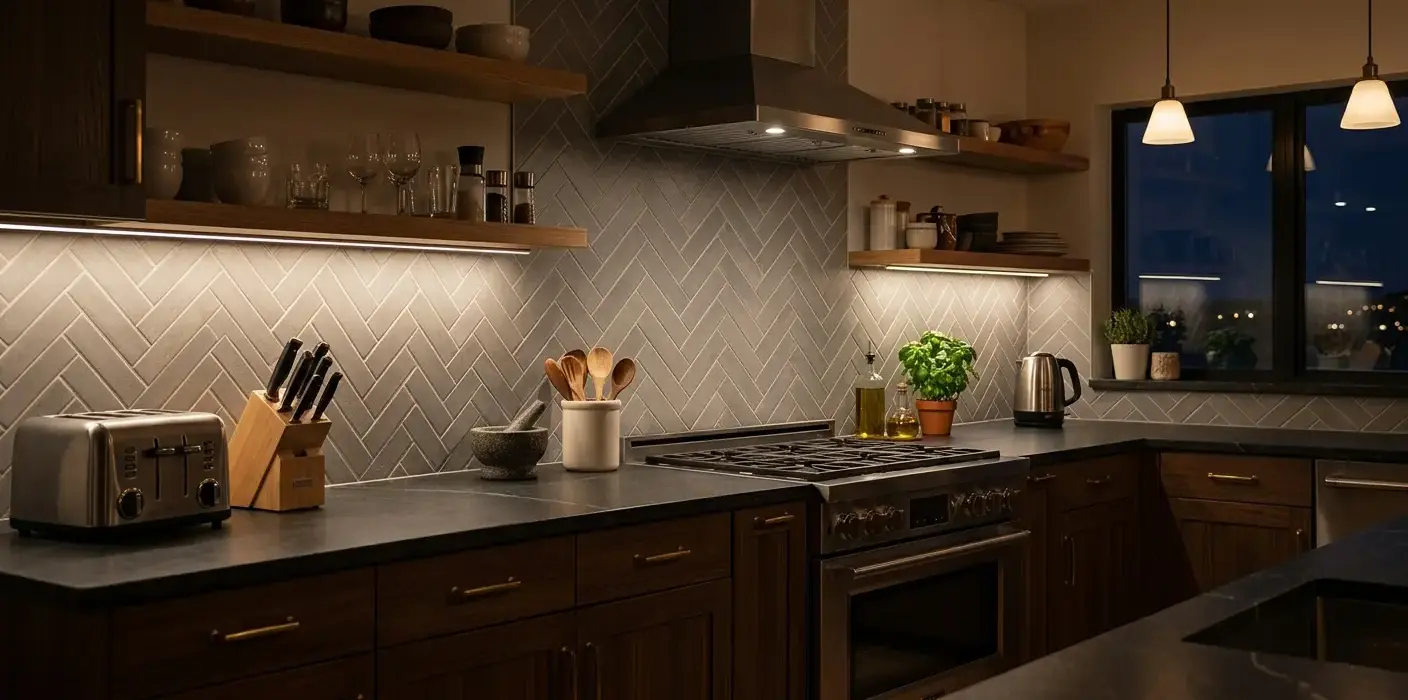
Herringbone and chevron arrangements introduce directional texture, making them a natural choice for feature walls, shower niches, and accent surfaces where visual interest is the priority.
Color selection is one of the most consequential decisions in any wall tile project. Warm whites pair naturally with wood cabinetry and matte brass hardware. Soft gray and charcoal porcelain wall tiles complement matte black or brushed nickel fixtures for a more minimal, contemporary aesthetic. For enduring guidance on building complementary palettes, classic color schemes from established interior design references provide reliable pairing frameworks that remain relevant across changing trends.
The porcelain tile collection at Nova Tile and Stone covers the most requested wall tile tones, from alabaster white with fine veining to deep charcoal with a refined matte surface.
Functional Advantages of Porcelain Wall Tiles
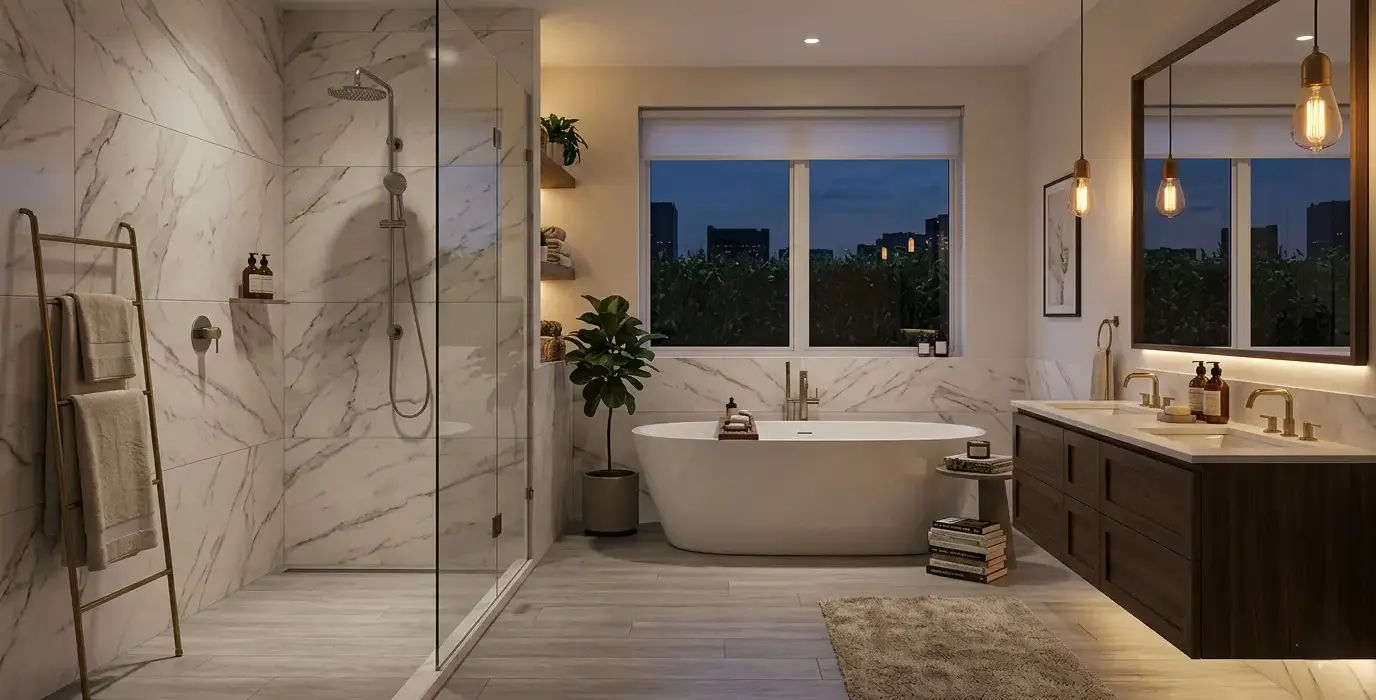 Conceptual rendering
Porcelain wall tiles provide dependable performance in both residential and commercial settings, making them a trusted choice for diverse wall projects. Their durability and consistency ensure reliable results across applications, from everyday interiors to high‑traffic environments.
- Moisture resistance. The dense, vitrified body resists water penetration on wall surfaces, keeping bathrooms, kitchens, and utility areas functional for years with proper maintenance.
- Stain resistance. Glazed porcelain surfaces resist household stains from cooking oils, soaps, and common cleaning agents, though routine cleaning preserves the surface appearance over time.
- Color stability. Porcelain tiles are fired with color integrated into the glaze or body, supporting consistent appearance under indoor lighting with regular upkeep. For exterior wall applications, verify UV performance on the individual product spec sheet.
- Finish range. Matte, satin, and gloss porcelain finishes are each available, allowing the same wall material to serve multiple spaces while delivering distinct light responses suited to each room's needs.
- Low routine maintenance. Neutral pH cleaners and a damp cloth handle most porcelain wall tile surfaces effectively. Grout joints benefit from periodic sealing to maintain their appearance and moisture resistance, but proper care preserves the surface's quality over time.
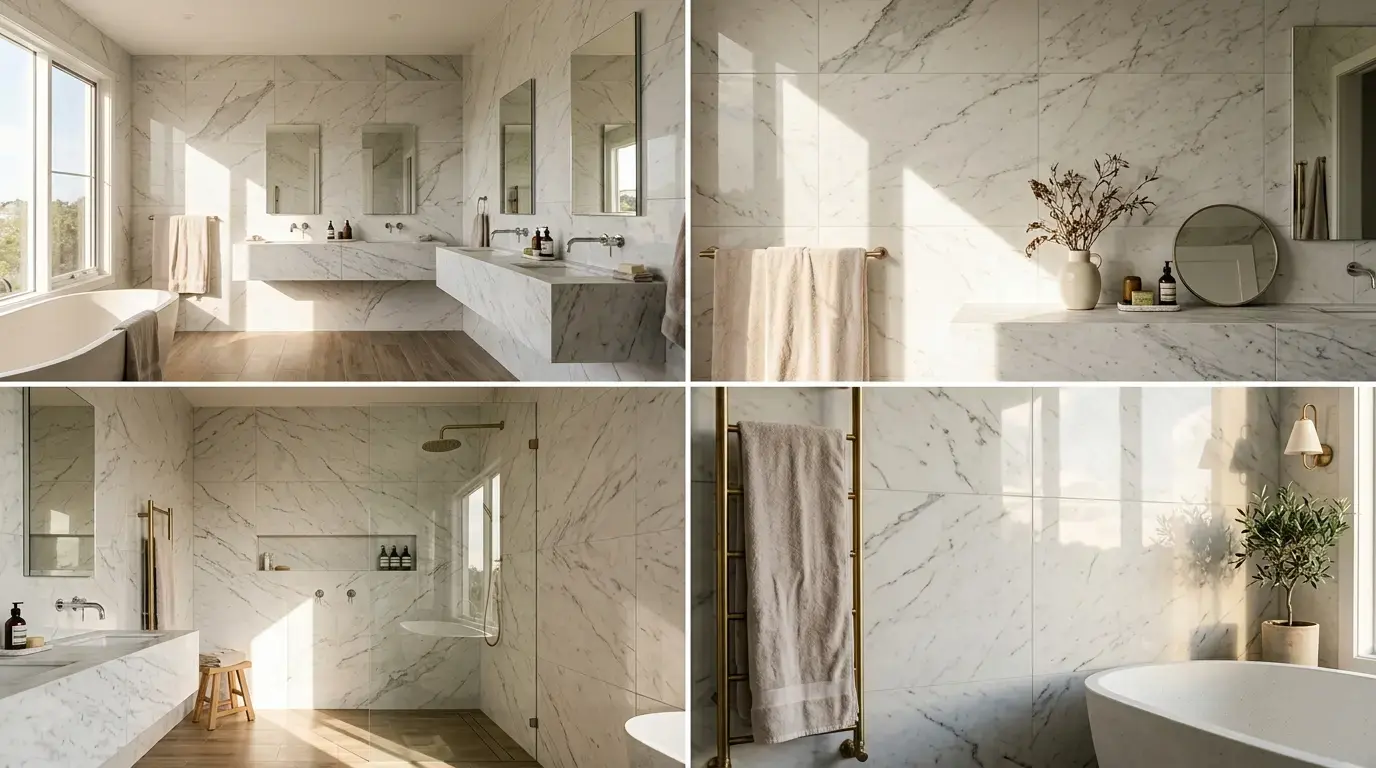
A Durable Investment in Interior and Exterior Surfaces
Porcelain's durability across wall applications is supported by established industry testing. Products meeting ASTM C373's impervious absorption threshold are generally suitable for exterior facade cladding and environments with freeze-thaw temperature cycles.
As with any specification decision, the individual product's data sheet should confirm the absorption result before the material is selected for exterior or cold-climate wall applications.
Additional benchmarks relevant to wall tile buyers include ASTM C484, which addresses thermal shock resistance in ceramic products, and ASTM C648, which covers breaking strength. Requesting these test results from a supplier gives objective data for comparing tile collections.
Nova Tile and Stone design experts, serving homeowners, designers, and trade professionals across Northern Nevada and California, carry porcelain wall tiles across residential and commercial-grade collections through four regional showrooms.
For keeping porcelain surfaces looking their best over time, the porcelain tile care guide covers routine cleaning, grout maintenance, and seasonal upkeep in practical detail.
Discover Our Recent Publications
Explore Recent Highlights from Our Team!
Frequently Asked Questions
Matte and gloss finishes are both suitable for bathroom walls. Matte finishes conceal water spots more effectively and are practical for high-use bathrooms. Gloss finishes reflect ambient light and make compact bathrooms feel larger. The best choice depends on the room's lighting, fixture finishes, and the visual result you are aiming for.
Yes, when the individual product's spec sheet confirms water absorption at or below 0.5% per ASTM C373, the tile meets the impervious classification that supports exterior and frost-resistant applications. Always verify specific product test data before specifying porcelain wall tiles for an exterior facade or cladding project.
Porcelain is fired at a higher temperature than standard ceramic, producing a denser, less porous tile body. Porcelain wall tiles typically absorb significantly less water, which makes them more resistant to moisture and better suited for wet wall areas and exterior cladding compared to non-porcelain ceramic alternatives.
Grout joint width depends on the edge type of the tile. Rectified porcelain wall tiles, precision-cut to consistent dimensions, support narrower joints as tight as 1/16 inch. Non-rectified tiles carry natural size variation and require wider joints to accommodate dimensional differences. Confirm the edge type on the product spec sheet before planning grout joint width.
Routine cleaning with a damp cloth or a neutral pH cleaner keeps porcelain wall tile surfaces in good condition. Avoid abrasive scrubbers on gloss finishes to prevent surface dulling. Grout lines benefit from periodic sealing to resist moisture absorption and staining. Follow the product manufacturer's specific care recommendations for best long-term results.