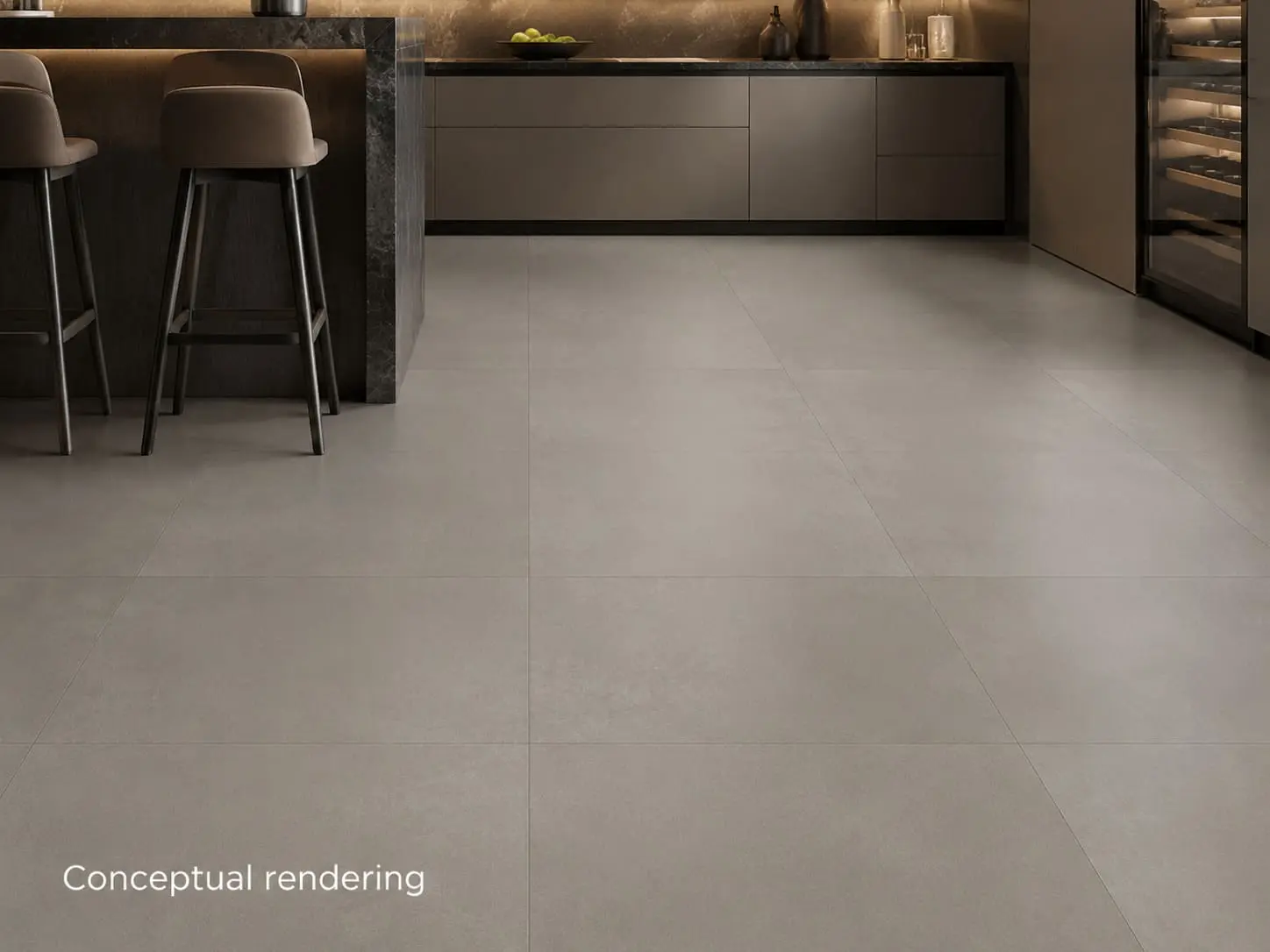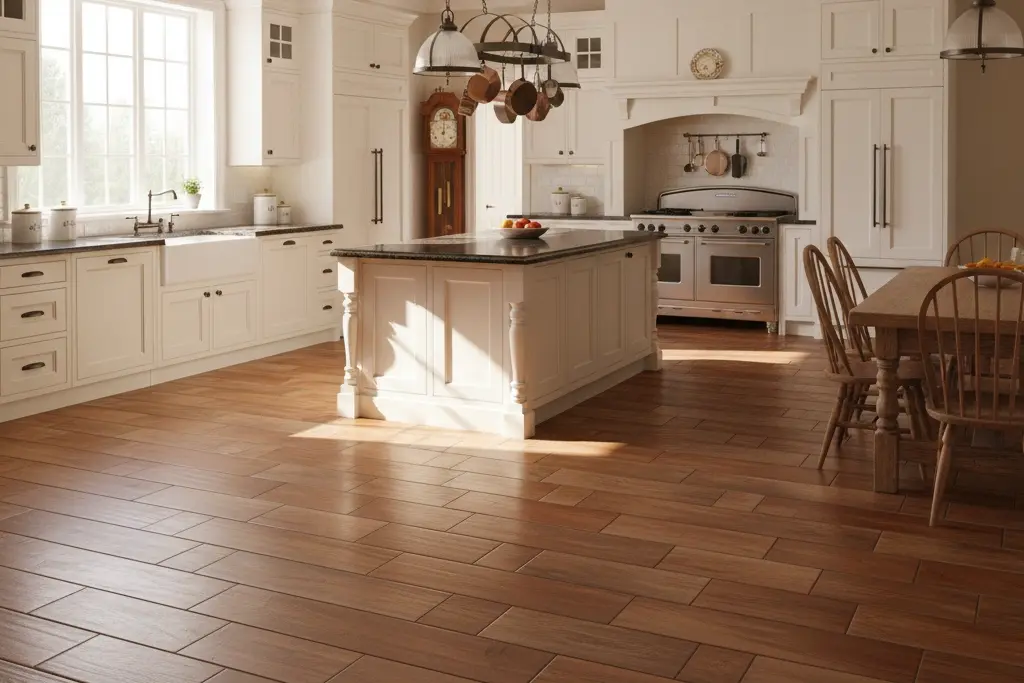
Porcelain is one of the most widely used materials for kitchen floors. It handles daily foot traffic, resists moisture and stains, and holds up in rooms where spills and splashes are routine. If you are weighing your flooring options for a kitchen remodel or new build, porcelain kitchen floor tiles are worth a close look. Understanding what sets porcelain apart from other flooring materials can help you make a more informed decision before placing an order.
Why Porcelain Works in Kitchens
Kitchens put more demands on a floor than most other rooms in a home. Water pools around sinks and dishwashers, grease can settle near cooking areas, and foot traffic is constant throughout the day. Porcelain is fired at high temperatures, which produces a dense, hard tile that resists moisture absorption. This makes it a suitable material for kitchen floors where wet conditions are frequent.
Because porcelain is fired at higher temperatures than ceramic, it has a lower water absorption rate. Porcelain tiles that meet the porcelain tile certification standard maintained by the Tile Council of North America must have a water absorption rate of 0.5% or less. Low water absorption matters in a kitchen environment where liquid spills are common and floors are cleaned frequently.
Porcelain is also available in matte and textured finishes, which can improve traction compared to polished surfaces. If slip resistance is a priority, look for tiles with a textured or matte finish when browsing the collection.
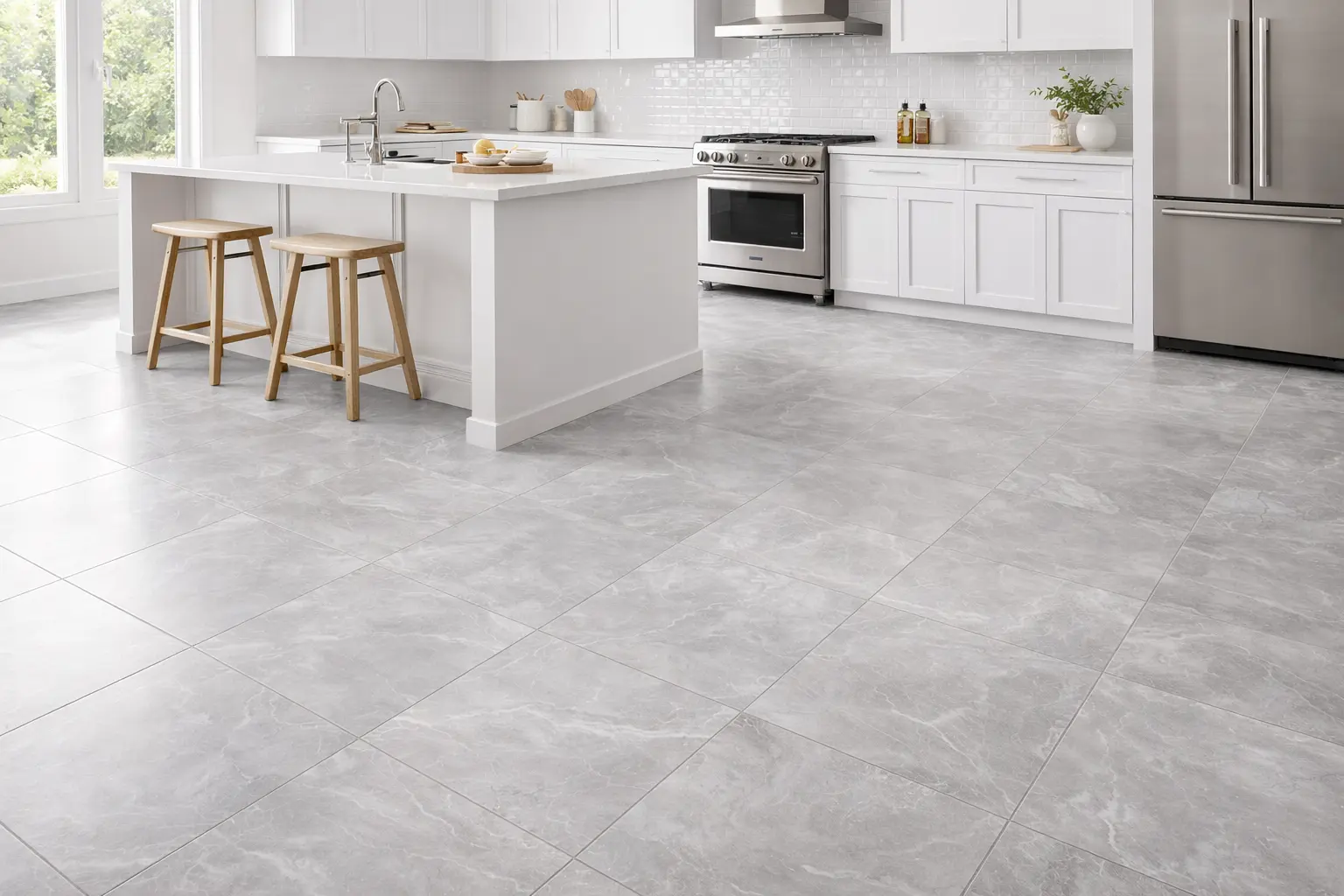
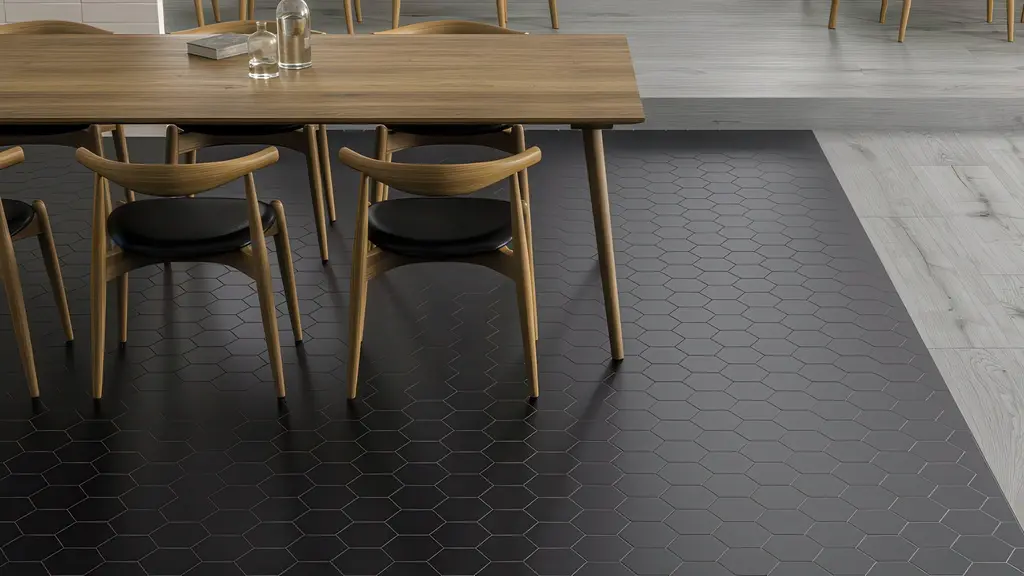
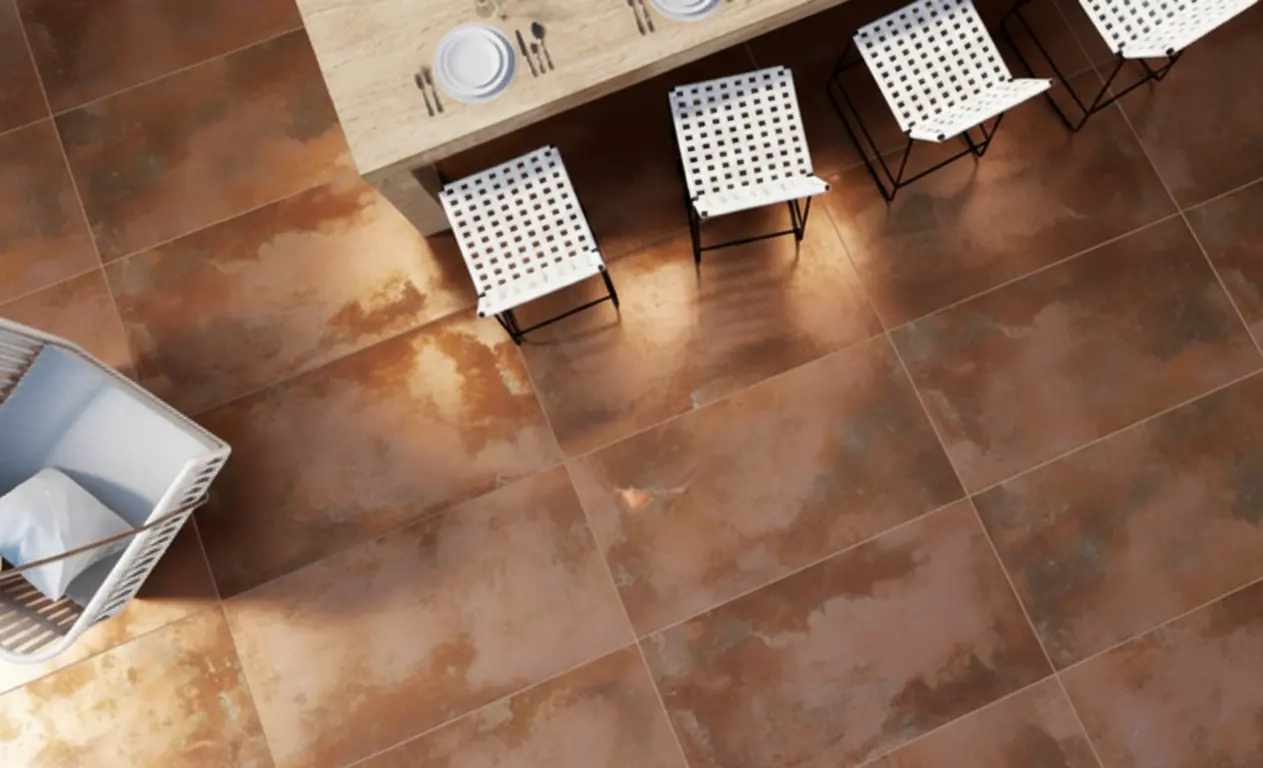
Note: Some images on this page may be conceptual renderings created to illustrate design possibilities and may not depict actual installations.
Sizes, Styles, and Finishes
Large-format tiles, such as 12x24 or 24x24, are common in kitchens because they create fewer grout lines, which makes cleaning easier and gives the floor a more open appearance. Smaller formats like 12x12 work well in compact kitchens or as part of a pattern layout. The right format depends on the dimensions of the kitchen, the overall style of the space, and personal preference.
Porcelain can be produced to closely resemble natural stone, concrete, or wood, giving you the visual character of those materials with the practical properties of a porcelain surface. Stone-look options are a good example of this range. The Onyx 12x24 matte porcelain tile replicates the look of natural onyx, while the Contemporary Slate 12x24 porcelain tile offers a grip finish well suited to kitchen floor use. Concrete-look tiles suit kitchens with a more minimal aesthetic, while wood-look porcelain works well in warmer, more casual spaces.
Finishes range from matte to polished. Matte and semi-matte are the more common choice for kitchen floors because of their lower maintenance requirements and better grip underfoot. Polished porcelain can work in lower-traffic kitchens but generally requires more frequent cleaning to maintain its appearance.
Grout and Layout Considerations
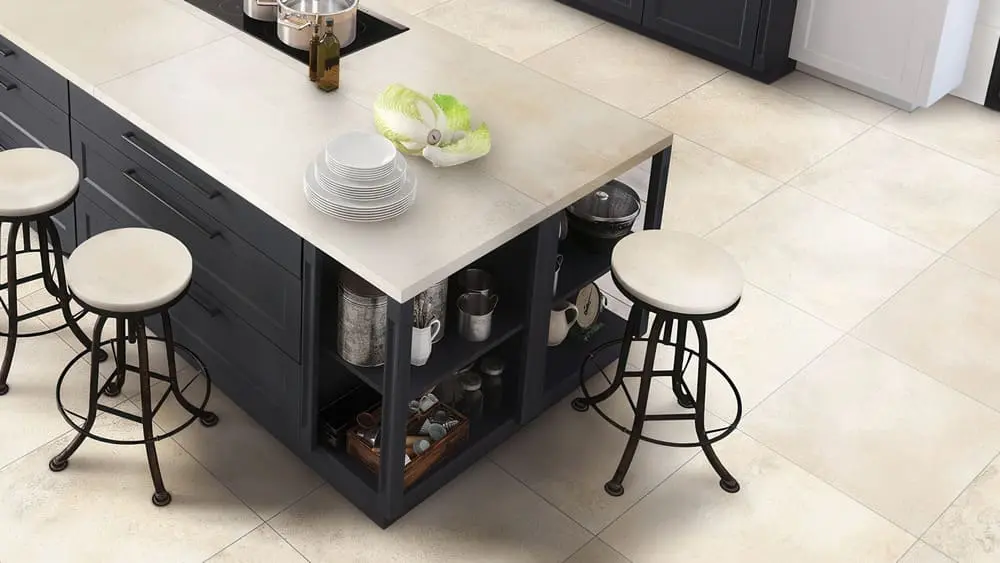
Rectified tiles, which are cut to precise dimensions after firing, allow for tighter grout joints. Narrower grout lines mean less surface area where dirt and grease can collect, which is a practical consideration in a kitchen setting. Installation standards for tile, including grout joint sizing guidance, are covered under the ANSI standards for tile installation published by the Tile Council of North America.
Layout pattern also affects the finished appearance. A straight stack layout is clean and straightforward. An offset or brick pattern adds visual movement. A diagonal layout can make a smaller kitchen feel wider. These are decisions worth thinking through before installation begins, and resources from industry events like the International Surface Event reflect how architects and designers approach these choices professionally.
Shopping Online or In a Showroom
The tile and stone showrooms carry a broad range of porcelain tile options across sizes, finishes, and styles. Browsing porcelain tiles online gives you the ability to filter by size, style, and finish at your own pace. The full online tile shop lets you explore the complete collection and place an order for home delivery or in-store pickup.
Before placing a full order, ordering a sample is worth considering. Colors and textures can look different on a screen than they do in person under your home's lighting. The $1 sample program lets you order a cut-to-order 4"x4" tile that ships free so you can evaluate the material before committing.
Seeing a tile sample in the actual room where it will be installed is one of the more reliable ways to evaluate a color or finish before purchase. Lighting conditions in a kitchen, whether natural or artificial, affect how a tile reads in practice. For a deeper look at porcelain as a material, the complete guide to porcelain tile covers specifications, finishes, and selection considerations in detail.
If you prefer to see tiles in person, free design consultations are available through the showroom design consultation booking page in Reno, Sacramento, Minden, and Fernley. Design staff can walk you through sizing, grout line spacing, and how different finishes will read in a kitchen environment.
Note: Some images on this page may be conceptual renderings created to illustrate design possibilities and may not depict actual installations.
Frequently Asked Questions
Porcelain tiles are well suited for kitchen floors. They are dense, moisture-resistant, and hold up under daily foot traffic. Matte and textured finishes provide better traction in areas where spills are common.
This depends on the size of the kitchen and the look you want. Large-format tiles such as 12x24 or 24x24 reduce the number of grout lines, which can make a floor easier to clean. Smaller tiles like 12x12 work well in tighter spaces or when a more traditional layout is preferred.
Matte porcelain has a non-reflective surface that tends to hide smudges and footprints better than polished. Polished porcelain has a smooth, reflective finish that can add brightness to a space but may show marks more easily. For kitchen floors, matte or textured finishes are generally more practical.
Yes. Samples are available for $1 each and ship free. Each sample is a 4"x4" cut-to-order tile so you can see the actual color and texture in your own space before placing a full order.
Free design consultations are available at all four showrooms in Reno, Sacramento, Minden, and Fernley.