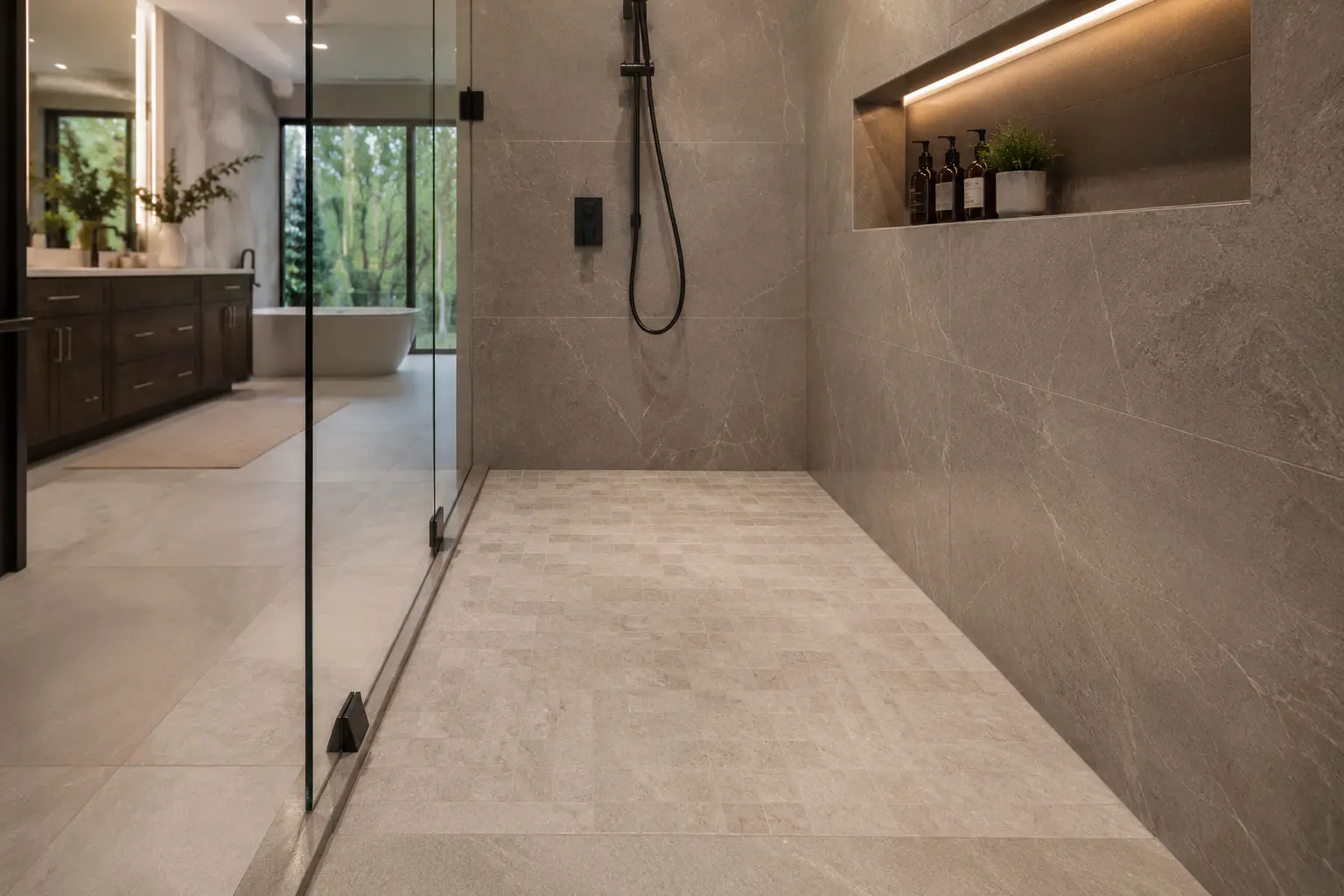
Porcelain tile is an engineered material fired at high
temperatures until it reaches a dense, vitrified body with water absorption at
or below 0.5 percent, the ANSI and TCNA threshold for that classification. That
low absorption rate is what makes porcelain tile for a shower floor a practical
choice, since the floor stays wet for extended periods and needs a surface
built to resist moisture rather than absorb it.
A matte or textured finish adds
a further advantage in this application, testing higher for slip resistance
under the industry's dynamic coefficient of friction standard than a polished
surface typically does. Our team
works with this material often, and our complete
guide to porcelain tile covers finish, size, and performance in more depth
for anyone comparing options before narrowing down a shower floor selection.
Sizing Tile for the Slope Toward the Drain
Shower floors are sloped toward a drain, and that slope
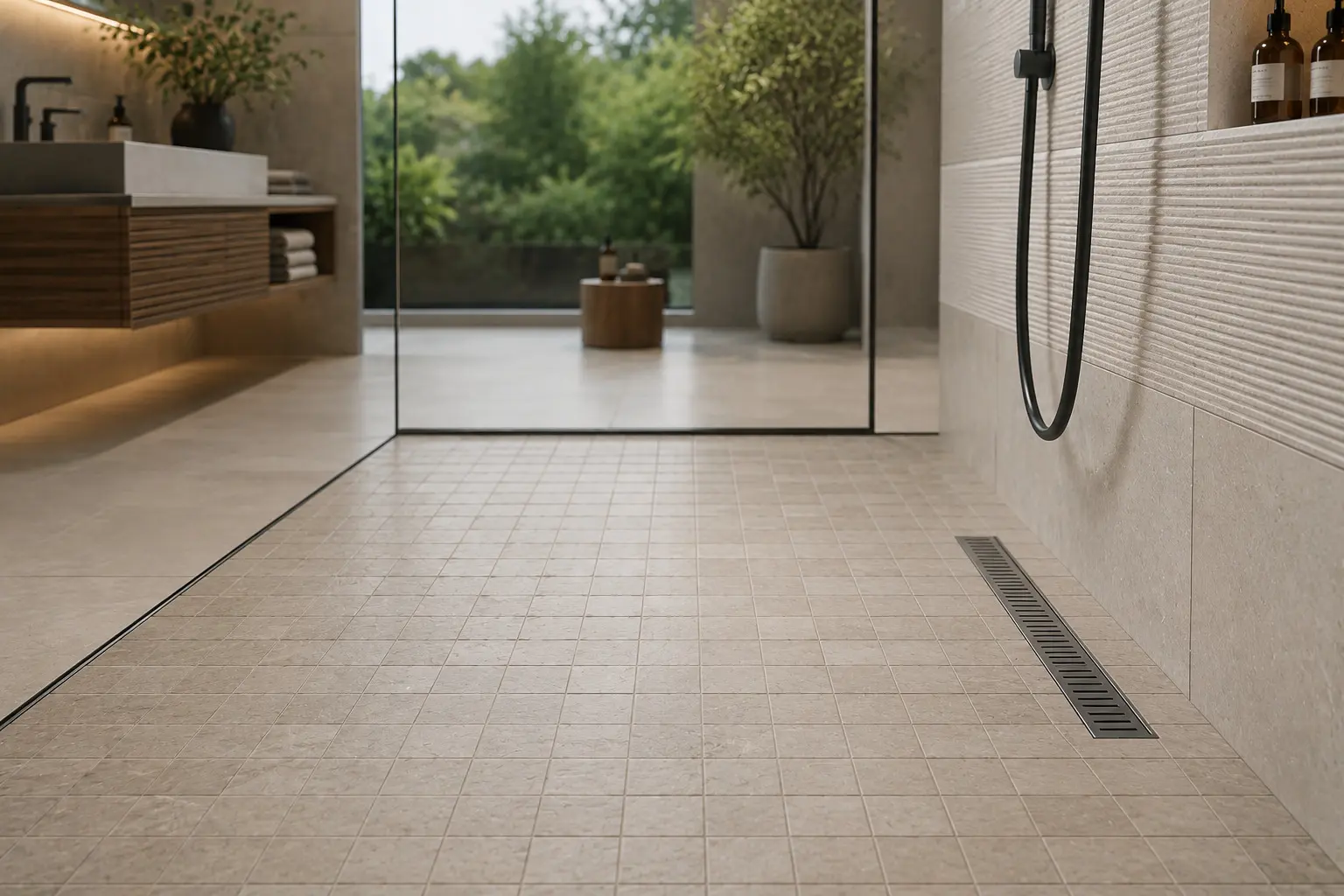
changes how tile size behaves in the space. Smaller-format porcelain, including
mosaics and tiles under about four inches, generally follows that pitch more
easily because the additional grout lines act like small seams, letting the
surface bend visually across the grade without large gaps or high spots. Our 12x24
porcelain floor tile and 24x24
porcelain floor tile collections tend to be a better match for the flat
bathroom floor surrounding the shower rather than the pan itself, since larger
tile needs a very even surface underneath to sit flush.
Homeowners planning a
curbless or barrier-free shower, a design trend covered in more detail by the National Kitchen and Bath Association, often lean toward smaller tile formats
because they adapt more readily to the gentle grade those layouts require. Our shop tiles by size
page groups these options together, which makes comparing sizes side by side
easier before placing an order.
How the Surface Handles Daily Water Exposure
Slip resistance is the performance question most people ask
about a shower floor, and for good reason, since the surface is wet nearly
every time it gets used. The tile industry measures this with a dynamic
coefficient of friction rating, and the Tile Council of North America publishes
the current testing standard for measuring that friction on
hard surface flooring. A matte or textured finish generally tests higher on
that scale than a polished finish, which is part of why polished porcelain is
rarely recommended directly inside a shower pan even though it can work well on
a surrounding bathroom floor.
General buying guides, including this overview of bathroom floor tile options, point out that a published
friction rating is one of the more reliable ways to compare flooring for
wet-area use, which is part of why porcelain comes up so often in shower floor
conversations specifically. That said, a tile meeting the industry's minimum
wet rating is not automatically safe in every household, since soap residue,
hair conditioner, and hard water buildup can all lower traction over time
regardless of the number printed on the box.
That low water absorption also
means the tile body itself resists staining and moisture penetration, but grout
lines are more porous than the tile and should still be sealed and checked
periodically so water is not slowly working its way into the joints.
Keeping the Grout and Surface in Good Shape
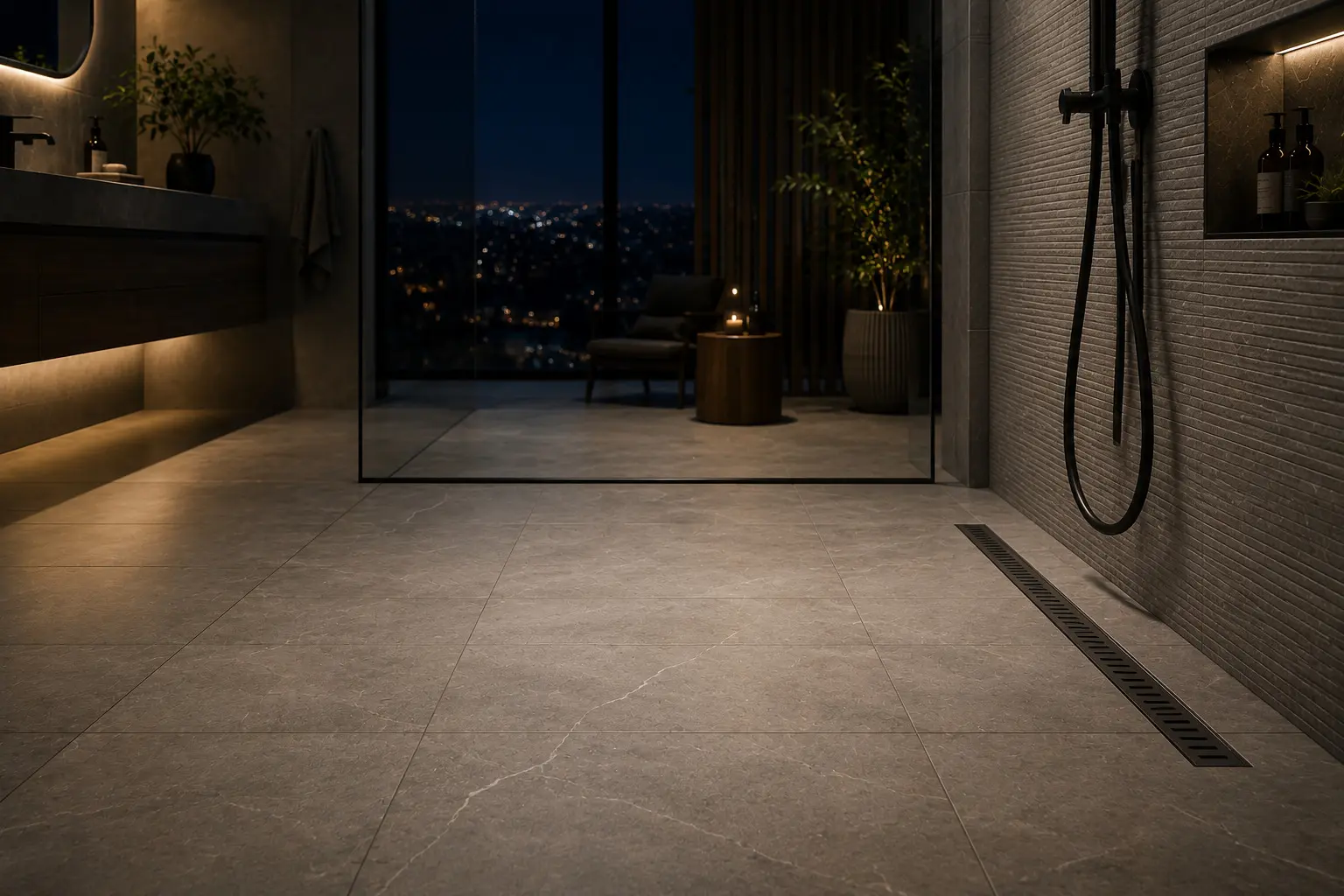
Porcelain tile is one of the lower-maintenance options for a shower floor, but a few consistent habits keep both the tile and the grout performing the way they should for years. Our team recommends the following routine for anyone maintaining a shower floor.
Use a soft-bristle brush or non-abrasive cloth with a pH-neutral cleaner rather than an abrasive scrub pad or powder.
Reseal the grout on the schedule recommended by the grout manufacturer, since sealed grout resists staining and mildew far better than bare grout in a wet environment.
Dry the floor with a squeegee or towel when possible, since standing water left in low spots can encourage mildew in the grout even though the tile itself resists moisture.
Avoid bleach-based or highly acidic cleaners, which can wear down grout and dull a matte or textured finish over time.
Rinse the floor with clean water after each use to limit soap scum and mineral buildup from settling into the grout lines.
Once a size and finish direction feels right, our shop tiles by style page is a good next stop for browsing current options in stock.
Smaller-format porcelain tile, including mosaics and pieces under about four inches, is generally the better fit directly inside a shower pan since the added grout lines help the tile follow the slope toward the drain without leaving large gaps. Larger-format porcelain works well on the surrounding bathroom floor, where the surface stays flat and does not need to pitch in any direction.
A matte or textured finish is generally a safer choice for a shower floor than a polished finish, since texture improves traction when the surface is wet. The tile industry tests this using a dynamic coefficient of friction rating, but no rating guarantees safety in every household, since soap residue, hard water buildup, and daily use all affect how slippery a floor becomes over time.
Routine care involves rinsing the floor after use, cleaning with a pH-neutral product rather than an abrasive or bleach-based cleaner, and keeping the grout sealed on the schedule recommended by the grout manufacturer. The tile itself resists staining and water absorption, but grout is more porous and needs the extra attention to hold up in a shower environment.
Yes, store pickup is available at all four of our showroom locations. Because tile orders vary by size, quantity, and current stock, scheduling an appointment ahead of time helps make sure the porcelain tile for your shower floor project is pulled and ready when you arrive.
Yes, porcelain tile can be shipped. Because tile is heavy and can chip in transit if it is not packed carefully, our team works with freight carriers experienced in handling flooring materials so shower floor tile orders arrive intact. Shipping cost and timing depend on the size of the order and the delivery location, so it is best to contact our team directly for a shipping quote.