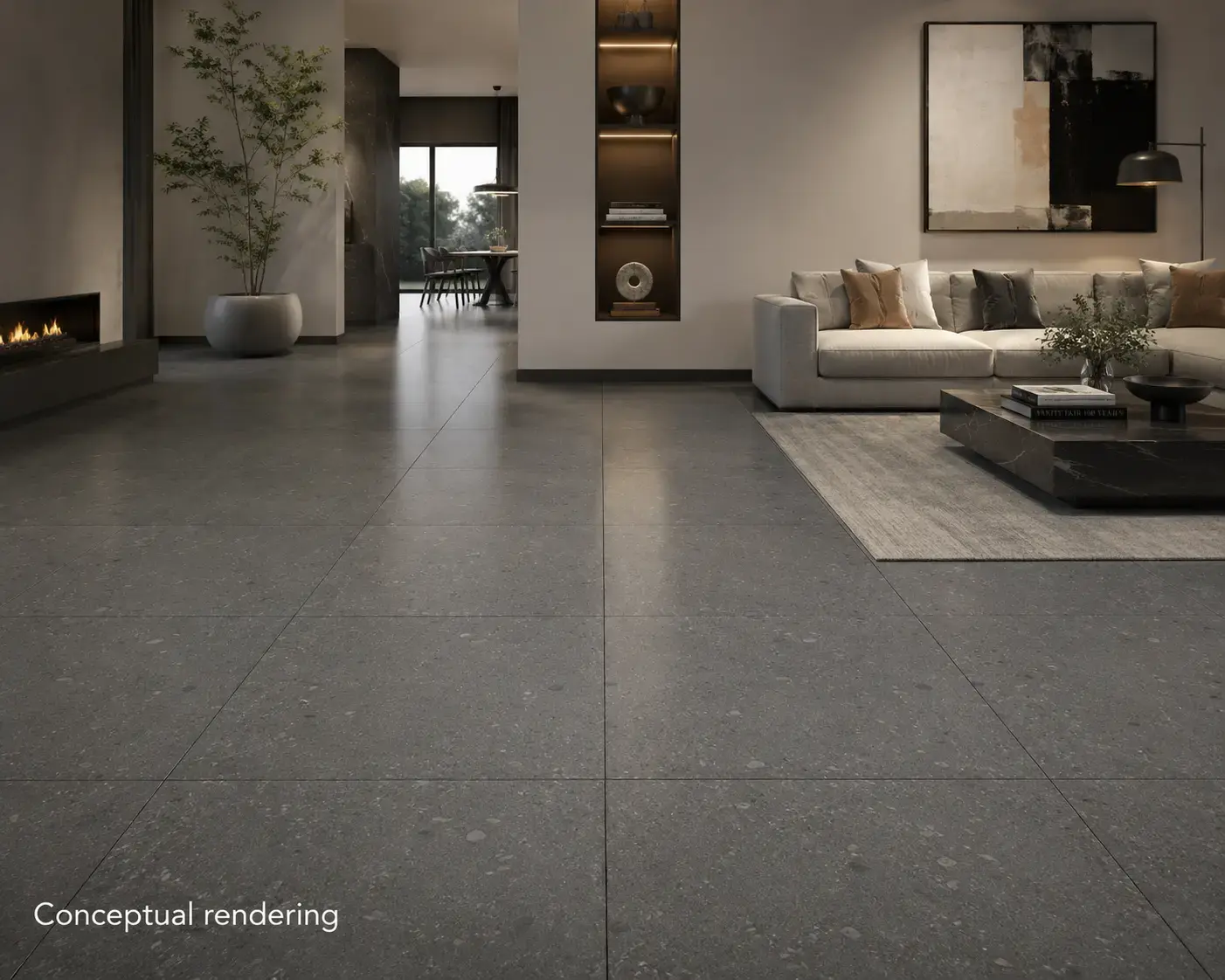
Porcelain floor tile in 24x24 size is a large-format ceramic tile made by firing refined clay at high temperatures, then cutting the fired material into a 24-inch by 24-inch format. The high-firing process gives porcelain a hard, dense, low-porosity surface, and porcelain is generally more resistant to moisture and wear than standard ceramic tile.
Because of this, porcelain floor tile is a common choice for both residential and commercial floors, and the 24x24 size is one of several large-format options manufacturers produce for this material. For a broader look at how porcelain is made and classified, see our complete guide to porcelain tile.
Applications
Porcelain floor tile works well in a range of residential and commercial settings, and the 24x24 size in particular is suited to larger, open floor plans where fewer grout lines create a more continuous look. Common applications include:
Entryways and Hallways
High foot traffic calls for a durable, easy-to-clean material, making porcelain a practical fit for these transition spaces.
Kitchens and Dining Areas
A smooth, low-maintenance surface is a priority in these spaces, and porcelain's low porosity helps it hold up to spills and daily use.
Living Rooms
The larger 24x24 format creates a more continuous visual flow, which works well in open-concept layouts.
Commercial Interiors
Lobbies, retail floors, and office spaces benefit from porcelain's durability under sustained foot traffic and its low upkeep over time.
Porcelain is classified by its water absorption rate, and the industry standard for porcelain specifically requires 0.5% or less, tested per ASTM C373. This low absorption rate is one reason porcelain is often specified for spaces that see routine foot traffic and occasional moisture exposure. Within this category, finish and texture vary widely; our concrete-look porcelain tile is one large-format option worth considering if an industrial aesthetic fits the space.
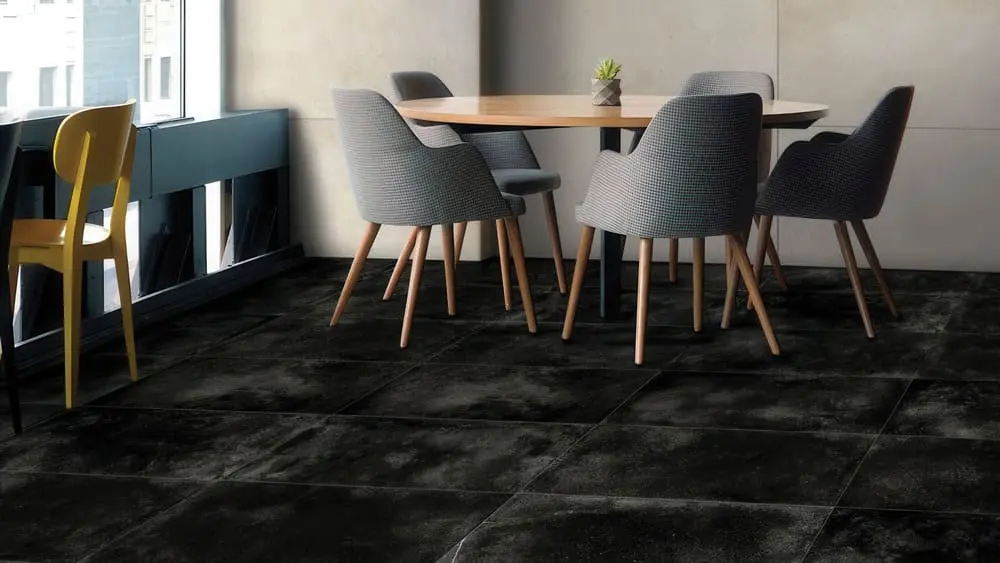 Conceptual rendering
Why Choose Porcelain Floor Tile in 24x24 Size
Beyond where it fits in a floor plan, a few practical factors explain why porcelain in this size is chosen over smaller tile or other materials. Porcelain's manufacturing process produces a denser tile body than standard ceramic, which can provide greater resistance to scratching and general wear. For floor-specific decisions, dynamic coefficient of friction (DCOF) is a useful data point: the ANSI A137.1 benchmark for level interior floors expected to be walked on wet is a DCOF of 0.42 or higher, which indicates the tile meets the industry threshold for slip resistance in that use case. This figure is worth checking against the specific tile's technical data sheet rather than assumed from the porcelain label alone.
Porcelain floor tile in 24x24 size also falls into the large-format category. Industry sources have historically defined large-format tile as any tile with an edge exceeding 15 inches, though this threshold varies by standard and publication date, and 24x24 comfortably qualifies under any commonly used definition. Large-format porcelain is typically rectified, meaning its edges are precisely ground to a uniform size, which generally allows for tighter, more consistent grout joints than smaller, non-rectified tile. This classification also affects installation: substrate flatness tolerances are tighter than for standard tile, and back-buttering is typically used to help achieve full mortar coverage. These are details worth discussing with a qualified installer before starting a project.
Care and Maintenance
Porcelain floor tile is known for being relatively easy to maintain, but a few habits can help extend its appearance and performance over time:
- Sweep or vacuum regularly to remove grit that can dull the surface finish over time.
- Damp mop with a pH-neutral cleaner; harsh acidic or abrasive cleaners can affect grout and any surface sealants.
- Wipe up spills promptly, particularly in kitchen areas, to help prevent grout staining.
- Check grout condition periodically, since sanded and cement-based grout typically needs resealing over time, while porcelain itself generally does not.
Following these steps can help preserve both the tile's surface finish and the appearance of the grout joints between tiles, particularly in higher-traffic rooms like kitchens and entryways.
Select the Ideal Porcelain Tile for Your Home
Frequently Asked Questions
Generally, yes. Porcelain's low water absorption rate and dense surface make it a practical option for kitchen floors, where spills and heavy foot traffic are common, though checking the specific product's rating is recommended.
Porcelain tile generally does not require sealing due to its low porosity, though this can vary by finish, so checking the manufacturer's specifications for a given product is worthwhile. Grout joints between the tiles typically do need periodic resealing.
Only if the specific tile is tested and rated for freeze-thaw resistance under ASTM C1026. Not every porcelain tile carries this rating, so it should be confirmed for the individual product before exterior use.
Industry guidance generally ties grout joint width to the tile's dimensional variation, typically requiring a joint at least three times that variation and no narrower than 1/16 inch.
It generally requires more precise substrate preparation than smaller tile, since large-format tile has tighter flatness tolerances, but this is a standard, well-documented part of professional installation.
Visit Nova Tile and Stone
Nova Tile and Stone carries porcelain floor tile in several large-format sizes, including 24x24, across multiple finishes and colorways. Because 24x24 porcelain tile is a significant, semi-permanent investment, viewing color and finish samples under your own lighting conditions before purchase is one of the more useful steps in the selection process. Browse the full range on our website, or stop by one of our showroom locations to see the tile in person before making a decision.
Browse Our Tile Collection