Porcelain Tile For Patio Flooring
Porcelain tile for patio flooring has a water absorption rate of 0.5% or less under ANSI A137.1. This qualifies it as impervious, the classification required for tile used in freeze-thaw climates. The low absorption comes from firing the tile body at temperatures approaching 2,500°F under high pressure, which leaves almost no space for water to enter and expand during a freeze. Outdoor porcelain patio tile is also commonly produced in a 20mm, or 2cm, thickness, roughly double a standard interior tile, to withstand ground-level installation and furniture loads. These properties are why porcelain tile for patio flooring holds up through repeated winters in Northern Nevada and the Sacramento region.
Slip Resistance, Thickness, and Wear Rating for Outdoor Porcelain
Slip resistance matters as much as water resistance on an outdoor surface. ANSI A137.1 references a dynamic coefficient of friction, or DCOF, test for tile that may be walked on while wet, and outdoor porcelain is generally selected with a textured or matte finish to help underfoot traction in rain or after watering nearby plants. Thickness is another factor: many porcelain tiles made for exterior use are produced in a 20mm or 2cm format rather than the thinner tiles used indoors, which allows the tile to be installed over pavers, pedestals, or a compacted base outdoors and gives it more resistance to point loads from furniture.
PEI rating, which measures surface abrasion resistance, is worth checking as well, since a patio sees ongoing foot traffic and occasional grit or sand tracked in from surrounding landscaping. For a broader look at PEI grades, finishes, and format options across all porcelain applications, our porcelain tile guide covers the full range beyond patio use specifically. When we help homeowners choose porcelain tile for patio flooring, we walk through finish, thickness, and size together so the tile matches how the space will actually be used, whether that's a quiet reading nook or a dining area that sees regular foot traffic.
Color, Finish, and Format Options for Outdoor Porcelain
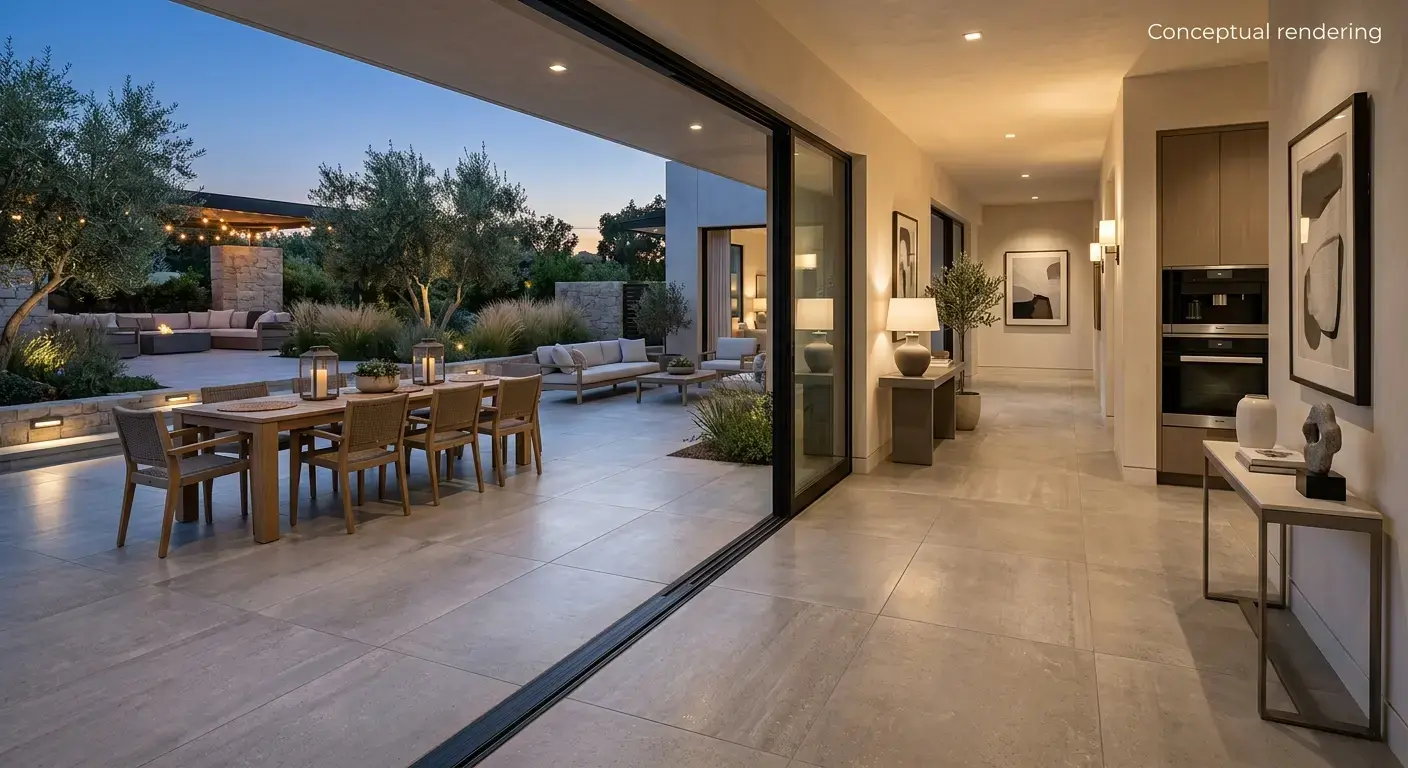
Color and pattern range widely within porcelain lines made for outdoor use, including stone-look, wood-look, and concrete-look finishes that carry the visual character of natural materials without the sealing that some natural stone requires. Because the color runs through or near the surface of the tile body rather than sitting only in a glaze, outdoor porcelain also tends to resist fading from sun exposure over time. Large format tiles have also become common for patio applications, since fewer grout lines can simplify the look of the finished space and reduce the number of joints exposed to weather. Some homeowners also coordinate their outdoor porcelain with an interior tile in a similar tone, creating visual continuity between a kitchen or living space and an adjoining patio accessed through sliding doors. Homeowners comparing porcelain tile for patio flooring against pavers or natural stone are often weighing this combination: a wide range of finishes, a freeze-rated tile body, and a surface that does not need periodic resealing. Our current porcelain patio tile selection includes several finishes suited to this kind of side-by-side comparison.
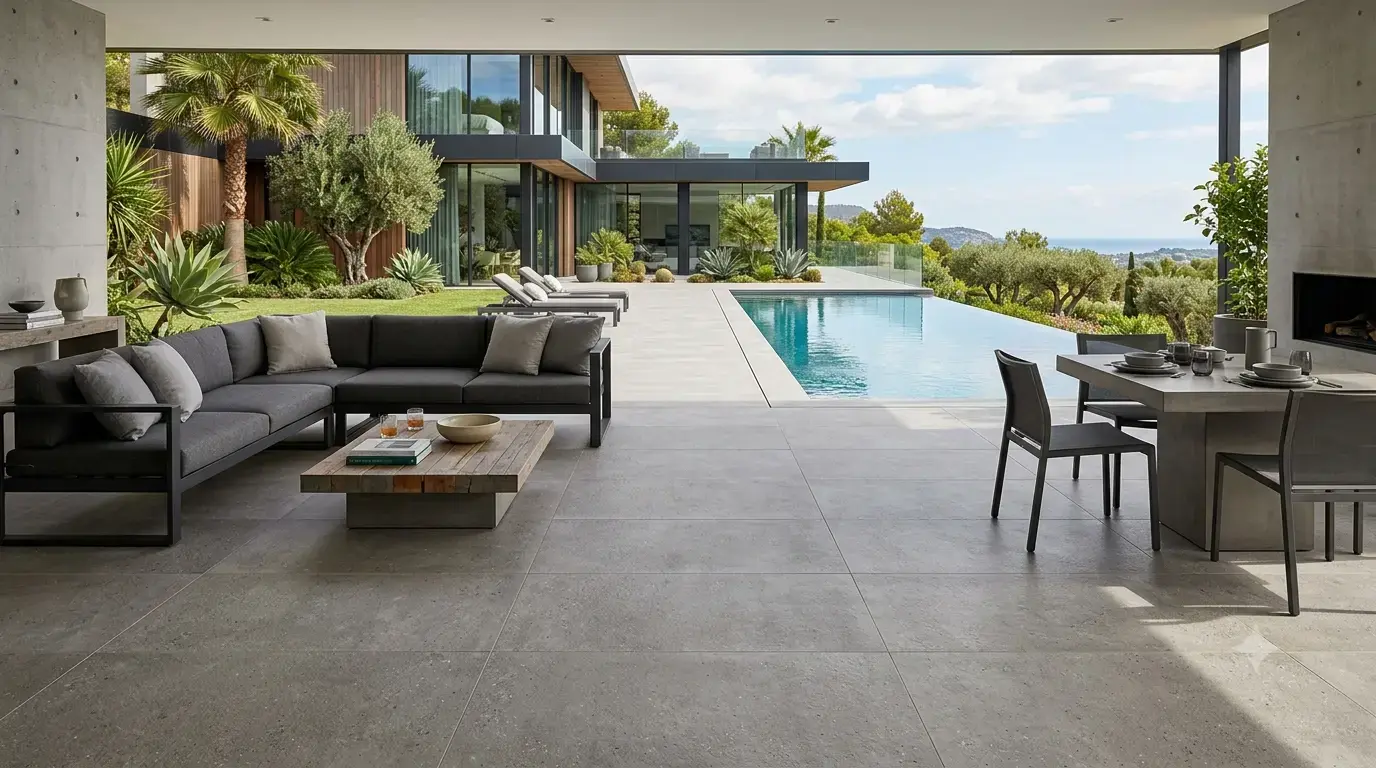
Some homeowners also coordinate their outdoor porcelain with an interior tile in a similar tone, creating visual continuity between a kitchen or living space and an adjoining patio accessed through sliding doors. Homeowners comparing porcelain tile for patio flooring against pavers or natural stone are often weighing this combination: a wide range of finishes, a freeze-rated tile body, and a surface that does not need periodic resealing. Our current porcelain patio tile selection includes several finishes suited to this kind of side-by-side comparison.
Visit Our Shop
Installation Considerations for Outdoor Porcelain
Porcelain tile for patio flooring can be installed a few different ways outdoors, and the right method generally depends on the base it will sit on. Thicker outdoor porcelain, often produced in a 20mm or 2cm format, can be dry laid directly over compacted gravel or sand, which allows rain to drain naturally into the ground below and skips a permanent mortar bed entirely. For a more permanent, heavy-traffic surface, the same tile can be mortared over a properly sloped concrete substrate. On balconies, rooftops, or uneven surfaces, a raised pedestal system is another option, since it allows water to drain underneath the tile while also hiding drainage lines or cabling.
Proper slope and drainage planning matter more outdoors than indoors, since standing water on a patio surface can affect both safety and the long-term performance of the joints between tiles. Grout and joint materials used outdoors are also typically selected for flexibility and weather resistance, since exterior joints expand and contract with temperature changes more than interior ones, and dry-laid installations typically use polymeric sand in the joints instead of traditional grout. Because outdoor installations involve site-specific factors like grade, drainage, and climate exposure, we recommend working with a qualified installer who can evaluate the space before work begins. Porcelain tile earning the certification mark from the Porcelain Tile Certification Agency has been independently tested to confirm it meets the water absorption threshold that supports these outdoor installation methods.
Maintenance and Care
One advantage of porcelain tile for patio flooring is that it does not require the periodic sealing that many natural stone patio materials need. Routine care generally involves sweeping away debris and rinsing the surface with water, along with a mild cleaner for tougher spots such as tree sap or grill residue. Because the tile body itself has such low water absorption, staining is less of a concern than it is with more porous materials, though grout lines between tiles may still benefit from occasional cleaning to keep their original color. Homeowners in areas with heavy leaf litter or snow accumulation may want to clear the surface regularly, both for appearance and to keep drainage paths clear beneath the tile. Checking that drainage channels and joints stay clear of debris each season can also help the patio surface perform consistently through both summer heat and winter freeze cycles.
Frequently Asked Questions
Porcelain tile made for exterior use has a water absorption rate of 0.5% or less, which qualifies it as impervious under ANSI A137.1 and suitable for climates with freezing winters. This low absorption means the tile body does not hold enough moisture to crack or spall when temperatures drop below freezing.
Outdoor porcelain tile is typically manufactured with a textured or matte finish rather than a polished one, which helps with slip resistance in wet conditions. ANSI A137.1 references a dynamic coefficient of friction test for surfaces that may be walked on while wet, and outdoor-rated porcelain is generally selected with this in mind.
Many porcelain tiles made for outdoor patios are produced in a 20mm, or 2cm, thickness rather than the thinner tiles used on interior floors. This added thickness supports installation methods used outdoors, including over pavers or a pedestal system.
Because the color in outdoor porcelain tile runs through or near the full body of the tile rather than sitting only in a surface glaze, it tends to resist fading from ongoing sun exposure better than some painted or coated surfaces.
We display porcelain tile for patio flooring at our four Home Design Centers in Reno, Sacramento, Minden, and Fernley. You can also request a $1 sample to bring home and compare against your patio's existing colors and materials before making a decision.
Note: Some images on this page may be conceptual renderings created to illustrate design possibilities and may not depict actual installations.
Visit a Nova Tile and Stone Showroom
We display porcelain tile for patio flooring alongside other outdoor and indoor surfaces at our four Home Design Centers in Reno, Sacramento, Minden, and Fernley. Each location has tile on the floor so you can compare finish and color in natural light, which looks different than it does on a screen. If you would rather test a tile at home before deciding, Get A $1 Sample and bring a piece into your own outdoor space to see how it reads against your existing stone, siding, or furniture. We also offer home delivery and in-store pickup once you are ready to order. You can browse the full tile shop online or find your nearest showroom location before visiting.
Bringing a few reference photos or rough measurements of your patio when you visit helps our design team narrow down finish and size options more quickly. Our team can also talk through how a given tile's finish, thickness, and color might hold up in your specific outdoor conditions, from shaded patios that stay damp longer to sun-exposed spaces that see more temperature swings throughout the day. Whether you are covering a small side patio or a larger backyard entertaining area, our team can walk you through the porcelain options currently in stock at each showroom, and help you weigh finish and format against how the space will be used day to day. If you have questions before your visit, feel free to reach out to our team directly, or start browsing our full range of tile and stone materials to see how a patio project might connect with other areas of the home.
Nova Tile and Stone Showrooms