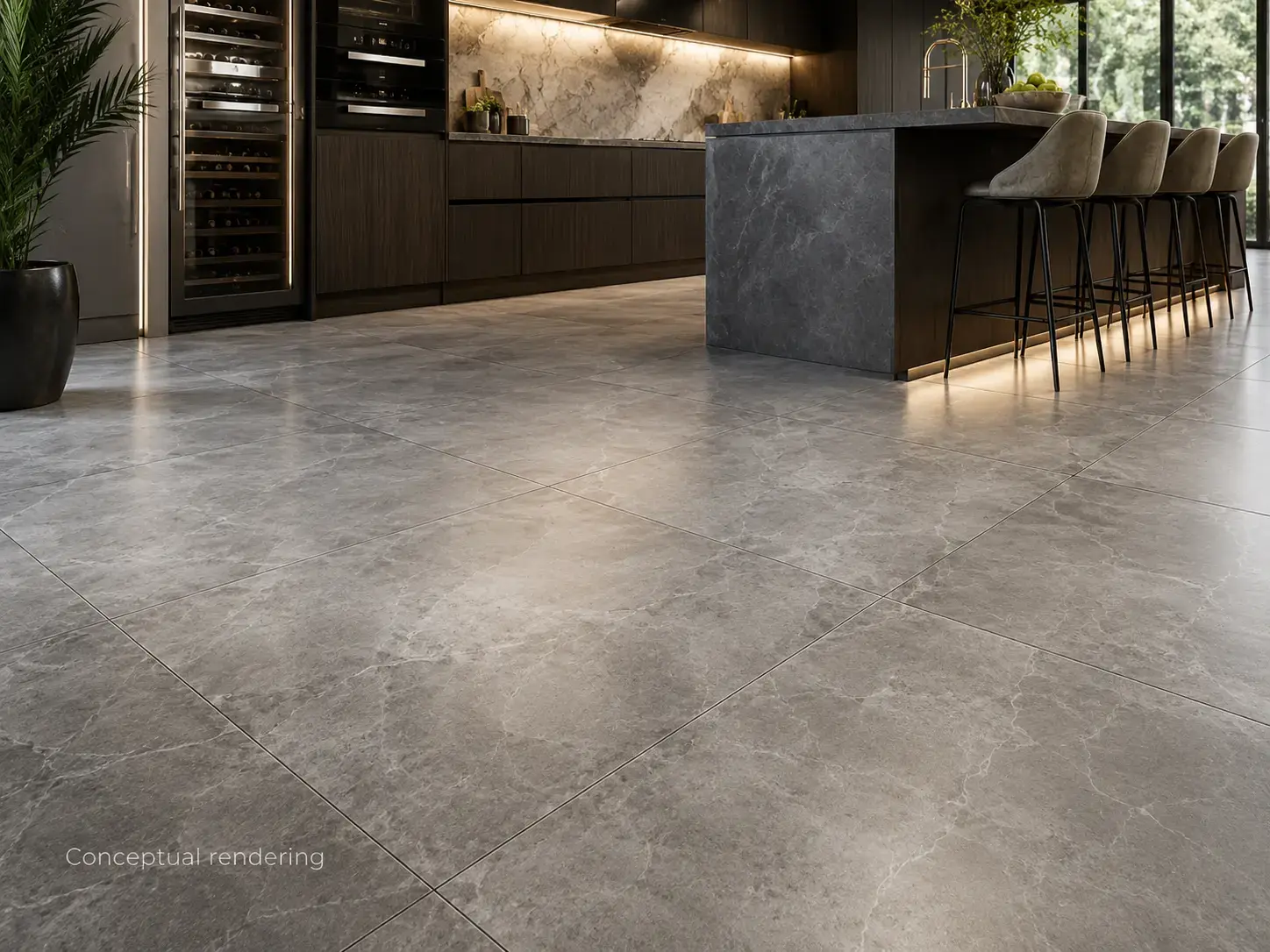
Porcelain tile is a dense, low-porosity ceramic material made by firing refined clay at high temperatures, giving it strong resistance to moisture, staining, and daily wear. Porcelain tile for kitchen floors is one of its most common applications, since kitchens combine heavy foot traffic with frequent spills and temperature changes. This performance comes from a water absorption rate of 0.5 percent or less, the threshold ANSI A137.1 uses to classify tile as impervious porcelain. It is built to handle the constant movement of a working kitchen, which is why it's a common choice for both residential and light commercial spaces.
For a broader look at how porcelain tile is made and where else it's used, see our complete guide to porcelain tile.
Porcelain kitchen floor tile suits a range of layouts and traffic levels, whether the space is a private home or a shared or commercial setting.
Porcelain Tile For Kitchen Floor: Why It's the Right Choice
Beyond where it performs well, porcelain tile's suitability for kitchen floors comes down to how it's tested and rated. A kitchen floor takes on more daily stress than almost any other room in the house, and porcelain tile is built to handle several of those stress points at once. Glazed porcelain tile intended for floor use is classified under the ASTM C1027 abrasion test, often labeled the PEI rating in the tile industry, though the standardized term for this classification is Visible Abrasion Classification. Residential kitchens typically call for Class 3 or 4, while light commercial settings such as cafes or break rooms often use Class 4, and higher-traffic commercial or restaurant kitchens generally require Class 5.
Porcelain tile also meets defined breaking strength requirements under ASTM C648, averaging 275 lbf with no individual sample below 250 lbf, which supports its use under heavy kitchen furniture, islands, and appliances. Slip resistance is another factor worth checking: ANSI A326.3 recommends a dynamic coefficient of friction (DCOF) of at least 0.42 for level interior floors that may get wet, a requirement TCNA explains in more detail on its resource page. This is relevant for any kitchen floor near a sink or dishwasher.
Beyond performance, porcelain tile for kitchen floors comes in a wide range of finishes, including options that replicate the look of natural stone, wood, or concrete, giving homeowners design flexibility alongside the practical benefits above.
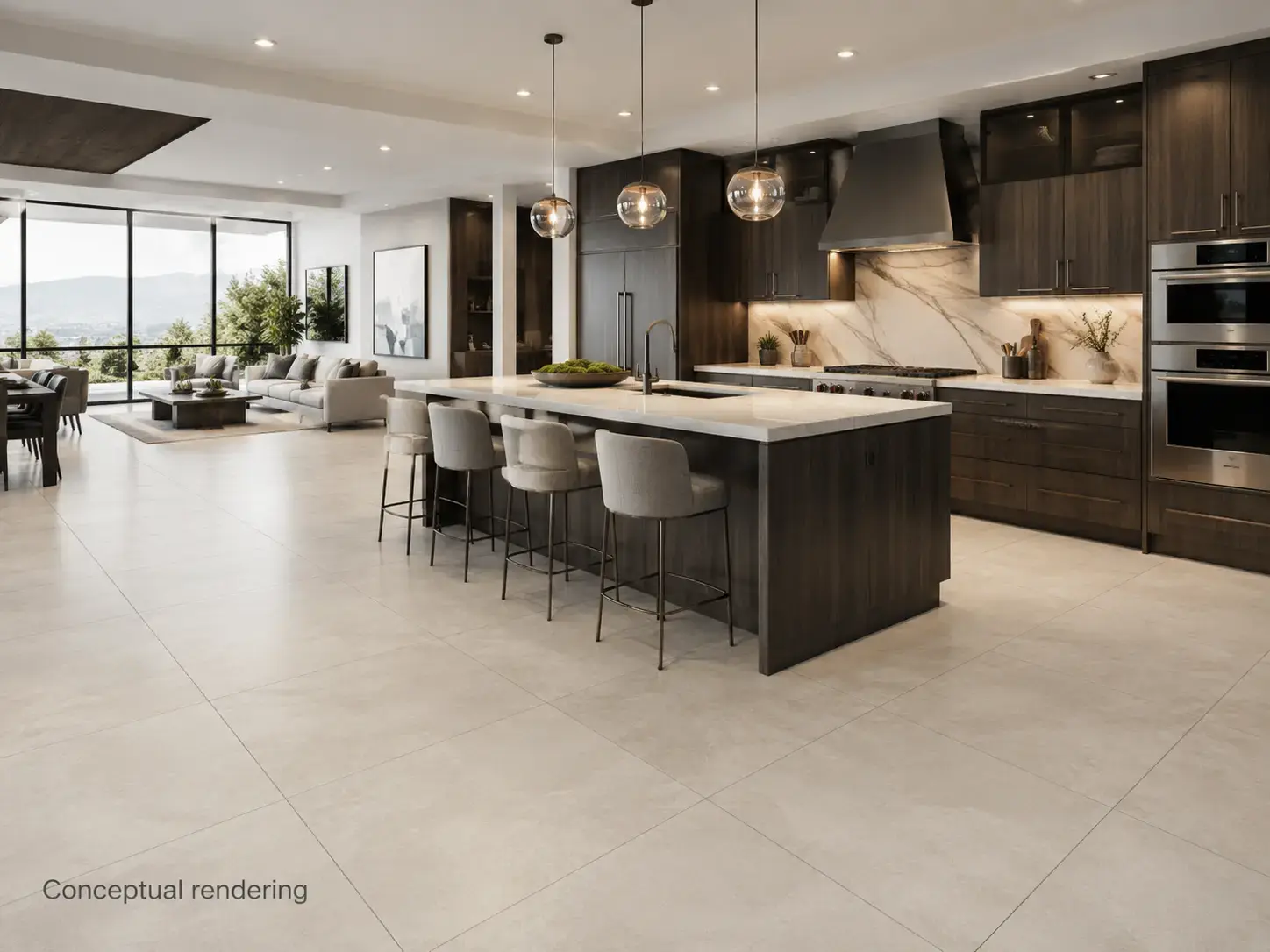 Conceptual rendering
Note: Some images on this page may be conceptual renderings created to illustrate design possibilities and may not depict actual installations.
That combination of strength, slip resistance, and finish variety holds up best with a bit of routine care. Porcelain kitchen floor tile requires comparatively simple upkeep, but a few habits extend its lifespan.
Sweep or vacuum regularly
Removing grit before it's ground underfoot helps protect the surface finish over time.
Clean spills promptly
While porcelain is known for strong stain resistance, acidic spills like wine or citrus juice are best wiped up rather than left to sit.
Use a pH-neutral cleaner
Harsh acidic or alkaline cleaners can affect slip resistance over time, an effect the National Floor Safety Institute has tested, so a neutral tile cleaner is the safer choice.
Check grout separately
Grout is more porous than the tile itself and may need periodic sealing depending on the type used, even though the tile itself typically doesn't require sealing.
Browse our Porcelain Tile Collection
Frequently Asked Questions
Yes. Its low water absorption, resistance to scratching, and abrasion classification suited to residential and light commercial traffic make it a durable option for kitchen use.
No. Porcelain's low porosity means the tile itself typically doesn't require sealing, though the grout lines between tiles may benefit from periodic sealing depending on the grout type.
It depends on the finish. Textured or matte finishes with a DCOF of 0.42 or higher are recommended for kitchen floors to reduce slip risk near sinks and appliances.
Properly installed porcelain tile rated for floor use can support the weight of standard kitchen appliances. Cracking is more often related to installation issues, such as an unstable subfloor, than to the tile's load capacity.
Porcelain is denser and less porous than standard ceramic tile, giving it better resistance to moisture and wear, which is why it's often preferred for high-traffic, spill-prone rooms like kitchens.
Looking for immediate assistance?
Give us a call!
775-374-6682
(Available Mon-Fri 7:30am - 4:00pm PST)
Unlike most customer service lines, ours connects you with real people.
When you call, just press 1 for online shopping support, or 2 for local shopping support!