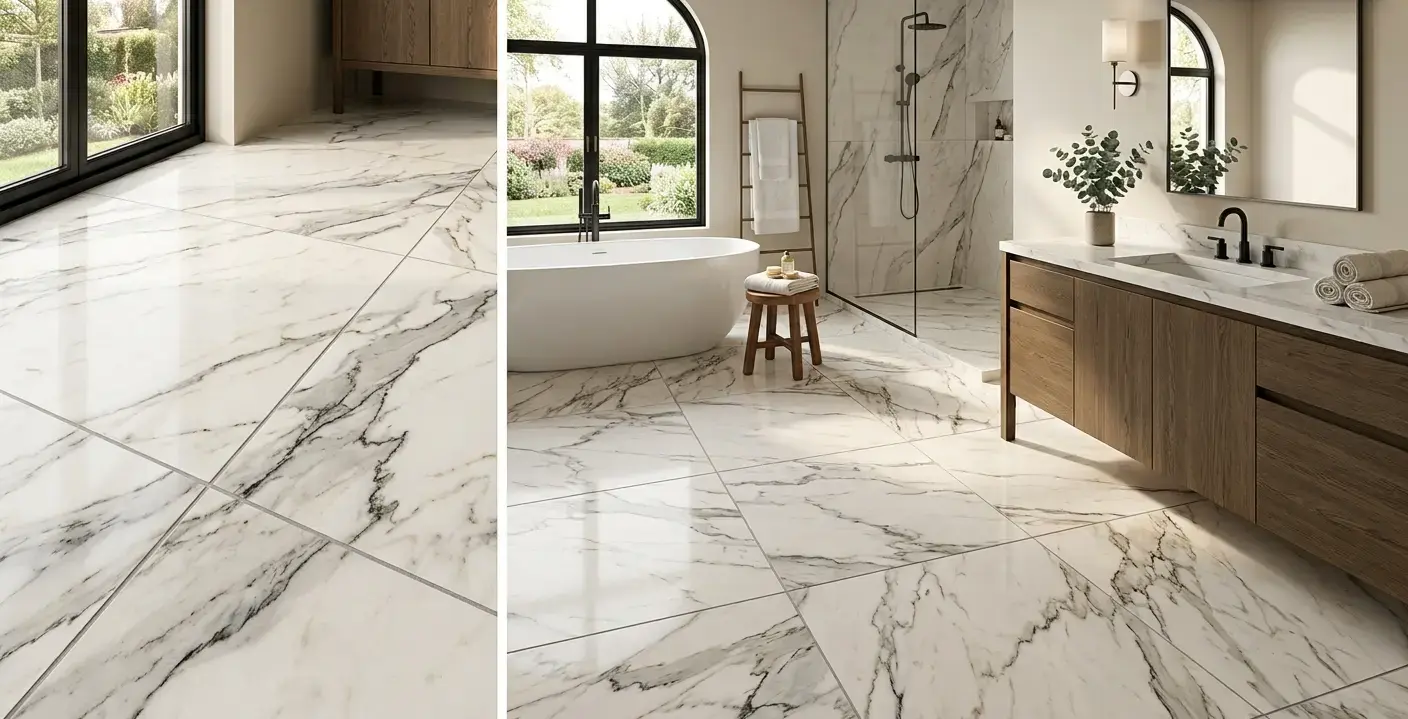
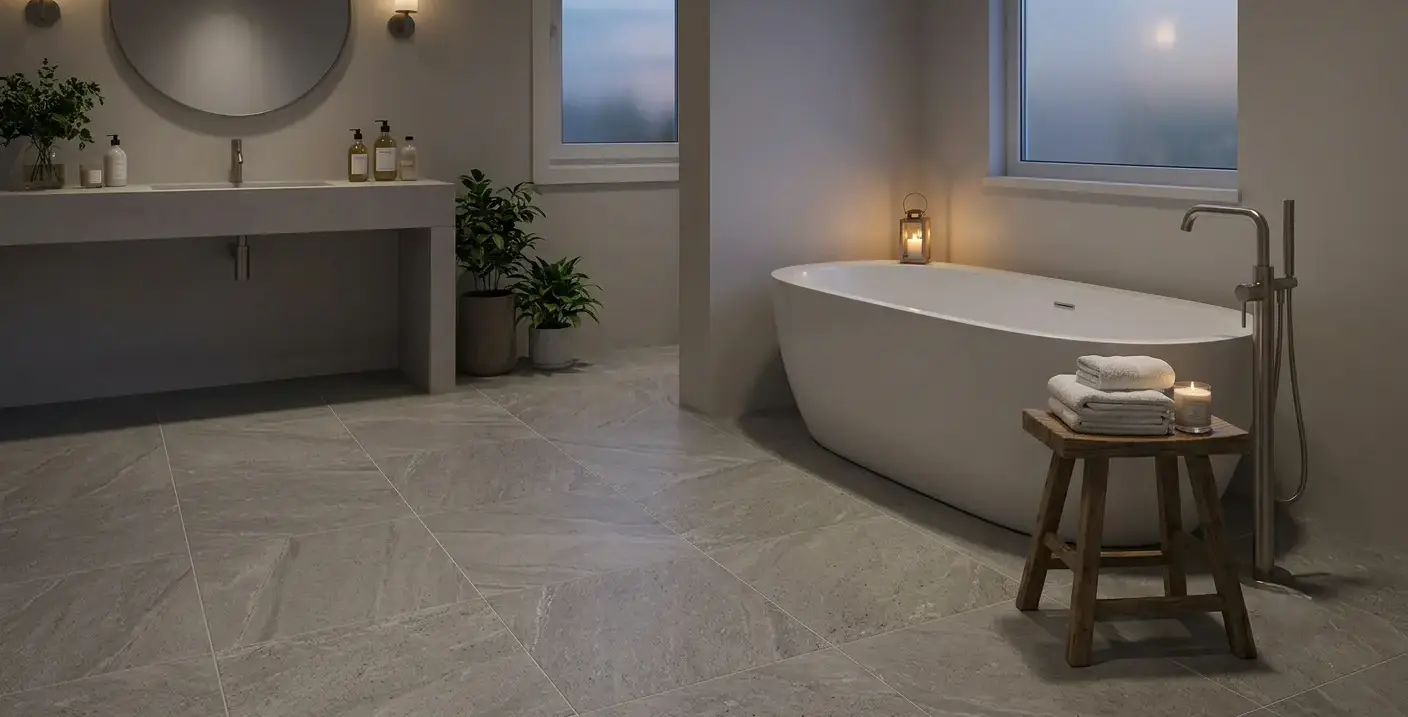
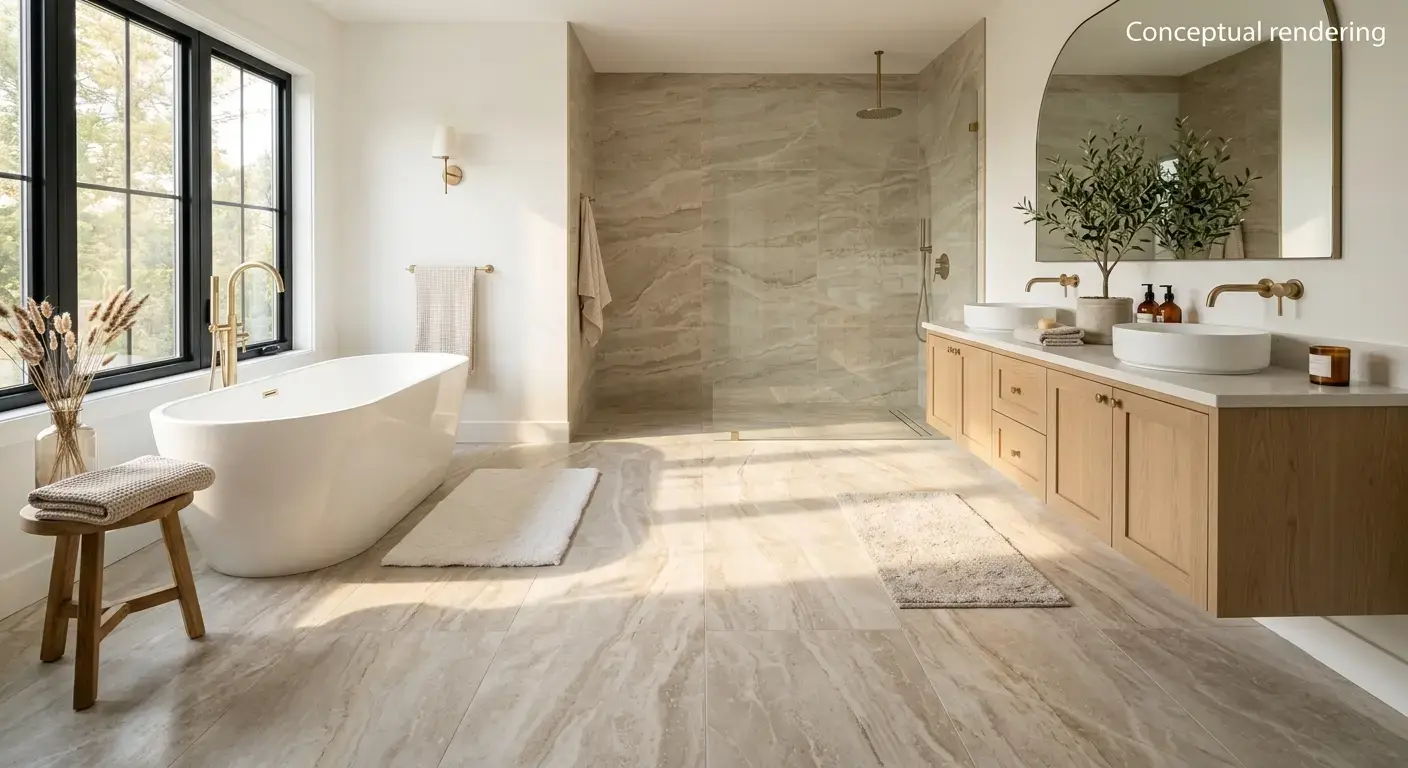
Porcelain tile for bathroom floor projects brings together a dense porcelain body with the classic visual appeal of stone surfaces. This variation is finished in a warm greige base with soft, linear veining inspired by travertine, paired with a matte surface suited to the daily demands of a bathroom. Porcelain is produced through a high-temperature firing process that generally results in a denser body than standard ceramic, a quality that makes porcelain tile for bathroom floor applications a common choice among homeowners planning bathroom floor designs. Available through the Nova Tile and Stone showroom in a range of formats, this stone-look porcelain tile pairs a neutral palette with everyday bathroom use.
Porcelain Tile for Bathroom Floor: Material and Specifications
This tile is manufactured with a warm greige primary tone and a soft taupe secondary tone running through subtle, linear veining. The matte finish is a widely used choice for bathroom floor tile because it carries a softer visual texture than polished surfaces and tends to show water spots less readily, though proper daily cleaning still helps preserve its appearance over time. Compared with standard ceramic tile, porcelain is generally produced with a denser body, and compared with natural stone tile, it typically does not require periodic sealing to maintain its surface. A full breakdown of these material differences is available in the porcelain tile guide, useful reading before finalizing a bathroom floor order.
Some technical values were not included in the current product brief and are marked below pending confirmation from the product data sheet, rather than estimated:
 Conceptual rendering
SPECIFICATION |
STATUS |
Material | Porcelain |
Finish | Matte |
Primary Color | Warm Greige |
Secondary Color | Soft Taupe |
PEI Rating | 3-5 (contact us for verification) |
DCOF Slip Rating | 0.42 – 0.50 (contact us to confirm your requirements) |
Water Absorption | ≤ 0.5% |
Mohs Hardness | 7–8 |
Standard Thickness | 8-12 mm (contact us to confirm your requirements) |
Edge Type | Square (Straight) Edge |
Our Complete Porcelain Collection
Check out what's new in our inventory!
 Conceptual rendering
Design Flexibility for Bathroom Floor Designs
A warm greige porcelain tile with soft veining adapts to several layout approaches common in bathroom floor designs. A straight lay lets the veining read as a continuous stone-like field, a look that suits smaller bathrooms where one uninterrupted floor plane helps the room feel larger. A herringbone or basketweave layout adds movement for bigger bathroom floor projects, while a diagonal lay can help balance an irregular room shape. Because this tile carries stone surfaces styling rather than a bold graphic pattern, it works well as a grounding element beneath patterned wall tile, textured vanities, or matte black fixtures. Homeowners weighing tile for bathroom floor layouts against other formats can browse the tile shop to compare current stone-look, wood-look, and classic porcelain collections side by side.
Practical Benefits of This Bathroom Floor Tile
- Dense porcelain body: generally less porous than standard ceramic tile, a quality that supports its use in bathroom floor designs, though water absorption data for this specific item should be confirmed before ordering.
- Matte finish: a popular finish for bathroom floor tile that tends to show fewer visible water spots than a polished surface, with daily wiping helping maintain a clean look.
- Neutral warm greige tone: pairs with a wide range of vanity, cabinetry, and fixture finishes, from warm wood to cool chrome hardware.
- Travertine-inspired veining: brings the appearance of natural stone surfaces to a bathroom floor without the periodic sealing that natural stone typically requires.
- Finish, color, and veining reflect this collection's signature look; contact us to confirm exact specifications for your project. Browse the full shop tile by type listings to compare confirmed specifications across similar porcelain options.
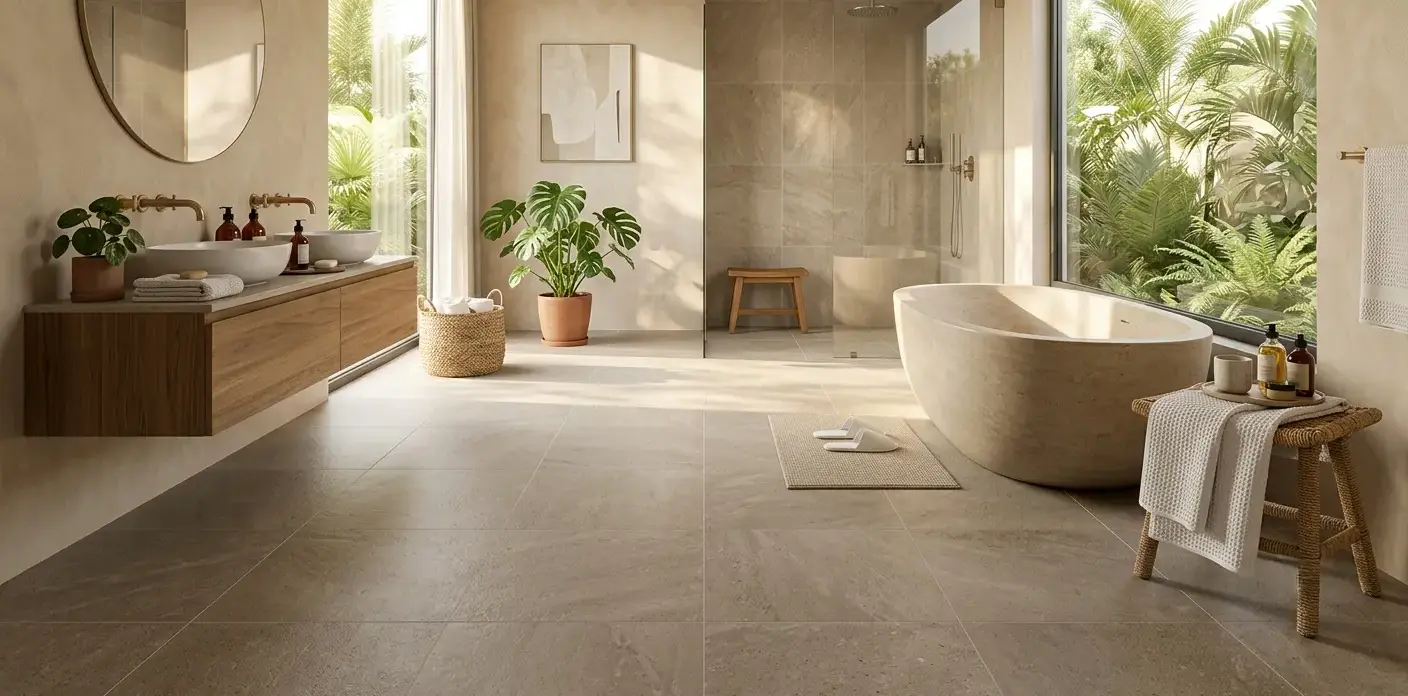
Long-Term Value and Industry Standards
Choosing a stone-look porcelain tile for bathroom floor use is a decision meant to outlast passing color trends, since warm greige tones and travertine-inspired veining have stayed popular across several bathroom floor design cycles. Porcelain tile durability across the industry is typically measured against standards such as ASTM C373 for water absorption and ASTM C1027 for surface abrasion resistance, commonly referred to as the PEI rating, giving homeowners a consistent way to compare porcelain tile for bathroom floor options across manufacturers. Groups such as tile industry standards organizations also help shape the technical benchmarks used to classify and specify tile products across the trade. For ongoing upkeep once a bathroom floor tile is in place, the tile care guide outlines routine cleaning steps suited to matte, stone-look finishes like this one.
Our latest porcelain tile insights
Check out what's new in our collection!
Frequently Asked Questions
Porcelain tile is a widely used option for bathroom floors because of its generally dense, low-porosity body, though exact performance depends on the specific product's tested specifications.
Matte and textured finishes are commonly chosen for bathroom floors because they tend to show water spots less than polished surfaces, though slip performance should always be confirmed using the manufacturer's documented rating.
Most glazed porcelain tile does not require sealing because the surface is generally non-porous, though grout lines typically benefit from periodic sealing.
Warm greige, stone-look porcelain tile is often used in kitchens, entryways, and hallways in addition to bathrooms, provided the specific product's rated use matches the space.
Regular sweeping followed by damp mopping with a pH-neutral cleaner is a standard care routine for porcelain tile, with manufacturer-specific guidance followed for best results.