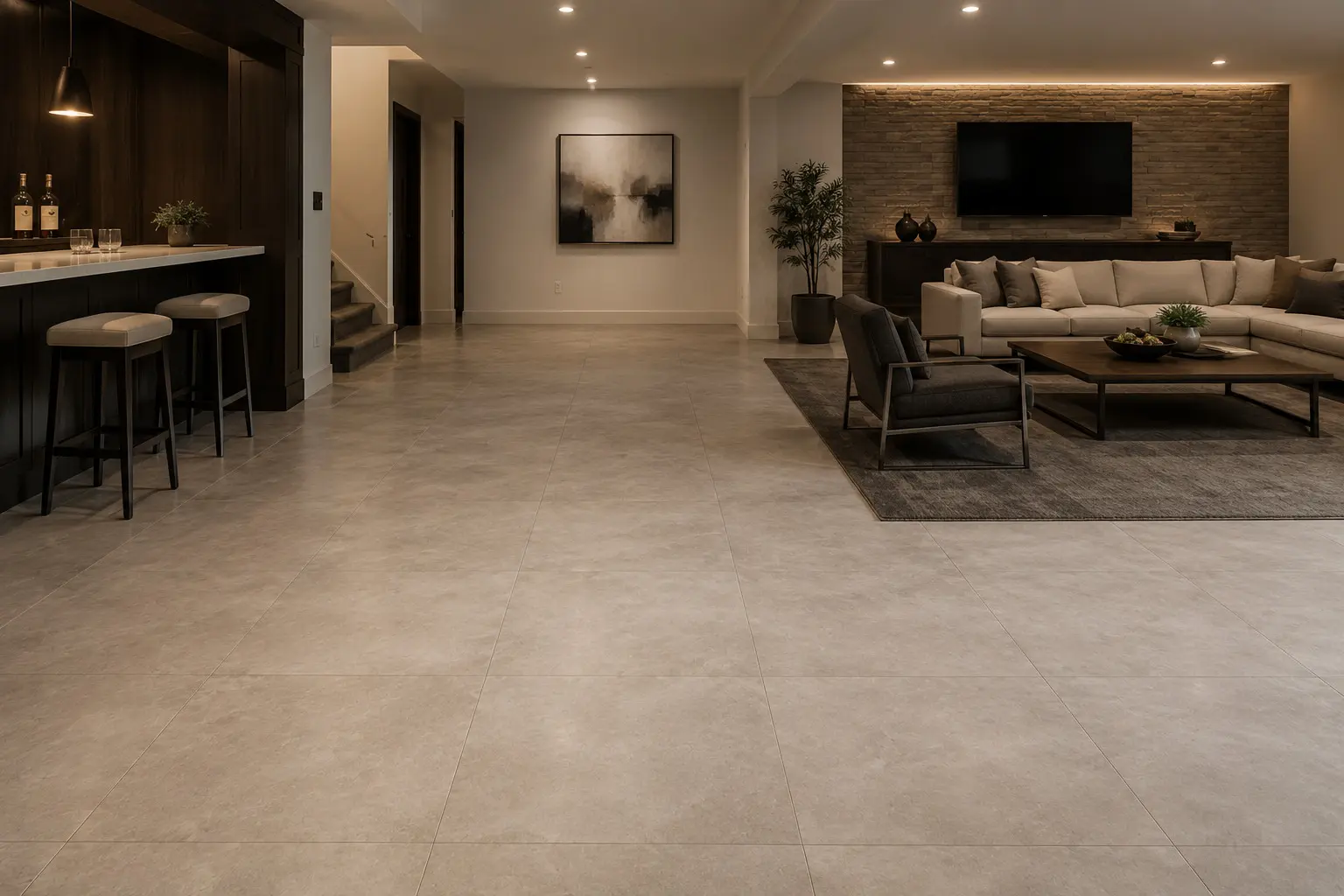
Porcelain tile is a strong choice for a basement floor
because it is dense, kiln-fired, and rated for a water absorption of 0.5% or
lower, a level low enough to classify it as impervious under recognized
industry testing standards. That density is exactly why porcelain tile for
basement floors comes up so often among homeowners finishing a lower level that
sits directly on the concrete below.
A basement faces conditions a main-level
room rarely encounters, including ground moisture that can migrate up through
the concrete over time and temperature differences between the concrete below
and the living space above it. Our
team is glad to help at any stage of a project, whether that means
choosing a finish suited to a below-grade space or reviewing what the concrete
needs before any tile goes down.
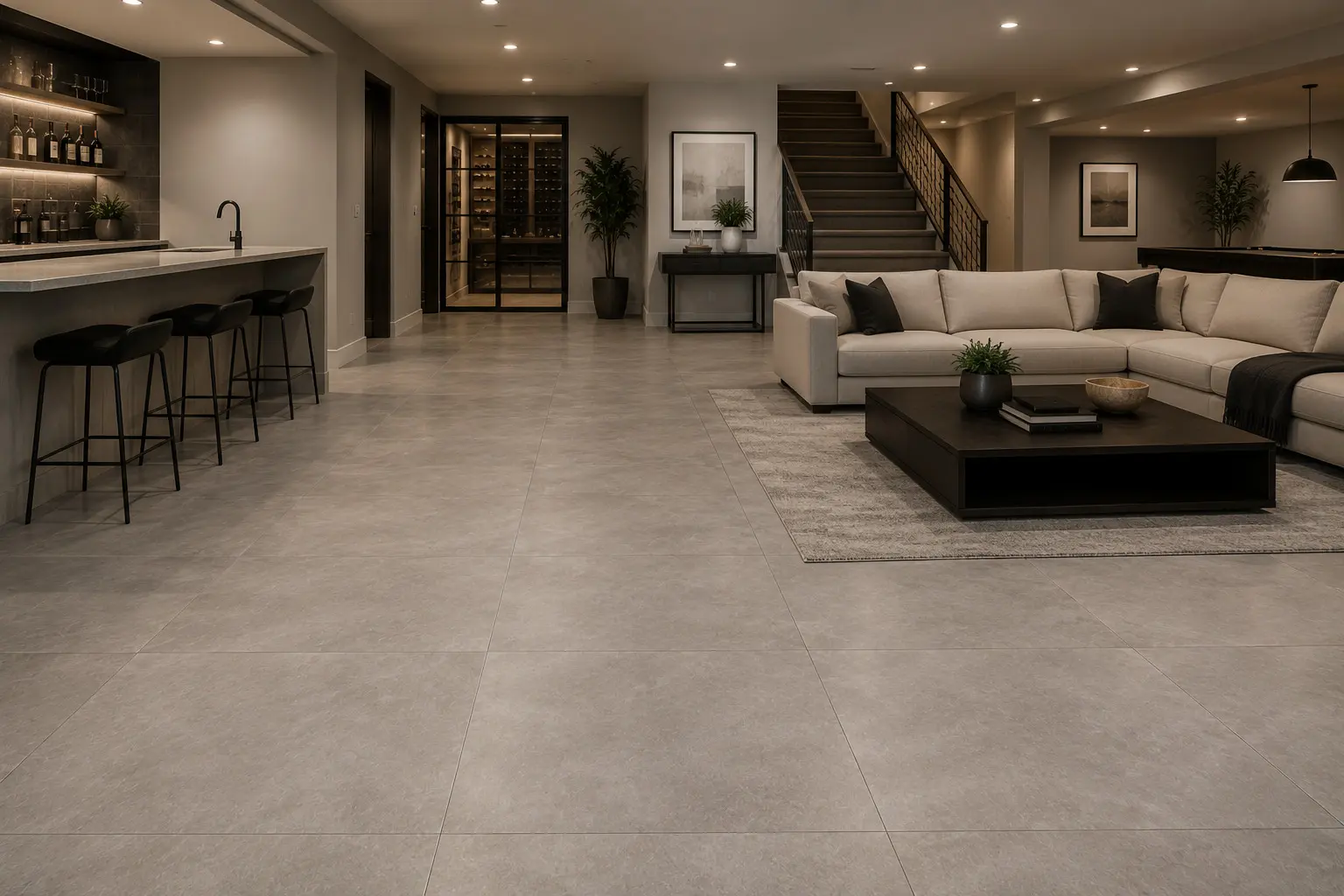 Conceptual rendering
0.5 %
MAX WATER ABSORPTION
What Makes Porcelain Tile Suited to a Basement Floor
This tile begins as a mixture of refined clays and minerals
that gets pressed and fired at temperatures generally between 1,200 and 1,300
degrees Celsius, a process known as vitrification. That process produces a
dense, glass-like body with a low water absorption rate, a property verified
through the ASTM C373 test method and recognized by the PorcelainTile Certification Agency, a program launched jointly by the Ceramic Tile
Distributors Association and the Tile Council of North America.
For a basement
floor, that density matters because the tile sits over concrete that can hold
residual moisture long after a home is finished, sometimes for years after the
original pour.
It is manufactured in polished, honed, and specialty finishes,
and for a basement a honed or textured option is generally more practical since
it reduces glare and adds grip underfoot, worth considering near a stairwell or
utility room. Larger formats also reduce the number of grout lines across an
open floor plan, simplifying daily cleaning. You can browse the full tile collection or
compare tile
sizes to see what's available now.
How Porcelain Tile Performs on a Basement Floor
Concrete below grade can hold moisture long after
construction, and that moisture can move upward through it over months or years
depending on drainage, grading, and whether an intact vapor retarder was
installed under the original pour.
This material resists moisture at the
surface once fired and glazed, but that resistance applies to the tile itself
and not to what's happening underneath it, so standing water or unresolved
moisture in the concrete should still be addressed before installation rather than
covered over.
A relative humidity test on the concrete, following the ASTM
F2170 method, is a common first step contractors use to confirm it falls within
an acceptable range before tile goes down, and a moisture-mitigating membrane
is often added where readings run high.
These floors are also commonly paired
with in-floor radiant heat, and this material generally conducts that heat
evenly across the surface, though a
thermal break layer between the tile and below-grade concrete is
usually recommended so it doesn't pull heat away from the mat. Because
basements often sit near stairwells, sump areas, or utility spaces where water
is more likely to appear underfoot, slip resistance depends heavily on the
finish chosen, and a textured or honed option is generally preferred,
particularly near a bathroom or laundry hookup.
Living Spaces |
|
|
Ground moisture |
Caring for a Porcelain Tile Basement Floor
This tile needs relatively little upkeep once installed,
since the glazed surface generally does not absorb stains or require sealing
the way many other flooring materials do. In a basement, ongoing care is less
about the tile and more about the environment around it, since these rooms tend
to see more humidity swings and grout staining than floors above grade.
Founded
in 2005, our team has worked with homeowners, interior designers, and
contractors across four showroom locations in Nevada and Northern California,
and we're glad to help with questions specific to a basement project. You can
read more about our background on our about us page, and
our complete
tile guide covers finish and format choices in more depth. A few
consistent habits go a long way toward keeping this floor performing well over
time.
Sweep or vacuum regularly to remove grit before it can scratch the glazed surface underfoot.
Damp mop with a pH-neutral cleaner rather than an abrasive or acidic product, since harsh chemicals can dull the finish over time.
Watch for a white, powdery residue along the grout lines, since this can signal moisture moving up through the concrete and evaporating at the surface.
Run a dehumidifier during humid months to help keep ambient moisture down, particularly in a space without strong ventilation.
Reseal the grout periodically, since it's more porous than the tile itself and the part of the floor most likely to need attention over the years.
Avoid leaving standing water on the floor for extended periods, even though the surface itself resists moisture.
Our latest content
Check out what's new in our company !
Frequently asked questions
Lighter, neutral tones tend to work well in a basement, since these rooms often get less natural light than spaces above grade, and a lighter floor can help the room feel more open. Matte and textured finishes are generally a practical choice underfoot, particularly near a stairwell or utility area. Compare current options by browsing tile styles to see what's available now.
Yes, this material is a common pairing with in-floor radiant heat because it generally conducts and holds heat evenly across the surface. For a basement specifically, a thermal break layer between the tile and the concrete is usually recommended so heat isn't pulled into the ground below, especially on a grade-level or below-grade floor. More detail on that type of underlayment is worth reviewing before planning a heated floor.
A relative humidity test performed directly on the concrete, following the ASTM F2170 method, is generally the most reliable way to check moisture levels before installing any flooring. Surface-level tests can miss moisture sitting deeper in the concrete, a common issue in basements built without an intact vapor retarder under the original pour. If a test comes back high, a vapor-mitigating membrane is typically installed rather than skipping the test altogether. More detailed information on concrete moisture testing is available for anyone planning ahead.
Yes, this tile is available for in-store pickup at any of our showroom locations. If you'd like guidance on choosing the right style before you come in, you can schedule an appointment with our team.
Yes, orders can be shipped directly to a home or job site. Basement projects often involve larger quantities to cover an open floor plan, so it's worth confirming quantity and lead time with our team before placing an order, particularly if the project is on a tight schedule.