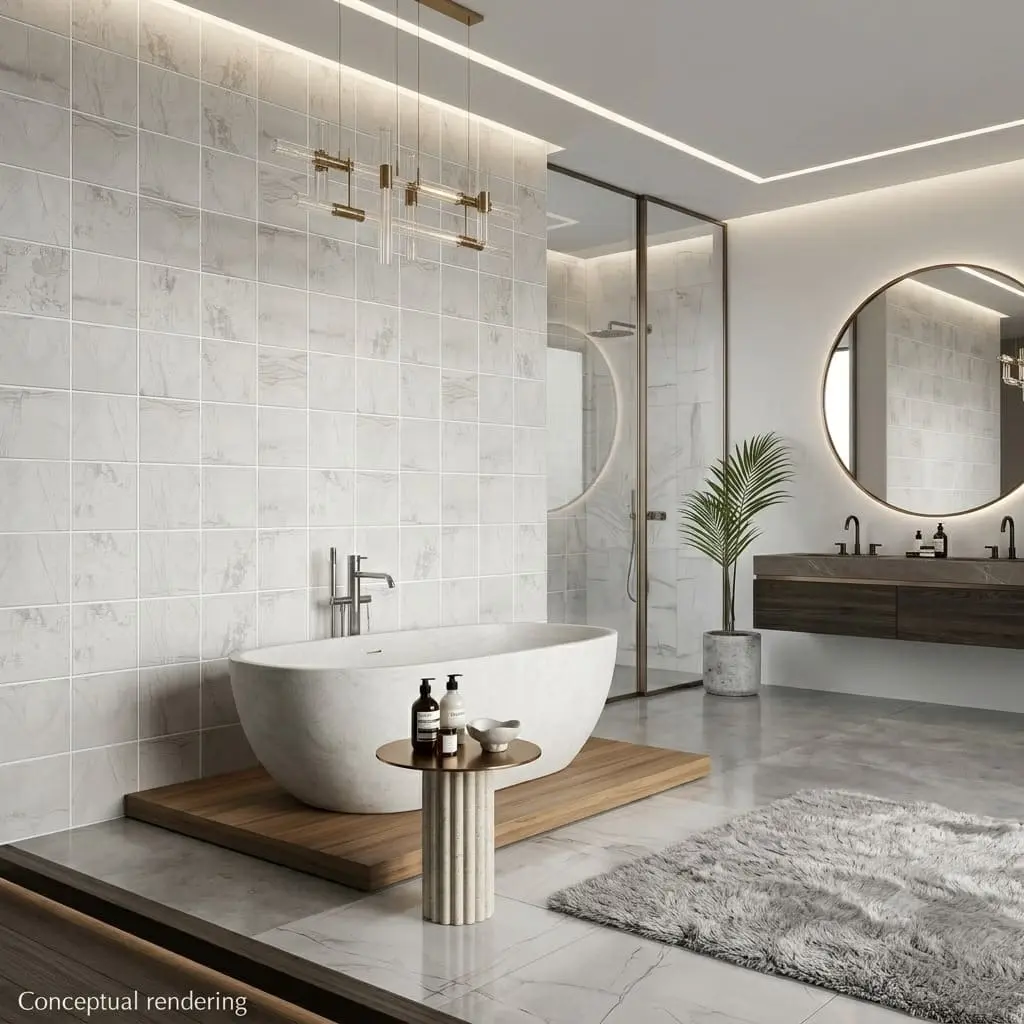
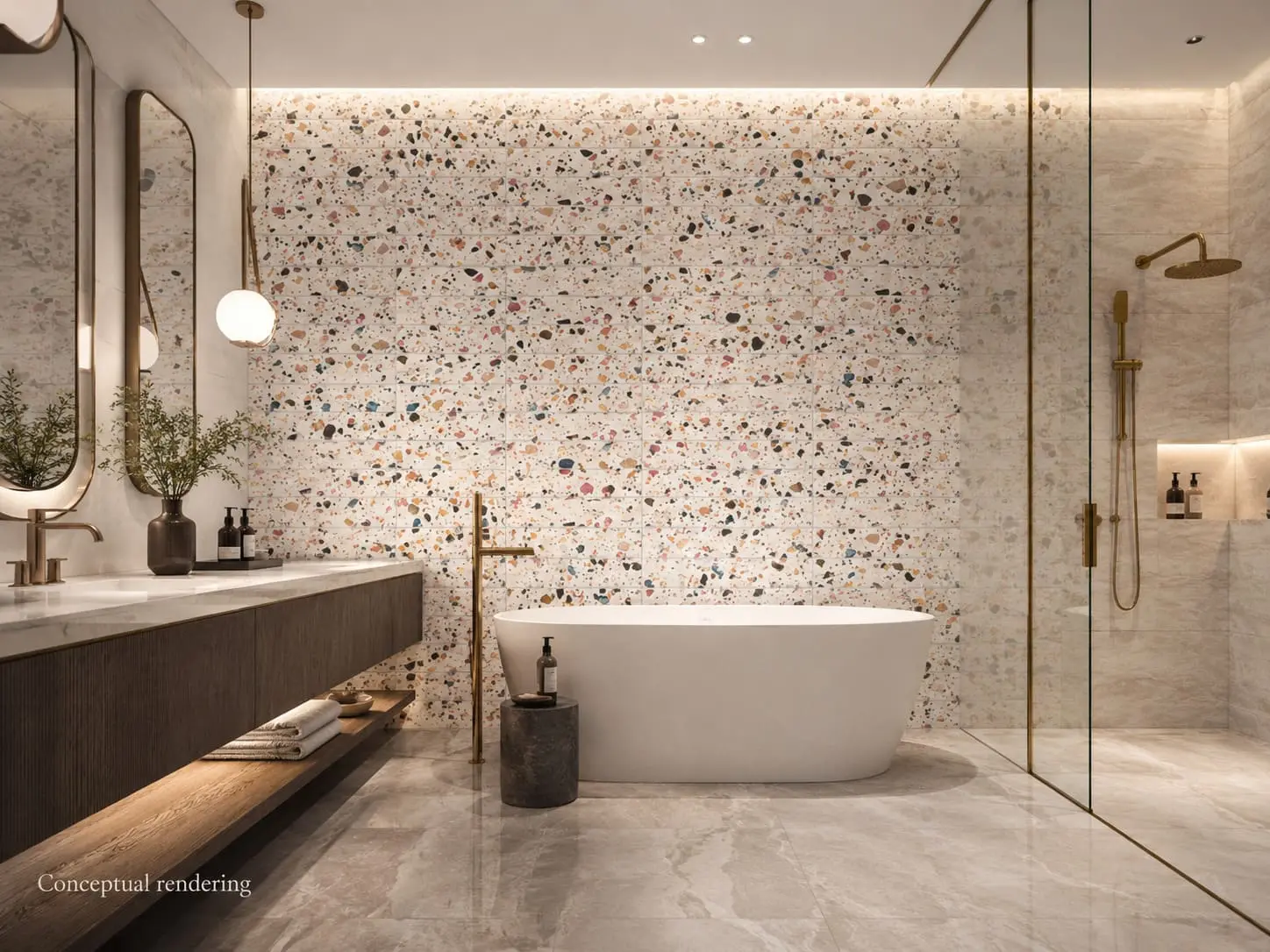
Porcelain mosaic tile is a small-format ceramic material with a water absorption rate of 0.5% or less, as defined by ANSI A137.1 and tested per ASTM C373. Per that standard, mosaic tile has a facial area of less than 9 square inches per piece and a thickness typically between 1/4 and 3/8 inch, with individual pieces arriving pre-mounted on mesh-backed sheets for installation. The small format produces a high density of grout joints per square foot, which can improve traction on wet floors by interrupting continuous water film, making it a common specification for shower floors, pool step edges, and commercial wet rooms. It is available in shapes including square, hexagon, penny round, and arabesque, and in matte, textured, and glossy finishes.
Porcelain Mosaic Tile Applications
Shower floors and bathroom walls
Shower floors require a surface that can follow a sloped substrate, withstand continuous moisture, and provide reliable traction underfoot. The mesh-backed sheet format allows mosaic pieces to conform to grade changes across a shower pan, and the resulting grout joints contribute to slip resistance. Matte and textured-finish mosaics are generally recommended for shower floors, while glossy finishes tend to be better suited to bathroom walls and backsplash surfaces where wet-foot contact is not a factor.
Kitchen backsplashes
A kitchen backsplash benefits from a material that resists heat-generated moisture and is straightforward to clean during routine maintenance. Porcelain's dense body can help resist grease penetration, and a glazed surface generally wipes down with warm water and a mild cleaner. Available shapes, from square and hexagon to arabesque and penny round, allow a backsplash to range from a simple grid to a detailed focal point within the same base material.
Pool interiors and waterline trim
Pool environments expose the material to chemical treatment, constant water contact, and seasonal temperature cycling. Porcelain mosaic tile tested and rated frost-resistant under ASTM C1026 or ISO 10545-12 may be appropriate for pool waterline bands, step edges, and interior pool surfaces. Low water absorption alone does not confirm frost resistance; product-level test results should be verified before specifying for pool or outdoor use.
Entryways, accent walls, and fireplace surrounds
Beyond wet-area use, porcelain mosaic tile suits dry applications including entryways, feature walls, and fireplace surrounds. It is non-combustible, carrying a Class A flame-spread rating under ASTM E84, which supports its use around fireplace surrounds and hearths. Its small format supports herringbone, basketweave, and geometric layouts within a single durable material.
When comparing small-format options, porcelain mosaic tile tends to stand out for what it does not require as much as for what it delivers.
Its dense body resists liquid absorption, which can significantly reduce staining risk compared to more porous alternatives, and the surface itself typically does not need sealing. Products meeting the 0.5% threshold can carry PTCA porcelain certification through the Tile Council of North America, providing independent verification. Natural stone mosaics tend to require a regular sealing schedule to help prevent surface degradation, an ongoing commitment that porcelain-based products generally do not share. Properly installed porcelain mosaic tile can remain serviceable for many years, requiring little more than routine cleaning and periodic grout maintenance.
It typically carries a higher unit cost than ceramic alternatives, but reduced sealing requirements and resistance to staining mean total ownership costs can compare favorably to materials that need more frequent upkeep to maintain their appearance.
Note: Some images on this page may be conceptual renderings created to illustrate design possibilities and may not depict actual installations.
How to Care for Porcelain Mosaic Tile
Mosaic installations have more grout joints per square foot than large-format porcelain tile, so grout maintenance requires more consistent attention than the surface itself.
Routine cleaning typically requires warm water and a mild, pH-neutral cleaner. Acid-based and ammonia-containing products should be avoided, as both can degrade grout and may damage glazed surfaces with repeated use. In areas prone to soap scum or hard water deposits, a gentle multipurpose spray cleaner is generally suitable.
Grout joints in a mosaic installation require more active care than the tile itself. Cementitious joints should receive a penetrating sealer 72 hours after installation and be inspected periodically for reapplication. Epoxy grout is chemically cured, highly resistant to moisture, and generally does not require sealing, making it a practical choice for shower floors and pool applications. Both grout types can accumulate buildup in high-use installations, so periodic deep cleaning with a dedicated tile-and-grout cleaner is part of a sound long-term care routine.
Frequently Asked Questions
Per ANSI A137.1, porcelain is the classification for ceramic with a water absorption rate of 0.5% or less, tested per ASTM C373. Standard ceramic mosaic uses a less refined clay body, tends to absorb more moisture, and can be more susceptible to staining and surface damage in wet environments, which is why porcelain is a common specification for bathroom floors, shower floors, and pool applications.
It is a common choice for shower floors because the high grout joint density of a small-format layout can improve traction by breaking up the water film on wet surfaces. Matte and textured finishes tend to perform better underfoot in wet conditions than glossy ones. A DCOF rating of 0.42 or higher is the accepted minimum for interior wet floors per ANSI A137.1, and specific product ratings should be confirmed before purchase.
The tile body generally does not require sealing given its water absorption rate of 0.5% or less, though manufacturer guidelines for any specific product should always be reviewed. Cementitious grout joints benefit from a penetrating sealer applied 72 hours after installation. Epoxy grout is chemically cured and highly resistant to moisture, so it typically does not require sealing.
It may be suitable for pool and outdoor use when the specific product has been tested and rated frost-resistant under ASTM C1026 or ISO 10545-12. Low water absorption is a prerequisite for frost resistance but is not by itself a guarantee. Finish type and installation method both affect long-term performance, so product specifications should be reviewed before purchase.
Epoxy grout is commonly recommended for wet areas and pool applications because it is highly resistant to moisture and chemicals and generally does not require sealing. Cementitious grout is compatible in dry or lower-traffic applications but benefits from a penetrating sealer applied 72 hours after installation. The tight joint spacing of mosaic formats means grout upkeep tends to be a more consistent part of maintenance than with large-format tile, regardless of which grout type is used.