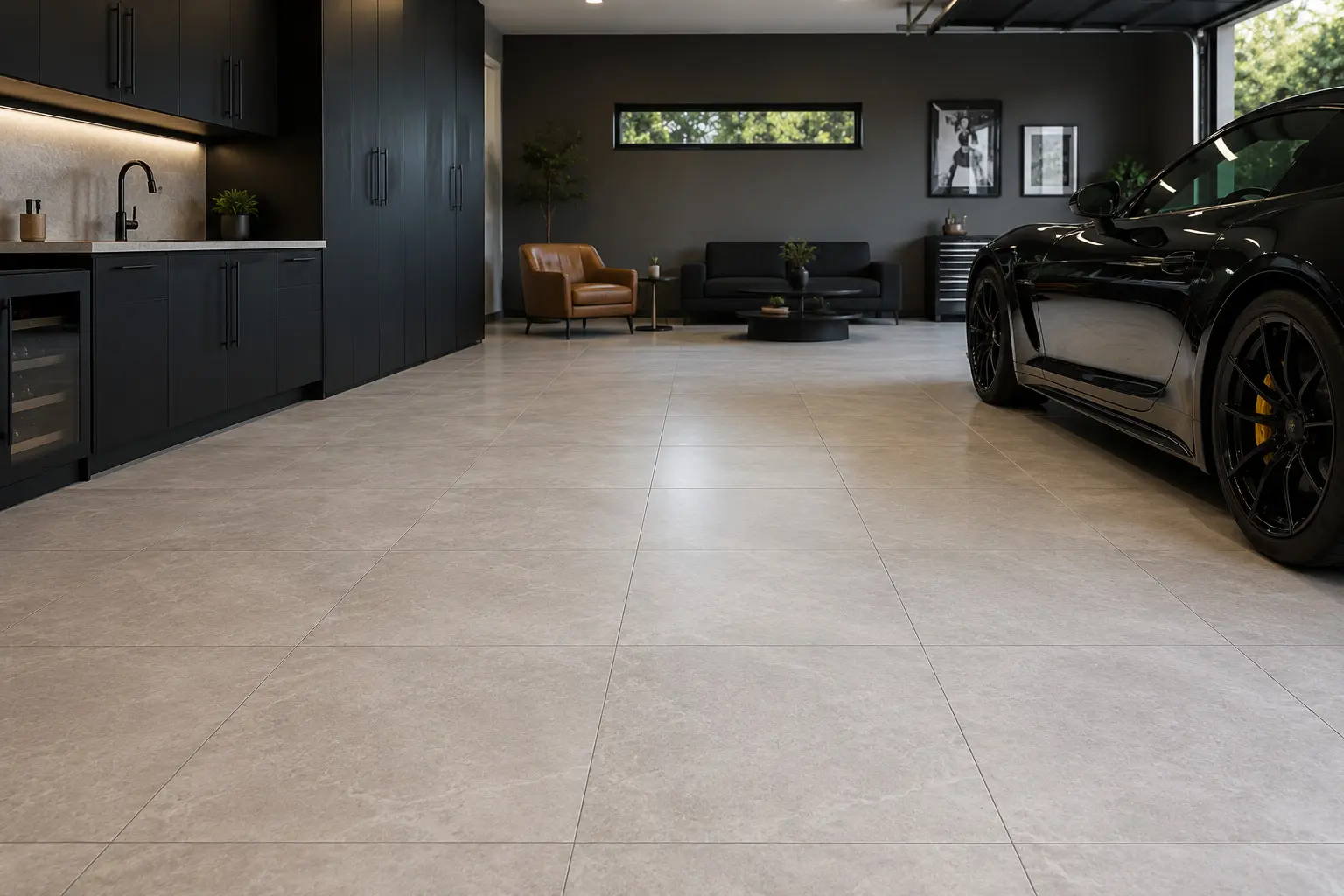
A low-absorption, non-porous flooring material fired at
extreme temperatures, porcelain tile for garage floors resists oil, automotive
fluids, road salt, and heavy vehicle loads beyond what most interior flooring
can handle. True porcelain absorbs less than 0.5 percent water by weight,
making it frost resistant and capable of holding up in conditions ranging from
daily parking to chemical exposure.
Our team works with homeowners, designers,
and contractors across Nevada and Northern California to help select the right
tile for each project. To learn more about our background and showrooms, visit
our home page. You can learn
more about formats and finishes for garage floors on our porcelain tile page.
Why Porcelain Holds Up in a Garage
A garage floor faces conditions most interior surfaces are
not built for: motor oil, brake fluid, antifreeze, road salt, tire abrasion,
and vehicle weight. These tiles suit those demands because the firing process
produces a through-body material with consistent density from surface to base.
Unlike a glazed surface tile where wear eventually reaches the clay body
underneath, a through-body porcelain tile retains its color and structure even
if the surface is scratched or chipped.
The non-porous nature of true porcelain
means automotive fluids sit on the surface rather than soaking in, though
spills should still be cleaned promptly to protect the tile and grout joints.
Both through-body and glazed porcelain are available for garage floors, each
with its own performance profile. For glazed options, a PEI Class 4 or 5 rating
is generally recommended, as these classes are designed for heavy-use
environments where abrasion and impact resistance matter. PEI ratings measure
surface glaze wear and apply specifically to glazed tiles. Through-body and
unglazed porcelain tiles do not carry a PEI rating because their density and
color run throughout the full tile body. Our complete
porcelain tile guide covers the full technical range of what porcelain can
do.
Water absorption, frost resistant
< 0.5%Recommended for glazed garage floors
PEI 4–5Wet DCOF baseline, interior
0.42+
Wet DCOF, exterior & oily areas
0.55+
Finish, Slip Resistance, and Performance
Finish selection matters in a garage, particularly because
floors can become wet from rain, snow melt, or washing. Matte and textured
finishes offer better grip than polished surfaces and are generally the
preferred choice for garage floors. Polished finishes are better reserved for
wall applications or showroom-style spaces where foot traffic is controlled. In
the US, ANSI A326.3 is the test method for measuring dynamic coefficient of
friction, or DCOF, while ANSI A137.1 is the ceramic tile product standard that
references it and sets the 0.42 minimum for interior wet floors.
For a typical
enclosed garage floor, a wet DCOF of 0.42 or greater is the baseline. Garage
aprons and open bays exposed to weather fall under the Exterior Wet category,
where 0.55 or greater is generally expected. Where oil, grease, or automotive
fluids are present regularly, the Oils and Greases category under ANSI A326.3
also requires a minimum wet DCOF of 0.55. Confirming which category applies and
checking the tile's declared DCOF on its data sheet is a recommended step
before specifying.
Frost-resistance is also relevant for garages exposed to
weather, and any tile used in those conditions should carry a water absorption
classification at or below 0.5 percent, as defined by TCNA porcelain tile certification standards. Concrete garage floors can develop
cracks over time due to settling and thermal movement. Installing a crack
isolation membrane between the concrete base and the tile can help reduce the
risk of those cracks telegraphing through to the finished surface. Our team
references ANSI A108 installation standards when advising on installation methods and
membrane use. Architects and design professionals can find additional resources
through the International Surface Event design program.
| ||||||
|
Cleaning and Care for Garage Tile
This type of tile is easy to maintain in a garage, though a consistent routine helps preserve both the tile surface and the grout joints over the long term.
- Sweep or vacuum regularly to remove grit, debris, and abrasive particles before they work into grout joints or scratch the tile surface under foot traffic.
- For oil, grease, and fluid spills, clean promptly with a pH-neutral degreaser diluted in warm water and rinse thoroughly.
- Avoid acid-based cleaners and harsh chemical solvents, as these can damage grout joints and, over time, affect the tile surface depending on the finish.
- For grout joints, epoxy grout is worth considering in a garage because it resists oil, chemicals, and staining more effectively than standard cement-based grout, though correct installation remains important for long-term results.
- Sealing the tile itself is not typically necessary, as the fired surface is non-porous, but grout joints should be sealed with a penetrating sealer if cement-based grout is used, and resealed periodically based on exposure.
- Pressure washing at a moderate setting can be effective for periodic deep cleaning of garage tile, particularly for textured surfaces where grime builds up over time.
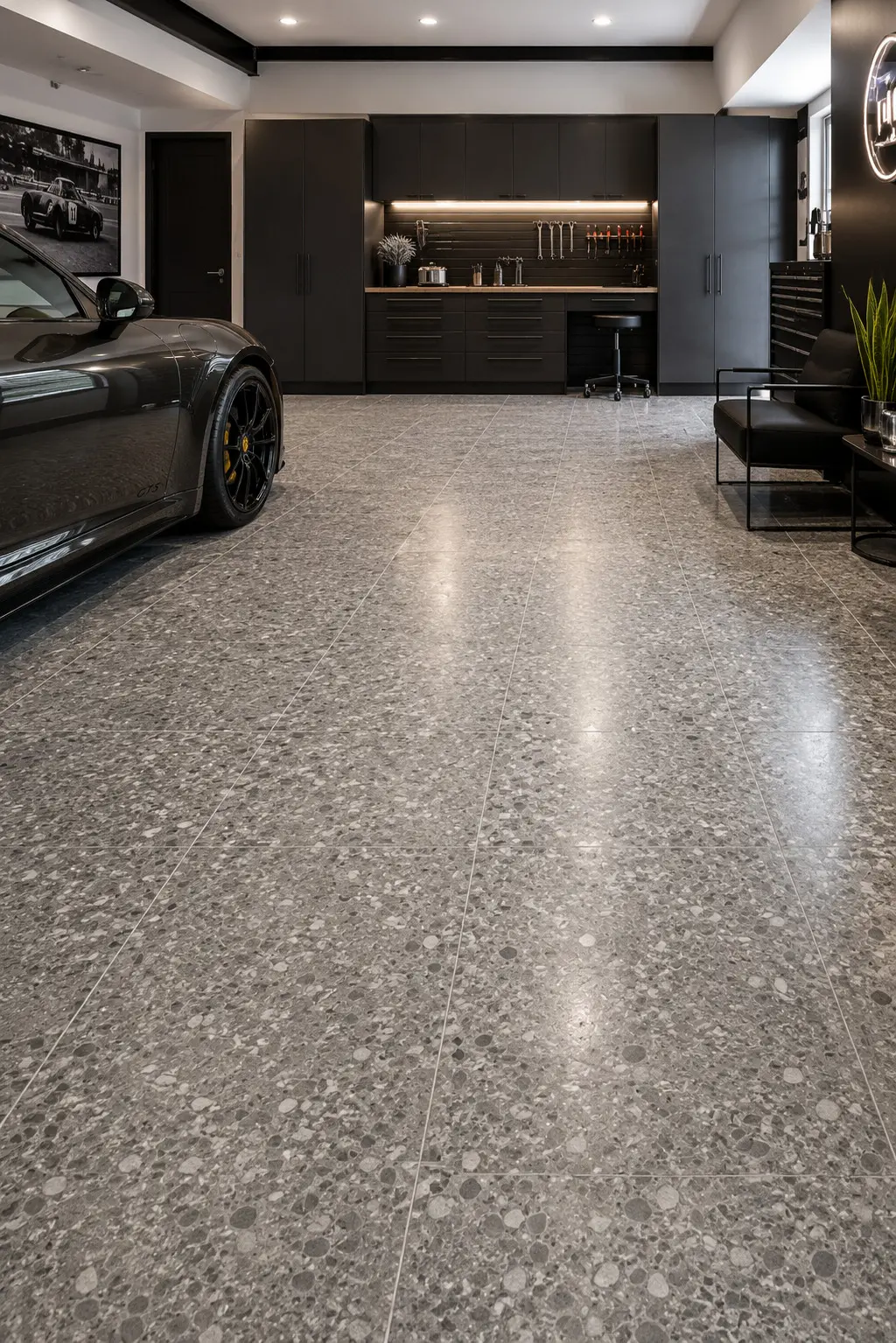
Porcelain tile can handle the distributed weight of passenger vehicles when installed correctly over a sound, fully prepared concrete substrate. Full mortar coverage beneath the tile is essential. Even small voids in the mortar bed leave the tile more vulnerable to cracking under point loads such as a floor jack or heavy toolbox on wheels.
A PEI Class 4 or 5 rating is generally recommended for glazed porcelain used on garage floors, as these classes handle heavy abrasion and impact well. Class 3 suits moderate residential use such as kitchens and hallways, but is not well matched to the heavier abrasion and traffic typical of a garage. Our team can help match the right tile to your use during a showroom visit.
The tile itself does not typically require sealing, since true porcelain absorbs less than 0.5 percent water and the fired surface resists oil and chemical penetration. Grout joints are the more vulnerable element and should be sealed, or for better chemical resistance in a garage, filled with an epoxy-based grout that does not require a topical sealer.
Porcelain tile with water absorption at or below 0.5 percent is classified as frost resistant, meaning it can generally handle freeze and thaw exposure better than higher-absorption materials. The installation method also matters. A latex-modified or flexible thinset helps accommodate movement from freeze and thaw cycles in a concrete floor base, and proper expansion joints should be included.
Our team is available to help you explore tile options for your garage project, and you can book an appointment at your nearest showroom to get started. If you are looking for a specific aesthetic, you can find more information about refined finishes for showroom-style or multi-use garage spaces on our marble look porcelain tile page.
Frequently Asked Questions
Fresh Insights from Our Blog:
Find the right garage tile at your nearest showroom
Serving homeowners, designers, and contractors across Nevada and Northern California. Our team will help match the right finish, PEI rating, and slip resistance to your project.
Through-body & glazed porcelain in stock
Matte & textured finishes for slip resistance
Installation
& membrane guidance from our team