Try Our $1 Tile Sample Today Book a Showroom Visit
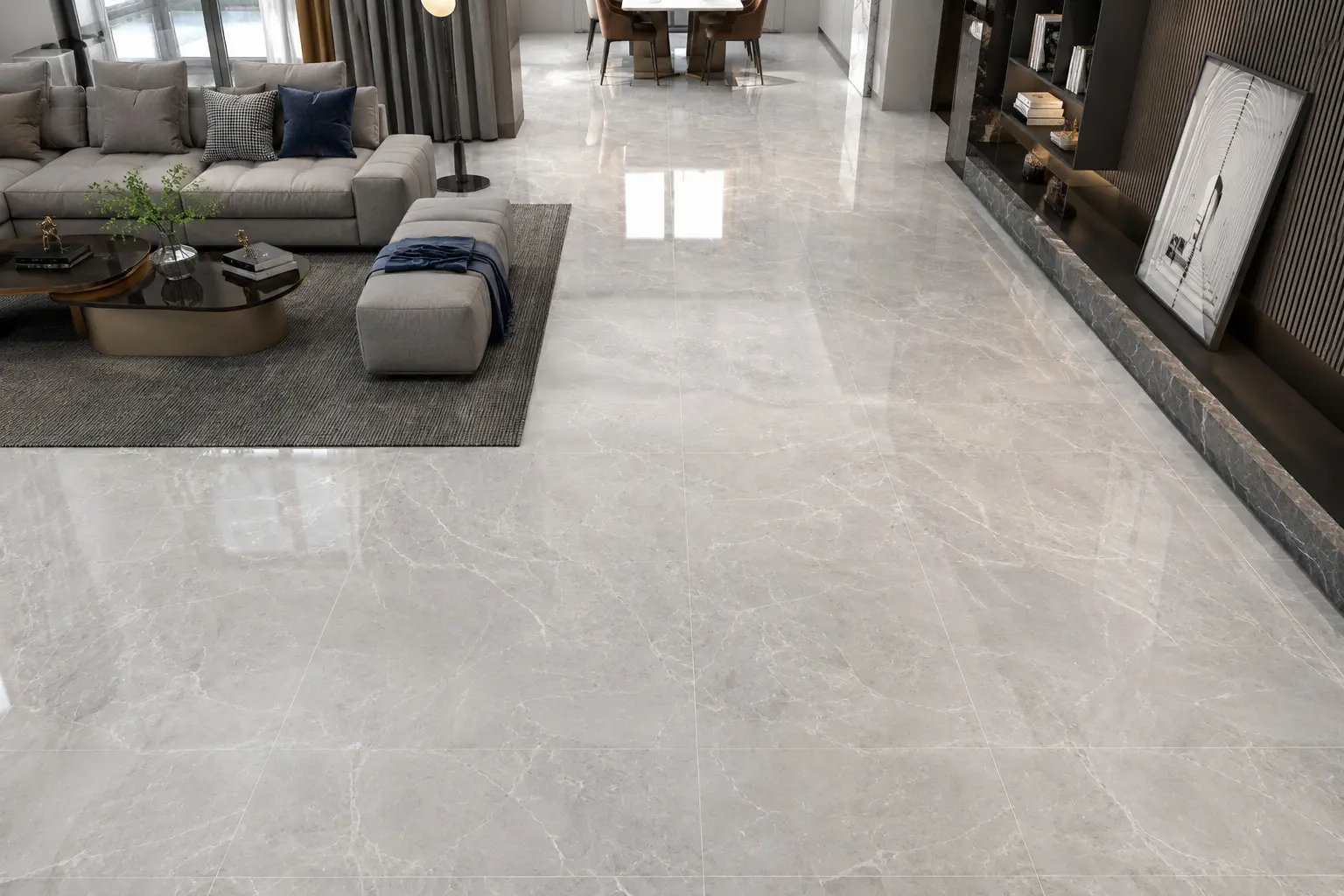
Polished tiles are a finish type produced by mechanically refining the surface of a fired ceramic body using progressively finer abrasive heads until a smooth, high-gloss result is achieved. The surface reflects light evenly across the face, giving rooms a clean, luminous quality suited to formal and refined settings. When the body is porcelain, it carries a water absorption rate of 0.5% or less under ANSI and TCNA standards, and that low-porosity composition is what allows it to hold a polished finish consistently over time. One important property of this finish is that the polishing process opens micro-pores on the surface, which can make it more susceptible to staining, but this can be managed with appropriate sealing and prompt spill cleanup.
refining interior since
samples ship free
Our team carries polished tiles across a range of sizes and design directions suited to interior floor and wall applications. For floors, they are generally better suited to dry, lower-traffic spaces. For walls, they work well across a broader range of settings. Selecting the right product depends on the space, the intended use, and the conditions the surface will face. For a broader overview of what to evaluate when choosing a product, our tile selection guide covers formats, technical considerations, and what to look for when comparing options.
How Polished Tiles Are Produced
Reflectivity increases with each polishing stage
Matte
Coarse abrasive
Removes the largest surface irregularities from the fired body.
Satin
Progressive heads
Successively finer grit refines the face with each pass.
Polished
Fine polish
Builds an even, consistent gloss, more stages, deeper shine.
Mirror
Sealed gloss
A factory sealant treats the micro-pores opened during polishing.
The polished finish is achieved by running the surface through a series of abrasive heads of increasing fineness. Each pass removes microscopic irregularities, gradually building toward a consistent, even gloss. The degree of reflectivity in the final product depends on how many polishing stages are applied and the grade of tooling used at each stage, with more intensive polishing generally producing a deeper, more mirror-like result.
A key technical consequence of this process is that it opens micro-pores across the surface that were sealed during firing. Many polished tiles receive a factory-applied sealant to address this, but the level of treatment varies by product, so confirming the specific treatment status before installation is recommended. Our team works with manufacturers whose products meet porcelain tile certification guidelines set by recognized industry bodies, so the products we carry reflect consistent and measurable quality benchmarks.
Slip Resistance, Staining, and Surface Performance
On Walls
Versatile, friction isn't a factor
Feature Walls / Backsplashes / Refined Interiors
With
no traction concern, the polished finish can be used across a broader range of
vertical applications.
On Floors
Best for dry, lower-traffic spaces
Living Rooms / Dining Areas / Hallways / Entryways
Less
friction underfoot, evaluate against the product's slip resistance rating, and
avoid where moisture is regularly present.
VS
The smooth surface of polished tile tends to offer less friction underfoot than a textured surface, which is an important consideration for floor use. In dry conditions this is generally manageable, but where moisture is present, the reduced surface contact can increase slip risk. Polished tiles on floors are best evaluated against the product's stated slip resistance rating, and they tend to be more appropriate for dry settings such as living rooms, dining areas, hallways, and entryways. On walls, friction is not a factor, and the finish can be used across a wider range of applications.
From a staining perspective, the surface can require more attention than a non-polished product, but proper sealing and consistent care can help manage this. Oils and pigmented liquids in particular can penetrate if not addressed promptly. Harsh scrubbing tools should be avoided, as they can affect the surface quality over repeated use. Products in our collection are aligned with ANSI ceramic and porcelain standards, which set measurable benchmarks for water absorption, breaking strength, and related performance properties. UV resistance is a characteristic generally associated with porcelain tile, but results may vary by product, color, and finish.
View Our Featured Products
Caring for Polished Tiles
Polished tiles are relatively easy to maintain, but consistent care will help preserve the surface appearance. The following practices are recommended:
Sweep or dry mop regularly to remove grit and debris that can scratch the surface with repeated contact.
Use a pH-neutral cleaner with a damp mop for routine cleaning. Acidic or alkaline solutions can affect the sheen and should be avoided.
Keep harsh chemical cleaners and scrubbing pads away from the surface, as these can dull the finish with repeated use.
Address spills quickly, particularly oils or deeply pigmented liquids, since the surface can be more susceptible to staining if spills are left unattended.
Clean grout lines with a grout-safe cleaner and a soft brush. Sealing grout periodically can help reduce discoloration and moisture absorption.
Place felt pads under furniture legs to reduce the risk of scratching when pieces are moved across the floor.
Use entrance mats at doorways to limit the amount of grit tracked onto the surface.
Avoid dropping heavy or sharp objects onto the tile. The material is durable, but edges and corners can be vulnerable to chipping, particularly on larger format tiles.
Frequently Asked Questions
Polished tiles are mechanically refined after production using abrasive equipment to achieve a smooth, glossy surface that distributes light evenly. The polishing process opens micro-pores across the face, which is why factory sealing and consistent maintenance are important. When the body is porcelain, the result is a dense, low-porosity base that can hold the finish well when properly maintained. Our team can help identify the right product based on the space and intended use.
Polished tiles can be used on both floors and walls, but the floor application requires more careful evaluation. The smooth surface tends to offer less traction underfoot, which can be a concern in wet or high-traffic areas. For dry, lower-traffic floors such as living rooms and hallways, they can perform well. On walls, the application is more versatile since surface friction is not a factor. Reviewing the product's technical data before selection is recommended. To learn more, visit our porcelain tile page.
The tile body itself generally does not require sealing given its low porosity, but this can vary by product. The polishing process creates a surface that can benefit from treatment, and many products come with a factory-applied sealant for this reason. Checking whether the specific product has been pre-treated and whether the manufacturer recommends additional sealing after installation is an important step before proceeding.
Yes. Our team is ready to assist at showroom locations across Nevada and Northern California. We recommend booking a showroom visit in advance so we can be prepared for your project and make the most of your time with us. Reach out if you have questions about current availability.
Polished tiles work well in dry settings where a luminous, refined surface is the goal. Living rooms, dining areas, hallways, entryways, and feature walls are among the more common applications. Our team has been helping homeowners, interior designers, and contractors find the right surface since 2005. Our marble look tile page is one example of the design directions available within our polished tile offering. To browse our full range, explore our full collection. For those working in the architecture and design industry, the tile and surface industry resource covers surface trends, product launches, and continuing education relevant to tile specification.