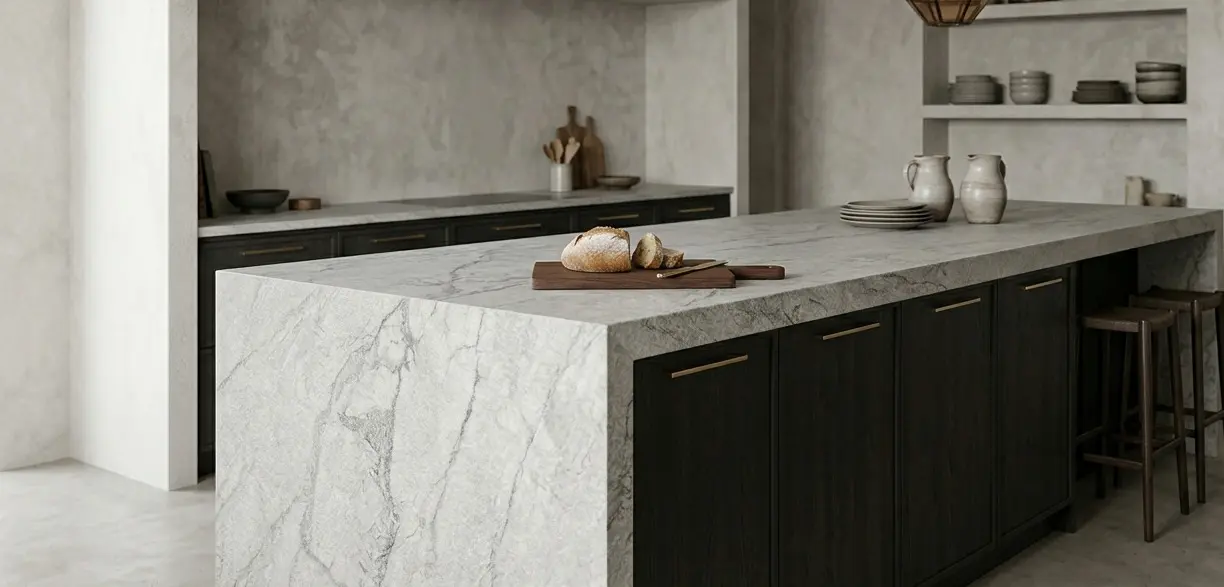
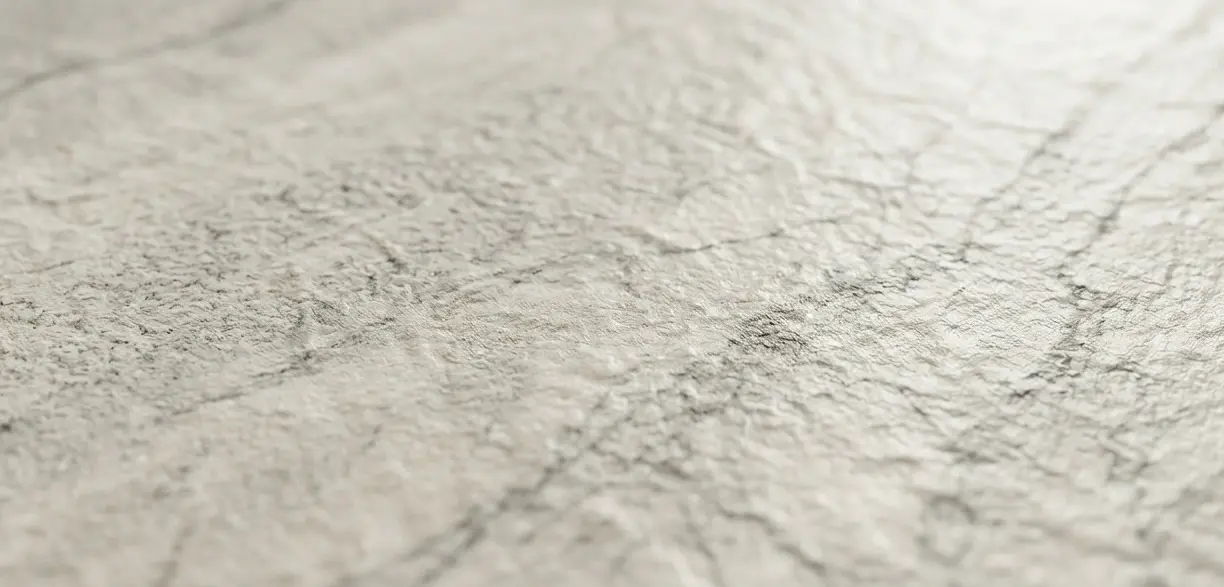
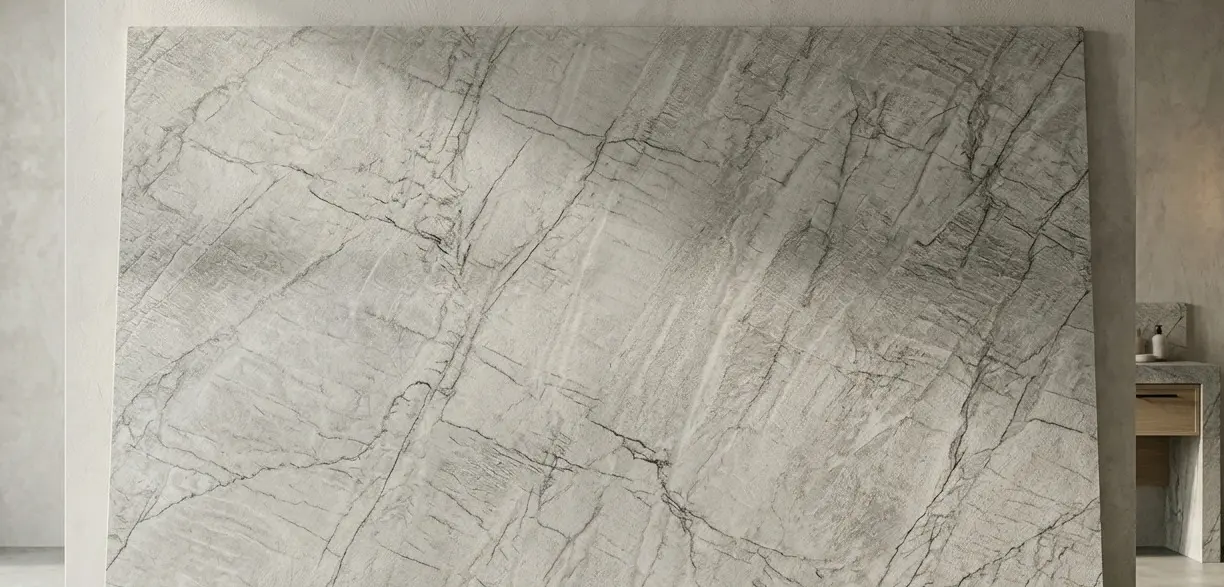
Dolomite is a metamorphic stone composed of calcium magnesium carbonate that rates 3.5 to 4 on the Mohs hardness scale, sitting between marble and quartzite in hardness. It offers better scratch resistance than marble while maintaining the soft white, cream, and gray veining palette that makes it one of the most versatile natural stone options available. The leathered finish is created by running diamond-tipped brushes across a honed slab, producing a gently textured surface with subtle peaks and valleys that catch light differently depending on angle and time of day, bringing a tactile, low-sheen quality to the stone's natural elegance.
Leathered dolomite is a practical and refined choice for countertops, as the texture conceals fingerprints and water spots more effectively than polished dolomite, making it well suited for high-use kitchen countertops and bathroom vanities.
For buyers who want to explore available options in person, Nova Tile and Stone carries a curated dolomite slab selection at four showroom locations in Reno, Sacramento, Minden, and Fernley.
Where Leathered Dolomite Slabs Work Best as a Countertop
The warm, textured quality of a leathered dolomite surface makes it particularly well suited to design environments where natural materials, tactile richness, and organic warmth are valued. The finish reads as genuinely distinctive from both polished and honed options in the same stone, and how it interacts with a room depends significantly on where and how it is placed.
Kitchens, Islands and Custom Countertop Configurations
In a modern kitchen countertop setting, leathered dolomite pairs naturally with flat-panel cabinetry, matte brass or brushed black hardware, and warm wood elements where the stone's textured quality adds material depth without competing with other surfaces. For kitchen islands, a leathered surface is particularly effective because the texture conceals daily contact marks from prep work and casual dining better than polished alternatives. A custom waterfall edge in leathered dolomite allows the stone's veining and subtle texture to flow continuously from horizontal to vertical, creating an architectural detail that holds its character across years of use. The green dolomite countertop page offers a useful reference for how dolomite reads in a bolder palette for buyers exploring beyond neutral tones.
Bathroom Vanities and Feature Surface Applications
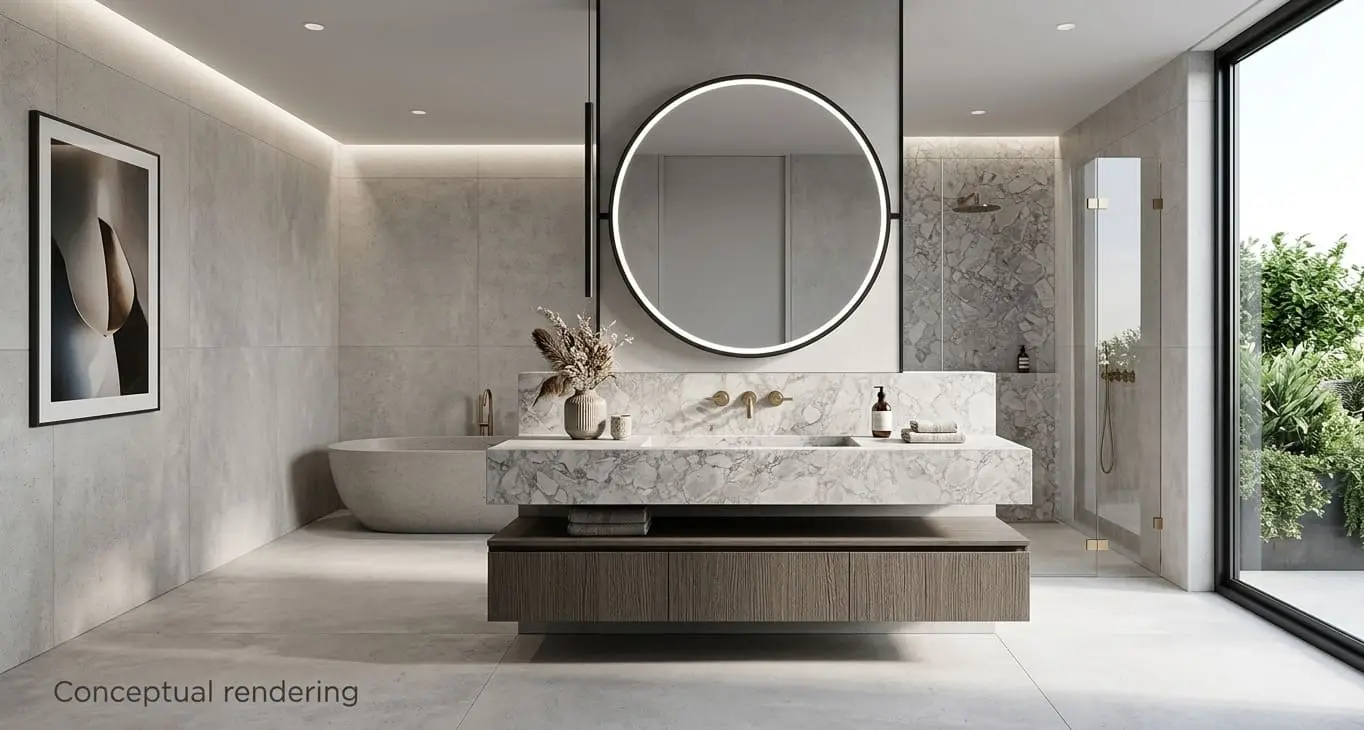
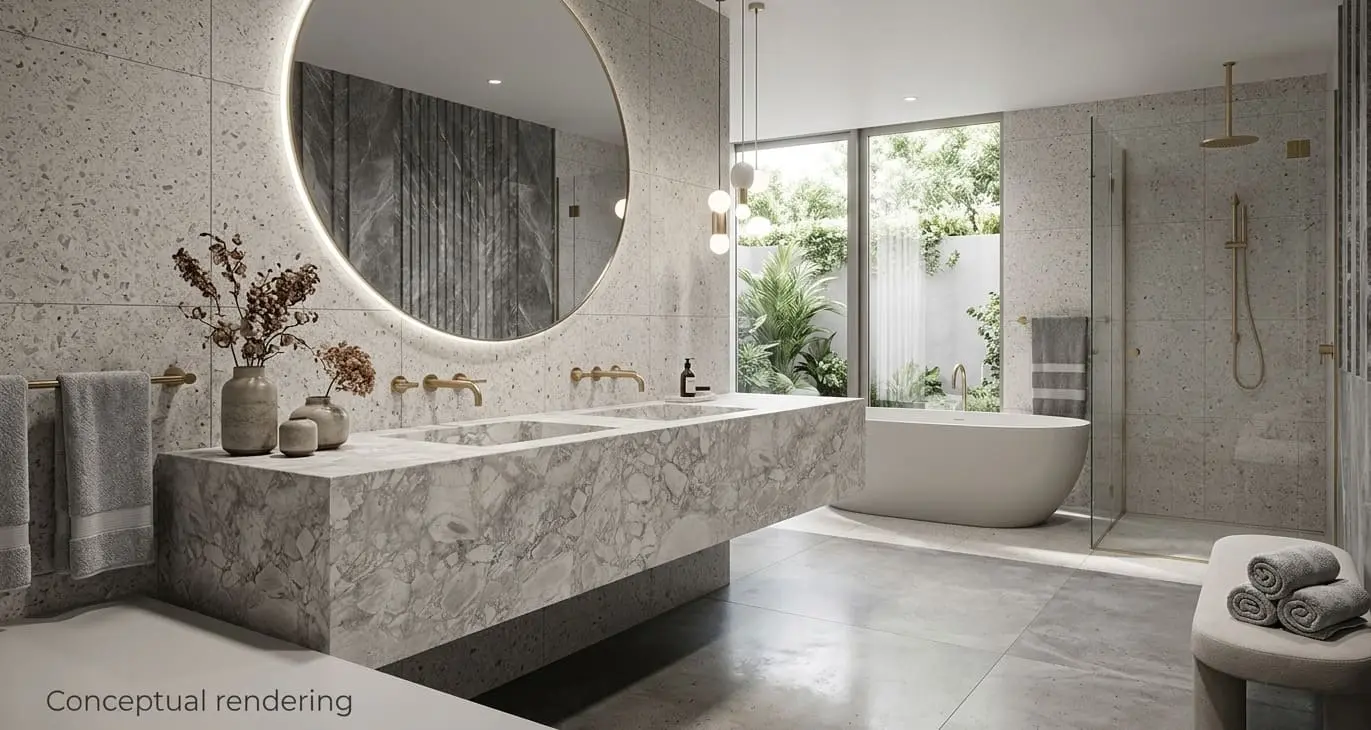
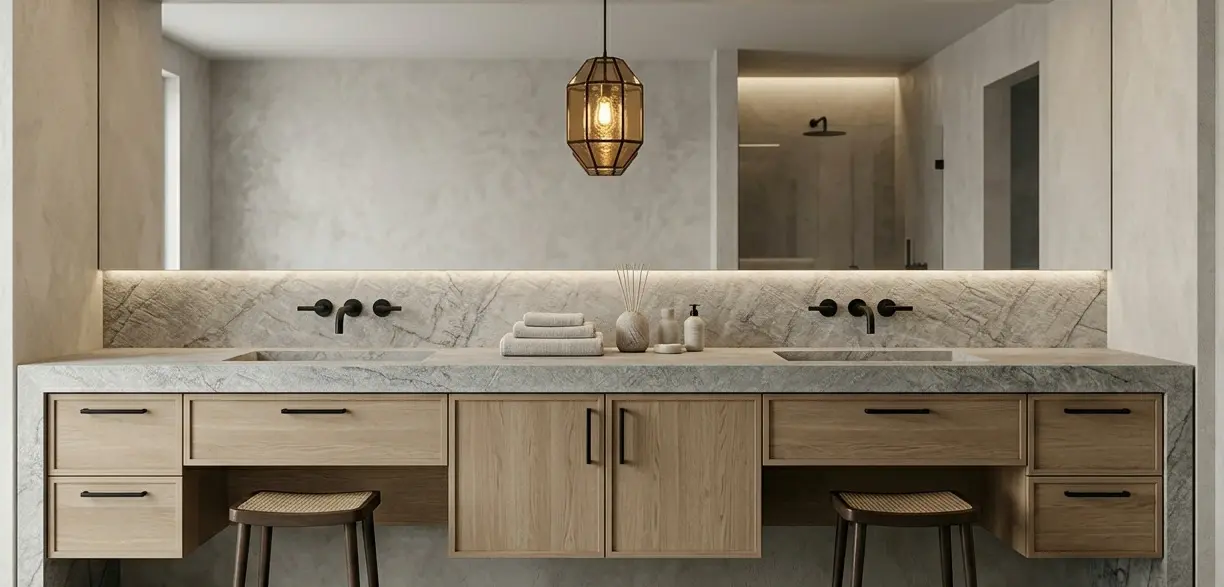
In luxury bathroom vanities, the leathered finish adds a spa-like, tactile quality that polished dolomite does not deliver in the same way. It conceals moisture marks effectively and pairs naturally with matte black, brushed nickel, and brushed gold fixtures in both single and double vanity configurations. As wall cladding in a bathroom or shower surround when properly sealed, the textured surface creates visual depth that flat polished panels cannot achieve. Buyers also considering classic neutral dolomite options will find the white dolomite countertop page useful for context on how similar dolomite slabs read across finish and application combinations.
What Makes Leathered Dolomite Stand Out
The leathered finish sits between polished and honed in terms of surface sheen. It preserves the stone's natural color depth more faithfully than honed while adding a subtle tactile dimension that polished surfaces do not offer. Where polished dolomite amplifies reflectivity and honed delivers a quiet matte quality, leathered introduces a warm, lived-in character that interacts with both natural and artificial light in a uniquely dynamic way.
This finish also has measurable practical advantages. The gentle surface texture reduces the visibility of fingerprints, smudges, and everyday water contact throughout the day, which is a meaningful benefit on kitchen countertops and bathroom vanities where clean appearances matter between thorough cleanings. Dolomite at Mohs 3.5 to 4 is harder than marble, so it handles moderate daily kitchen activity well, but acidic spills including citrus, wine, and vinegar should still be cleaned up promptly to prevent surface etching. Regular sealing every 6 to 12 months maintains stain resistance.
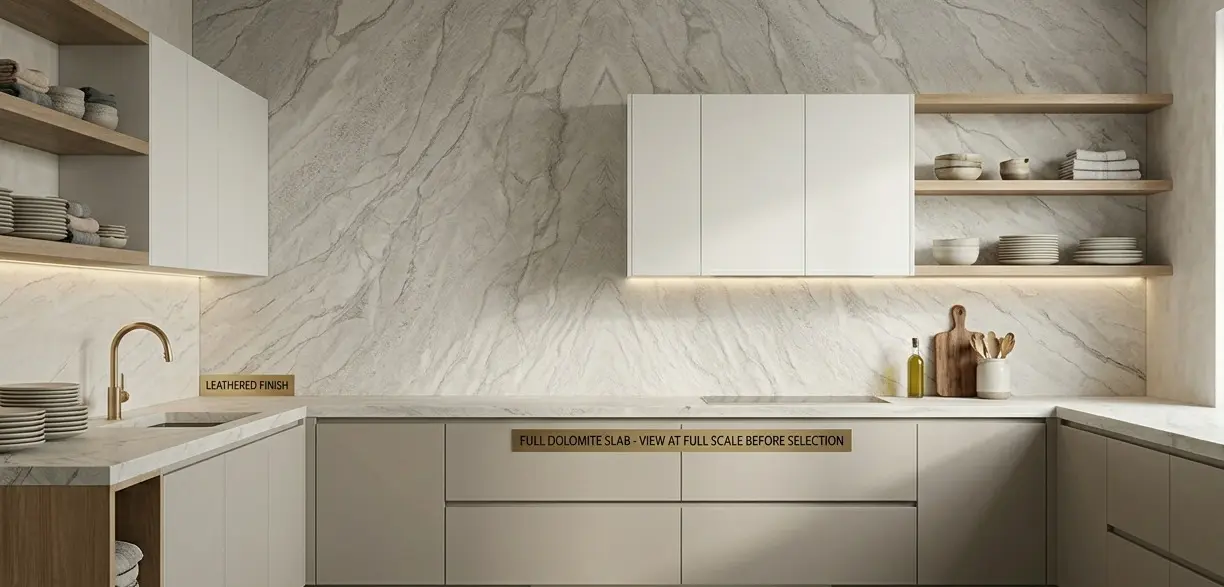
Compared to tiled countertop surfaces that carry grout lines collecting grime over time, a full dolomite slab in a leathered finish delivers a seamless surface with tactile depth across the entire countertop run. For a broader look at how dolomite slabs perform across finish types, the blog post: dolomite stone slab guide is a well-referenced starting point before selecting a finish.
Note: Some images on this page may be conceptual renderings created to illustrate design possibilities and may not depict actual installations.
Why Leathered Dolomite Slabs Are Worth Using for Countertops
Leathered dolomite slabs commonly used for countertops are a long-term design investment that holds its relevance well beyond trend cycles. The tactile finish adds a layer of material richness that polished stone cannot develop with age, and the soft white, cream, and gray palette of dolomite translates across contemporary, transitional, and classic interior design contexts without requiring updates as styles shift.
The material resists surface wear well over consistent use, but the sealant layer needs to be monitored and refreshed regularly. Each application should be individually evaluated to ensure the right slab thickness and edge profile are selected for the specific demands of the kitchen or bathroom environment. Because every leathered dolomite slab is shaped by geological processes rather than manufactured to a specification, no two countertops will look the same. That individuality is a design asset that adds genuine long-term value to any space.
Understanding Leathered Dolomite Slabs
Leathered dolomite slabs are a refined natural stone surface, but consistent care and sealing are essential to preserving the leathered finish and maintaining the stone's stain resistance over time.
- Harder than marble at Mohs 3.5 to 4, but cutting directly on the surface is still not recommended
- Leathered texture hides fingerprints and water spots better than polished; daily wiping keeps it looking its best
- Stain resistant when sealed, but acidic spills must be wiped promptly and resealing done every 6 to 12 months
- Heat resistant, though trivets should always be used under hot cookware
- Suitable for kitchen countertops, bathroom vanities, and feature walls, but each application benefits from finish-specific sealing guidance
- Easy to maintain with pH-neutral cleaner and mild soap; avoid acidic and abrasive products entirely
- Custom applications including waterfall edges and full-height backsplash panels are achievable, but each should be planned with a qualified fabricator
- Each slab is one of a kind, so the specific veining and texture of your leathered dolomite countertop slab cannot be replicated in a future replacement
For buyers wanting to understand how dolomite compares to other natural stone options before deciding, a guide to stone countertops covers the key material distinctions in depth. And for establishing the right countertop cleaning and care routine after installation, a reliable countertop care resource outlines the practical habits that protect natural stone finishes long-term.
Frequently Asked Questions
A leathered dolomite finish has a subtly textured surface with gentle peaks and valleys created by diamond-tipped brushes during processing. The result is a low-sheen finish that sits between polished and honed in terms of reflectivity. It gives the stone a tactile, organic quality while preserving the natural color depth of the veining more faithfully than a honed finish does.
Yes, with the right maintenance habits. Dolomite at Mohs 3.5 to 4 is harder than marble and handles moderate daily kitchen activity well when properly sealed. The leathered texture conceals everyday contact marks and fingerprints better than polished, reducing the frequency of visible cleaning needed throughout the day. Cutting boards, trivets, and prompt spill cleanup are the key protective habits.
Leathered dolomite requires sealing every 6 to 12 months, similar to polished and honed options. pH-neutral cleaners and mild soap are sufficient for daily care. Acidic products including vinegar, lemon-based cleaners, and harsh chemicals must be avoided entirely to protect both the stone and the sealant.
Yes. The leathered finish suits bathroom environments well because it conceals moisture marks throughout the day and adds a spa-like tactile quality that polished alternatives do not deliver. It pairs naturally with matte black, brushed gold, and brushed nickel fixtures and performs well in both single and double vanity configurations.
Both stones can be leathered, but quartzite at Mohs 7 is significantly harder than dolomite at Mohs 3.5 to 4. Leathered dolomite offers a very similar marble-like aesthetic with the added texture benefit, but requires more careful management of acidic spills. Leathered quartzite is the stronger choice for very high-traffic kitchens where scratch and etch resistance are the top priorities.
Our latest content
From Our Slab Guide
Plan Your Next Project With Leathered Dolomite
Leathered dolomite is best evaluated at full slab scale in person. Visit any of our four showrooms in Reno, Sacramento, Minden, or Fernley to compare current dolomite slab options, experience the leathered finish texture firsthand, and speak with a design expert about the right slab and edge profile for your project.
Reno | Sacramento | Minden | Fernley