Dolomite stone slab is a natural sedimentary rock composed primarily of calcium magnesium carbonate, formed when magnesium-rich groundwater gradually replaces the calcium in limestone. The result is a dense, crystalline stone that closely resembles marble in appearance but is measurably harder, making it a popular marble alternative for kitchen countertops, bathroom vanities, and backsplashes. Dolomite slabs present most commonly in white, light gray, and cream tones with soft flowing veining, and they are available in polished, honed, and leathered finishes. Harder than marble but softer than granite and quartzite, dolomite sits in the middle of the natural stone hardness range at 3.5 to 4 on the Mohs scale. Like all natural stone, it requires periodic sealing and careful management of acidic spills to maintain its surface over time.
Dolomite Stone Slab: What Sets It Apart from Other Natural Stone
Natural stone shoppers encounter a lot of options: granite, marble, quartzite, and increasingly, dolomite. While dolomite shares visual traits with several of these materials, it sits in a category of its own. Understanding what dolomite is, how it performs, and where it works best will help you make a confident decision for your next countertop or vanity project.
At our showrooms in Reno, Minden, Sacramento, and Fernley, we work with homeowners who discover dolomite mid-project and want to know more before committing. This guide covers everything worth knowing before you select your slab.
What Is Dolomite Stone?
Dolomite is a sedimentary rock primarily composed of the mineral calcium magnesium carbonate. It forms through a geological process called dolomitization, in which magnesium-rich groundwater gradually replaces the calcium in limestone. The result is a denser, slightly harder stone than the limestone it originated from.
In the stone trade, dolomite is sometimes called dolostone to avoid confusion with the mineral dolomite that makes up much of its composition. For countertop purposes, the two terms refer to the same material: a natural stone quarried in large slabs and cut for interior applications.
According to Britannica's overview of dolomite geology, dolomite makes up approximately 2 percent of the Earth's crust and has been used in construction for centuries, though its emergence as a premium countertop material is more recent. As homeowners search for marble alternatives that deliver on aesthetics without the higher maintenance, dolomite has earned a growing following among designers and remodelers alike.
What Does Dolomite Stone Look Like?
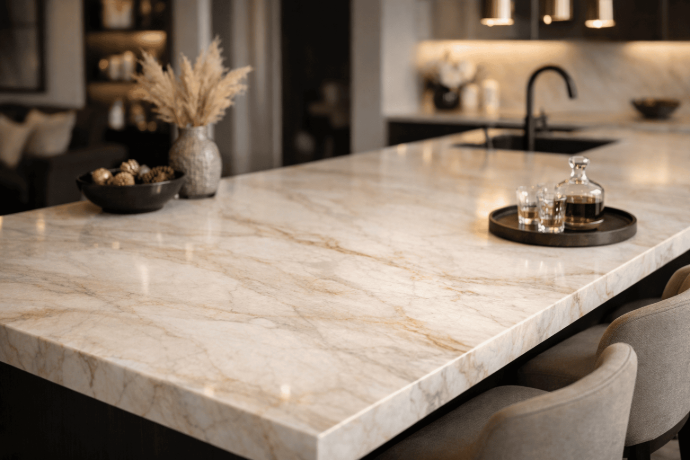
Dolomite's visual appeal is one of its strongest selling points. The stone typically presents in white, light gray, and cream tones with soft, flowing veining in gray, beige, or occasionally warmer hues. Its resemblance to Carrara and Calacatta marble is striking enough that dolomite slabs are sometimes misrepresented as marble or quartzite at the point of sale.
Beyond the standard white and gray palette, dolomite occasionally appears in softer tones like taupe, blush, and warm ivory, depending on the regional quarry and mineral composition. Veining patterns range from subtle and wispy to bold and dramatic, giving buyers a wide range of visual options within a single material category.
Finish options include:
Polished: The most common choice, polished dolomite has a reflective, glass-like surface that enhances the depth and contrast of the veining. It works well in kitchens and bathrooms where a clean, high-end look is the goal.
Honed: A matte, flat finish that softens the overall appearance of the stone. Honed dolomite is popular in contemporary and transitional designs and shows fewer surface scratches than polished versions, though it requires more attentive sealing.
Leathered: A textured finish achieved by brushing the surface to raise its natural texture. Leathered dolomite has a sophisticated, tactile quality and hides fingerprints and water spots better than polished finishes.
Browse our full natural stone slab collection to see current dolomite options available across our locations.
How Hard Is Dolomite Stone?
Hardness matters when selecting a countertop material, and dolomite occupies a middle position on the Mohs hardness scale, typically rating between 3.5 and 4. That places it harder than marble, which averages around 3, but softer than granite and quartzite, which range from 6 to 7.
In practical terms, this means dolomite will hold up better than marble under everyday kitchen use, but it is not impervious to scratching. Glass, metal utensils, and sharp objects can leave marks on the surface. Using cutting boards and avoiding dragging heavy items across the countertop are straightforward habits that preserve the finish long-term.
Our stone specialists across all four showroom locations can help you evaluate how dolomite's hardness compares to other slabs in your consideration set based on how your kitchen or bathroom gets used day to day.

Dolomite vs. Marble: The Key Differences
The comparison homeowners make most often is dolomite versus marble. Both stones share a similar visual profile and natural origin, but they differ in meaningful ways.
Hardness: Dolomite is measurably harder than marble, making it more resistant to scratching in everyday use. This is one of the primary reasons homeowners choose dolomite when they want marble's aesthetic without marble's fragility.
Etching: Both stones are susceptible to etching from acidic substances like citrus juice, vinegar, and wine. Dolomite is slightly more resistant than marble, but neither stone is acid-proof. Prompt cleanup of spills is necessary for both.
Heat resistance: Dolomite handles heat better than marble and significantly better than quartz, which can be permanently damaged by hot cookware. While using trivets is still a good practice, dolomite is a more kitchen-friendly option in this regard.
Porosity: Both stones are porous and require sealing, though dolomite is generally considered slightly less porous than marble. Annual sealing is the standard recommendation for dolomite in most kitchen and bathroom applications.
Appearance: The two stones look nearly identical to the untrained eye, which is part of dolomite's appeal. Homeowners get the soft, veined beauty of marble with a material that performs a step above it.
For a deeper look at how natural stone options compare before you commit to a material, This Old House's guide to stone countertops is a reliable reference for understanding the full range of options available.
Dolomite vs. Quartzite: Understanding the Confusion
Dolomite and quartzite are frequently confused with each other, partly because some suppliers incorrectly label dolomite slabs as quartzite. Knowing the difference protects you as a buyer.
Quartzite is a metamorphic rock formed when sandstone is subjected to extreme heat and pressure. It is significantly harder than dolomite, typically rating 6 to 7 on the Mohs scale, and is more resistant to scratching and etching. Quartzite is the better choice for high-traffic kitchens where durability is the top priority.
Dolomite is softer and requires more careful daily use, but it offers a similarly elegant appearance. If you are drawn to a slab that looks like quartzite but your preference leans toward a different option, it is worth verifying the actual stone type before purchasing. Shopping local and working with a knowledgeable stone specialist in person is the most reliable way to confirm the material you are selecting.
Where Is Dolomite Stone Slab Used?
Dolomite's versatility makes it a practical choice across several residential applications.
Kitchen countertops: The most popular application for dolomite slabs. The stone's heat resistance, aesthetic appeal, and natural character make it a compelling option for kitchen remodels. White and gray dolomite pairs especially well with dark cabinetry, light wood tones, and two-tone kitchen designs.
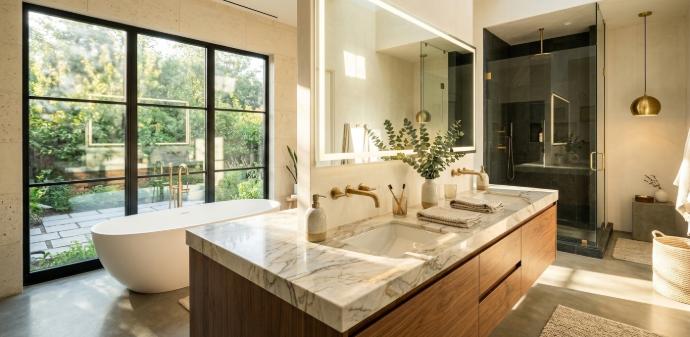
Bathroom vanities: Dolomite performs well in bathrooms, where it is exposed to less daily wear and fewer acidic substances than in the kitchen. The soft veining adds a spa-like quality to vanity surfaces.
Backsplashes: Full slab dolomite backsplashes are a growing design trend. Running the same slab material from the countertop up the wall creates a seamless, high-end look that works particularly well in contemporary kitchens.
Fireplace surrounds: Dolomite's heat resistance and refined appearance make it a natural fit for fireplace surrounds, where it adds texture and elegance without the maintenance concerns of a kitchen countertop.
Dolomite Countertop Maintenance
Like all natural stone, dolomite requires some care to maintain its appearance over time. The maintenance routine is not burdensome, but it is consistent.
Sealing: Dolomite should be sealed at the time of installation and resealed annually, or every six months in heavy-use kitchens. Sealing reduces the stone's porosity and helps prevent staining and moisture absorption.
Daily cleaning: Clean dolomite surfaces with a mild, pH-neutral stone cleaner or a gentle dish soap diluted in warm water. Avoid acidic cleaners, vinegar-based products, and abrasive scrubs, as these can etch or scratch the surface over time.
Spill management: Wipe up acidic spills promptly. Citrus juice, wine, tomato sauce, and vinegar are the most common culprits for surface etching. The faster the cleanup, the less likely the stone is to show damage.
Cutting boards and trivets: Always use a cutting board when working with knives, and use trivets or hot pads under cookware. These simple habits extend the life of the finish significantly.
Fine Homebuilding's natural stone countertop guide offers additional detail on care routines across different stone types, which is especially useful if you are weighing dolomite against other natural stone options for the same space.
Is Dolomite Stone Slab Right for You?
Dolomite is an excellent choice for homeowners who want the look of marble with slightly better durability and heat resistance, and who are comfortable with a natural stone care routine. It is well-suited to kitchens and bathrooms where aesthetics are a priority and daily use is moderate to heavy.
It is not the best fit for homeowners who want a truly low-maintenance surface. If careful spill management and periodic sealing are not realistic for your household, porcelain or engineered stone may be a better match for your lifestyle.
For those drawn to natural stone and willing to give it the care it deserves, dolomite delivers exceptional beauty, a broad range of slab expressions, and a genuinely luxurious result in the finished space.
Our team across our four showrooms is available for free design consultations to help you compare dolomite with other natural stone options and find the right slab for your project. Explore everything we carry at our Northern Nevada and Northern California stone showrooms.
Conclusion
Dolomite stone slab occupies a valuable position in the natural stone category: it delivers the marble-like elegance homeowners love, with measurably better heat resistance and durability than marble itself. It requires consistent care, especially where acidic substances are involved, but for buyers willing to invest in that routine, dolomite is a rewarding long-term material. Whether you are planning a kitchen countertop, bathroom vanity, or a full slab backsplash, dolomite brings a refined, natural character that few other materials can replicate. Visit one of our showrooms or explore our stone slab options to see current dolomite options in person and find a slab that fits your design vision.
Frequently Asked Questions
What is dolomite stone slab made of?
Dolomite stone slab is a natural sedimentary rock composed primarily of calcium magnesium carbonate. It forms when magnesium-rich groundwater replaces the calcium in limestone over time, producing a denser stone with a crystalline structure. It is quarried in large slabs and cut for countertop, vanity, and backsplash applications.
Is dolomite harder than marble?
Yes. Dolomite rates between 3.5 and 4 on the Mohs hardness scale, while marble typically rates around 3. This makes dolomite more resistant to scratching in everyday use, though it is still softer than granite and quartzite, which both rate between 6 and 7.
Does dolomite need to be sealed?
Yes. Like most natural stone, dolomite is porous and requires sealing to protect against staining and moisture absorption. Most stone care professionals recommend sealing dolomite countertops once a year for typical household use, or every six months in high-traffic kitchens.
Can dolomite be used for kitchen countertops?
Yes, and it is one of the most popular applications for dolomite slabs. Its heat resistance, elegant appearance, and natural character make it a strong choice for kitchen remodels. Homeowners who love the look of marble but want a slightly more durable option often find dolomite to be the right fit.
What is the difference between dolomite and quartzite?
Dolomite is a sedimentary rock with a Mohs hardness of 3.5 to 4, while quartzite is a metamorphic rock rated 6 to 7 on the same scale. Quartzite is significantly harder and more resistant to etching. Both stones can look similar on the surface, which is why confirming the material type with your stone supplier before purchasing is important.