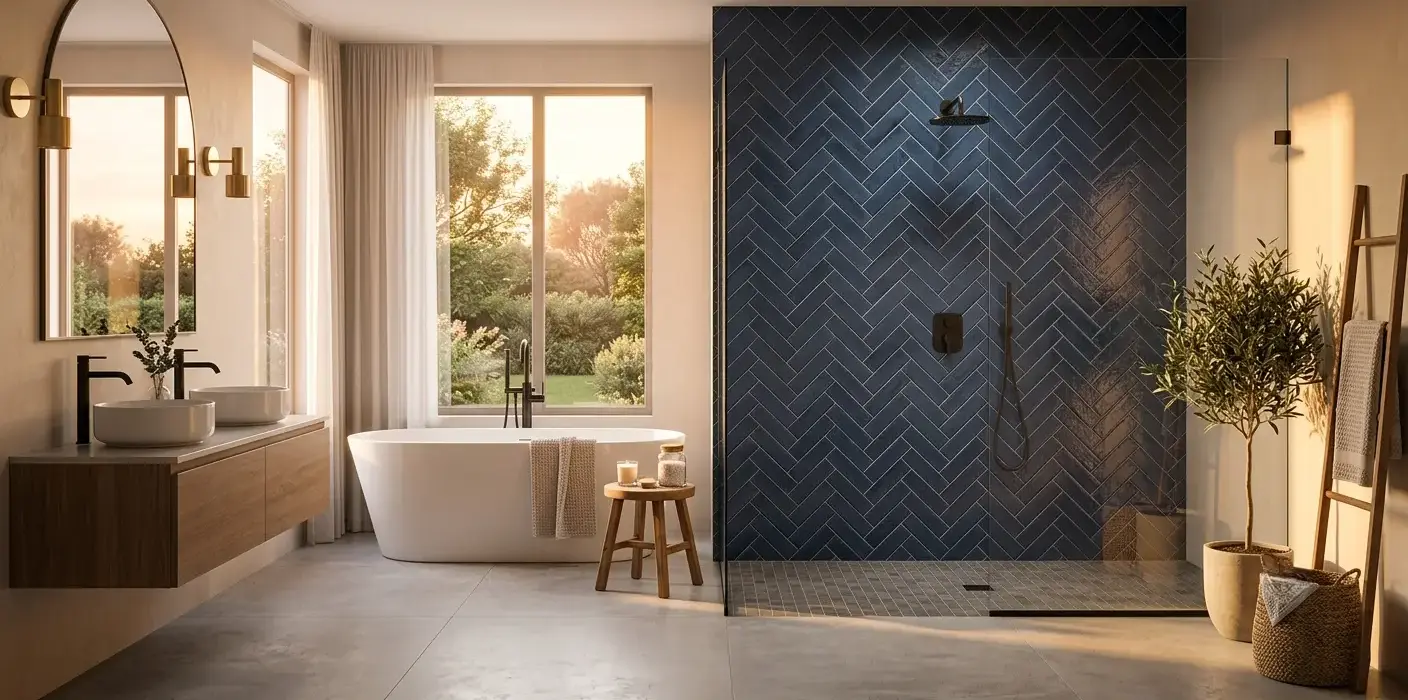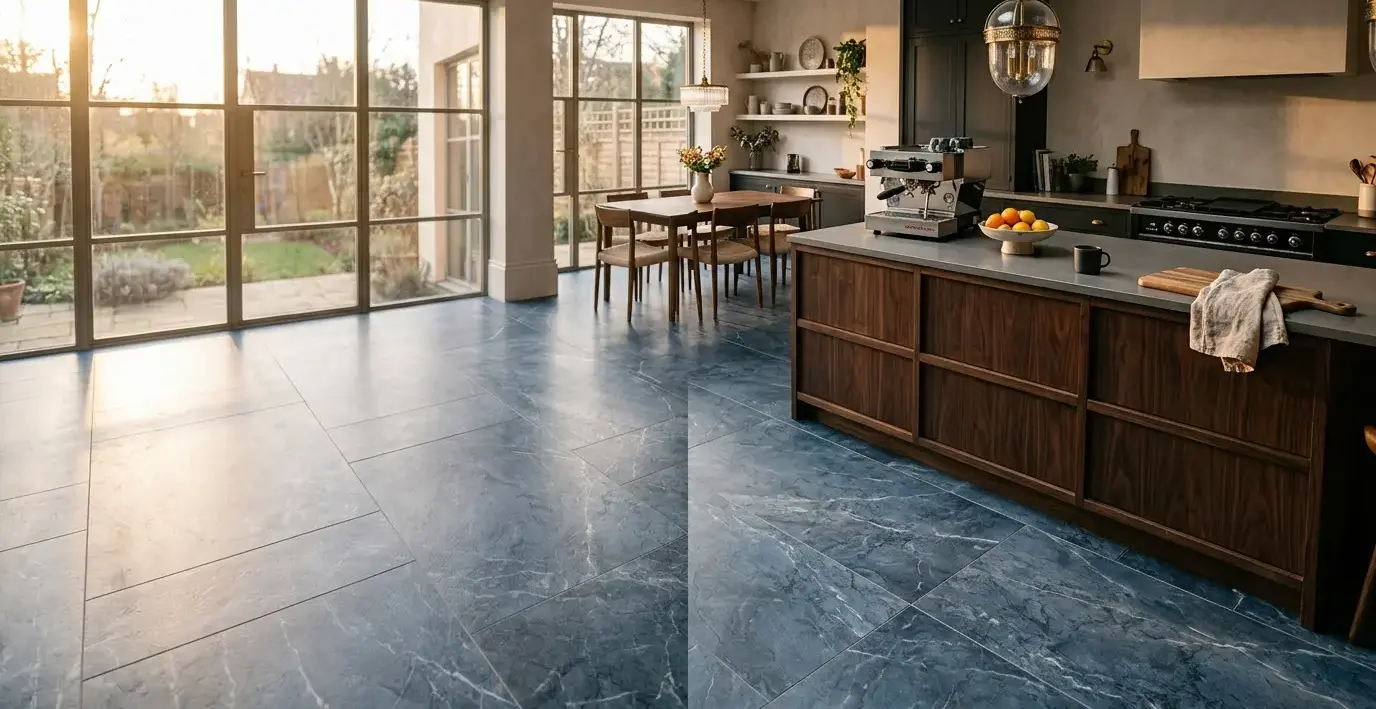
Indigo Porcelain Tile brings a deep, jewel-toned blue-violet color to kitchens, bathrooms, and living room designs, paired here with a matte finish and subtle tonal marbling that keeps the surface from reading flat. Nova Tile and Stone offers this color with a soft warm-ivory companion shade, giving designers a flexible accent option for backsplashes, shower walls, and feature surfaces. As a fired porcelain product, indigo tile shares the dense, low-porosity body common to the category, distinguishing it from standard ceramic. Below, find core specifications, layout ideas, and practical guidance for working indigo porcelain tile into a kitchen, bathroom, or living room project.
Indigo Porcelain Tile Specifications and Material Profile
Built from refined clay body that tends to hold color saturation well even in dramatic shades like indigo. The matte finish selected for this variation softens reflectivity, helping the blue-violet tone read as rich rather than glossy, while the tonal marbling and warm-ivory secondary shade add quiet visual movement instead of a flat, uniform surface. Visit Nova Tile and Stone's collection to compare indigo against other color and finish combinations.
Compared with high-gloss subway layouts or pale neutral floor tiles, indigo porcelain tile reads as a feature material best suited to backsplashes, shower walls, and accent surfaces, where a smaller footprint lets the saturated color make an impact without overwhelming a room. Porcelain's density generally supports good resistance to everyday wear, though the exact traffic rating and hardness figure for this specific tile are still pending lab confirmation, so durability claims below stay general rather than numeric.
*Figures reflect general porcelain category standards referenced in the complete porcelain tile guide; SKU-specific lab results for Indigo Porcelain Tile are pending confirmation before exact specs are published. Please contact us for more details.
 Conceptual rendering
PROPERTY | TYPICAL PORCELAIN BENCHMARK* |
Surface Hardness (Mohs) | Often around 7 for fired porcelain bodies |
Standard Thickness | Wall formats near 4mm; floor formats typically 8mm or thicker |
Water Absorption | Certified porcelain generally falls at or below 0.5% |
Our latest porcelain products
Check out what's new in our company!
Layout Ideas for Indigo Porcelain Tile in Modern Interiors
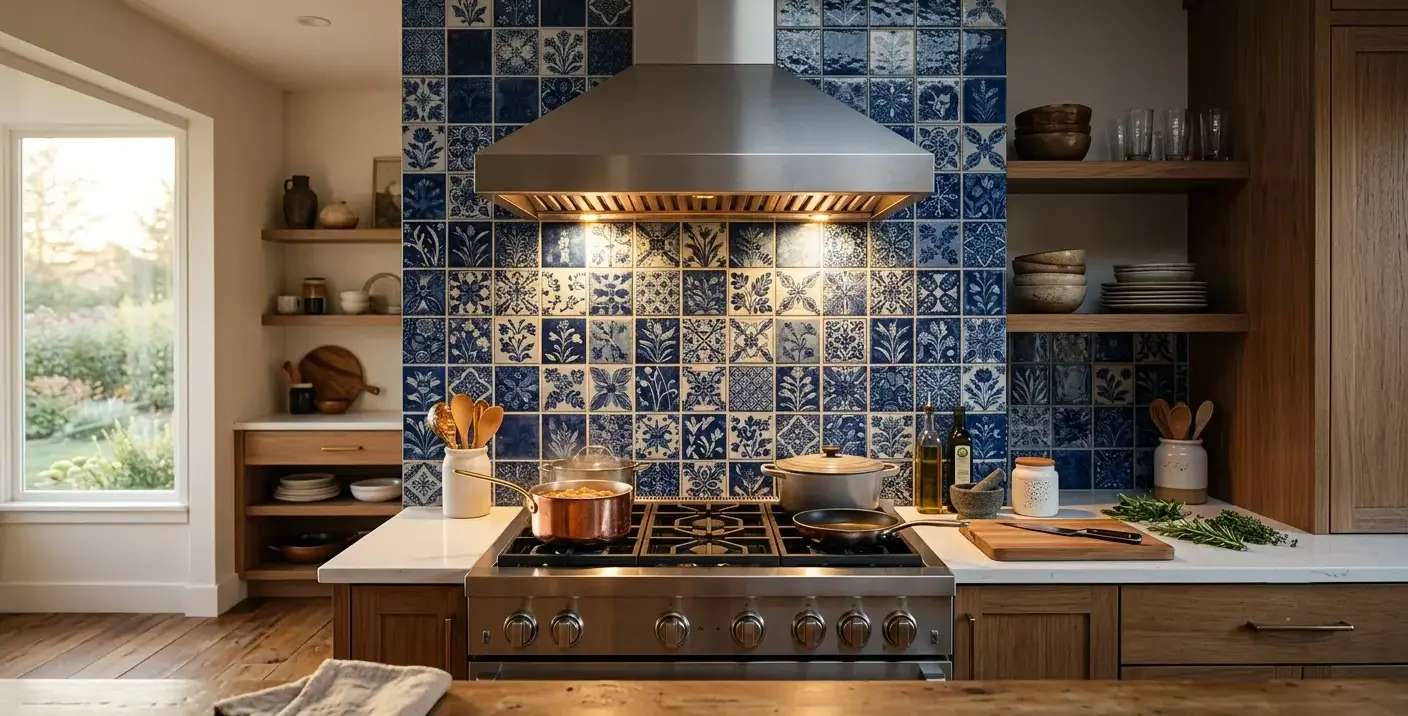
Indigo's depth of color responds well to layout choice. A horizontal run along a kitchen backsplash keeps sightlines calm under upper cabinetry, while a vertical stack behind a range hood draws the eye upward and adds a touch of drama to an otherwise simple wall. In bathrooms, a herringbone layout on a shower accent wall plays with the tile's tonal marbling, creating movement without competing with fixtures or hardware. Browse the shop tile collection for additional formats that pair well with this layout style.
In living room designs, indigo porcelain tile works well as a fireplace surround or feature wall, especially alongside warm wood tones or brass fixtures that complement its cooler, jewel-toned color. For outdoor patios or pool surrounds, exterior performance depends on confirmed freeze-thaw results and a verified water absorption rate, figures not yet supplied for this product. Until that confirmation is available, indigo porcelain tile is best treated as an interior selection for kitchen, bathroom, and living room applications.
Why Choose Indigo Porcelain Tile for Everyday Spaces
- Dense porcelain body: generally resists moisture better than standard ceramic, though grout lines still benefit from periodic sealing and routine care.
- Matte finish: softens the appearance of water spots and fingerprints compared with a high-gloss surface, but regular cleaning still keeps the deep indigo tone looking fresh.
- Tonal marbling: adds visual depth to the surface, helping disguise minor everyday marks between cleanings.
- Color-forward design: indigo reads well against ivory, brass, and warm wood tones, giving designers a flexible anchor color for kitchen, bathroom, and living room palettes.
- Porcelain color depth: many porcelain bodies carry color further through the tile than a surface glaze alone, though this should be confirmed for this specific SKU before any chip-resistant coloring claim is made.
For finish-specific cleaning notes on deep color tile, the porcelain tile care guide covers daily and deep-cleaning routines by tile color.
 Conceptual rendering
Indigo Porcelain Tile as a Long-Term Design Investment
Because porcelain tile is fired at high temperatures, the material category is generally recognized for holding its surface and color over years of normal residential use, provided everyday care guidelines are followed and grout joints receive routine maintenance. Test methods published through the American National Standards Institute, including those maintained by the Tile Council of North America for ceramic tile specifications and dynamic coefficient of friction, give designers a consistent framework for evaluating porcelain performance claims across suppliers; the ANSI tile standards reference library covers the relevant test methods (ASTM C373 for water absorption, ASTM C648 for breaking strength, and ASTM A326.3 for slip resistance among them).
For a saturated color like indigo, that long-term stability matters more than it does with a neutral tile, since a feature surface is harder to replace piecemeal if it fades or wears unevenly. Asking for the specific DCOF, PEI, and water absorption figures for the exact SKU under consideration helps designers avoid surprises later in a project timeline.
Fresh Insights from Our Blog
Frequently Asked Questions
Porcelain is fired at higher temperatures than ceramic, producing a denser body with generally lower water absorption, part of why deep, saturated colors like indigo tend to hold their richness well in porcelain formats.
Indigo's saturated tone tends to read best as an accent rather than a whole-room surface, making kitchen backsplashes, bathroom shower walls, and living room feature walls strong starting points for this color.
Most glazed porcelain bodies do not require sealing because the surface itself resists moisture, though grout joints are more porous and generally benefit from periodic sealing depending on the grout type used.
Outdoor and wet-area performance depends on confirmed freeze-thaw results and a verified water absorption rate for the specific tile, figures that have not yet been confirmed for this product, so indigo porcelain tile is currently best suited to interior applications.
This variation is offered in a matte finish, which tends to soften glare and conceal minor water spots better than a high-gloss surface, particularly useful in kitchens and bathrooms.