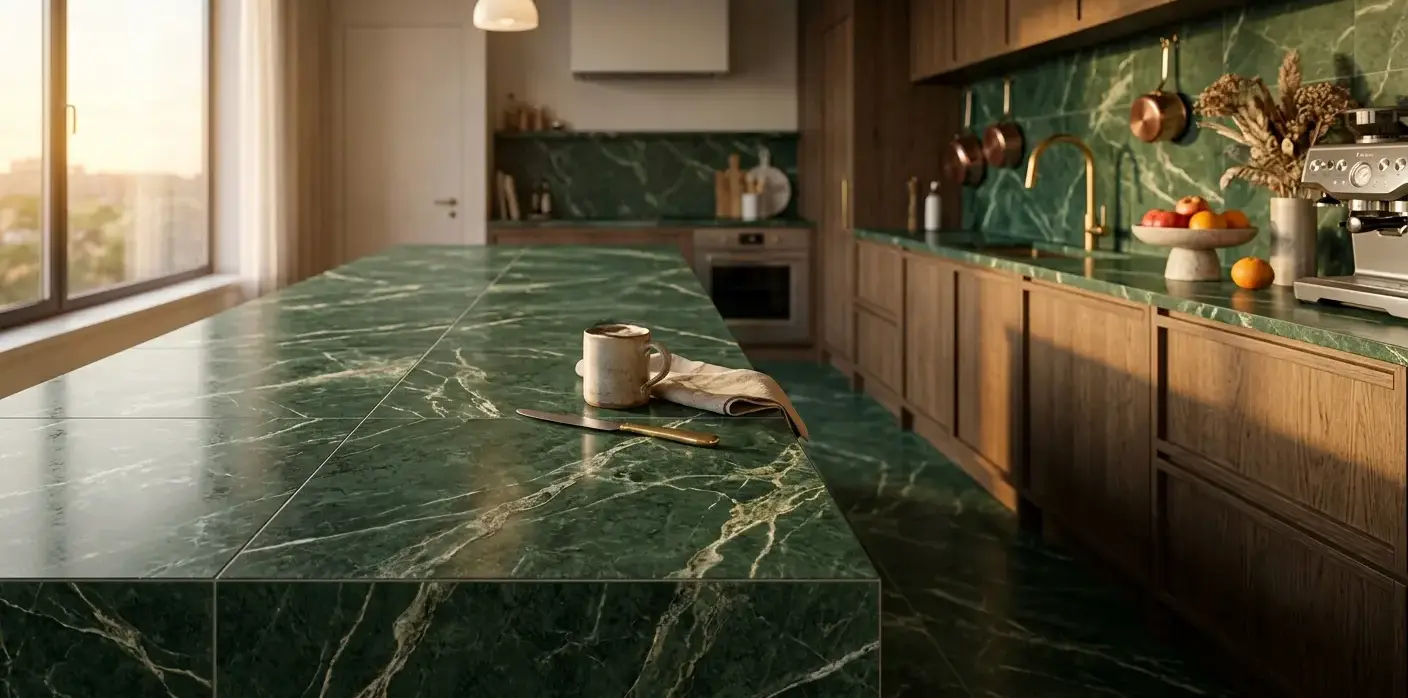
Hunter Green Porcelain Tile is a deep, jewel-toned porcelain surface built for kitchen backsplashes, bathroom accent walls, and living room feature walls. Made from dense porcelain with marble-look veining in warm cream and gold tones, this tile pairs a saturated hunter green base with the durability porcelain is known for. A glossy finish enhances the color's depth while reflecting light across the surface. Homeowners comparing tile surface options for kitchen, bathroom, or living room designs often choose hunter green for its ability to anchor a room with a bold, nature-inspired statement that still feels considered rather than overwhelming.
Material Specifications for Porcelain Tile in Hunter Green
Hunter Green Porcelain Tile is produced from a dense, fully vitrified porcelain body finished with a glossy glaze that deepens the hunter green base color while adding reflective dimension. Soft cream and gold veining runs through the surface in a marble-look pattern, giving each standard-format 12x24 panel a one-of-a-kind visual rhythm rather than a flat, uniform tone. Compared to standard subway or square layouts, the 12x24 rectangle gives hunter green more room to read as a cohesive design statement instead of a busy grid of grout lines.
Hunter green joins a broader wave of nature-inspired colorways covered in Nova's 2025 tile color trends post, which tracks how deep greens are replacing all-white palettes in kitchens and baths. Porcelain in this category carries a water absorption rate of 0.5% or less under ANSI A137.1, and a surface hardness around Mohs 7, comparable to quartz, supporting day-to-day resistance to scratching under normal residential use. As part of the Nova Tile and Stone selection, hunter green sits alongside dozens of other colorways for homeowners comparing tile surface options for kitchen, bathroom, and living room projects.
SPECIFICATION | DETAIL |
Material | Fully vitrified porcelain |
Finish | Glossy, marble-look veining |
Format | Standard 12 in. x 24 in. rectangle |
Water Absorption | ≤0.5% (ANSI A137.1, category standard) |
Surface Hardness | Mohs ~7, comparable to quartz (contact us for more details) |
Edge Type | Rectified (contact us for more edge type) |
Recommended Use | Kitchen backsplash, bathroom accent walls, living room feature walls |
Water absorption, hardness and edge type reflect general porcelain-category standards, not SKU-specific lab certification; contact us for more details.
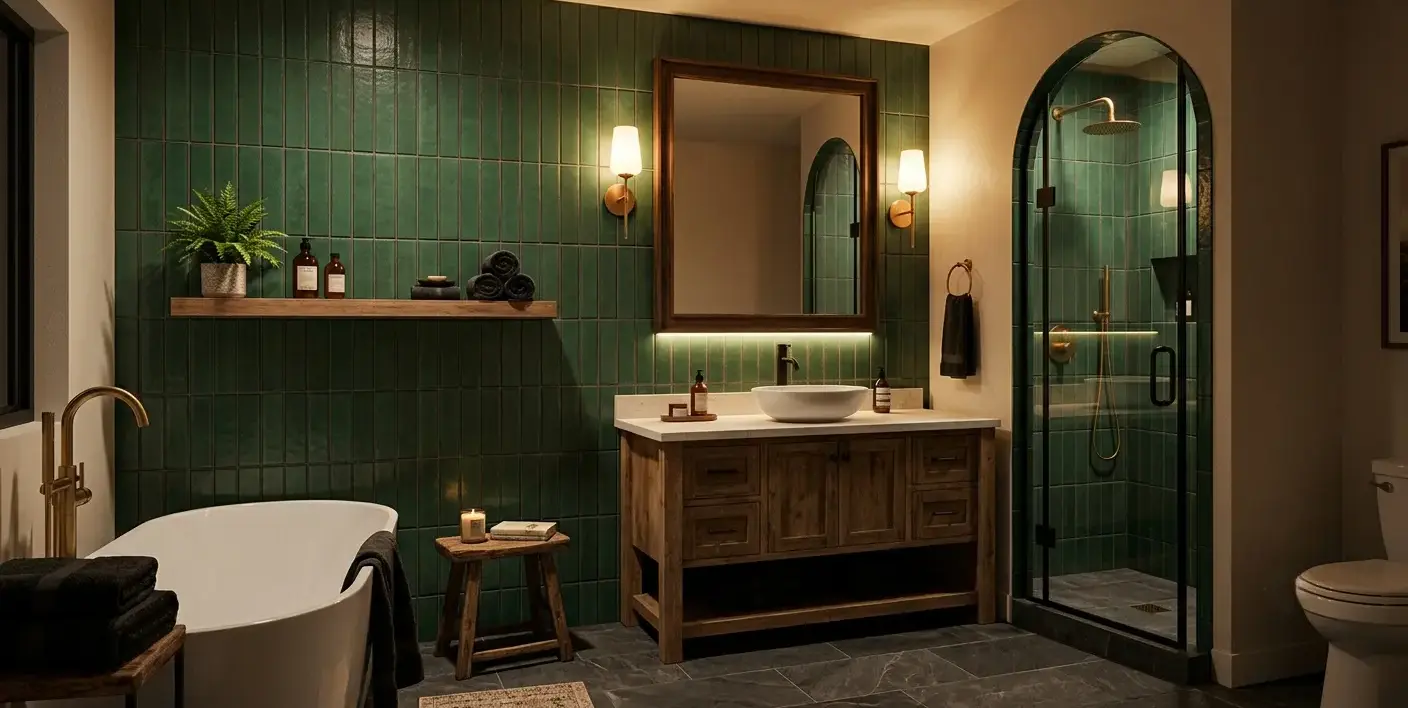 Conceptual rendering
Our latest inventory
Check out what's new in our listing!
Layout Options for Hunter Green Porcelain Tile
Hunter Green Porcelain Tile in its standard 12x24 format adapts to several layout approaches depending on the room. A horizontal running-bond layout along a kitchen backsplash keeps the marble-look veining flowing in one direction, a treatment that tends to suit shorter backsplash runs behind a range or sink. Vertical installation on a bathroom accent wall or shower surround draws the eye upward, pairing well with the tile's reflective glossy finish in rooms with limited ceiling height. For a living room feature wall, a herringbone layout breaks the green into smaller diagonal segments, adding texture without losing the color's overall impact.
If the edge profile on a given order is rectified, panels can typically be set with grout joints as tight as 1/16 inch, letting the veining read as continuous across multiple tiles; non-rectified batches should plan for a wider standard grout joint instead. Shop by size to compare the 12x24 format against other available rectangle, plank, and mosaic options before finalizing a layout.
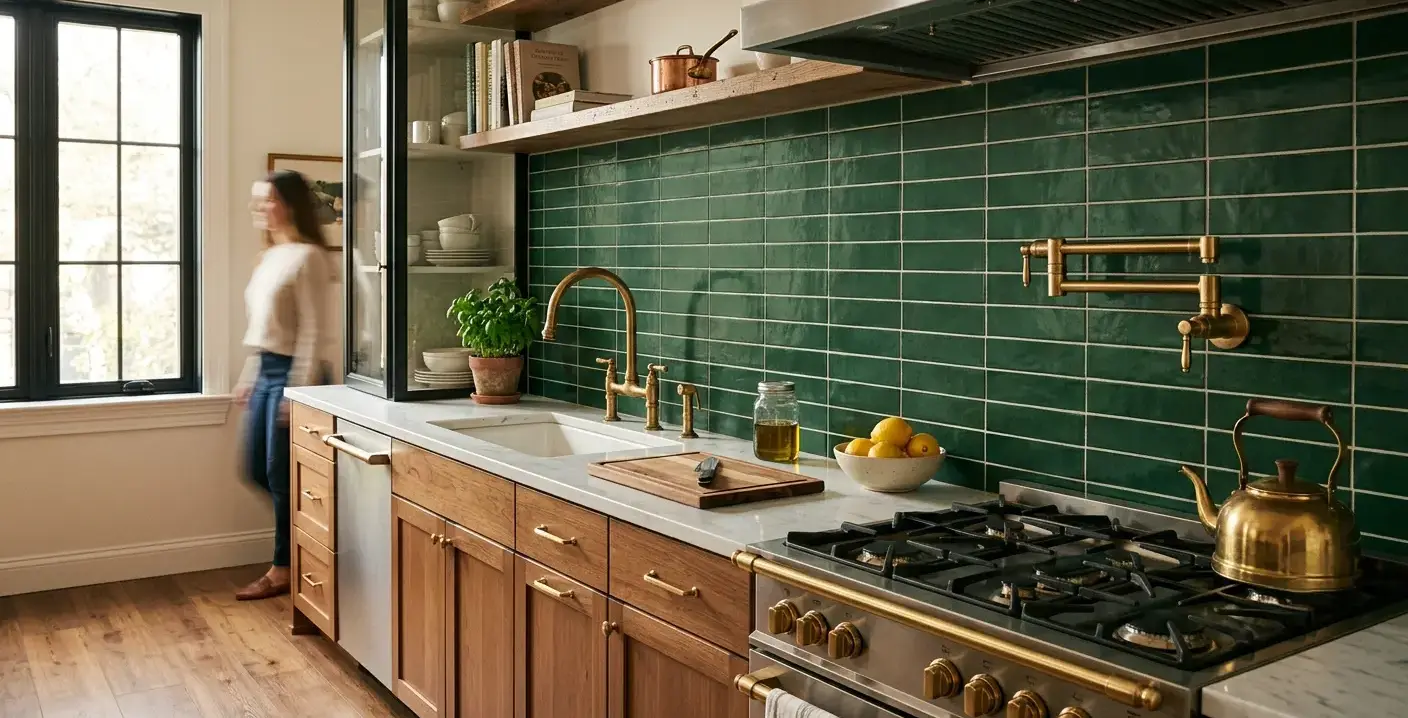 Conceptual rendering
Practical Benefits of Hunter Green Porcelain Tile
Beyond its color impact, Hunter Green Porcelain Tile offers a handful of functional advantages worth weighing against other tile surface options. Browse the full tile collection to compare colorways before committing to a single accent wall or backsplash.
- Stain resistance: The glazed surface resists everyday marks from cooking oil, grease, and toiletries, though spills should still be wiped up promptly to preserve the glossy finish over time.
- Low maintenance: A non-porous glaze means routine cleaning is generally limited to a pH-neutral cleaner and a soft cloth, without the periodic sealing natural stone surfaces in a similar tone often require.
- Color depth that hides minor marks: The saturated hunter green base tends to disguise light water spots and fingerprints more readily than a pale tile surface, though it is not stain-proof and still benefits from routine wiping.
- Design flexibility: Pairs with brass, matte black, or natural wood fixtures across kitchen, bathroom, and living room designs, giving room to coordinate hardware and cabinetry around the green.
- Ordering note: Because the marble-look veining varies tile to tile, ordering slightly more material than the calculated square footage helps account for cuts around outlets, niches, or wall corners.
Long-Term Value of Hunter Green Porcelain Tile
Choosing Hunter Green Porcelain Tile is as much a long-term decision as a stylistic one. Deep, nature-inspired tile colors have shown staying power across 2026 interior design trends, moving beyond a single season's moodboard and into a category homeowners are choosing for kitchens, baths, and living spaces alike.
Porcelain's water absorption rate, defined under ASTM C373 and ANSI A137.1 at 0.5% or below, is part of why the material tends to hold its surface integrity over years of normal indoor use, particularly in a kitchen or bathroom where humidity is a daily factor. Because the glazed surface does not require periodic sealing the way natural stone typically does, the ongoing care commitment stays relatively low for a tile this visually rich. For homeowners weighing hunter green against more neutral options, the complete porcelain tile guide breaks down how porcelain compares to ceramic and natural stone across durability and design longevity.
Frequently Asked Questions
Hunter Green Porcelain Tile is most often used on kitchen backsplashes, bathroom accent walls and shower surrounds, and living room feature walls, where its saturated color and marble-look veining can stand out without covering an entire floor.
This tile is positioned primarily for wall applications such as backsplashes and accent walls. Floor-specific wear and slip ratings were not confirmed for this colorway, so it should be treated as a wall tile until floor-rated specifications are verified.
No. The glazed porcelain surface is non-porous, so routine cleaning with a pH-neutral cleaner is generally sufficient. The grout lines around the tile, however, may benefit from periodic sealing depending on the grout type used.
A warm white or soft cream grout tends to echo the tile's marble-look veining and create contrast against the hunter green base, while a matching dark grout creates a more uniform, monochromatic look.
Porcelain offers a similar deep green, marble-inspired look with a water absorption rate of 0.5% or less, while natural stone in comparable tones is typically more porous and often benefits from periodic sealing that porcelain does not require.
Looking for More Porcelain Tile Options?
Explore Our Latest Porcelain Tile Designs
Check Out Fresh Porcelain Tile Trends!
Ready to bring hunter green into a kitchen, bathroom, or living room project? Compare finishes, formats, and grout pairings with a design consultant to find the right fit for the space before finalizing a tile selection.