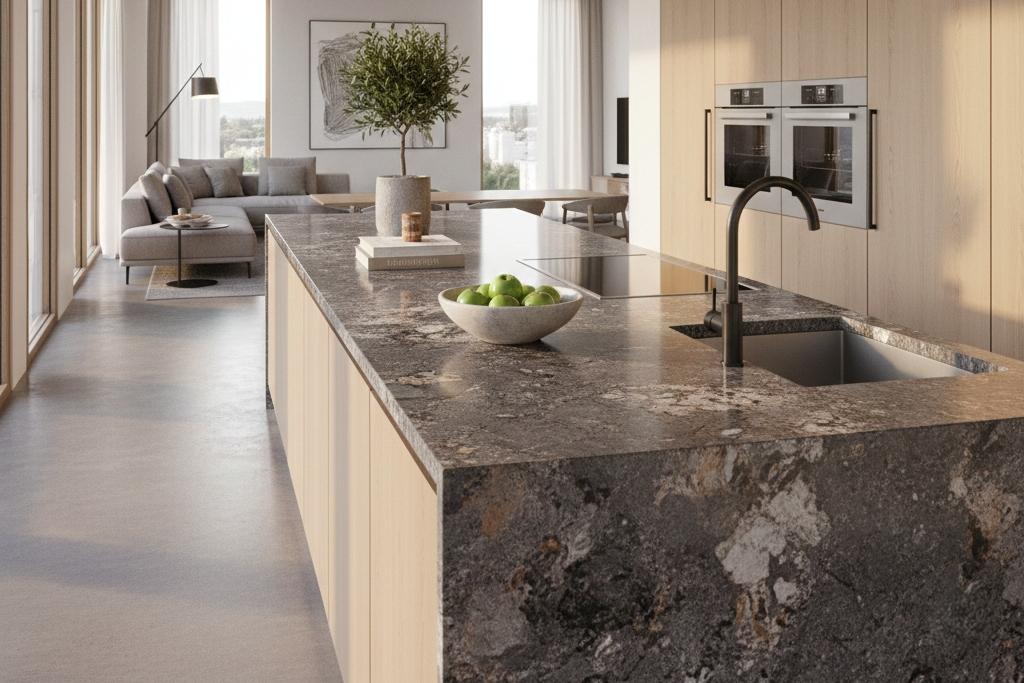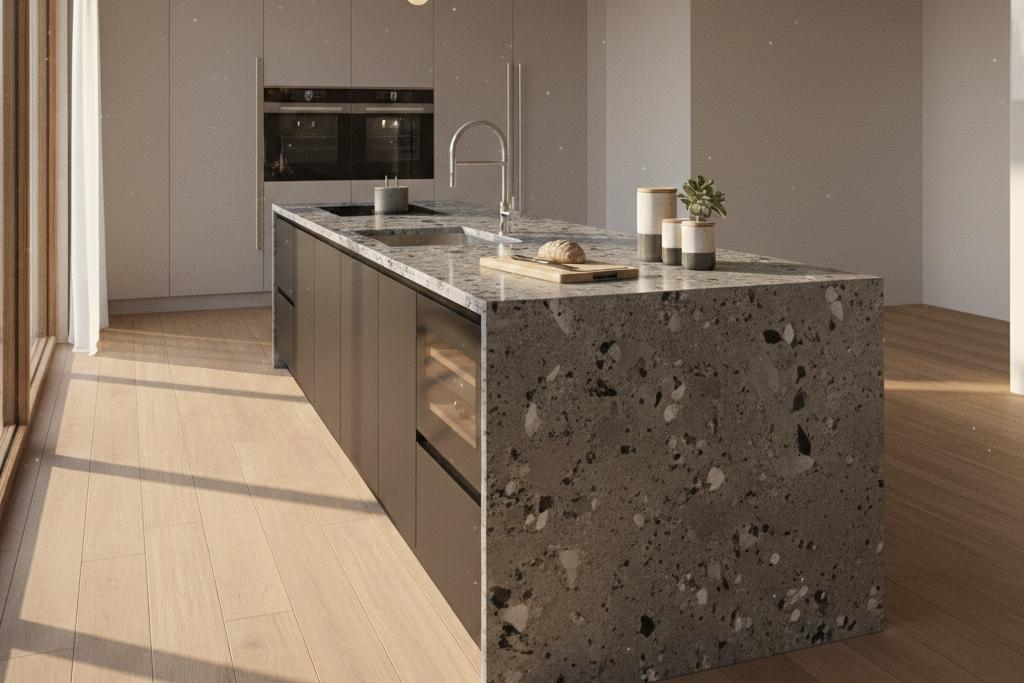
Gray granite countertop slabs bring the kind of character that only nature can produce. Each slab is a natural stone surface quarried from the earth, delivering a distinctive pattern of specks, veins, and mineral depth that no two pieces replicate. Available in polished, honed, and leathered finishes, this gray granite is built for kitchen islands, countertops, and bathroom vanities where performance and style need to coexist. If you want a surface that earns its keep while making every room feel more refined, this is where you start.
What Makes Gray Granite Countertop a Cut Above Standard Surfaces
Gray granite is an igneous natural stone composed of quartz, feldspar, and mica, which is what gives it both its hardness rating and its eye-catching, distinctive pattern. Slabs are typically available in large-format sizes ideal for seamless countertop runs, and the three finish options each serve a different purpose: polished surfaces maximize reflectivity and color depth, honed finishes deliver a matte, contemporary feel, and the leathered texture adds tactile dimension with a slightly satin look.
Unlike standard ceramic tile layouts that rely on grout lines and repeat patterns for visual interest, a granite slab functions as a single unified surface. There are no grout joints to maintain, no repeated motifs, and no compromises on the scale of the visual statement. That cohesion is exactly what makes it a go-to for modern kitchen countertops and upscale bathroom vanities.
Versatile Gray Tones That Flex Across Every Design Style
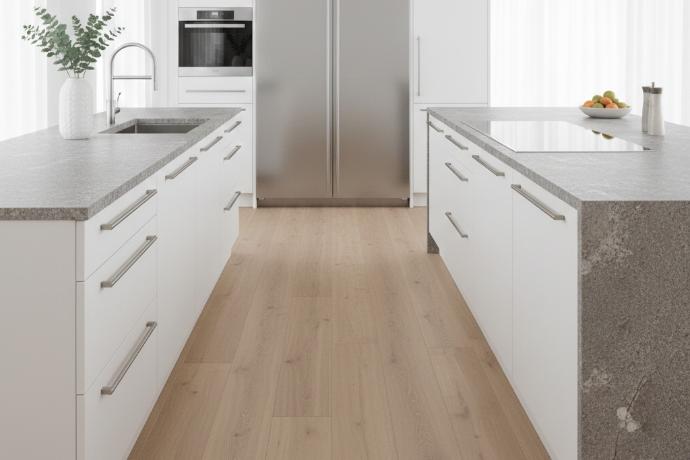
Gray is one of the most versatile anchor tones in interior design, and granite delivers it with depth. Cool gray varieties read as crisp and modern, pairing cleanly with white cabinetry, stainless steel appliances, and concrete-inspired accents for a luxurious kitchen countertop aesthetic. Warmer gray tones with tan or brown mineral flecks blend naturally into transitional and farmhouse kitchens, softening the overall palette.
For bathroom vanities, the natural movement in gray granite adds visual interest without competing with fixtures or tile surrounds. Gray granite also complements the gray subway tile aesthetic well, making it a smart pairing option with coordinating wall tile.
Practical Advantages Worth Knowing Before You Buy
- Exceptional hardness: Granite ranks 6 to 7 on the Mohs scale, making it highly resistant to scratches from daily kitchen use.
- Heat resistant: Hot cookware placed directly on a polished granite surface will not cause damage, a significant advantage over engineered surfaces.
- Unique per slab: The distinctive pattern of every gray granite countertop means your kitchen island or vanity top is genuinely one of a kind.
- Multiple finish options: Polished, honed, and leathered finishes allow the same stone to serve different functional and stylistic needs within the same home.
A Long-Term Investment That Holds Its Value and Its Look
Gray granite countertop slabs are a surface material that has been used in high-end residential projects for decades, and the reason is simple: they do not go out of style and they do not wear out quickly. When properly sealed, granite resists staining and moisture absorption, making it as well suited to a hardworking kitchen as it is to an elegant bathroom vanity. For a deeper look at how granite stacks up at every stage of the buying process, the Granite Countertop Buying Guide: 8 Things To Know Before You Shop is a useful resource. Unlike trends that fade with the decade, the combination of natural depth, distinctive patterning, and raw material durability keeps granite relevant regardless of what style direction a home takes over time.
Frequently Asked Questions
Yes. Gray granite countertop slabs are an excellent choice for kitchens because they are heat resistant, scratch resistant, and durable enough for heavy daily use. The neutral gray tone also pairs well with a wide range of cabinet colors and hardware finishes, making it one of the most flexible options for modern kitchen countertop design.
Gray granite is typically available in three finishes: polished, which gives a glossy, reflective surface; honed, which offers a flat matte look; and leathered, which has a slightly textured, satin feel. Each finish affects both the appearance and the maintenance requirements of the surface.
Granite is a natural stone, meaning every slab has a truly distinctive pattern that cannot be replicated. Engineered quartz is more uniform in appearance and requires no sealing, but it lacks the natural depth and heat resistance of granite. For homeowners who value authenticity and visual uniqueness in their kitchen island or countertop, granite is generally the preferred choice.
Granite does require periodic sealing to protect against staining, typically once every one to two years depending on use and the specific slab. Day-to-day cleaning is straightforward with mild soap and water. The honed and leathered finishes may require sealing more frequently than polished surfaces.
Absolutely. Gray granite works well in bathroom vanities because its natural moisture resistance (when sealed) and visual elegance make it a practical and attractive surface for wet environments. The tonal versatility of gray also makes it easy to coordinate with a wide range of tile and fixture choices in bathroom design.