Before buying granite countertops, there are eight essential things every homeowner should know: what granite is and how it forms, its key advantages, the three main finish types, how to match color and pattern to your space, why viewing slabs in person matters, what thickness and edge profile options are available, what the installation process involves, and how to maintain and seal granite over time. Understanding these factors upfront helps you choose the right slab, avoid costly mistakes, and get the most value from your investment.
Granite is a natural igneous stone prized for its durability, heat resistance, and one-of-a-kind patterning. No two slabs are alike, which means selecting granite requires more consideration than choosing an engineered material. This guide walks through every important decision point so you can approach the process with confidence, whether you are renovating a kitchen, upgrading a bathroom, or exploring options at a showroom for the first time.
1. Understand What Granite Actually Is
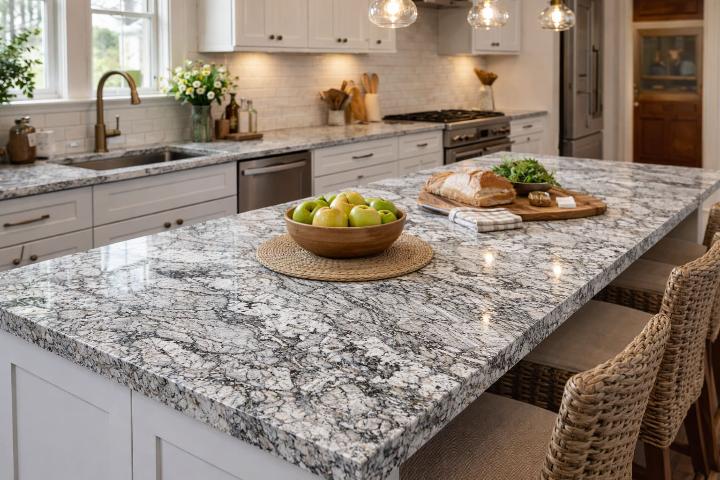
Granite is a natural igneous rock formed deep within the Earth's crust when molten magma slowly cools and crystallizes over millions of years. This geological process gives granite its distinctive interlocking mineral structure, made up primarily of quartz, feldspar, and mica. The result is an extraordinarily dense, hard stone that has been used in architecture and design for centuries.
What makes granite especially compelling as a countertop material is that no two slabs are ever identical. The minerals, veining patterns, and color variations in each piece are the product of its unique formation environment, meaning your countertop will be one of a kind. Whether you prefer subtle, uniform tones or dramatic sweeping veins, there is a granite slab to match virtually every design vision.
2. Know the Advantages Granite Brings to Your Home
Before diving into the details of selection, it helps to understand why granite remains a top choice for homeowners and designers alike. According to This Old House's guide to stone countertops, granite consistently ranks among the most durable and value-adding countertop materials available.
Durability: Granite ranks 6 to 6.5 on the Mohs hardness scale, making it one of the hardest countertop materials available. It resists scratches, chips, and heat from everyday kitchen activity, holding up beautifully for decades when properly cared for.
Unique Appearance: Each granite slab is a natural work of art. The depth of color, movement of veining, and variation in mineral flecks create a surface that no engineered material can fully replicate.
Home Value: Granite countertops are widely recognized as a premium upgrade that appeals to homebuyers and can boost resale value. Real estate professionals frequently highlight granite as a feature that sets a home apart in competitive markets.
Versatility: Available in hundreds of colors and patterns, from crisp whites and warm beiges to dramatic blacks and deep blues, granite adapts to both traditional and contemporary interiors with ease.
3. Learn the Different Granite Finishes
The finish you choose will significantly affect how your granite looks, feels, and performs in daily use. There are three primary finishes to consider.
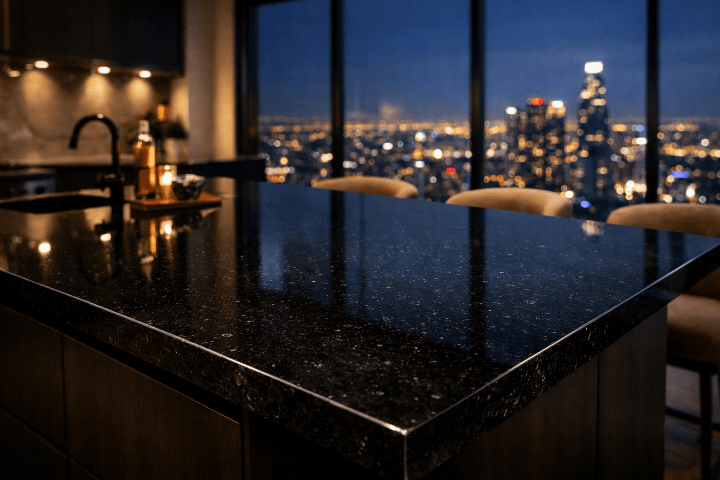
Polished: The most popular choice for kitchens and bathrooms, polished granite features a high-gloss surface that intensifies the stone's color and pattern. Its smooth, reflective finish is easy to wipe clean and gives spaces a sleek, sophisticated look. Keep in mind that polished surfaces can show fingerprints and water spots more readily than other finishes.
Honed: A honed finish is sanded to a smooth, matte appearance without the reflective sheen of polished granite. It offers a softer, more understated look that works well in contemporary and transitional interiors. Honed granite is slightly more porous than polished, so it may require more frequent sealing.
Leathered: Leathered granite is processed with diamond-tipped brushes to create a gently textured surface with a low-sheen finish. It adds depth and character to the stone while doing an excellent job of hiding fingerprints, smudges, and water spots, making it a practical and stylish choice for busy households. It pairs particularly well with darker granites like Black Pearl or Absolute Black.
4. Choose the Right Color and Pattern for Your Space
Granite selection goes well beyond picking a color you like in isolation. The slab needs to work harmoniously with your cabinetry, flooring, backsplash, and overall design palette.
Neutral tones like white, gray, and soft beige are timeless and versatile, pairing effortlessly with both light and dark cabinetry. They are also easier to match as design trends evolve. If you want a surface that feels calm and classic, a neutral granite is a safe and enduring choice.
Bold granites with dramatic veining, rich earth tones, or vibrant mineral movement make a strong design statement. Deep blues, terracotta reds, and forest greens are increasingly popular for homeowners who want their countertop to serve as the focal point of the room. These work best when the surrounding elements, including cabinets, walls, and backsplash, are kept relatively simple.
One important note: always evaluate granite in the context of your actual space. A color that looks stunning under showroom lighting may read very differently in your kitchen's natural light.
5. Always View Slabs In Person Before Buying
This is one of the most important steps in the granite buying process, and one that many homeowners skip to their later regret. Granite is a natural material with significant variation from slab to slab, even within the same stone type. Small tile samples or online photos simply cannot capture the full character of a slab, including the movement of the veining, the depth of the minerals, or the way the stone catches light.
Visiting a showroom or slab yard in person allows you to see exactly what you are purchasing. You can evaluate the full size of the slab, examine how the pattern flows across the surface, and compare options side by side. Browse our granite and natural stone slab inventory online to preview what is in stock, then visit any of our showroom locations to see the slabs in person before making your final decision. Our commission-free design team is available at every location to help you evaluate your options with no sales pressure.
6. Understand Thickness and Edge Profile Options
According to Fine Homebuilding's guide to natural stone countertops, thickness is one of the most overlooked decisions in the countertop selection process. Granite slabs are typically available in two standard thicknesses: 2 cm (approximately 3/4 inch) and 3 cm (approximately 1-1/4 inches). Each has its own applications and trade-offs.
2 cm granite is lighter and generally less expensive. It is commonly used for bathroom vanities and lighter-use areas. Because of its thinner profile, it typically requires a plywood sub-top for additional support, particularly around overhangs, and often uses laminated or mitered edges to achieve the appearance of a thicker slab.
3 cm granite is the industry standard for kitchen countertops. It is strong enough in most installations to be placed directly on cabinets without additional substrate support, offers more flexibility for intricate edge profiles, and presents a more substantial, luxurious appearance.
Edge profiles are another important consideration. Standard options like eased (square), beveled, and pencil edges tend to be included in base pricing. More decorative profiles, such as bullnose, ogee, and DuPont, add visual interest but come at a higher fabrication cost depending on the complexity of the profile.
7. Know What to Expect From Installation
Granite countertop installation is a multi-step process that requires professional expertise. Understanding the general timeline and what is involved will help you plan your project and avoid surprises.
The process typically begins with a template measurement after your cabinets are in place. Precise templates are made of your countertop layout, including sink and cooktop cutouts, and brought to the fabrication shop. The granite slabs are then cut, shaped, and finished off-site based on your specifications.
On installation day, the fabricated pieces are carefully transported and placed onto your cabinets. Installers level the surface, secure the slabs with adhesive, and complete any seaming required for larger countertop runs. Final sealing is then applied to protect the stone and enhance its longevity. The full process from measurement to installation typically spans one to three weeks depending on the scope of the project.
8. Commit to Proper Maintenance and Sealing
Granite is one of the lower-maintenance natural stones, but it does require some routine care to stay looking its best over the long term.
Sealing: Granite is porous and should be sealed at installation and resealed periodically, typically every one to three years depending on the stone's porosity and the level of use. A simple water test will tell you when it's time: place a few drops of water on the surface. If the water beads up, the seal is intact. If it absorbs into the stone within a few minutes, it is time to reseal.
Daily cleaning: Use a mild pH-neutral cleaner or a mixture of warm water and a small amount of gentle dish soap with a soft cloth. Avoid harsh chemical cleaners, bleach, vinegar, or anything acidic, as these can break down the sealant and etch the stone over time.
Protecting the surface: While granite is highly heat resistant, using trivets or potholders is a good habit. For cutting, always use a cutting board, not because granite cannot withstand knives, but because knives will dull faster on stone than on wood or plastic.
Questions to Ask Before You Buy
Before finalizing your granite purchase, make sure to get clear answers to these key questions from your supplier:
- Is the specific slab I'm viewing the exact slab I'll receive?
- What finish is best suited for my application, whether kitchen, bathroom, or outdoor?
- How often will this particular granite need to be resealed?
- What is included in the installation quote, including fabrication, cutouts, edge profiles, and sealing?
- Does this granite have any natural fissures, and how will they be addressed during fabrication?
A knowledgeable and transparent supplier will walk you through each of these points without hesitation.
Conclusion
Granite countertops are a significant investment that can transform your kitchen or bathroom for decades to come. By understanding how granite is formed, what finishes and thicknesses are available, why viewing slabs in person matters, and what maintenance to expect, you are well-equipped to make a confident and informed decision. The right granite slab, selected carefully and installed properly, will deliver lasting beauty, exceptional durability, and real value to your home.
Our home design centers carry a curated selection of natural stone slabs with knowledgeable staff ready to help at every location. Visit our Reno, Minden, Sacramento, or Fernley showroom to explore our granite selection in person. Our commission-free design team is here to help you compare materials, evaluate slabs side by side, and find the granite that is right for your project. Stop by any of our four Northern Nevada and Northern California locations or contact us to schedule a free design consultation today.
Frequently Asked Questions
How long do granite countertops last?
With proper care and periodic sealing, granite countertops can last a lifetime. Granite is one of the hardest natural stones used in residential applications, and it is highly resistant to scratches, heat, and everyday wear. Many granite countertops installed decades ago still look exceptional today. The key to longevity is maintaining the sealant and avoiding harsh chemical cleaners that can degrade the stone's protective coating over time.
Is granite better than quartz for kitchen countertops?
Both granite and quartz are excellent choices for kitchen countertops, and the better option depends on your priorities. Granite is a natural stone with unique, one-of-a-kind patterning and excellent heat resistance, but it requires periodic sealing. Quartz is an engineered material that is non-porous and never needs sealing, making it slightly easier to maintain. However, it is worth noting that NIOSH research on engineered stone highlights silica dust exposure as a concern during fabrication, which is a factor some homeowners consider when comparing natural stone to engineered alternatives. If you value the authenticity of natural stone and do not mind the maintenance, granite is a compelling choice. If low maintenance is your top priority, quartz may be a better fit.
Does granite need to be sealed every year?
Not necessarily. How often granite needs sealing depends on its porosity, which varies by stone type. Some denser granites, particularly darker varieties like Absolute Black, may only need sealing every three to five years. Lighter, more porous granites may require annual sealing. The water test is the most reliable way to check: if water drops absorb into the surface within a few minutes rather than beading up, it is time to reseal.
Can granite countertops be used outdoors?
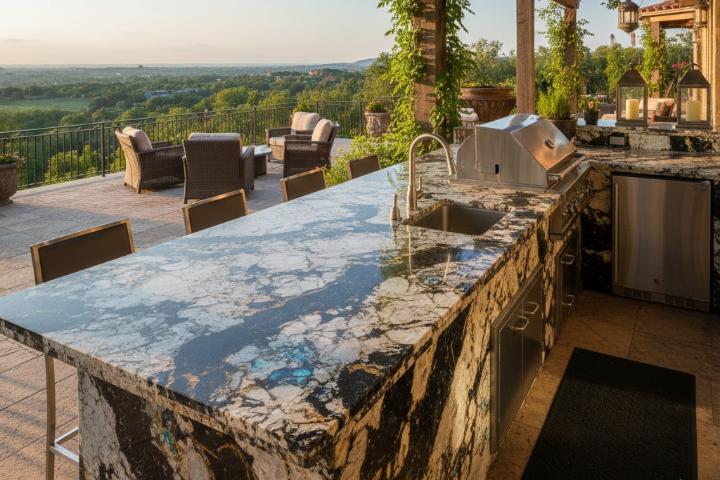
Yes, granite is one of the best natural stone options for outdoor kitchens and entertaining areas. Its density and hardness make it highly resistant to weathering, and it holds up well under UV exposure without fading the way some engineered materials can. However, it is important to choose a granite that is not resin-treated, as resin coatings can degrade with prolonged sun exposure. Consult with a knowledgeable supplier to identify outdoor-appropriate slabs for your specific climate.
How do I find the right granite slab at a Nova Tile and Stone showroom?
The best way to find the right granite is to visit one of our four showrooms in Reno, Minden, Sacramento, or Fernley, where you can view full-size natural stone slabs in person and compare your options side by side. Our commission-free design team is available for free consultations to help you evaluate color, veining, finish, and thickness based on your specific project. We work with homeowners, designers, and contractors across Northern Nevada and Northern California to connect them with the right materials for every application.