Crema Marfil and Cream Quartz: What Separates These Cream Backsplash Slab Materials
Quarry origin: Crema Marfil marble is quarried in the Pinoso region of Alicante, Spain, where sedimentary limestone transformed under geological pressure into the warm, ivory-toned stone recognized in residential and commercial interiors worldwide.
| Property | Crema Marfil Marble | Cream Quartz |
Hardness (Mohs) | 3–4 | 7 |
Standard Thickness | 2 cm / 3 cm | 2 cm / 3 cm |
Water Absorption | 0.20–0.40% | <0.10% |
Finish Options | Polished, Honed, Leathered, Specialty | Polished, Honed |
Veining | Subtle gold-beige, organic | Engineered, consistent |
Polished Crema Marfil amplifies ambient light across a backsplash wall. Honed Crema Marfil delivers a softer matte result, though it requires more attentive sealing. Cream quartz produces a consistent appearance ideal for kitchen backsplash designs where panel uniformity matters. At Mohs 7, quartz resists surface scratches better than marble, though cutting boards are advisable for both. Learn how Nova Tile and Stone sources its natural and engineered slab collection.
Cream Slabs for Kitchen and Bathroom Backsplashes
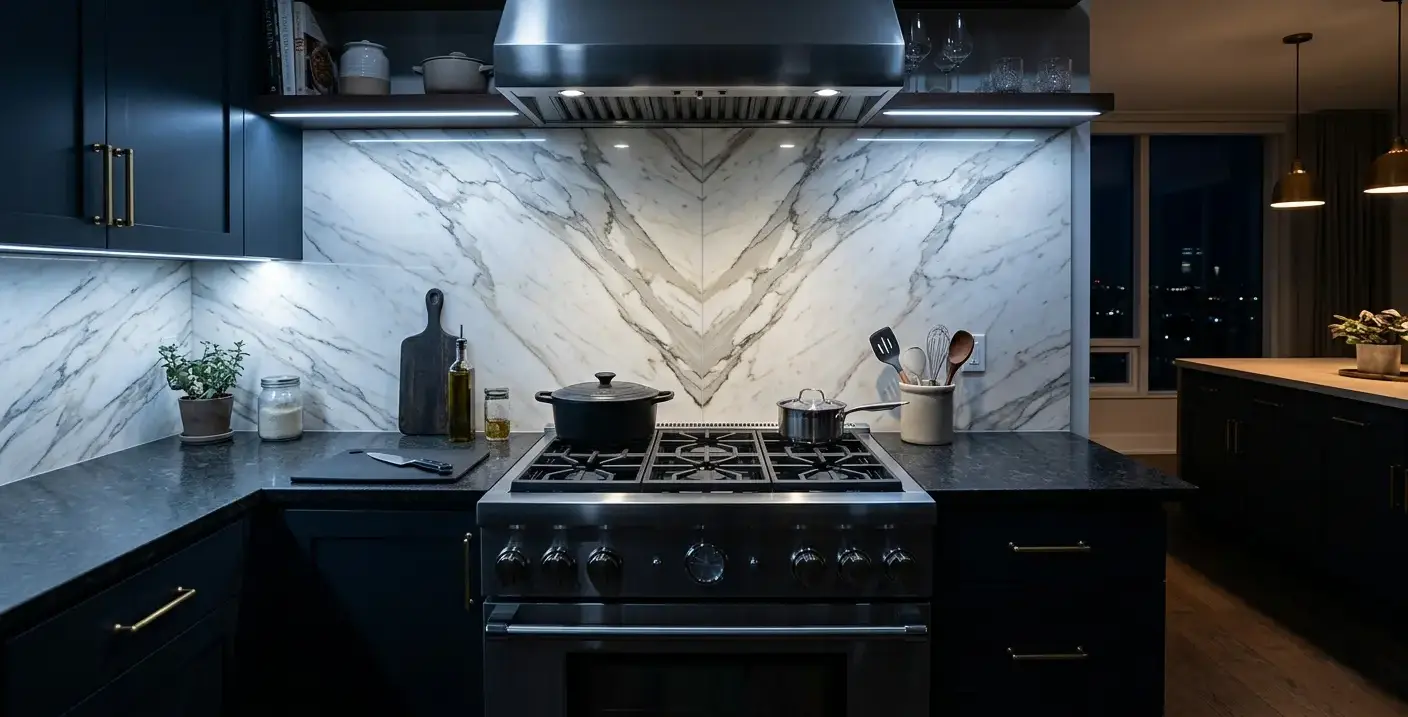
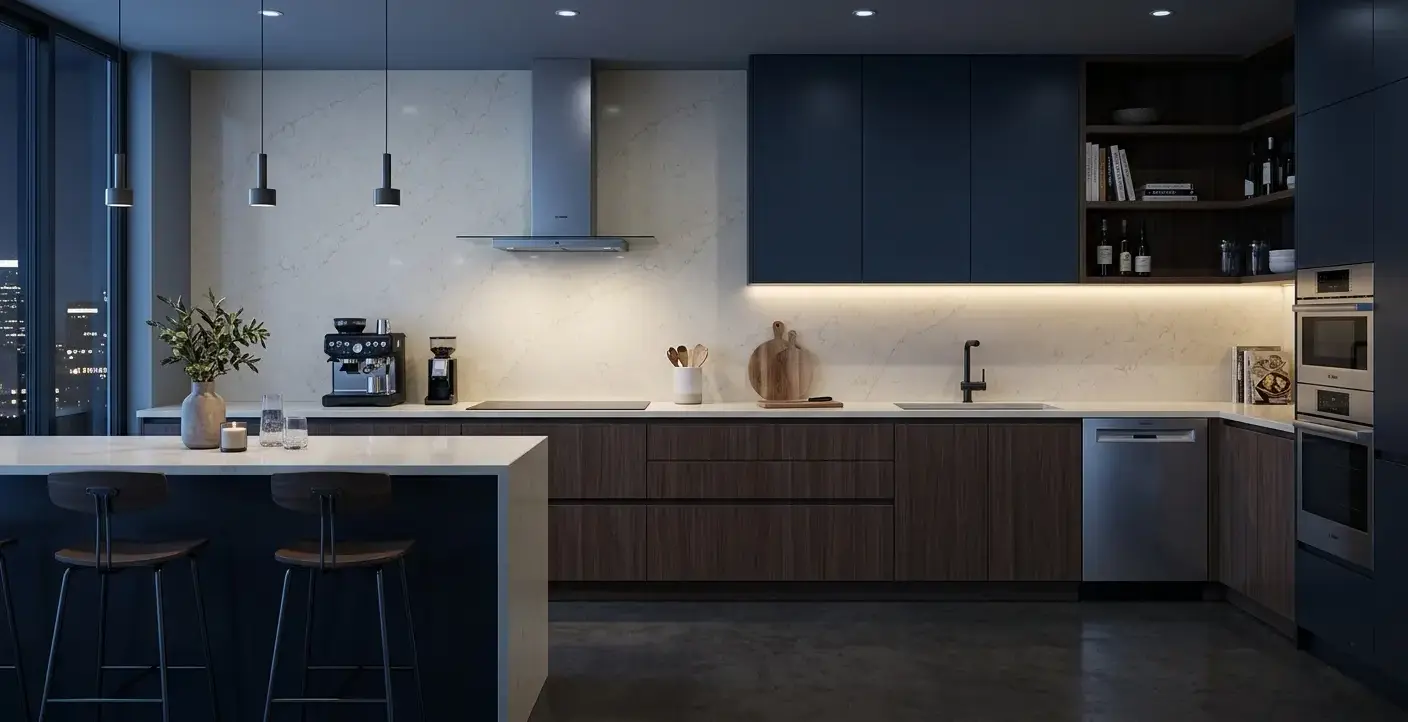
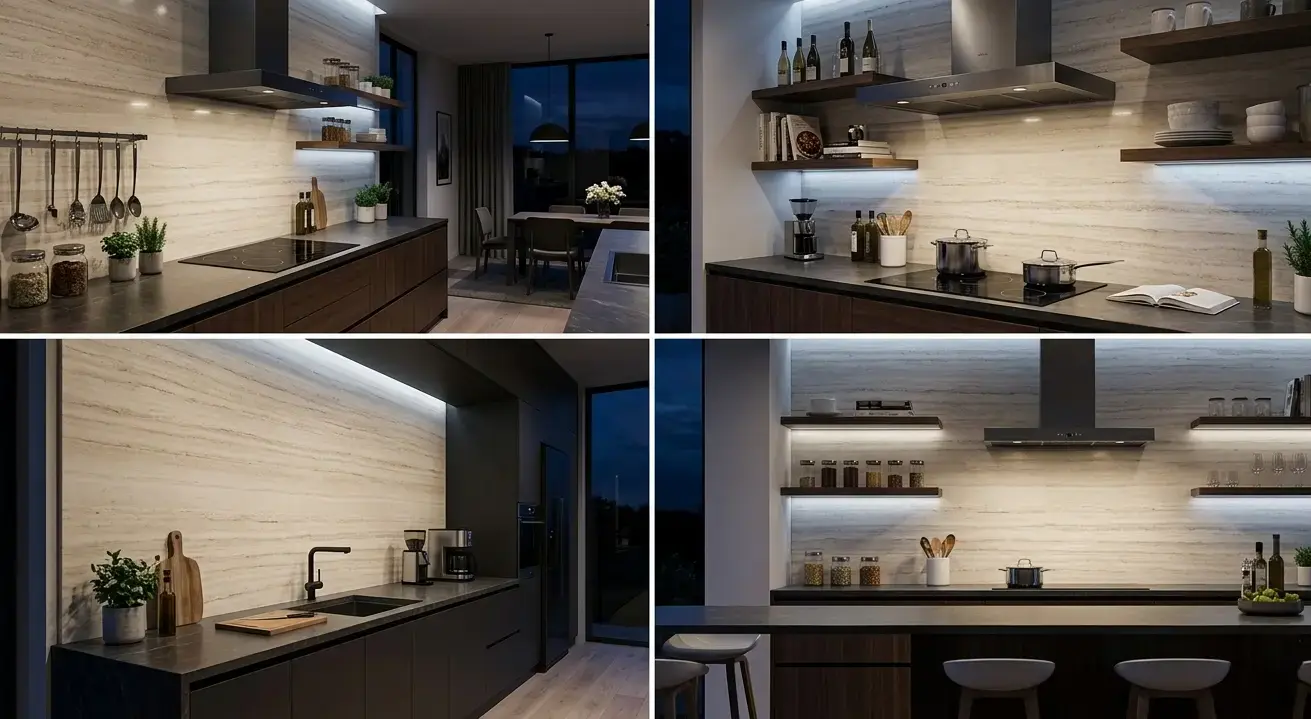
Cream slabs used for backsplashes are among the most layout-flexible slab formats available. Horizontal veining behind a range reads as architectural; vertical orientation adds perceived ceiling height in tighter spaces. Bookmatched cream marble panels create a symmetrical butterfly pattern suited to open-plan kitchens where the backsplash serves as a focal feature.
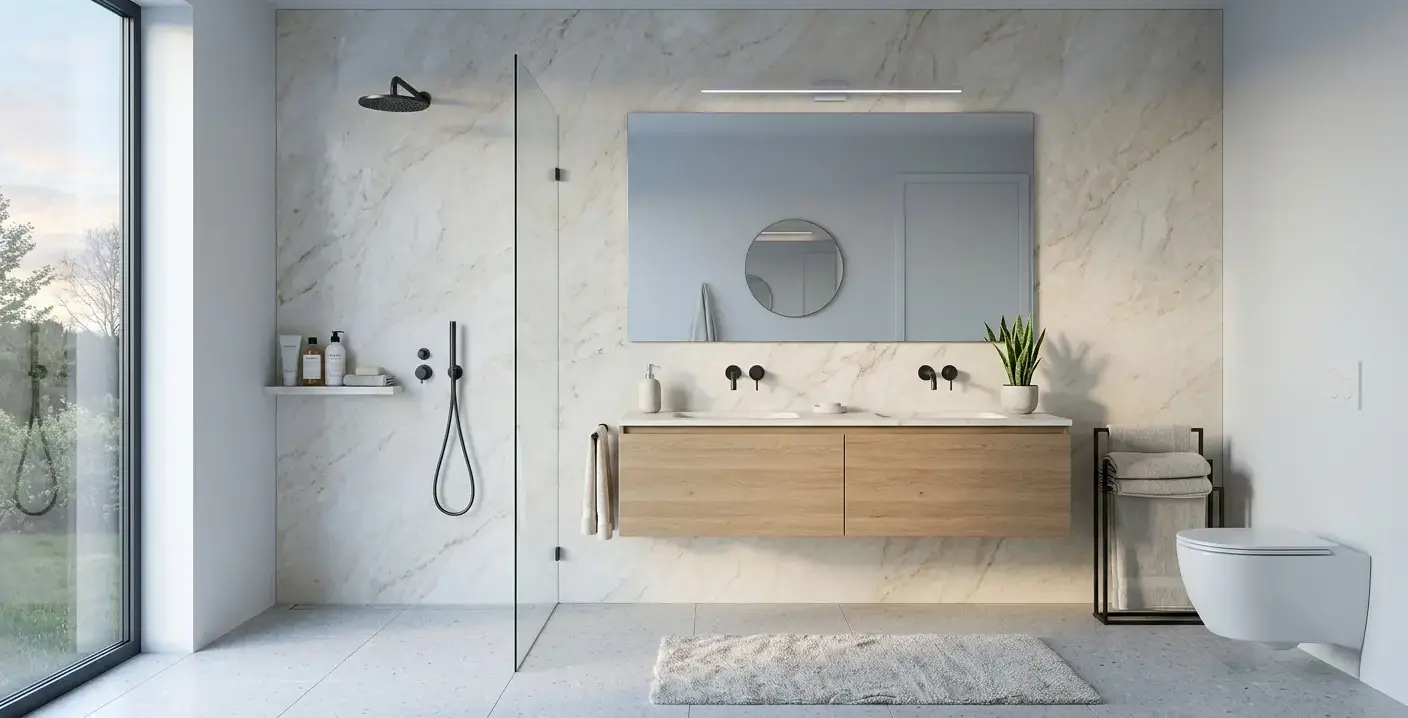
In bathrooms, cream backsplash slabs work for wet-wall surrounds above tubs and full-height shower enclosures. Honed is preferred in wet areas because matte surfaces offer better traction than polished. Interior design reporting confirms that warm neutral stone tones are a leading direction in 2026 kitchen and bath design.
 Conceptual rendering
Functional Advantages of Selecting a Cream Slab
- Neutral compatibility. Cream pairs with white, gray, wood-tone, and dark cabinetry without a full palette overhaul.
- Light performance. Polished finishes reflect task and ambient light, reducing visual weight above countertops.
- Material flexibility. Both natural marble and engineered quartz are available in cream backsplash formats, offering organic variation or manufactured consistency.
- Grout-free surfaces. Full slab panels eliminate grout lines, simplifying cleaning over time.
- Finish range. Polished, honed, and leathered (marble only) let the same tone serve multiple design moods.
- Heat caution. Neither material is thermal-shock resistant; trivets are required near cooktops.
- Sealing. Marble requires periodic resealing; quartz does not, but prompt spill cleanup remains advisable.
 Conceptual rendering
Long-Term Value of a Cream Backsplash Slab
Properly sealed Crema Marfil retains its surface appearance for decades. The main kitchen risk is acid etching from wine, citrus, or vinegar, which prompt cleanup prevents. Cream quartz requires less routine care, making it better suited to high-use households.
Natural stone backsplash slabs are commonly associated with property value because buyers tend to recognize material quality on sight. Nova Tile and Stone's slab specialists match the right cream slab material to actual use patterns. For further context on engineered stone performance in kitchens, read The Best Engineered Stone Marble Lookalikes for Luxury Kitchens.
Note: Some images on this page may be conceptual renderings created to illustrate design possibilities and may not depict actual installations.
Frequently Asked Questions
Crema Marfil marble is the most widely specified natural stone for cream backsplash applications. Quarried in Alicante, Spain, it offers a warm ivory field with fine golden veining, available in polished, honed, leathered and specialty finishes. It requires periodic sealing but delivers an organic visual depth that engineered stone cannot replicate.
Yes. Cream quartz is suitable for kitchen backsplash walls and other indoor vertical surfaces. Its low absorption rate and hardness rating of 7 on the Mohs scale make it a practical choice for kitchen environments. Quartz should not be used in outdoor applications or areas exposed to direct UV light, as pigment fading may occur over time.
A polished finish amplifies the cream tone and reflects light, making it a popular choice for kitchen backsplash designs. A honed finish delivers a matte appearance with a softer, less reflective surface. For shower surround applications, honed is generally preferred because polished finishes can be slippery when wet. Both finishes require regular sealing on natural marble.
Use a pH-neutral stone cleaner and a soft cloth. Avoid abrasive scrubbing pads and acidic cleaners, including vinegar-based products, which can etch the marble surface. Spills from wine, citrus juice, or oils should be wiped promptly. Periodic resealing, typically once per year for polished surfaces, helps maintain stain resistance.
Yes, with natural marble. No two Crema Marfil slabs are identical; quarrying location within the deposit and slab cutting angle produce variation in vein density, direction, and tone. This natural variation is considered a quality characteristic rather than a defect. Cream quartz slabs, by contrast, are manufactured for consistent patterning across production runs, which benefits projects requiring a uniform appearance across multiple panels.