Cream Quartz Countertop
Cream quartz is an engineered stone surface made from approximately 90–93% natural quartz crystals bound with polymer resins and pigments, available in slab form for use in kitchen and bathroom countertops, vanities, and islands. It is characterized by warm, neutral tones, ranging from soft ivory to sandy beige, subtle veining, and a non-porous surface that resists staining without requiring sealing.
Those properties make cream quartz slabs one of the most adaptable countertop materials available, integrating naturally into modern, transitional, farmhouse, and traditional design styles. Because engineered stone is manufactured to a consistent color and pattern, homeowners and designers can rely on uniform results across the full surface, an advantage over natural stone, where variation between slabs is common.
Nova Tile and Stone carries a curated selection of cream quartz slabs for countertops across showrooms in Reno, Sacramento, Minden, and Fernley. Our inventory is sourced from industry-leading manufacturers and selected for both design quality and long-term performance.
What
Makes Cream Quartz Slabs a Smart Investment
The polymer resins used in manufacturing seal the natural pores of the quartz crystals, producing a surface that is non-porous, consistent in appearance, and resistant to the demands of daily use, and this composition offers several practical advantages worth considering.
Explore all our offeringsSee these slabs in full
For starters, the non-porous surface repels common household substances such as coffee, wine, and cooking oils without the periodic sealing that most natural stone surfaces require. The material also ranks at approximately 7 on the Mohs hardness scale, making it highly resistant to scratches from knives, utensils, and everyday kitchen use, though it's worth noting the surface is scratch-resistant rather than scratch-proof, so cutting boards are still recommended.
Unlike natural stone, engineered quartz delivers a predictable appearance across the entire slab, which is especially valuable for large kitchen islands or expansive bathroom surfaces where visual continuity matters. Finally, the neutral tone of cream quartz sidesteps short-lived design trends, supporting enduring appeal and resale value over time. Taken together, these qualities make it one of the more practical and lasting investments available for kitchen and bathroom surfaces.
Featured Quartz Slabs
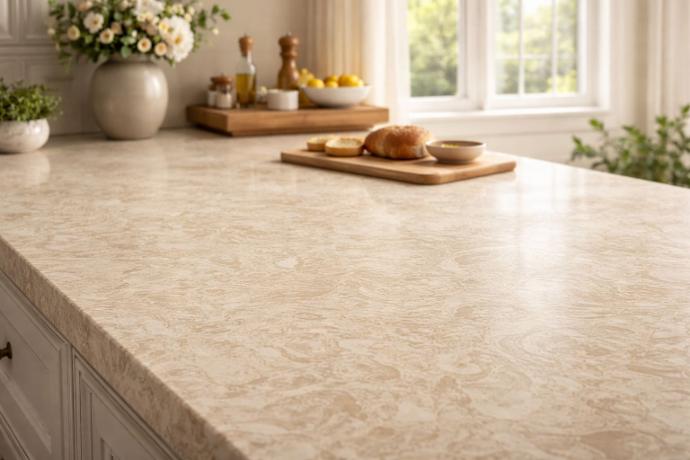
MELANGE
Quartz
Melange Quartz is a stunning engineered stone that captures the beauty of natural stone through a rich blend of swirling tones and veining. Crafted from over 90% natural quartz crystals, it delivers the elegance of marble or granite with superior durability and no sealing required.
Its scratch- and stain-resistant surface makes it a perfect choice for kitchens and bathrooms in any design style.
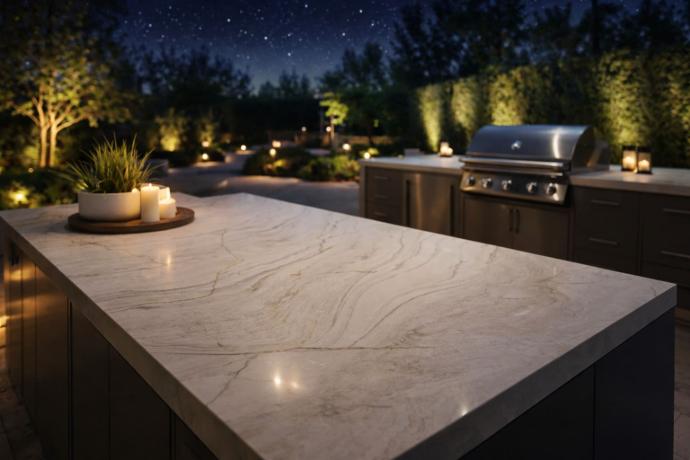
INVERNESS EVERLEIGH
Quartz
Inverness Everleigh is a sophisticated quartz design that blends cool gray and warm sand-honey tones with delicate debossed veining for a look that's bold yet beautifully understated. Composed of approximately 93% pure natural quartz, it delivers a nonporous, stain-resistant surface that requires no sealing and is certified food safe.
Its timeless, movement-rich aesthetic makes it an elegant choice for kitchen countertops, bathroom vanities, and beyond.
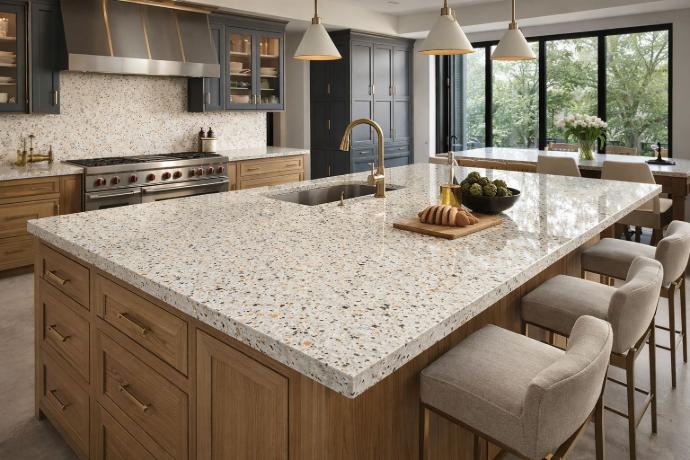
Vendome Terazzo
Quartz
Vendome Terazzo is a striking engineered quartz surface featuring a crisp cream-white base scattered with multicolored stone chips in warm terracotta and charcoal tones. Its classic terrazzo-inspired pattern brings a bold yet timeless character to any space.
Durable, nonporous, and low-maintenance, it's an ideal choice for kitchen countertops, bathroom vanities, and beyond.
Cream
Quartz Countertop: Design Versatility Across Every Style
One of the most notable qualities of cream quartz countertop is how naturally it integrates into a wide range of interiors. Soft undertones, whether ivory, sand, or greige, act as a neutral anchor that allows surrounding design elements to stand out without competing.
- Modern and contemporary kitchens benefit from the clean, polished surface, which pairs well with flat-panel cabinetry, stainless steel appliances, and large-format tile backsplashes.
- Traditional and transitional spaces are equally well-served. Cream quartz slabs pair naturally with raised-panel wood cabinetry, antique brass or oil-rubbed bronze fixtures, and natural stone tile flooring for a look that feels both polished and approachable.
- Farmhouse and rustic-style kitchens find a fitting companion in cream quartz, particularly in slabs with subtle taupe or gray veining. Paired with open shelving and matte black hardware, the surface completes the aesthetic without overpowering it.
- Bathroom vanities and spa-inspired spaces benefit from the calm, neutral palette, and the non-porous surface holds up well in environments with consistent moisture exposure.
Lighting also plays a role in how the material reads in a space. In rooms with ample natural light, the surface appears bright and airy, while warm ambient lighting in enclosed areas draws out the depth and dimension of the slab's pattern.
How Cream Quartz Slabs Compare to Other Countertop Materials
Understanding how cream quartz performs against other common surfaces helps clarify whether it is the right fit for a given project. It is also worth noting that cream quartzite countertop slabs, a natural metamorphic stone, are sometimes confused with engineered quartz. While both share a similar warm, neutral palette, quartzite is harder and more heat-resistant but requires sealing and carries more variation between slabs.
Cream Quartz vs. Marble: Marble is porous and prone to etching from acidic substances, requiring sealing to maintain its surface. Cream quartz countertop offers a visually comparable aesthetic with stronger stain resistance and no sealing required.
Cream Quartz vs. Granite: Most granite slabs require periodic sealing, typically every one to five years, while engineered stone does not. Granite also varies considerably in color and pattern from slab to slab, whereas cream quartz delivers a consistent, predictable appearance.
Cream Quartz vs. Laminate: Laminate is cost-effective but scratches more easily and does not offer the same long-term durability or resale value. Cream quartz slabs for countertops represent a meaningful upgrade in both performance and visual impact.
Cream Quartz vs. Solid Surface: Both materials are non-porous, but solid surface is softer, more prone to scratching and warping from heat, and lacks the stone-like depth that engineered stone provides. Cream quartz holds up better under daily use and requires less corrective maintenance.
Get Slab Inspiration
Frequently Asked Questions
Yes. The non-porous surface resists staining from food and beverages, and the material's hardness holds up well under regular food preparation. One important consideration: cream quartz is not heatproof. The polymer resins can begin to degrade at temperatures above approximately 150°F, so hot pots and pans should always be placed on a trivet or hot pad rather than directly on the surface.
No. The polymer resins used in manufacturing seal the natural pores of the stone, creating a surface that resists moisture and staining without any additional treatment, unlike most natural stone options, which are porous and require periodic sealing.
Warm water and mild dish soap applied with a soft cloth is sufficient for routine cleaning. Avoid abrasive cleaners, bleach-based products, and acidic cleaners such as degreasers or glass cleaners, as these can damage the surface. A non-abrasive household cleaner handles stubborn residue effectively.
Prolonged exposure to direct sunlight can cause the polymer resins to degrade and discolor. High-quality slabs are formulated with UV-stable pigments to reduce this risk, but cream quartz is generally not recommended for outdoor installations. For rooms with significant sun exposure, discussing UV resistance with our team before selecting a slab is worthwhile.
Yes. The same slabs used for kitchen and bathroom surfaces are also available for islands, vanity tops, fireplace surrounds, backsplashes, and accent wall panels. Because cream quartz is not recommended for outdoor use, UV radiation and weather exposure degrade the resin binders over time, it performs best in interior applications.
Transform Your Space
Seeing a slab in person, under different lighting conditions and alongside complementary materials, makes a significant difference in the selection process. At Nova Tile and Stone, our showrooms in Reno, Sacramento, Minden, and Fernley carry a broad range of cream quartz slabs for countertops, giving you the opportunity to evaluate each option in context.
Our team is available to guide you through material performance, answer technical questions, and help identify the option that best fits your project's design goals and budget. Visit one of our four locations or browse our current inventory online to explore available cream quartz slabs.