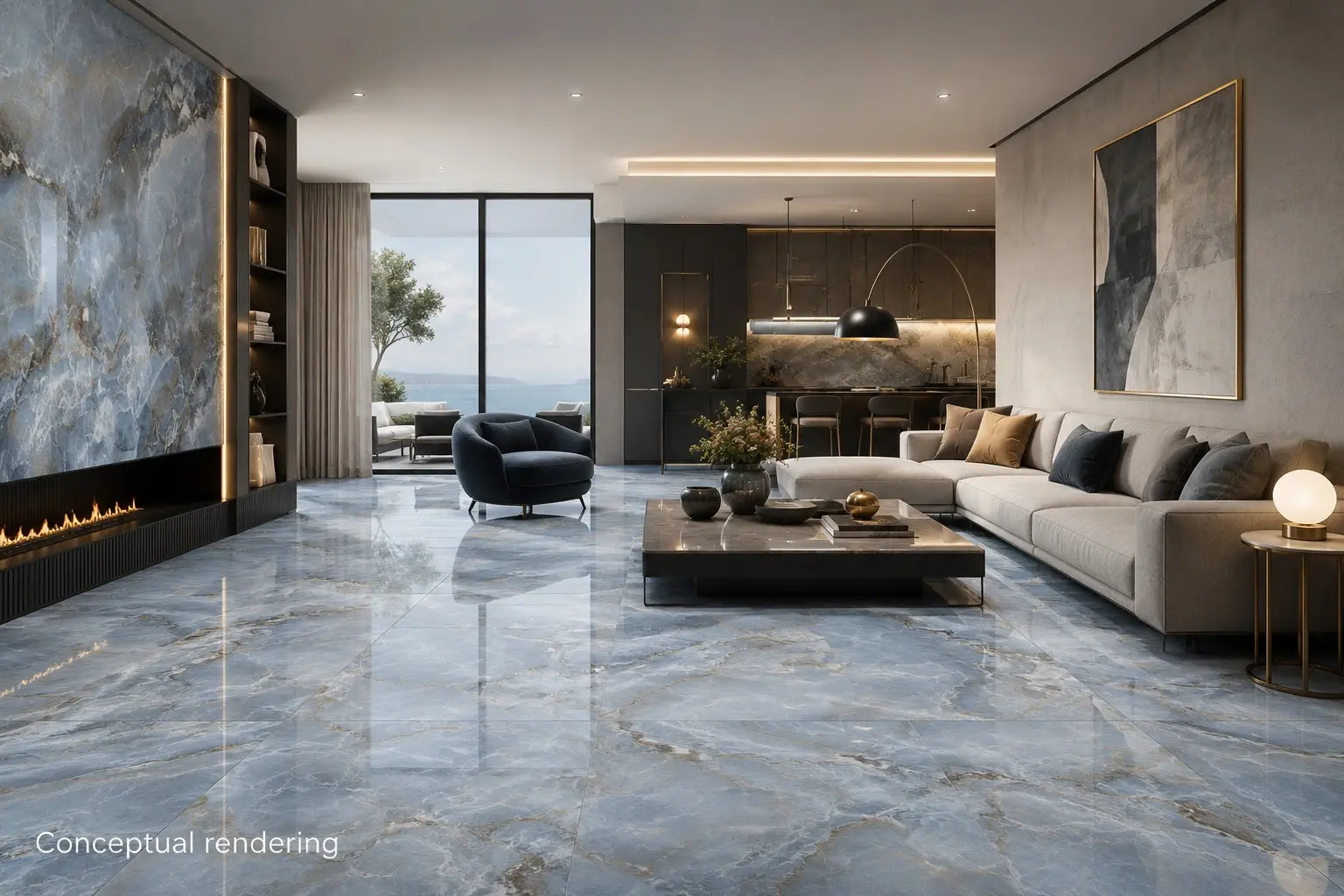
Porcelain tile is a dense, low-porosity tile material that meets the classification defined by ANSI A137.1, which requires a water absorption rate of 0.5% or less, making it denser and more moisture-resistant than standard ceramic tile. Coral is a warm reddish-orange color available in porcelain floor and wall tile, ranging from soft peachy salmon to deeper burnt orange and terracotta-adjacent hues. Coral porcelain tile is suited to a wide range of interior and outdoor installations, including wet and frost-exposed surfaces. In addition to its moisture resistance, through-body coral porcelain tile carries its color throughout the tile thickness, so wear is less likely to expose a contrasting base layer.
Where to Use Coral Porcelain Tile
Interior Floors
Coral porcelain tile works well in living rooms, kitchens, entryways, and hallways. Its surface hardness makes coral tile resistant to scratching and chipping under regular foot traffic, and its warm color suits both open-plan spaces and smaller rooms where a grounding tone adds visual warmth.
Accent Walls and Backsplashes
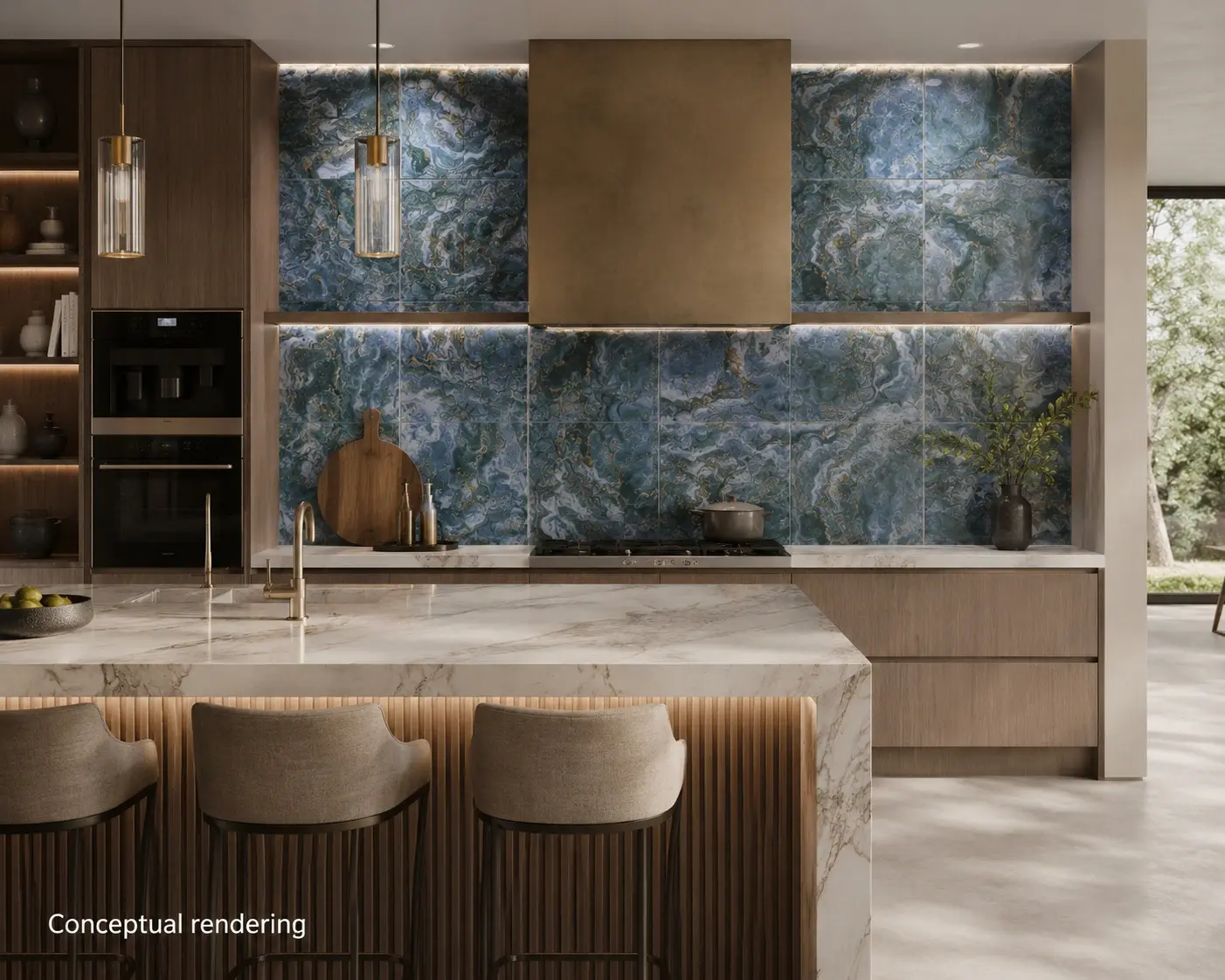
Coral porcelain tile brings color to kitchen backsplashes and bathroom feature walls without the periodic sealing that many natural stone wall applications require. A single wall in coral tile can anchor a neutral room without overwhelming it. The warm tone pairs naturally with white, cream, warm gray, and natural wood, and contrasts well against blue-green or navy accents. For a cooler contrast, cobalt porcelain tile pairs well alongside coral in two-tone backsplash and feature wall designs.
Bathrooms and Wet Areas
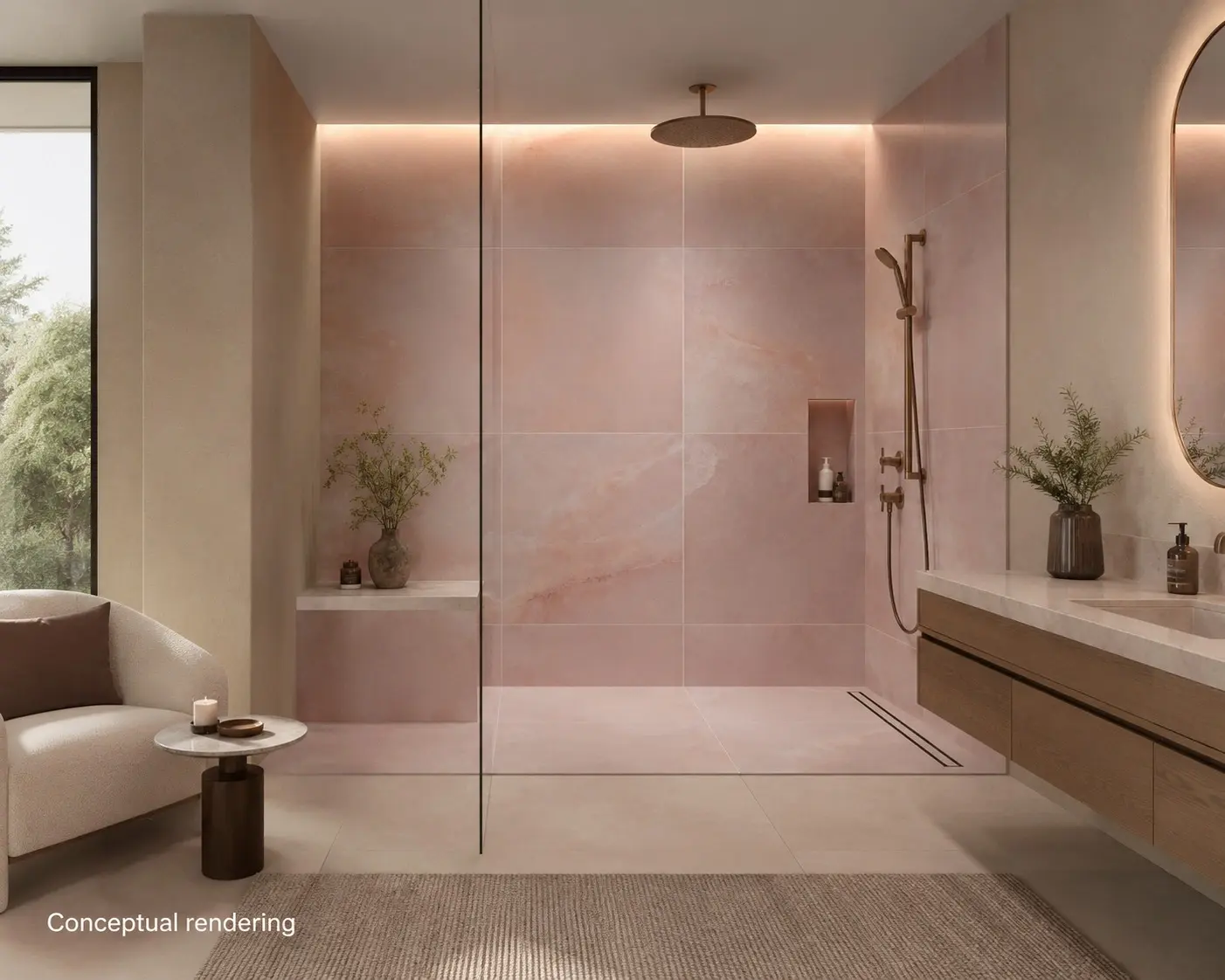
Coral tile is appropriate for bathroom floors, shower walls, and tub surrounds. The ANSI A326.3 standard specifies a minimum wet DCOF of 0.42 for bathroom floors and 0.50 or higher for shower floors. For wall installations in wet areas, the DCOF requirement does not apply, which opens up a wider range of finishes and formats.
Outdoor Spaces
Coral tile's low water absorption makes it suitable for patios, pool surrounds, and exterior walkways, even in climates where temperatures drop below freezing. Moisture is unlikely to penetrate coral tile's dense body in meaningful amounts, which can help prevent the cracking that affects more porous materials in freeze-thaw cycles. Check that the product you select carries a frost resistance rating before using it outdoors.
Why Choose Coral Porcelain Tile
Coral porcelain tile suits projects where color and long-term performance both matter. Its low water absorption means most household liquids are unlikely to penetrate the tile body and can be wiped away cleanly, and no periodic sealing is needed. The coral color is known to hold up in sunrooms and outdoor installations with minimal fading, whether the tile is through-body or surface-glazed.
Beyond durability, coral tile comes in formats from small mosaics to large-format panels, in matte, polished, and textured finishes. Matte and textured surfaces are the practical choice for floors, wet areas, and outdoor installations where slip resistance matters, while polished finishes work well on accent walls and lower-traffic decorative floors where the warmth of the coral tone can be highlighted. For a full overview of tile grades, formats, and installation considerations, see Nova Tile and Stone's complete porcelain tile guide.
Care and Maintenance
Sweep or vacuum coral tile regularly to remove grit that can scratch or dull polished finishes, and damp mop with warm water and a pH-neutral cleaner. For spills, wipe promptly; for dried residue, use a non-abrasive cleaner formulated for porcelain. Avoid acidic cleaners, including vinegar-based products, and abrasive pads.
Grout joints around coral tile benefit from sealing at installation and periodic resealing depending on exposure. Epoxy grout does not require sealing and is a practical choice for wet areas. For outdoor coral tile, routine cleaning with a garden hose or low-pressure wash is usually sufficient. Clear leaves and organic debris promptly, as tannins can stain lighter grout.
Find Your Perfect Tile
Frequently Asked Questions
Coral porcelain tile refers to porcelain floor and wall tile finished in a warm reddish-orange color, ranging from soft peachy salmon to deeper burnt orange. Like all porcelain tile, it has a water absorption rate of 0.5% or less as defined by ANSI A137.1.
Yes. Bathroom floors require a minimum wet DCOF of 0.42 per ANSI A326.3, while shower floors generally call for 0.50 or higher. Check the product specification sheet for the DCOF rating before purchasing.
Yes, provided the product carries a frost resistance rating. Porcelain's low water absorption can help prevent the internal cracking that affects more porous materials in freeze-thaw conditions.
No. Porcelain tile does not require sealing, though grout joints do benefit from sealing unless epoxy grout is used.
Coral porcelain tile is typically available in matte, polished, and textured finishes. Matte and textured options are practical for floors and wet areas, while polished finishes suit accent walls and lower-traffic floors.
Note: Some images on this page may be conceptual renderings created to illustrate design possibilities and may not depict actual installations.
Visit Nova Tile and Stone
Nova Tile and Stone imports tile and stone directly, which means a broader and more consistent selection than is typically available through retail chains. Coral tile samples are available at our four showroom locations in Reno, Sacramento, Minden and Fernley, so you can evaluate color, finish, and scale before committing to an order. Browse the full tile collection online, or contact us and stop in to speak with a product specialist about your project.
Nova Tile and Stone's Offerings