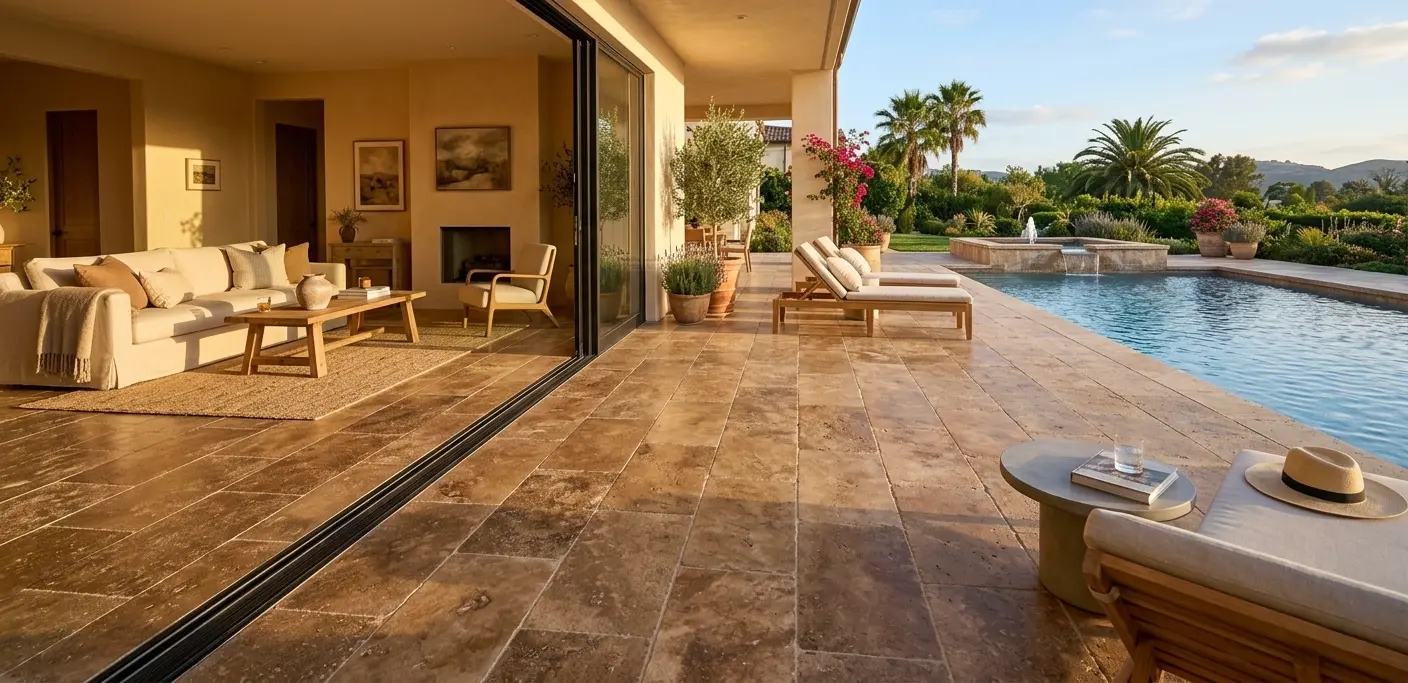
Brown travertine is a natural sedimentary stone valued for its warm earthy tones, porous texture, and completely one-of-a-kind patterning. Available as large-format natural stone slabs in polished, honed, leathered, and specialty finishes, it suits an impressive range of spaces including kitchen countertops, bathroom vanities, floors, wall cladding, patios, pool decks, and fireplace surrounds. No two slabs share the same veining or color depth, making every project genuinely distinct. For homeowners and designers who want a surface that brings organic character without sacrificing function, brown travertine is one of the most versatile natural stone choices on the market.
Brown Travertine: Material Specs, Hardness, and Thickness
Brown travertine is a calcium carbonate sedimentary stone formed through mineral-rich spring water deposits over thousands of years. It is primarily quarried in Turkey, Iran, Mexico, and Peru. Standard slab thickness runs at 3/4 inch (2 cm) for wall applications and lighter projects, and 1.25 inches (3 cm) for countertops and flooring. On the Mohs hardness scale, travertine rates between 3 and 4, placing it softer than granite at 6 to 7 and quartzite above 7, but comparable to marble in workability and density.
Its water absorption rate typically falls between 1% and 5%, a moderate to high porosity range that makes periodic sealing essential in kitchens, bathrooms, and outdoor settings. Compared to engineered quartz, brown travertine delivers a warmer, more textured surface with natural movement. Against granite, it reads softer and more organic, with open pores and subtle fossil-like markings that add genuine visual interest at any scale.
Layouts and Design Options That Match Any Project
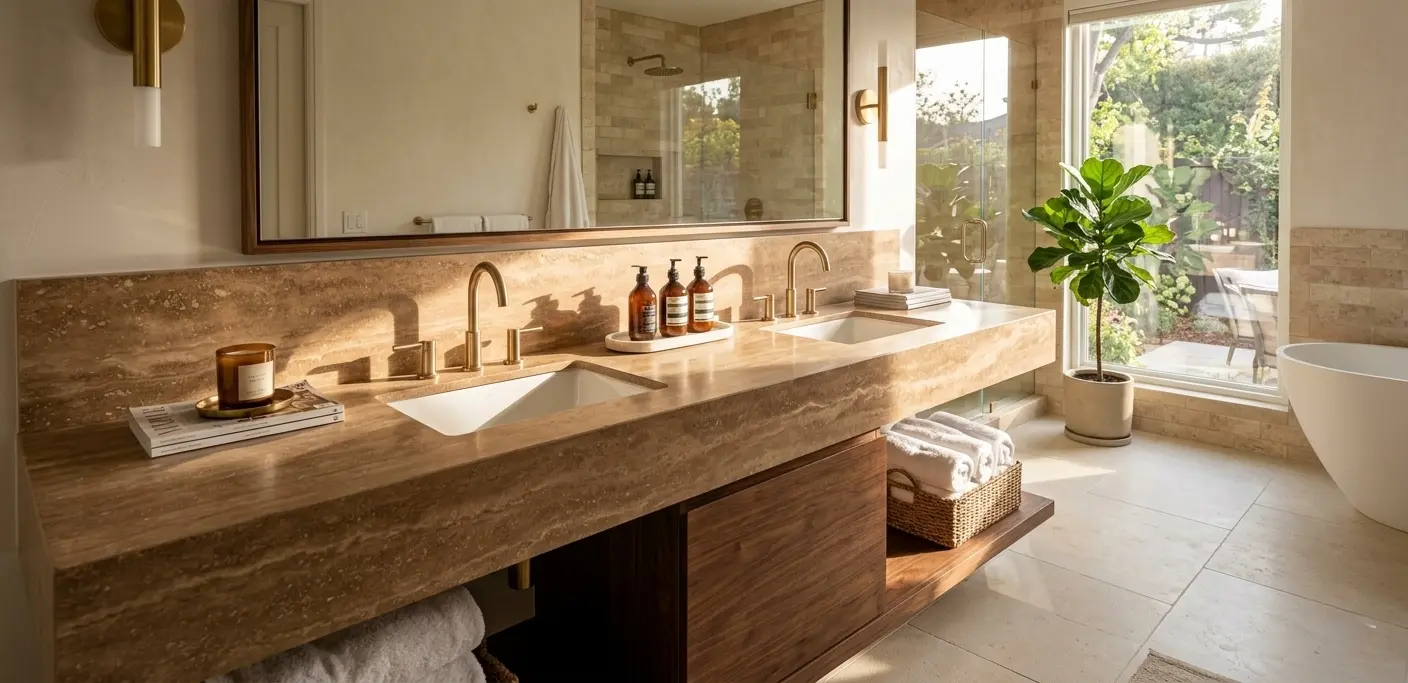
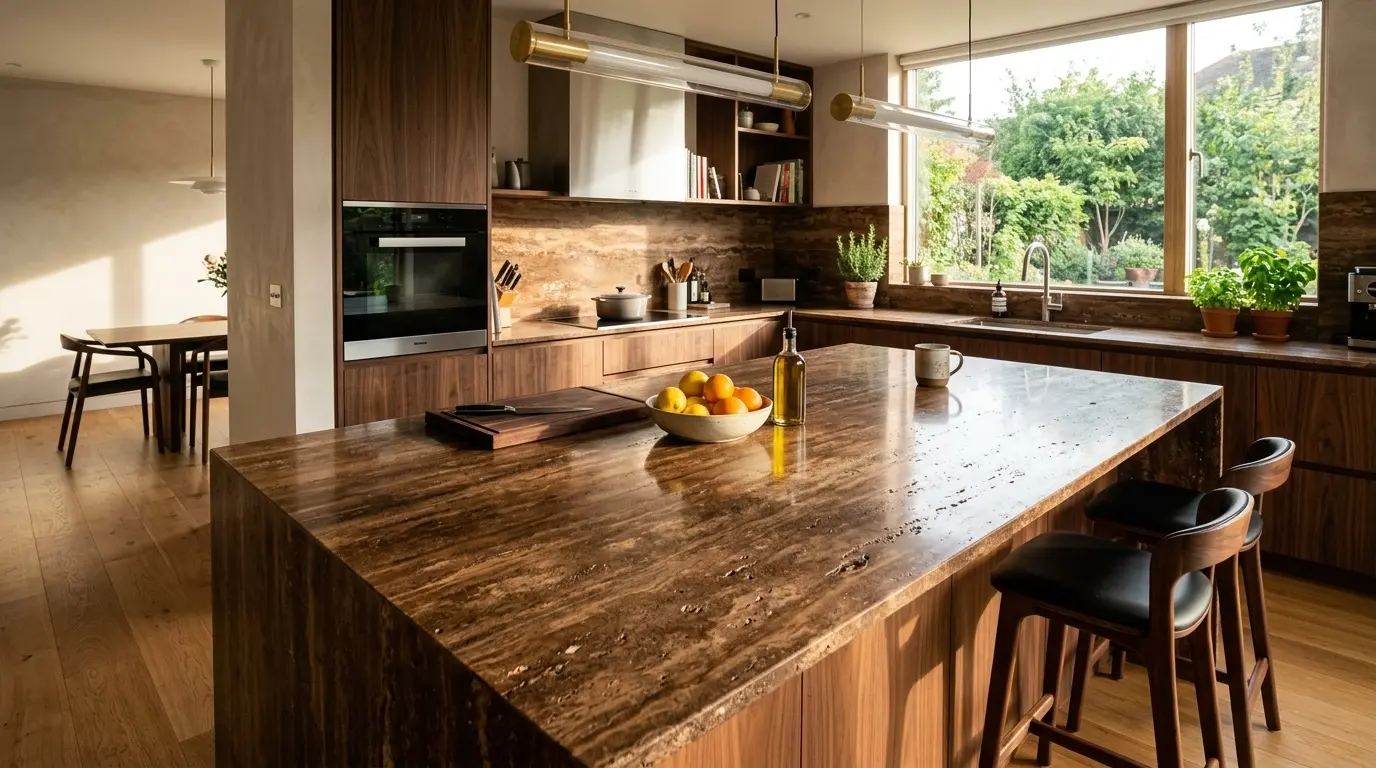
The brown travertine palette ranges from light tan and golden walnut tones to richer chocolate depths, giving designers meaningful flexibility across interior styles. A polished or honed finish works well for kitchen countertops and island surfaces, amplifying color depth and bringing out natural veining. For bathroom vanities and shower surrounds, a leathered finish adds tactile character while reducing surface reflectivity.
On exterior surfaces such as patios and pool decks, this stone handles UV exposure and seasonal temperature shifts effectively when properly sealed. Wall cladding in a horizontal stack layout follows the stone's natural grain and reads as calm and grounded, while vertical stacking adds visual height in entryways and living room accent walls. Herringbone and large-format grid patterns work especially well for flooring projects, indoors and out.
Built to Perform: Key Practical Advantages
- Naturally heat resistant, making it a dependable surface near cooktops and an excellent choice for fireplace surrounds
- Slip-resistant texture in honed and leathered finishes, ideal for bathroom floors and pool decks
- Four distinct finish options let you control sheen level, surface texture, and durability to match the function of each room
- Outdoor ready when sealed, withstanding UV exposure and freeze-thaw temperature cycles
- Compatible with radiant floor heating systems, effective in colder climates
- Home delivery available, with store pickup at four brick-and-mortar locations across Northern Nevada and California
Nova Tile and Stone's expert natural stone specialists offer free design consultations backed by 100% U.S.-based client support, so you can evaluate your actual slab before making a final decision.
A Long-Term Investment in Natural Beauty
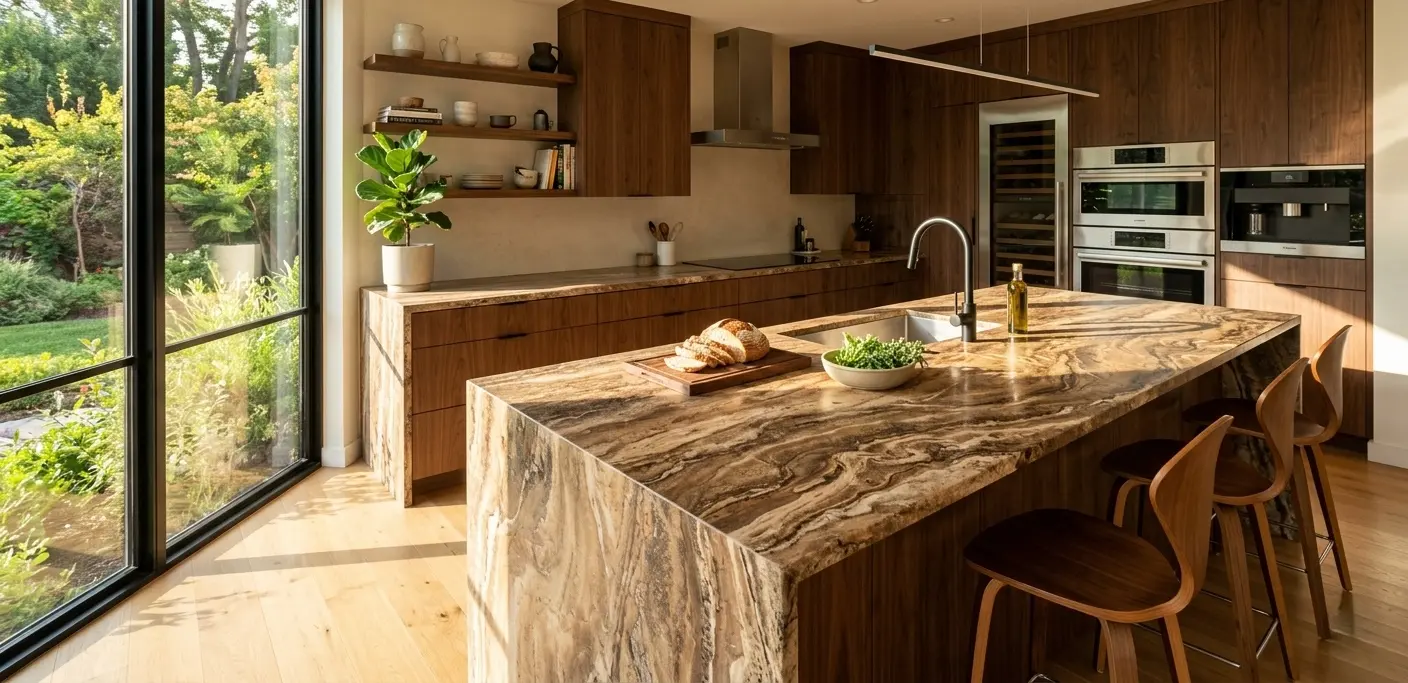
Travertine has appeared in landmark architecture for centuries, and its visual appeal has only grown stronger over time. Brown travertine in particular ages with genuine character, developing a subtle patina that adds depth rather than showing wear. At larger formats, such as full bathroom feature walls or wide kitchen islands, this stone maintains visual warmth in a way that porcelain and engineered surfaces rarely achieve.
Its earthy palette pairs naturally with wood cabinetry, concrete finishes, and matte metal hardware across both modern and traditional interiors. Understanding how travertine performs underfoot across different finishes and climates is worthwhile before committing to a surface. The Natural Stone Slab Flooring: Complete Guide to Materials, Finishes and Care covers what you need to know.
Frequently Asked Questions
When sealed correctly, it performs well in kitchens. Polished and honed finishes are the most practical choices because they resist surface staining and are easy to wipe clean.
Travertine rates 3 to 4 on the Mohs scale, softer than granite at 6 to 7. Routine sealing keeps it protected against etching and staining in high-traffic areas.
Yes, it is widely used for both. Honed and leathered finishes provide slip resistance, and sealing protects against water absorption and temperature-driven expansion.
Slabs are typically available in 2 cm for walls and lighter countertop work, and 3 cm for full countertops and flooring installations.
No. Natural variation in veining, tone, and pore pattern means each slab is one of a kind, with shades ranging from light caramel to deep walnut even within the same batch. Viewing the actual slab before purchase is always recommended.