Natural stone slab flooring uses large, continuous pieces of quarried stone, such as marble, granite, quartzite, and travertine, installed as a seamless floor surface with minimal grout lines. Unlike standard tile, each slab is cut from a single piece of stone, meaning no two floors look identical. It is one of the most durable flooring options available, with properly maintained stone floors lasting 50 years or more. Homeowners choose natural stone slab flooring for its design versatility, its resistance to heat and wear, and its ability to increase home resale value. This guide covers the most common stone types, which finishes work best for floors, where slab flooring performs well, and how to care for it long term.
What Makes Slab Flooring Different From Tile
Standard floor tile, even large-format tile, is produced in uniform, factory-cut pieces and installed with a grid of grout lines running throughout the space. Slab flooring uses continuous pieces of natural stone that can span entire rooms or large sections of a floor with minimal interruption.
The practical differences go beyond looks. Slab floors eliminate the grout-line accumulation that makes tile floors harder to clean over time. The surface reads as one coherent plane, which visually expands a room and creates a calmer, more refined aesthetic. Because the material is genuine stone quarried from the earth, no two slabs ever look exactly alike.
Slab flooring is a premium product. It requires careful selection, proper sealing, and a structurally sound substrate to support the weight and thickness of solid stone. Understanding your options before you commit makes the difference between a floor that performs beautifully for decades and one that falls short.
Stone Types for Slab Flooring
Marble
Marble is the material most associated with luxury stone floors, defined by bold veining running through white, cream, gray, or warm backgrounds. Its surface reflects light in a way that makes any room feel more spacious and refined. The tradeoff is maintenance. Marble is softer than granite or quartzite and can scratch and etch when exposed to acidic substances like citrus juice, wine, or harsh cleaners. It performs best in lower-traffic spaces such as primary bedrooms, formal living rooms, or spa-style bathrooms.
Granite
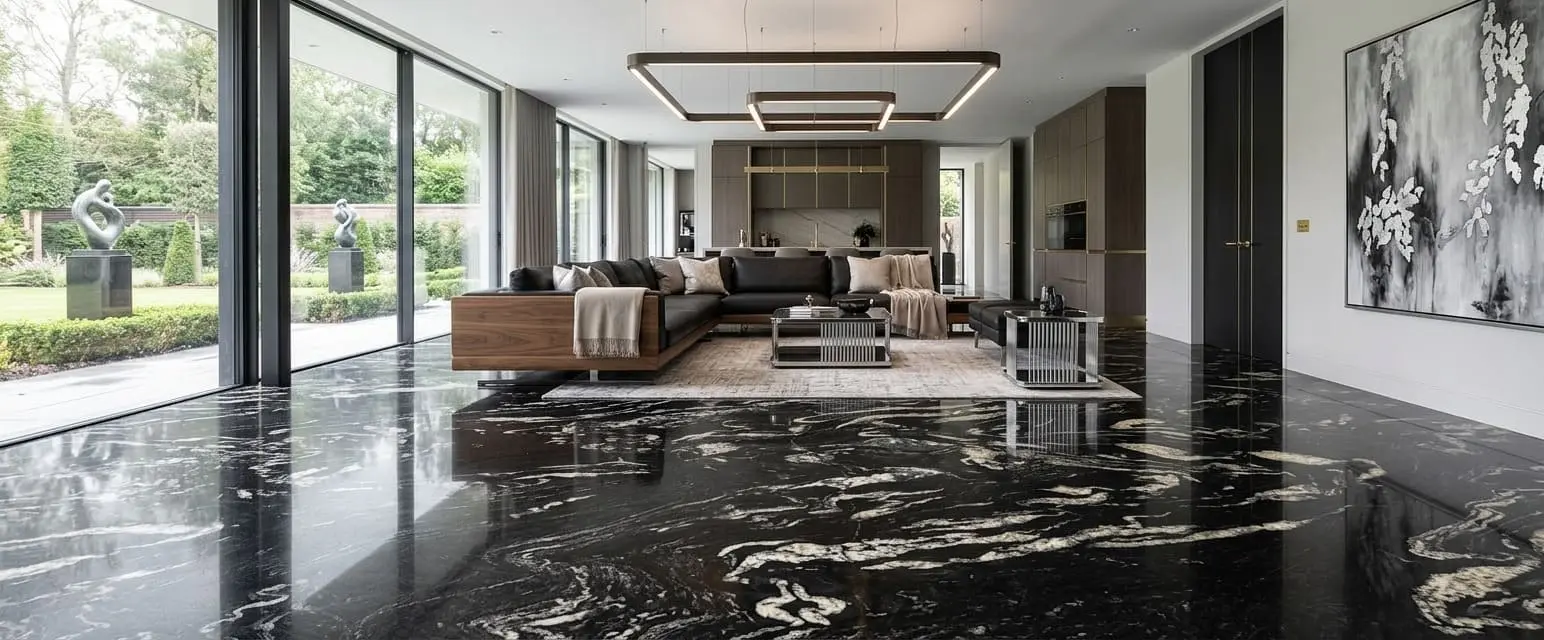
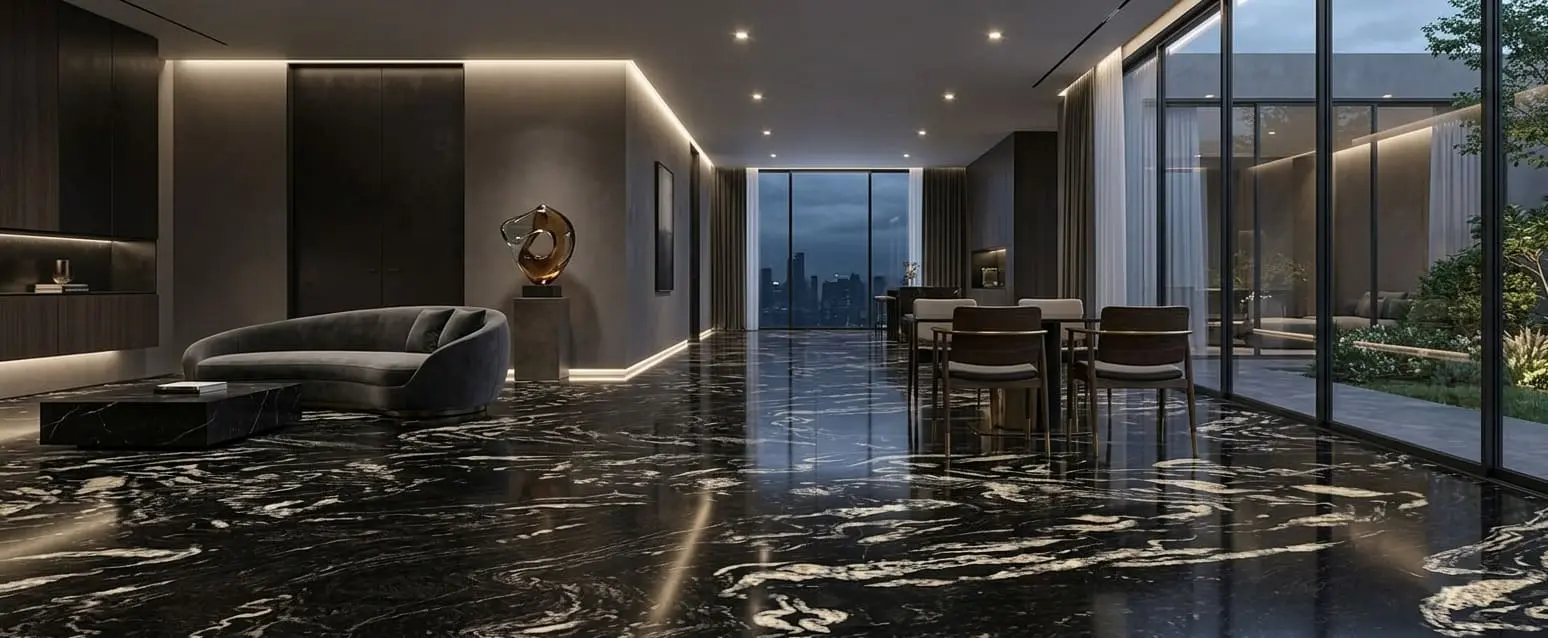
Granite is the workhorse of natural stone flooring. As an igneous rock, it is denser and harder than most other stone types, making it highly resistant to scratches, heat, and heavy foot traffic. It performs well in kitchens, entryways, and hallways. Granite comes in a wide range of colors, from pale creams and soft grays to deep blacks and multicolored speckled patterns, and requires less frequent sealing than more porous stones. It is one of the most practical and low-maintenance natural stone floor choices available.
Travertine
Travertine has a warm, earthy character defined by its naturally pitted surface and honey, cream, and walnut tones. It is a popular choice for homeowners who want a stone floor with an organic, Old World feel and works especially well in bathrooms, patios, and spaces with a Mediterranean or transitional aesthetic. Because travertine is porous and softer than granite or quartzite, it requires regular sealing and gentle, pH-neutral cleaning to maintain its appearance.
Quartzite
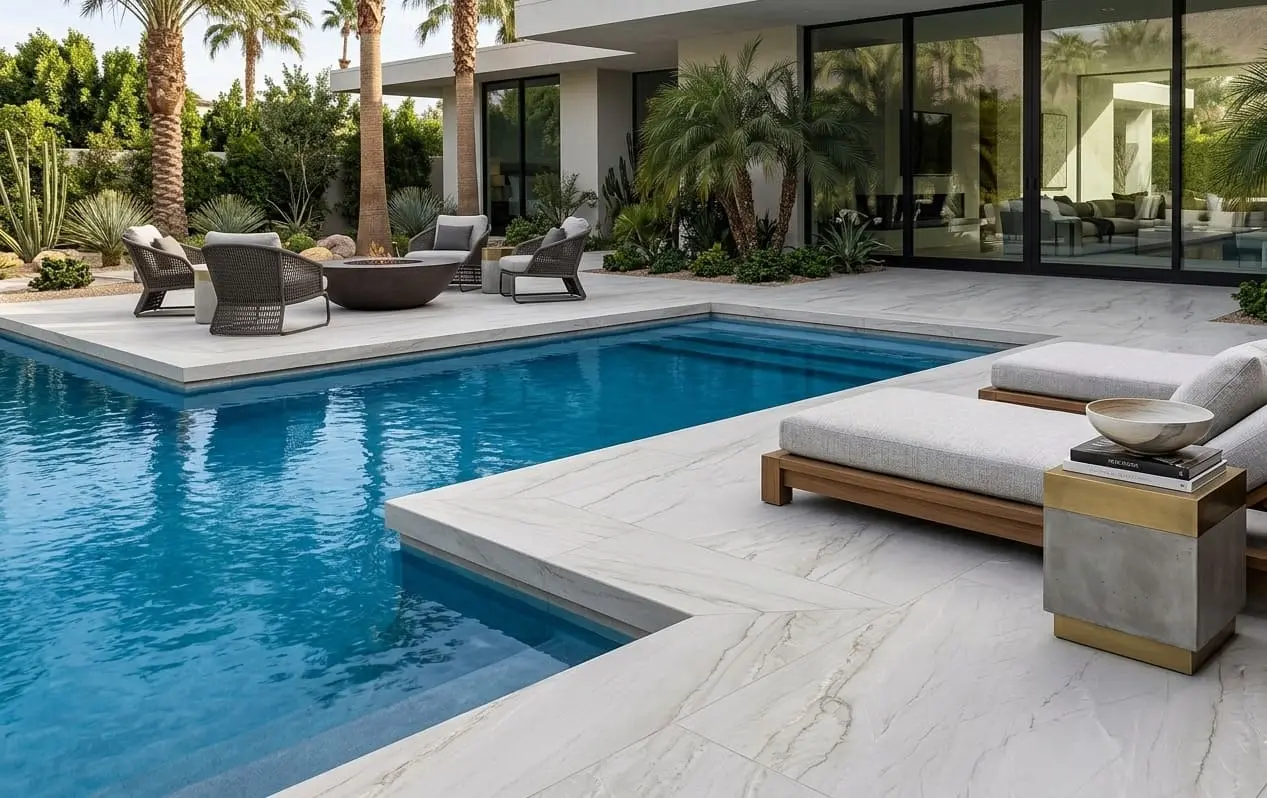
Quartzite is one of the most durable natural stones available, formed when sandstone is exposed to intense heat and pressure. The result is a dense, scratch-resistant surface that is highly resistant to etching from acids, which is a key limitation of marble that quartzite largely avoids. Its appearance ranges from pale white and soft gray to warm tan and dramatic veined patterns that rival high-end marble. For kitchen floors, entryways, and demanding applications where beauty and durability both matter, quartzite is one of the best options available.
Limestone
Limestone offers soft, understated elegance with neutral tones including beige, cream, light gray, and warm brown. It creates a calming, airy atmosphere and pairs naturally with minimalist, Mediterranean, and farmhouse interior styles. Limestone is more porous than granite or quartzite and benefits from consistent sealing. It is best suited for lower-traffic rooms and bathrooms where its quiet, natural palette can be appreciated without the stress of heavy daily use.
Slate
Slate brings a distinctly different texture and character to stone flooring. Its layered surface comes in deep grays, muted greens, rustic reds, and dark multicolored blends. That natural texture provides built-in slip resistance, making slate a practical option for entryways, mudrooms, and bathrooms. Slate is durable but can chip if a sharp or heavy object is dropped on it. Keeping it sealed and attending to any minor chips promptly will ensure it holds up well for decades.
Finishes for Natural Stone Slab Floors
The finish applied to natural stone slab flooring affects both its appearance and its practical performance. For flooring specifically, two finishes are most appropriate: honed and brushed.
Honed stone is ground smooth but not buffed to a shine, resulting in a soft matte surface. It hides minor scratches and scuffs better than a high-gloss finish and creates a warmer, more relaxed aesthetic. Honed finishes work well in family homes, kitchens, and spaces where a softer look is preferred.
Brushed or leathered finishes involve texturing the stone's surface to create subtle dimension and grip. This option is popular for travertine and quartzite floors, where the slight texture adds to the natural, organic character of the material and improves traction underfoot.
Where Slab Flooring Works Best
Natural stone slab flooring is versatile enough for nearly every interior space, but certain applications bring out its strongest qualities.
In open-plan living areas, slab flooring creates a cohesive, expansive visual that flows from room to room without interruption. Large-format slabs amplify the sense of space in great rooms and combined kitchen-dining areas.
In primary bathrooms, stone slab floors pair beautifully with slab shower walls and stone vanity tops, creating a fully unified design. Marble, travertine, and limestone are especially popular here for the spa-like atmosphere they produce.
In entryways and foyers, stone slab flooring sets a powerful first impression. Granite and quartzite are well-suited for entry applications due to their durability under foot traffic and resistance to tracked-in moisture and debris.
In kitchens, quartzite and granite slab floors deliver the combination of elegance and toughness that busy cooking spaces demand. Their resistance to heat, spills, and heavy use makes them more practical than marble or limestone in this environment.
We carry a broad natural stone slab collection, and our team is available for a free design consultation to help you find the right stone for your specific space. Visit our Reno showroom, Sacramento showroom, Minden showroom, or Fernley showroom to see full-size slab displays in person.
How to Choose the Right Stone for Your Floor
A few key factors should guide your selection.
Traffic level. High-traffic areas call for denser, harder stones. Granite and quartzite top the list. Lower-traffic spaces like bedrooms and formal living rooms open the door to softer, more visually dramatic options like marble or limestone.
Maintenance commitment. All natural stone benefits from sealing and gentle cleaning, but some stones require more attention than others. If a lower-maintenance floor is a priority, granite and quartzite are the most forgiving choices. Marble and travertine are beautiful but reward consistent care.
Design direction. Stone color, veining pattern, and finish all interact with your existing architecture, cabinetry, and light sources. Viewing large slab samples in your actual space, under both natural and artificial lighting, is the most reliable way to make a confident decision. Fine Homebuilding's guide to selecting natural stone surfaces recommends evaluating samples at different times of day before committing to a material.
Room size. Larger slabs visually expand a room, while smaller cuts work better in compact spaces. Getting the proportions right is just as important as the material itself. This Old House's natural stone countertop guide notes that scale is one of the most commonly overlooked factors in stone surface selection.
We are proud to support Northern Nevada and Northern California homeowners who choose to shop local for their natural stone needs. As a direct stone importer, we source stone from quarries worldwide and pass those savings on without middleman markup.
Caring for Natural Stone Slab Floors
Natural stone flooring is durable and long-lived, but it requires proper care to maintain its appearance.
Seal regularly. Most natural stone floors benefit from resealing every one to three years depending on stone type, traffic level, and porosity. A simple water-bead test tells you when it is time. Drop a small amount of water on the surface and watch whether it beads or absorbs into the stone.
Clean with pH-neutral products. Acidic or abrasive cleaners damage stone surfaces over time. Use a cleaner specifically formulated for natural stone and avoid anything containing vinegar, bleach, or citrus-based ingredients.
Sweep and dry-mop regularly. Fine grit and debris act as abrasives underfoot, gradually wearing away the surface finish. Frequent dry sweeping removes this before it can cause damage.
Address spills promptly. Porous stones like marble, travertine, and limestone are particularly vulnerable to staining if spills sit. Blot rather than wipe to prevent spreading, then clean with the appropriate stone-safe product.
Inspect periodically. Small chips or cracks should be addressed before they spread or allow moisture to penetrate beneath the surface.
Always follow engineered stone safety guidance and use appropriate protective equipment when working with stone dust during any maintenance or repair activity.
Conclusion
Natural stone slab flooring represents one of the most enduring investments you can make in a home. It combines genuine material authenticity, long-term durability, and a visual character that manufactured flooring simply cannot match. Whether you are drawn to the dramatic elegance of marble, the rugged reliability of granite, the warmth of travertine, or the performance of quartzite, there is a natural stone floor suited to your lifestyle and space.
The key to a successful slab floor project is matching the right stone to the right application and seeing large samples in person before making your final selection. Our team is here to help you navigate those decisions. Stop by any of our showrooms in Reno, Sacramento, Minden, or Fernley, or reach out to schedule a free design consultation.
Frequently Asked Questions
What is the most durable natural stone for flooring?
Granite and quartzite are the most durable natural stone flooring options. Both are dense, hard, and highly resistant to scratches, heat, and heavy foot traffic, making them ideal for kitchens, entryways, and any high-use area of the home.
How often does natural stone slab flooring need to be sealed?
Most natural stone floors benefit from resealing every one to three years, depending on the stone type and traffic level. More porous stones like travertine and limestone may need more frequent attention, while denser stones like granite require sealing less often.
Is natural stone slab flooring a good choice for kitchens?
Yes, particularly when the right stone is selected. Quartzite and granite are excellent kitchen floor choices because of their resistance to heat, scratches, and acidic spills. Marble and limestone can also work in kitchens but require more consistent maintenance and sealing to hold up over time.
What is the difference between honed and brushed stone flooring?
Honed stone has a smooth matte surface that hides everyday wear well and creates a softer, relaxed aesthetic. Brushed or leathered stone has a subtly textured surface that adds dimension and improves traction underfoot. Both finishes are well-suited for floor applications.
Can natural stone slab floors be used in bathrooms?
Absolutely. Natural stone slab flooring is one of the most popular choices for bathrooms, particularly primary bath spaces where a spa-like aesthetic is the goal. Marble, travertine, and limestone are especially well-suited here. A honed or brushed finish improves slip resistance in wet areas.