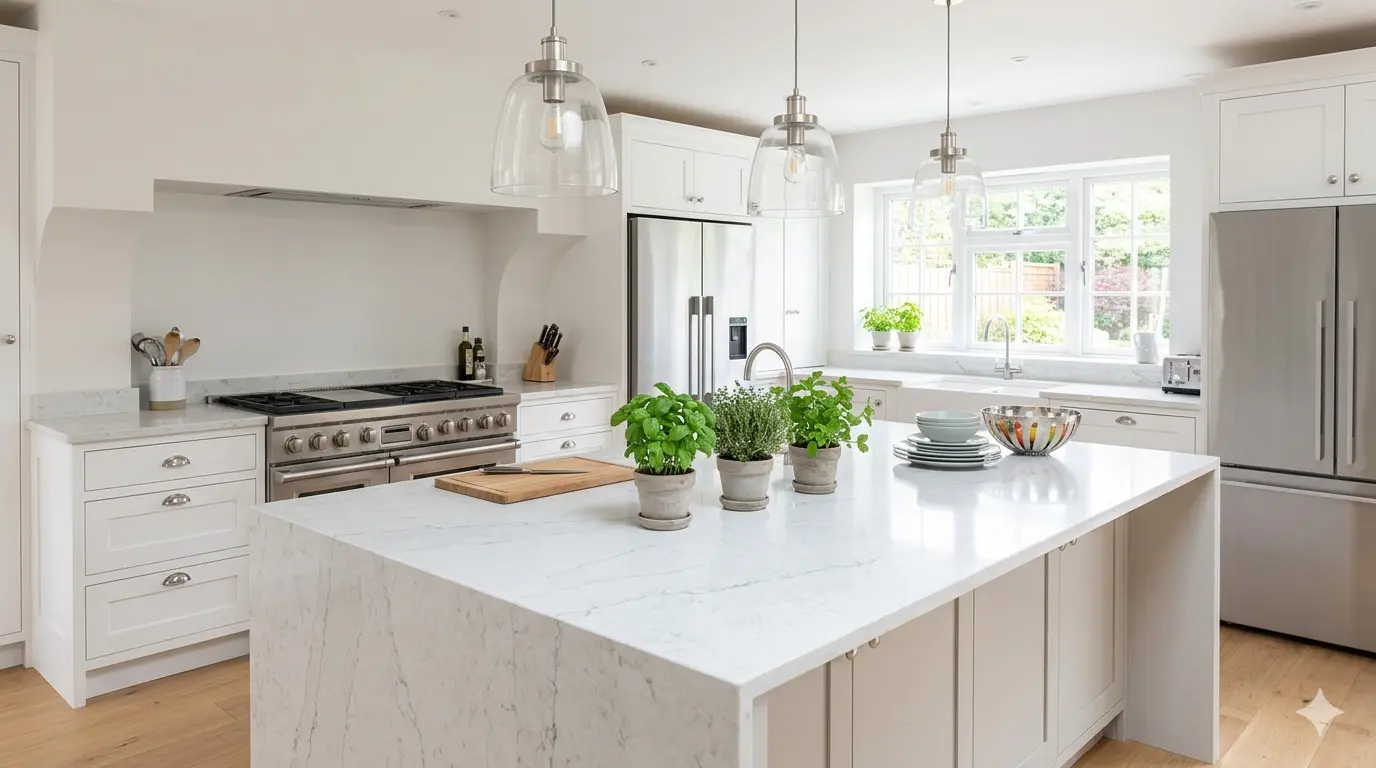
Marble and quartzite are two of the most popular natural stone countertop options available today. Both offer stunning veining and a high-end look that many homeowners love. However, they perform very differently in a real kitchen environment. Marble is a softer stone made from limestone and calcite, making it more vulnerable to scratches and acid etching. Quartzite is a naturally hard stone formed from sandstone under intense heat and pressure, giving it superior durability. For busy kitchens, quartzite resists scratches, staining, and etching far better than marble does. Marble, on the other hand, develops a natural patina over time that many homeowners find beautifully unique. Both stones require sealing, but marble needs it more frequently to stay protected. Choosing between them comes down to your lifestyle, maintenance preference, and how you define long-lasting beauty. This guide breaks down the key differences to help you make the most informed decision possible. If you are exploring premium surface options, Nova Tile and Stone's trusted natural stone slab selection is a great place to start your search.
Where Each Stone Comes From
Understanding a stone's origin helps you know how it will perform. Every stone has a unique makeup that affects its durability. Marble is a metamorphic rock that forms from limestone. Its main ingredient is calcite, also known as calcium carbonate. That calcite content is actually marble's biggest weakness in the kitchen. Calcite is chemically alkaline, so it reacts quickly to anything acidic. Quartzite, on the other hand, is completely natural and often confused with man-made quartz. It starts as sandstone and transforms through intense heat and pressure. That process fuses it into a solid mass of quartz crystals. Both stones offer soft grey veining and milky backgrounds that many homeowners love. However, their chemical makeup is what truly determines how long they last. For a deeper look at how natural stone slabs compare in real spaces, this guide from This Old House on stone countertops is worth reading.
How Hard Are These Stones Really?
Knowing a stone's hardness helps you make a smarter buying decision. A kitchen countertop faces knives, heavy pans, and dropped objects daily. Here is what sets these two stones apart in terms of hardness:
- Quartzite ranks among the hardest natural materials on earth
- It is harder than glass and even harder than granite
- Normal kitchen activities are unlikely to scratch quartzite at all
- Marble is significantly softer by comparison
- Soft marble can develop visible scratches and marks over time
- These surface marks are often called battle scars in the stone industry
- Maintaining a smooth surface long-term is harder with marble
Quartzite clearly wins when it comes to scratch resistance and surface durability. Choosing the harder stone means less visible wear over the years.
The Truth About Etching on Stone Surfaces
Etching is one of the most misunderstood issues with natural stone countertops. Many homeowners mistake dull spots for stains when they are actually something different. Here is what you need to understand about etching:
- Etching is a physical change on the stone's surface, not a stain
- It happens when acid eats away at the calcite in marble
- Common culprits include lemon juice, vinegar, and wine
- Quartzite is made of silica, not calcite, so it does not etch
- Spilling an acidic drink on quartzite and leaving it overnight causes no damage
- For families who cook and entertain often, this is a major advantage
- Some stones labeled as quartzite are actually dolomitic marble in disguise
- These softer varieties are harder than standard marble but will still etch
- Always ask your stone supplier for a lemon test sample before buying
Etching resistance is a key factor in a stone's long-term appearance. Knowing the difference between true quartzite and mislabeled stones protects your investment. If you want to explore what true quartzite slabs look like, browse the Taj Mahal Quartzite options available in the slab catalog. You can also learn more about natural stone care and maintenance directly from the Natural Stone Institute's consumer care resource.
How Porous Is Your Natural Stone Countertop?
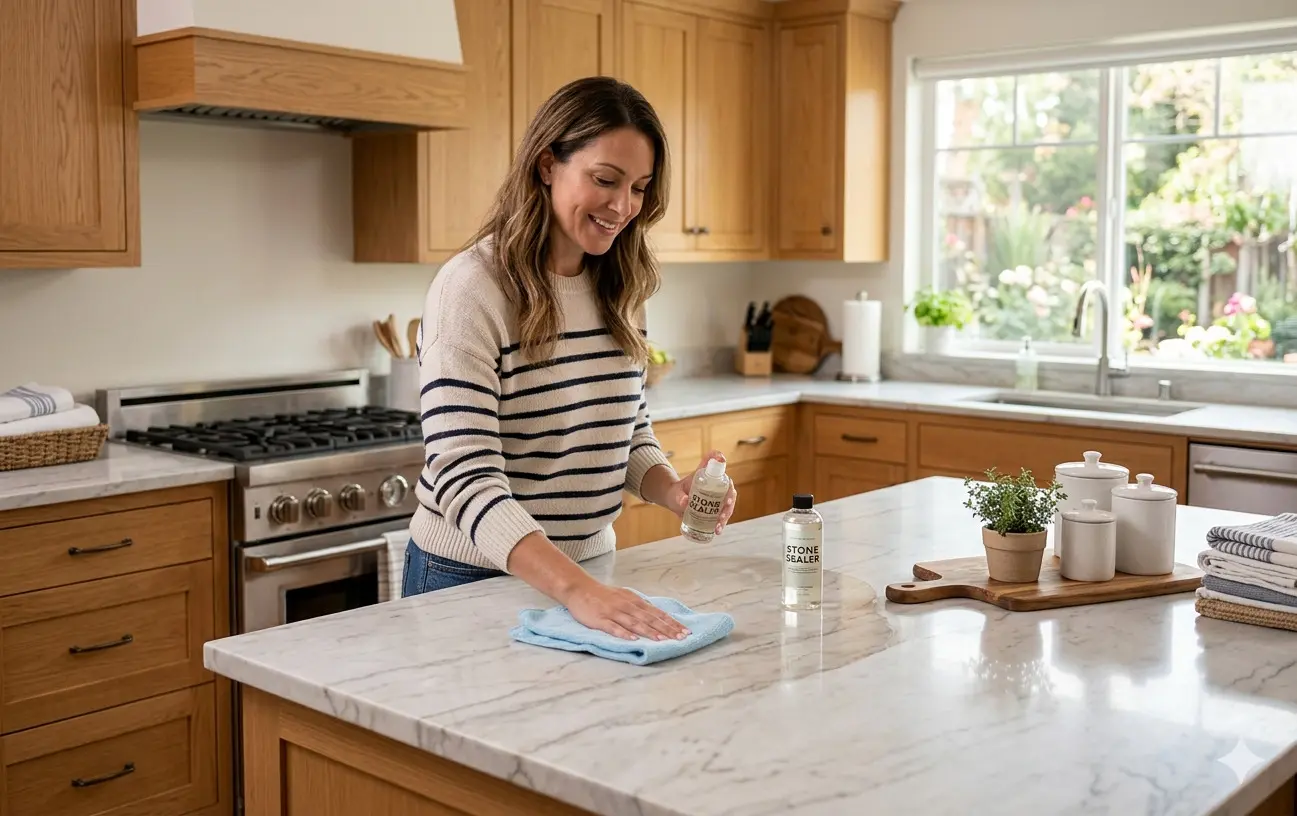
Porosity affects how easily a stone absorbs spills and develops stains. Both marble and quartzite are natural stones, so both have some level of porosity. Here is how they compare when it comes to staining risk:
- Marble has an open, porous structure that absorbs liquids quickly
- A red wine splash on unsealed marble can become a permanent stain
- Proper sealing is essential to protect marble from deep staining
- Quartzite has a much denser and tighter grain structure
- That density makes it significantly less porous than marble
- Spills on quartzite give you more time to wipe them up safely
- Sealing quartzite is still recommended for extra protection
Quartzite offers more forgiveness when accidents happen in the kitchen. Its tighter structure makes it a lower-maintenance option for busy households. If you are considering a marble-look surface without the porosity concerns, the Calacatta Magnifico porcelain slab offers a stunning alternative worth exploring.
What Does a Long-Lasting Countertop Mean to You?
The idea of a stone lasting long means something different to every homeowner. Quartzite is ideal if you want your countertop to look exactly the same for decades. It is truly a set-it-and-forget-it luxury stone for low-maintenance living. Marble, however, develops what designers call a patina over time. Scratches and etches gradually blend together into a naturally aged, beautiful surface. Think of historic European spaces where marble has been used for centuries. That worn character tells the story of a home well-lived in. If you can embrace how marble evolves, it can actually last for a very long time. Both stones offer longevity, just in very different ways. For more inspiration on selecting the right natural stone surface, read this in-depth blog post on the art of selecting natural stone slabs.
What Upkeep Do These Stones Actually Need?
Maintenance plays a huge role in how long your countertop stays beautiful. Being realistic about upkeep helps you choose the right stone for your lifestyle. Here is a straightforward breakdown of what each stone requires:
- Marble needs sealing more frequently than quartzite does
- Quartzite generally requires sealing far less often over time
- Both stones need pH-neutral cleaners to avoid surface damage
- Avoid using common household cleaners like vinegar-based products on either stone
- Marble is soft enough to be professionally re-honed to remove scratches
- Re-honing can restore marble's surface when etching or scuffs appear
- Quartzite is so hard that chipping it is rare but harder to fix
- Repairing a chipped quartzite surface comes with a higher cost
- Choosing the right stone means matching it to your cleaning habits
Both stones reward consistent care with lasting beauty in your kitchen. Understanding the upkeep difference helps you plan and budget more effectively. For guidance on what a natural stone countertop project might involve, Fine Homebuilding's countertop guide for natural stone is an excellent resource. You can also explore the Calacatta marble slab ultimate guide to see how marble surfaces are properly chosen and cared for.
Conclusion
When it comes to technical durability, quartzite is the clear winner. It resists daily wear better than most other natural stones available. Quartzite delivers the high-end look of marble with the toughness of granite. That combination makes it the stronger choice for busy, working kitchens. It holds its fresh, polished appearance far longer with minimal effort.
Marble, however, holds its own kind of timeless appeal. It is not the best fit for someone easily stressed by surface marks. But for those who see their home as an evolving work of art, marble is hard to beat. Its beauty deepens and changes in a way no other stone can replicate. Both stones have their place, depending on how you live and what you value most. Whichever stone calls to you, browsing the live natural stone slab inventory is the best next step to finding your perfect match. You can also find us on Google Maps here or visit our showroom location to see stone slabs in person before deciding.
Frequently Asked Questions
Can you place hot pans directly on marble or quartzite?
It is best to avoid placing hot pans directly on either stone. Quartzite handles heat better, but trivets protect both surfaces effectively.
Does quartzite look exactly like marble in a finished kitchen?
Quartzite closely mimics marble's elegant veining and soft tones. However, quartzite tends to have a crisper, more crystalline appearance up close compared to marble's softer look.
Is marble a good choice for baking surfaces specifically?
Yes, marble is naturally cool to the touch, making it a favorite surface for bakers who work with dough, pastry, and temperature-sensitive ingredients regularly.
Can either stone be used in bathrooms or outdoor spaces?
Quartzite works excellently in both bathrooms and outdoor kitchens due to its low porosity and resistance to moisture, UV exposure, and weather changes.
How long can each stone realistically last with proper care?
With consistent maintenance and proper sealing, both stones can last decades. Quartzite often maintains its original appearance longer, while well-loved marble develops beautiful character over time.