There is a moment in every renovation when everything clicks. That moment usually begins with the slab. Natural stone slabs carry a quiet authority that painted cabinetry and engineered surfaces simply cannot replicate. Each piece is geologically unique, formed over millions of years, and cut into a panel ready to anchor your home.
Choosing the wrong stone, however, can work against you. A slab that clashes with your layout, resists your lifestyle, or exceeds your maintenance tolerance turns a dream renovation into a daily frustration.
This guide walks you through the critical decisions behind selecting the right stone. From evaluating veining patterns to matching stone types with specific rooms, you will leave with practical knowledge that makes your next visit to a slab showroom far more productive.
Why the Right Stone Surface Transforms Your Home's Value
A well-chosen stone surface is not just a design choice; it is a long-term investment. The right slab raises the perceived and actual market value of your property while serving your household for decades.
Stone surfaces perform differently depending on where they are installed. A kitchen island endures daily wear, heat exposure, and spills. Bathroom vanity surfaces face humidity, product residue, and constant moisture contact. Countertops in high-traffic cooking zones need resistance to etching and staining above all else. Matching stone properties to room function is the first principle of smart selection.
Here is what makes stone surfaces worth prioritizing over alternatives:
- Longevity: Properly sealed stone outlasts laminate, solid surface, and most engineered options
- Heat resistance: Many stone varieties tolerate direct heat without warping or discoloring
- Resale appeal: Stone countertops consistently rank among the top buyer-preferred features in real estate surveys
- One-of-a-kind appearance: No two slabs share identical patterning, which means your surface is genuinely exclusive
- Layered visual depth: Stone catches and reflects light in ways that flat-surface materials cannot match
Understanding these advantages helps you justify the investment and communicate your vision clearly to contractors and designers.
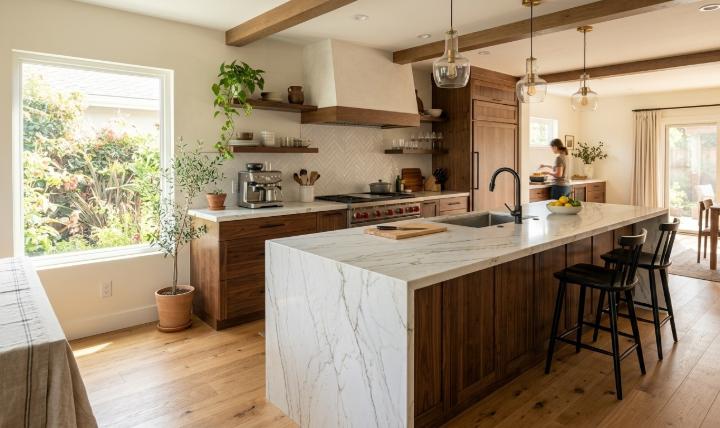
How Natural Stone Slabs Work Across Different Spaces
Kitchen Island: The Case for Drama and Durability
A kitchen island is the social and functional center of modern cooking spaces. Selecting a stone with bold veining and a leathered or honed finish adds texture without demanding constant polishing. Quartzite and dolomite marble are gaining popularity here because they offer the look of classic white marble with greater hardness and stain resistance.
When sourcing your slab for a kitchen island, always view the full panel in person. Online photography compresses color and scale. Visiting a slab showroom allows you to see how light interacts with the stone across its full dimensions, which is critical for large horizontal surfaces.
According to This Old House's guide to stone countertops, the thickness of the slab also affects both the visual weight and the structural requirements of your cabinetry, so coordinate with your installer before finalizing your selection.
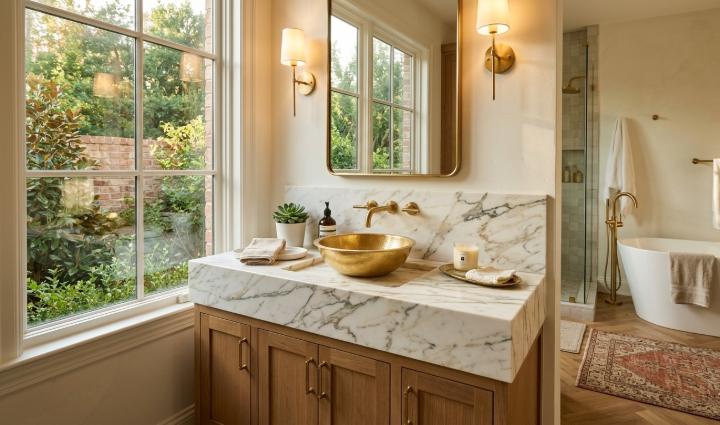
Bathroom Vanity: Where Elegance Meets Practicality
A bathroom vanity presents a unique opportunity to use more delicate, veined stones that might feel overwhelming in a kitchen. Calacatta marble with gold undertones, Verde Guatemala, and book-matched onyx all perform well in vanity applications because moisture exposure is controlled and surface area is smaller.
Smaller surface areas also mean a single premium slab goes further. You can often source matching pieces from one panel for both the vanity top and an accent wall niche. For those exploring statement materials, honed black Marquina marble creates a striking contrast against white fixtures.
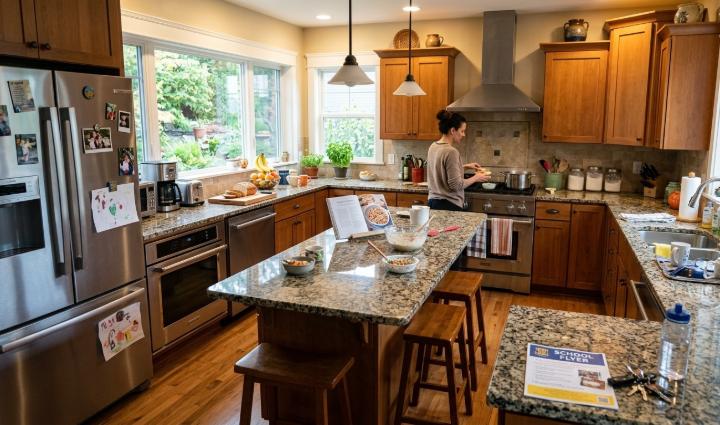
Countertops: Matching Stone to Your Cooking Reality
Countertop selection is where lifestyle honestly meets aesthetics. If your household cooks daily with acidic ingredients like citrus, wine, or vinegar, calcite-based stones such as traditional white marble will etch and require frequent resealing. Granite and quartzite hold up better in these conditions.
The Fine Homebuilding countertop guide recommends conducting an acid sensitivity test on stone samples before committing. Applying a few drops of lemon juice to the surface and watching for a dull reaction tells you everything about the stone's calcite content.
Stone Type Comparison: What to Know Before You Commit
Stone Type | Hardness | Acid Resistance | Best Application | Maintenance Level |
Carrara Marble | Medium | Low | Bathroom Vanity, Low-traffic areas | High |
Calacatta Marble | Medium | Low | Feature walls, Vanity tops | High |
Quartzite | High | Medium-High | Kitchen Island, Countertops | Low-Medium |
Granite | Very High | High | Countertops, Outdoor kitchens | Low |
Soapstone | Medium | Very High | Kitchen sinks, Countertops | Medium |
Dolomite Marble | Medium-High | Medium | Kitchen Island, Vanity | Medium |
Onyx | Low | Very Low | Accent panels, Backlighting | Very High |
Pros and Cons: Classic Marble vs. Quartzite
Classic Marble
Pros:
- Iconic, timeless veining that no engineered stone replicates
- Cool surface temperature ideal for pastry work
- Available in an extensive range of origins and price points
- Develops a sought-after patina over time
Cons:
- Susceptible to etching from acids and citrus
- Requires sealing every 6 to 12 months
- Scratches more readily than granite or quartzite
- Color consistency varies widely between slabs from the same quarry
Quartzite
Pros:
- Harder than granite in most varieties
- Resists etching and staining more effectively than marble
- Offers marble-like aesthetics with greater durability
- Lower long-term maintenance demands
Cons:
- Some varieties are mislabeled at retail level (always request geological certification)
- Heavier than marble, requiring reinforced cabinetry in some cases
- Fewer dramatic veining options than classic marble
How to Select and Source Your Slab: A Step-by-Step Process
Step 1: Define the Room's Functional Demands
Before visiting any showroom, list what the surface will face daily. Heat, moisture, acidic food contact, and foot traffic each narrow your material options considerably.
Step 2: Establish a Realistic Budget Including Fabrication
Stone pricing varies by origin, rarity, and thickness. Always request a total project estimate that includes fabrication, edging, and installation. The material cost is typically 40 to 60 percent of the final project figure.
Step 3: Visit a Showroom to View Full Slabs in Person
Request to see entire slabs, not just samples. Color, movement, and veining shift dramatically across a full panel. Showrooms in Reno, Minden, Fernley, and Sacramento carry rotating inventories, so visiting in person gives you access to pieces that may not appear online.
Step 4: Request a Sealer Recommendation and Maintenance Schedule
Every stone requires specific care. Ask your supplier to recommend a compatible penetrating sealer and confirm how frequently reapplication is needed. Refer to Bob Vila's granite cleaning guide for a clear overview of best practices across stone types.
Step 5: Confirm Lead Times and Reserve Your Slab
Premium slabs sell quickly. Once you identify the right panel, place a hold immediately. Fabrication timelines range from two to six weeks depending on complexity, so factor this into your renovation schedule.
Finding a Trusted Source for Your Stone Project
The quality of your stone experience depends as much on the supplier as on the material itself. Working with a knowledgeable team reduces costly mistakes, delays, and the risk of purchasing mislabeled stone.
A design-forward stone resource with strong inventory and transparent sourcing allows you to see the full picture before committing. Look for suppliers who offer physical locations where you can view slabs at scale, access to trade pricing, and staff who ask the right questions about your project before making recommendations.
Those working on professional or multi-unit projects benefit from applying for a trade account to access priority pricing and early access to new inventory arrivals. Professionals who shop local also reduce freight damage risk and shorten lead times considerably.
If you are early in the planning process, requesting physical samples to test in your actual lighting conditions is one of the most underrated steps in the selection process. What reads as warm ivory on a screen can appear distinctly grey under recessed kitchen lighting.
Conclusion
The right natural stone slab does not just finish a surface. It establishes the character of an entire room. Every veining pattern, every quarry origin, and every finish type communicates something about how the space will feel and function for years ahead.
Matching stone to your lifestyle, your light conditions, and your design intent separates a regrettable impulse purchase from a surface you will appreciate every single day. Natural stone slabs reward careful selection with longevity, beauty, and a kind of presence that only geology can produce.
Whether you are finalizing plans for a kitchen island, a bathroom vanity, or a complete countertops overhaul, take the time to view slabs in person, ask hard questions, and work with a team that prioritizes your outcome over a quick transaction.
Explore the full collection and connect with knowledgeable staff at Nova Tile and Stone to begin your selection with confidence.
Frequently Asked Questions
What is the most durable stone for kitchen countertops?
Granite and quartzite consistently rank as the most durable options for kitchen countertops. Both resist heat, scratching, and most staining agents when properly sealed. Quartzite is often preferred for spaces that combine heavy cooking use with a desire for marble-like aesthetics.
How do I know if a slab labeled as quartzite is genuine?
Request a geological certification or hardness verification from your supplier. Genuine quartzite registers a 7 or higher on the Mohs hardness scale. Marble mislabeled as quartzite will show etching when exposed to a mild acid test, which genuine quartzite resists.
Can marble work on a kitchen island in a household that cooks daily?
Yes, but with realistic expectations. Honed marble develops a patina from daily use that many homeowners appreciate aesthetically. If you prefer a pristine surface, consider dolomite marble or quartzite, which offer similar veining with significantly better acid resistance.
How often does a natural stone surface need to be resealed?
Sealing frequency depends on the stone porosity and the sealer used. Most granite surfaces require resealing every one to two years. Marble and limestone benefit from resealing every six to twelve months in high-use areas. Perform the water bead test periodically: if water absorbs rather than beads, it is time to reseal.
Is it worth visiting a showroom rather than ordering stone online?
Without question. Photography compresses color, scale, and the dimensional movement of veining. Viewing a full slab under showroom lighting, and ideally under conditions similar to your renovation space, eliminates surprises at installation. The investment in a showroom visit consistently saves money and disappointment downstream.