What is a Calacatta marble slab? Calacatta marble is a premium natural stone quarried in the Apuan Mountains near Carrara, Italy. It is defined by a bright white base and bold, dramatic veining in gold, taupe, brown, or deep gray. Because it is extracted from a geographically limited region in low volumes, it ranks among the most sought-after materials in residential and commercial interior design.
Key facts at a glance:
| Feature | Detail |
|---|---|
| Defining feature | Bright white background with bold, contrasting veins |
| Common varieties | Calacatta Gold, Borghini, Viola, Michelangelo |
| Best applications | Vanities, shower surrounds, fireplace walls, accent walls, floors |
| Hardness | 3 to 5 on the Mohs scale |
| Finish options | Polished, honed, leathered |
| Primary consideration | Porous and acid-sensitive; requires periodic sealing |
Calacatta marble is frequently compared to Carrara marble, but the two are distinct. Carrara features a softer gray background and more subtle patterning. Calacatta presents a brighter white field with more pronounced, contrasting veining, originating from a smaller, more restricted quarrying area, which directly contributes to its premium standing.
Whether you are evaluating it for a bathroom vanity, a full-height shower wall, or a statement fireplace surround, this guide covers everything you need to know: the main varieties, physical properties, finish options, complementary materials, and how to approach the selection process confidently.
What Makes Calacatta Marble Distinct
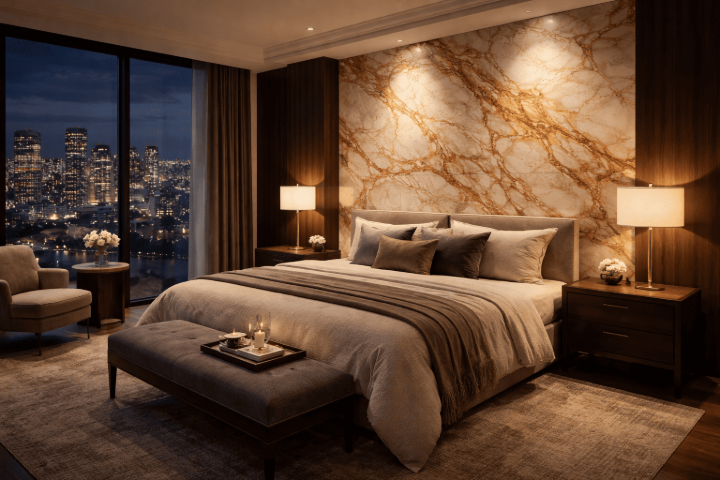
Calacatta marble is quarried in the Apuan Mountains near Carrara, Italy. It is frequently confused with Carrara marble, but the two materials are different. Carrara tends to feature a softer gray background with subtle, feathery patterning. Calacatta, by contrast, presents a brighter, more luminous white field paired with dramatic, contrasting veins that range from deep gray and brown to rich amber gold.
Because genuine Calacatta originates from a limited geographic area and in relatively low extraction volumes, it sits firmly in the premium tier of natural stone. Every piece is unique; no two finished installations are ever identical. That individuality is precisely why designers and homeowners seek it out for spaces that demand authentic character. You can explore our curated selection by visiting our natural stone slab inventory to compare options before making any decisions.
According to This Old House, the material chosen for a stone surface affects not just the visual result but how it performs over years of daily use, which is why understanding the full profile of any natural stone before purchasing matters enormously.
Recognizing the Main Varieties
Not every Calacatta stone looks alike. Several recognized varieties exist, each with its own personality and visual weight.
Calacatta Gold is a widely used commercial name that covers several varieties sharing a common characteristic: a brilliant white background with thick veining in honey-gray or gold-toned hues. Rather than referring to a single quarry-specific variety, the name broadly describes Calacatta stones where warm gold or taupe tones dominate the vein pattern.
Calacatta Borghini is defined by a clean white background with bold, deep gray veining accompanied by occasional feathered lines and subtle hints of gold. The combination of open veins and intricate brecciated patterns makes it one of the most visually striking varieties available, and a preferred choice for high-end feature walls and statement fireplace surrounds.
Calacatta Viola stands apart from other varieties through its distinctive dark blue to purple veining, sometimes accented with rusty gold tones across a white base. It is among the more dramatic and unusual options within the Calacatta family, suited to spaces where an unexpected material choice is intentional.
Calacatta Michelangelo has a quieter overall presence, with thinner gray veining and a clean white base. It works well in spaces where a softer visual tone is preferred, without sacrificing the prestige of genuine Italian marble.
Where This Stone Performs Best
Bathroom Vanities and Shower Surrounds
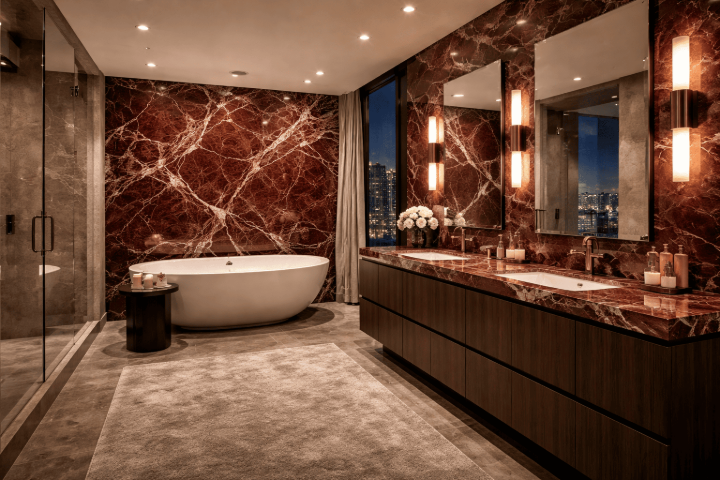
In bathrooms, Calacatta marble creates a spa-like environment that few other materials can replicate. Full-height shower walls clad in polished stone panels eliminate grout lines and create an uninterrupted visual flow from floor to ceiling. Paired with a coordinating vanity top, the overall effect feels cohesive and considered.
Bathtub ledges, floating shelves, and floor panels can all be sourced from the same block to create a fully unified bathroom environment, giving the space an architectural quality that individual tiles simply cannot replicate. For shower floors and other wet surfaces, a honed or textured finish is preferred over polished, as polished surfaces may be more slippery when wet. If you are unsure which finish suits your specific bathroom layout, our free design consultation is a practical starting point.
Fireplace Surrounds and Accent Walls
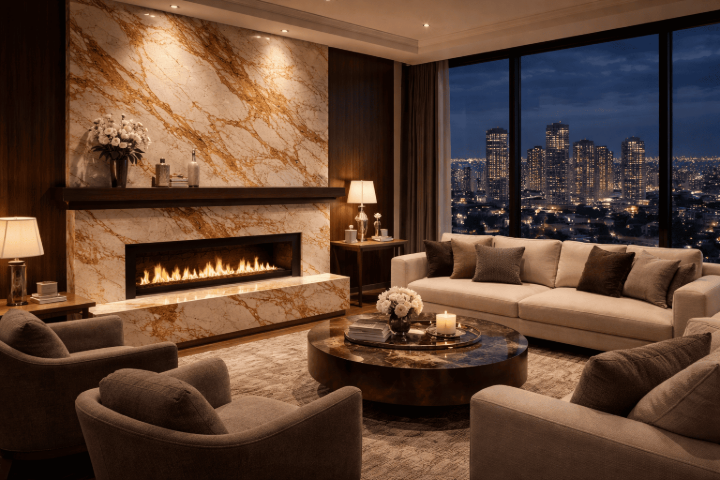
Calacatta marble has longstanding ties to architectural grandeur, and fireplace surrounds remain one of its most classical applications. The visual weight of this material is well suited to mantels and hearth panels where presence matters as much as beauty. As a large-format accent wall in a living room or primary bedroom, a single stone panel introduces depth and quiet drama without relying on color complexity.
Flooring
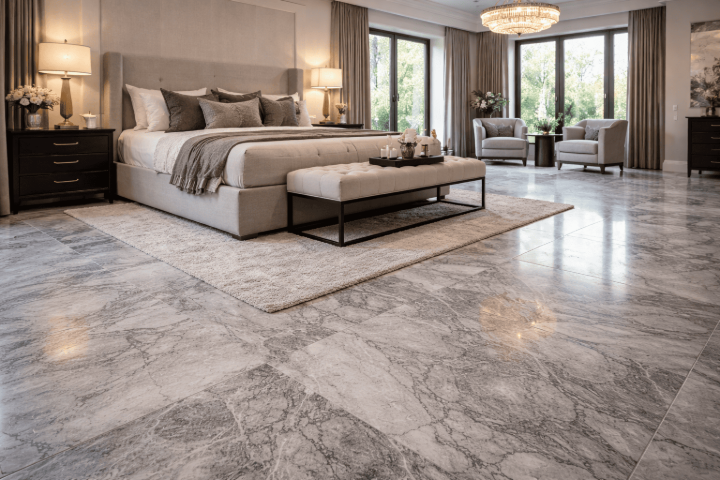
Large-format Calacatta marble flooring creates a seamless, flowing aesthetic in entryways, living rooms, and hallways. The material is suitable for indoor floor applications, but the right finish matters for both performance and safety. Polished finishes offer maximum visual impact, but a honed or textured finish provides better slip resistance and is the more practical choice for high-traffic floor areas.
Physical Properties and Performance
Marble is a metamorphic stone formed under immense heat and pressure over millions of years. That geological process gives it a crystalline structure and distinctive movement through the material, but it also means certain physical characteristics require careful consideration before and after installation.
Marble rates between 3 and 5 on the Mohs hardness scale, placing it softer than granite or quartzite. It is also porous and reactive to acidic substances, including citrus juice, vinegar, and many common cleaning agents. The surface is built for lasting use, but proper care is essential to preserving its appearance over time.
Heat: The material can handle normal ambient conditions, but direct contact with very hot cookware should be avoided. Trivets or heat pads are always recommended when placing warm items on any stone surface.
Scratch resistance: The surface resists everyday wear, but cutting directly on it is not recommended. A cutting board should always be used to protect the finish.
Maintenance: The slab is easy to maintain, but abrasive cleaners and harsh chemicals should always be avoided. Periodic sealing and pH-neutral cleaning products help preserve the stone's integrity, but spills should still be cleaned promptly to prevent staining or etching.
Understanding how to select the ideal stone finish from the start helps match the right surface treatment to your specific lifestyle and usage needs, minimizing maintenance challenges over time. Our team across our showroom locations can walk you through how each finish performs in real conditions before you commit.
Finish Options and How They Change the Look
The finish applied to a Calacatta stone surface affects both its appearance and day-to-day behavior in meaningful ways.
A polished finish amplifies the depth of the veining and produces a mirror-like reflectivity. It is a popular choice for vanity tops and wall cladding where visual impact is the priority, but polished surfaces may be more slippery when wet and are better suited to dry or low-traffic areas.
A honed finish creates a matte, smooth surface with a softer, more understated quality. It tends to be more forgiving of fingerprints and light scuffs in regular use, and offers better slip resistance than polished, making it a practical consideration for floors and wet area applications.
A leathered finish introduces slight surface texture and a low sheen. It helps conceal smudges, but care instructions should still be followed consistently to maintain the finish over time. It offers a more tactile experience suited to statement surfaces where both texture and performance matter.
Choosing between these finishes involves weighing aesthetics against practical needs. Each option interacts differently with veining depth, ambient lighting, and the frequency of daily contact, so scheduling a showroom visit to review samples in your actual context before deciding is always worthwhile.
Pairing With Complementary Materials
Calacatta marble works best when it anchors a space rather than competing with busy surroundings. Solid-color cabinetry in warm white, muted sage, or deep navy allows the stone to function as the primary focal point without visual interference.
For flooring that complements rather than clashes, large-format porcelain tile in a marble-inspired finish creates a smooth visual transition between stone surfaces and the floor. Pairing natural stone with coordinated tile across walls and floors ties a room together in a way that feels intentional and considered rather than assembled from separate decisions.
Hardware choices also play a significant role. Brushed brass and unlacquered bronze echo the warm tones found in Calacatta Gold varieties, while matte black fixtures provide a sharper, more contemporary contrast against the stone's white field.
Selecting the Right Stone Surface
Choosing a natural stone piece is fundamentally different from selecting tile. Because each panel is one of a kind, viewing the actual material you intend to use is essential. A vein pattern that reads beautifully in a photograph may feel entirely different at full scale in your specific room.
Our showroom locations in Reno, Minden, Sacramento, and Fernley allow you to view full-size options in person before any decisions are finalized. Bringing cabinet door samples, flooring references, or hardware pieces to your visit enables a far more accurate visual assessment of how the materials will work together.
For trade professionals working on client projects, our trade account program provides access to custom pricing, complimentary samples, and dedicated expert support tailored to professional workflows. Homeowners can also submit a slab quote request to begin the planning process.
Conclusion
Calacatta marble occupies a rare position among interior materials: visually stunning, historically significant, and versatile enough to anchor everything from a bathroom suite to an ornate fireplace wall. The right variety, finish, and material pairing transforms a room in ways that few other surfaces can replicate, but each application should be evaluated individually to ensure the stone and finish selected are the right match for the space.
Whether you are drawn to the bold drama of Calacatta Borghini or the quieter refinement of Calacatta Michelangelo, approaching the selection process with expert guidance ensures you land on a stone surface that fits both your space and your lifestyle. Nova Tile and Stone carries a curated natural stone inventory alongside complementary tile and flooring collections designed to help you bring a complete, cohesive vision to life.
Frequently Asked Questions
What is the difference between Calacatta and Carrara marble?
Calacatta features a brighter white base with bold, dramatic veining that typically appears in gold, brown, taupe, or deep gray. Carrara presents a softer gray background with more delicate, subtle patterning. Calacatta is also extracted from a more limited area within the Apuan Mountains, which contributes to its higher rarity and premium standing in the natural stone market.
Is Calacatta marble suitable for bathroom vanities and wall cladding?
Yes. Bathroom vanities, shower wall surrounds, and accent walls are among the most refined applications for this material. The stone performs well in indoor humid spaces, but proper sealing is still needed to protect against moisture and staining over time. For wet floor areas such as shower floors, a honed or textured finish is recommended over polished, as polished surfaces may be more slippery when wet.
How do I decide between a polished and honed finish?
A polished finish enhances the visual depth of the veining and produces a reflective surface well suited to walls and vanity tops in dry areas. A honed finish delivers a softer, matte look that offers better slip resistance and tends to be more forgiving in environments with heavy daily activity. The decision comes down to your design intent, the specific application, and the level of upkeep you are comfortable managing over the long term.
What care does Calacatta marble require?
The material is easy to maintain, but abrasive cleaners and harsh chemicals should always be avoided. Periodic sealing helps protect the surface against staining and etching, but spills, particularly acidic substances like citrus juice or vinegar, should still be cleaned up promptly. The surface is built for lasting use, but care instructions should always be followed to preserve its appearance over time.
What is bookmatching and does it work with Calacatta marble?
Bookmatching is a technique where two consecutive panels from the same block are opened like the pages of a book, producing a mirrored, symmetrical vein pattern across the joined surface. It works exceptionally well with Calacatta varieties that carry pronounced veining. For fireplace walls, feature walls, and statement shower surrounds, the visual outcome is difficult to achieve with any other material or method.