Bathroom tile and countertop selection in Minden homes comes down to two surfaces that need to work together: the tile on your walls, floors, and shower, and the natural stone or engineered surface on your vanity. Porcelain tile handles moisture well in wet areas, but finish and format selection matter. Granite, quartzite, and marble each bring different visual character and maintenance requirements to a bathroom vanity. Getting the pairing right, in terms of tone, finish contrast, and pattern hierarchy, is what separates a bathroom that looks considered from one that looks assembled.
This guide covers the tile materials and countertop options that tend to perform well in Minden and the broader Douglas County area, along with practical guidance on how to pair the two surfaces in a finished space.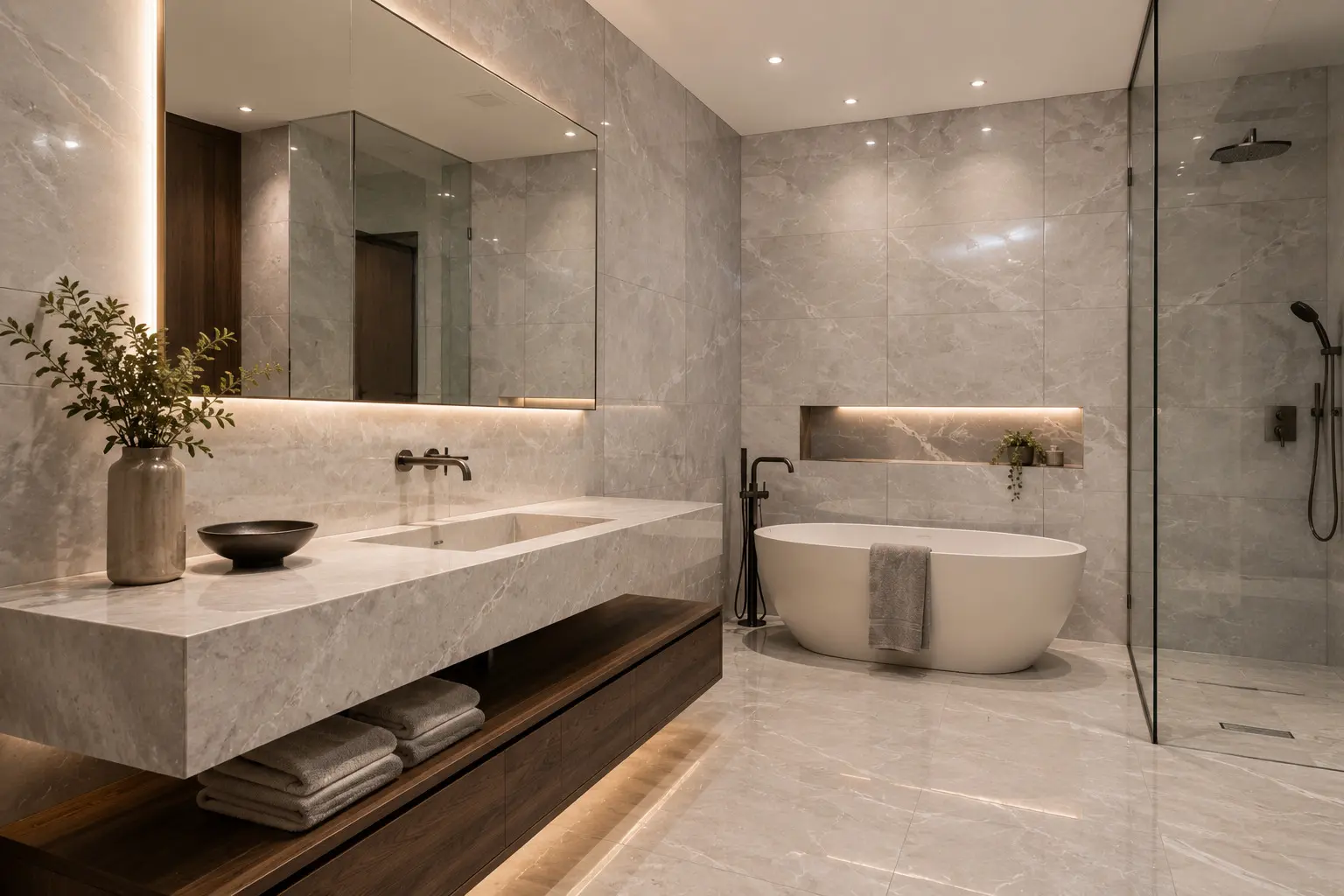
How Tile and Countertop Work Together in a Bathroom
One of the most common mistakes in bathroom design is choosing tile and countertop surfaces independently of each other. A vanity top with strong veining and warm cream tones will look disconnected next to cool-gray wall tile unless the two share at least one visual anchor, whether that is a common undertone, a finish that complements the other, or a format that balances rather than competes.
The relationship between the two surfaces is partly about color and partly about texture. A polished granite or quartzite countertop alongside a matte porcelain wall tile creates a contrast that reads as intentional. A honed stone surface next to a satin-finish ceramic tile can feel cohesive in a quieter, more understated way. Neither approach is universally better. What matters is that the two surfaces are selected with each other in mind, rather than treated as separate decisions.
For Minden homeowners planning a full bathroom renovation, reviewing countertop slabs and tile options at the same time, in the same light, makes a meaningful difference in how the finished room looks.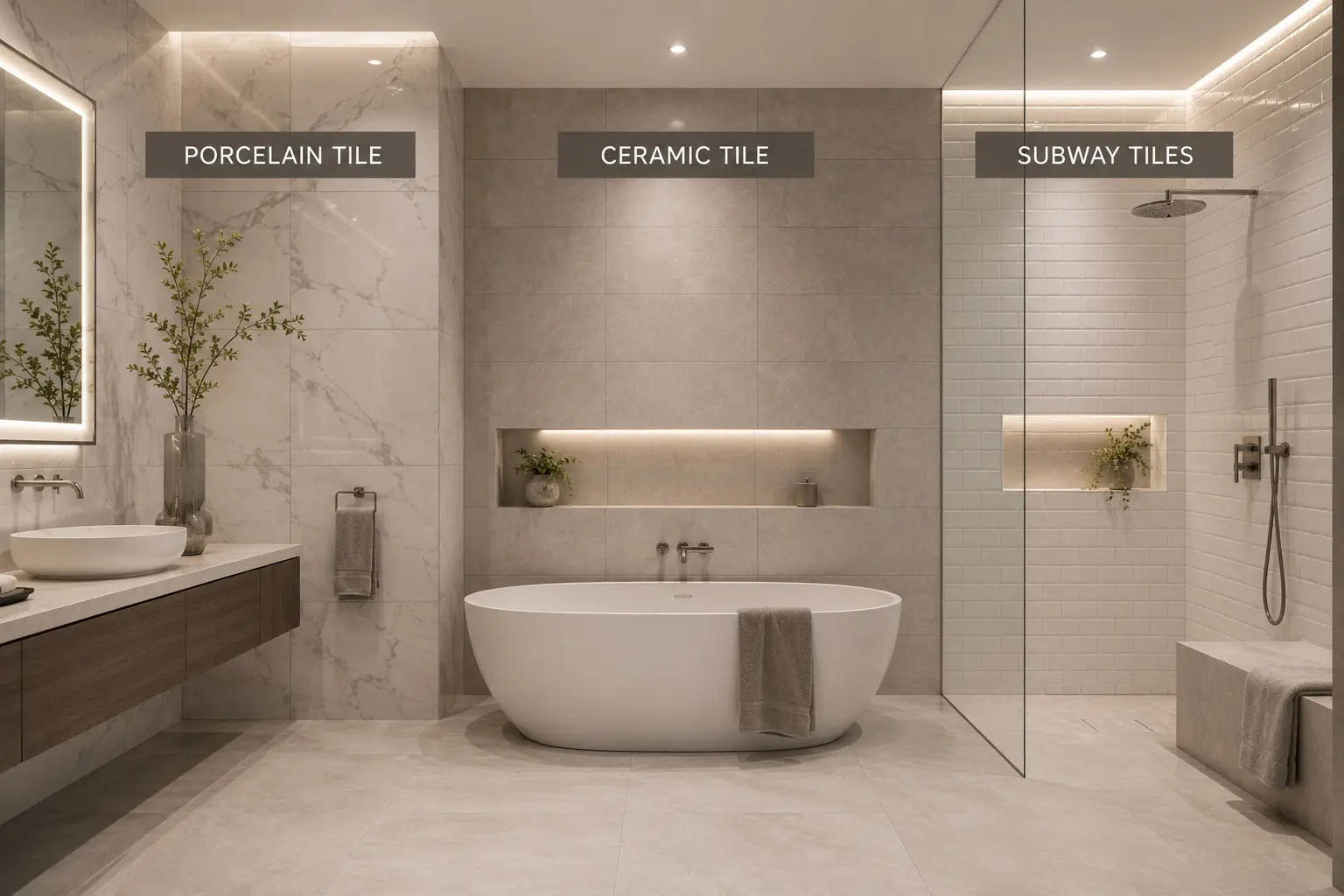
Tile Options for Minden Bathrooms: Walls, Floors, and Showers
Porcelain Tile
Porcelain tile for bathroom surfaces is one of the most widely used options for good reason. It is a dense material with low water absorption, which makes it well suited to wet areas like shower surrounds, floors, and vanity walls. The surface is moisture resistant, but grout joints still benefit from proper sealing to prevent water from working behind the installation over time.
Finish selection matters significantly in a bathroom. For floors, a matte or textured surface tends to provide better grip underfoot, particularly in spaces that get wet regularly. For walls, a polished or satin finish reflects light and is generally easier to clean. Porcelain offers broad design versatility, with surfaces that can reference natural stone varieties including granite, marble, and limestone. This makes it a practical choice for homeowners who want the look of natural stone in areas where the maintenance demands of actual stone may not be ideal.
Large-format porcelain, such as 12x24 or larger, can reduce the number of visible grout lines on walls and floors, which tends to make a room feel less busy and easier to maintain. Smaller mosaic formats work particularly well on shower floors and curved surfaces because they follow drainage slopes more naturally.
Ceramic Tile
Ceramic tile is a versatile option for bathroom walls and lower-traffic areas. Ceramic is more porous than porcelain, which means it absorbs liquids more readily, and as a result may require more frequent cleaning. For this reason, it is generally better suited to wall applications in a bathroom rather than floor areas that see daily water exposure. In a shower, ceramic wall tile can work well when properly sealed and maintained.
The range of colors, formats, and surface patterns available in ceramic makes it a flexible choice for bathrooms where the design direction calls for something more expressive or decorative. For a broader look at how different tile materials perform across bathroom floors and walls, HGTV's bathroom flooring and tile selection guidance is a useful reference point.
Subway Tile
Subway tile for bathroom walls remains one of the most consistently popular choices across design styles, from traditional to contemporary. The elongated rectangular format can be laid in a classic horizontal stack, a vertical orientation to draw the eye upward, or a herringbone pattern for a more layered visual effect. In a smaller Minden bathroom, running subway tile vertically can make the ceiling feel higher without any structural change to the room.
The range of subway tile styles available means there is significant room for variation within the format. A glossy white subway tile reads differently from a handmade-look ceramic in a warm ivory tone, even though both share the same basic dimensions. Grout color also plays a large role in how the finished wall reads, with contrasting grout emphasizing the grid and matching grout creating a more seamless surface.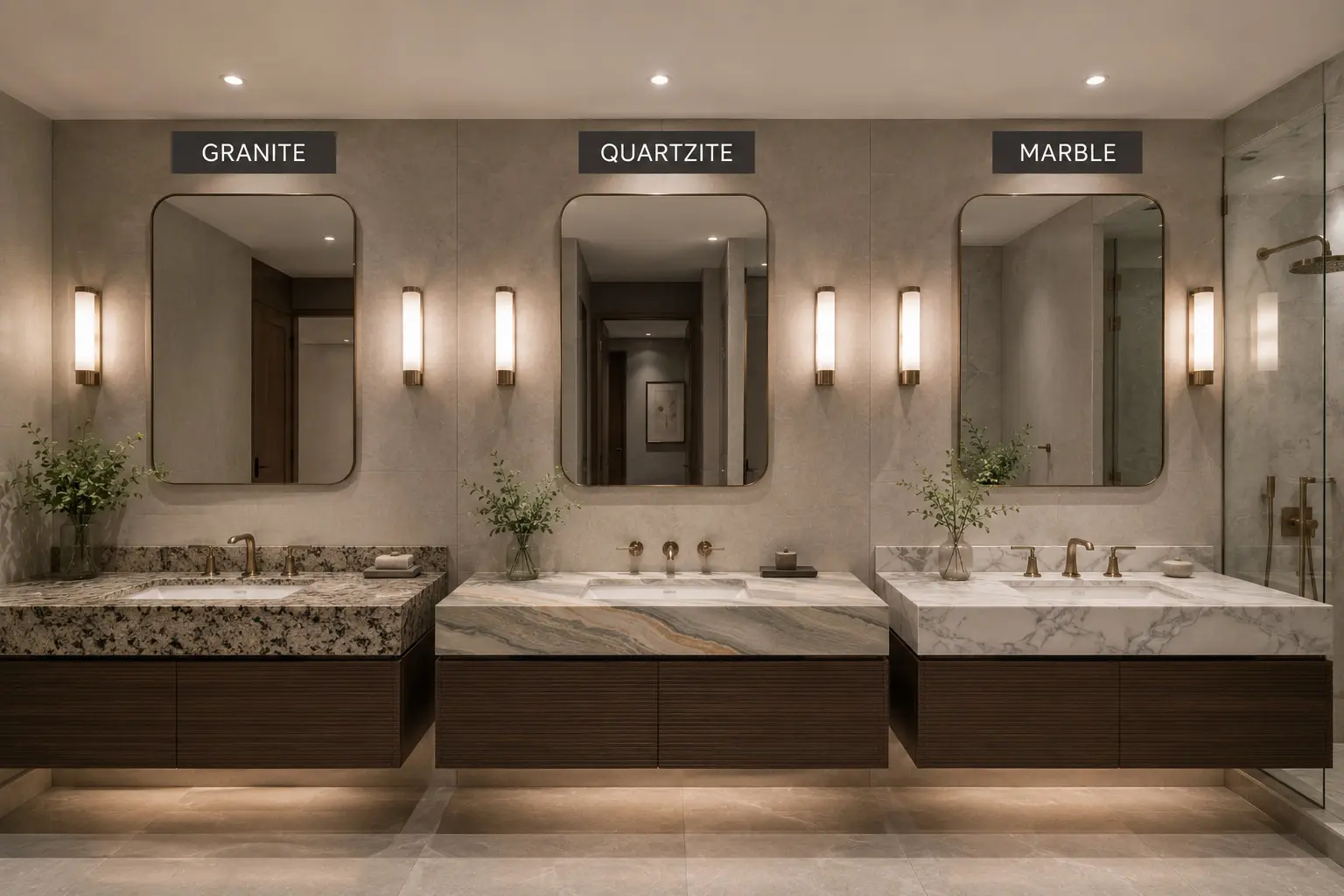
Countertop Materials for Bathroom Vanities
Granite
Granite is a natural igneous stone known for its density and varied mineral character. In a bathroom vanity application, it performs well in humid conditions, but standing water should not be left on the surface for extended periods. The material is stain resistant, but spills should still be cleaned promptly, particularly around natural fissures or in areas where the sealer has worn.
Each granite slab carries its own combination of tone, mineral flecking, and movement, which means no two vanity tops are likely to look identical. For Minden homes with a more traditional or rustic design direction, warmer granite tones with gold and rust mineral patterns can complement wood cabinetry well. For cleaner, more contemporary bathrooms, gray and white granites with subtle movement tend to pair naturally with matte porcelain wall tile or large-format ceramic.
According to the Natural Stone Institute's guidance on stone care, understanding your stone's geological classification is an important first step in choosing the right cleaning products and setting realistic expectations for long-term maintenance.
Quartzite
Quartzite is a metamorphic natural stone that tends to carry a softer, more fluid visual character than granite, often featuring veining patterns that reference marble in their movement. It is a durable surface, but proper care will help preserve its appearance over time. The material generally handles daily bathroom use well, but each application should be evaluated on its own because porosity varies between quartzite varieties.
For bathroom vanities, quartzite pairs particularly well with porcelain tiles in neutral tones, and browsing tile by type is a useful starting point when narrowing down options. A white or soft gray quartzite with subtle veining alongside a large-format matte porcelain wall tile creates a cohesive, spa-like result that works well in both primary bathrooms and guest baths. Warmer quartzite varieties with gold or bronze tones can complement brushed brass fixtures and warm-toned ceramic subway tile for a more layered, textured look.
Because quartzite is a natural stone, guidance on using natural stone in shower and bathroom spaces is worth reviewing before finalizing a material choice, particularly in bathrooms that see daily use. A penetrating sealer applied at regular intervals helps protect the surface from moisture absorption and staining.
Marble
Marble is a calcareous stone, meaning it is composed primarily of calcium carbonate and is more reactive to acidic substances than granite or quartzite. In a bathroom setting, it can perform well, but spills should be cleaned promptly and acidic products should be kept off the surface. The material benefits from sealing to reduce moisture absorption, but regular cleaning is still recommended, and sealing should be maintained on a consistent schedule.
The visual appeal of marble in a bathroom vanity is difficult to replicate with engineered surfaces. The soft, natural veining and luminous quality of the stone bring a level of refinement that pairs well with polished or satin-finish ceramic wall tile, particularly in lighter tones. For Minden homes with a more elevated design direction, marble countertops paired with white or off-white subway tile make a combination that has genuine staying power.
Pairing Tile and Countertop: What Works in a Bathroom
Selecting tile and countertop materials that work well together comes down to a few consistent principles: tone, pattern hierarchy, and finish.
When the countertop carries strong veining or dramatic mineral movement, the wall tile benefits from a quieter character. A bold quartzite vanity top with sweeping veins tends to read better alongside a solid-tone porcelain than next to a patterned mosaic that competes for visual attention. The reverse holds equally. A simple granite in a mid-gray works well next to a more expressive tile format or a patterned subway tile layout on the shower wall.
Finish contrast adds depth without introducing new color. A polished stone countertop alongside a matte wall tile creates that contrast naturally. A honed stone surface next to a textured ceramic builds a softer, more organic result. Both read well in Minden bathrooms depending on the design direction.
For homeowners working through these decisions, a free design consultation provides a chance to review actual materials side by side, compare how surfaces read in real lighting, and confirm the combination before committing. Nova Tile and Stone's Minden showroom carries a broad selection of tile and natural stone slab options specifically for this kind of comparison.
Conclusion
Bathroom renovation decisions in Minden and the wider Carson Valley area benefit from a clear-eyed look at both function and form. The materials that perform well in this region's climate are the same ones that tend to hold their visual quality over time: properly specified porcelain tile, dense natural stone countertops, and surfaces selected with each other in mind rather than independently. For a broad look at everything available, the full tile and stone collection is a useful starting point before visiting in person.
The relationship between wall tile and vanity countertop is one of the most defining elements of a finished bathroom. When those two surfaces are chosen together, with shared tones, complementary finishes, and a clear sense of which one leads visually, the result tends to feel considered and cohesive rather than assembled from separate decisions. Exploring options by tile size is a practical first step in narrowing down what works best for your space.
Frequently Asked Questions
Porcelain is a widely recommended option for shower walls and floors because of its low water absorption rate and dense composition. The surface performs well in humid conditions, but grout joints should be sealed after installation and maintained over time. For shower floors specifically, a matte or textured finish tends to provide better grip underfoot than a polished surface.
Quartzite can work well as a bathroom vanity countertop. It is a durable natural stone, but proper care will help preserve its appearance over time. Sealing is recommended, particularly for more porous varieties, and spills should be cleaned promptly to reduce the risk of staining. The specific porosity of the slab matters, so discussing the material with a stone specialist before selecting is worthwhile.
A useful starting point is to let the surface with the most visual complexity take the lead. If the countertop carries strong veining or pronounced mineral movement, a quieter tile format tends to complement it better than a pattern that competes. Finish contrast, such as a polished stone surface alongside a matte tile, can also add depth without introducing additional color variation.
Larger format tiles, such as 12x24, can reduce the number of visible grout lines and make a compact bathroom feel less segmented. Smaller mosaic formats work well in specific areas like shower floors where they follow drainage slopes more easily. The right choice depends on the specific dimensions of the room and how the tile is oriented.
Marble can be a practical choice when selected thoughtfully and maintained consistently. In a bathroom setting, it benefits from regular sealing and prompt cleanup of spills, particularly acidic substances. The material performs well in humid environments when properly cared for, but each application should be considered individually based on how the space is used and how much maintenance the homeowner is prepared to commit to.