The stones we recommend for a house facade that faces both strong summer sun and winter snow are granite, quartzite, and porcelain. All three are suited to outdoor walls, and in the Reno area we keep travertine for covered entries.
We choose facade stone one wall at a time, then pick the color. In the Reno area, including Minden and Fernley, we start with the north wall, which holds snow and gets little direct winter sun. In Sacramento, we start with the west wall, which takes the afternoon sun.
This guide covers which stone fits each side of the house, how absorption relates to freeze-thaw, and when a partial facade makes more sense than a full wrap.
What Our Region’s Weather Asks of a Stone Wall
The National Weather Service climate record for Reno lists an official low of -17°F and a high of 108°F. The same record shows about 21 inches of snow in an average season, so a facade in the Reno area has to be planned for snow.
That range matters because, as Natural Stone Institute course material notes, exterior stone may be exposed to freeze-thaw cycles and to thermal expansion and contraction.
Sacramento flips the problem. The city sees about 23 days of 100-degree heat in a typical year, and it logged at least 45 triple-digit days in 2024, a record. In the valley, we treat sun and heat as the main test for a facade.
That gap is why a stone that suits a Sacramento ranch home is not automatically right for a two-story in Reno. We build a different shortlist for each, and the sections below show how.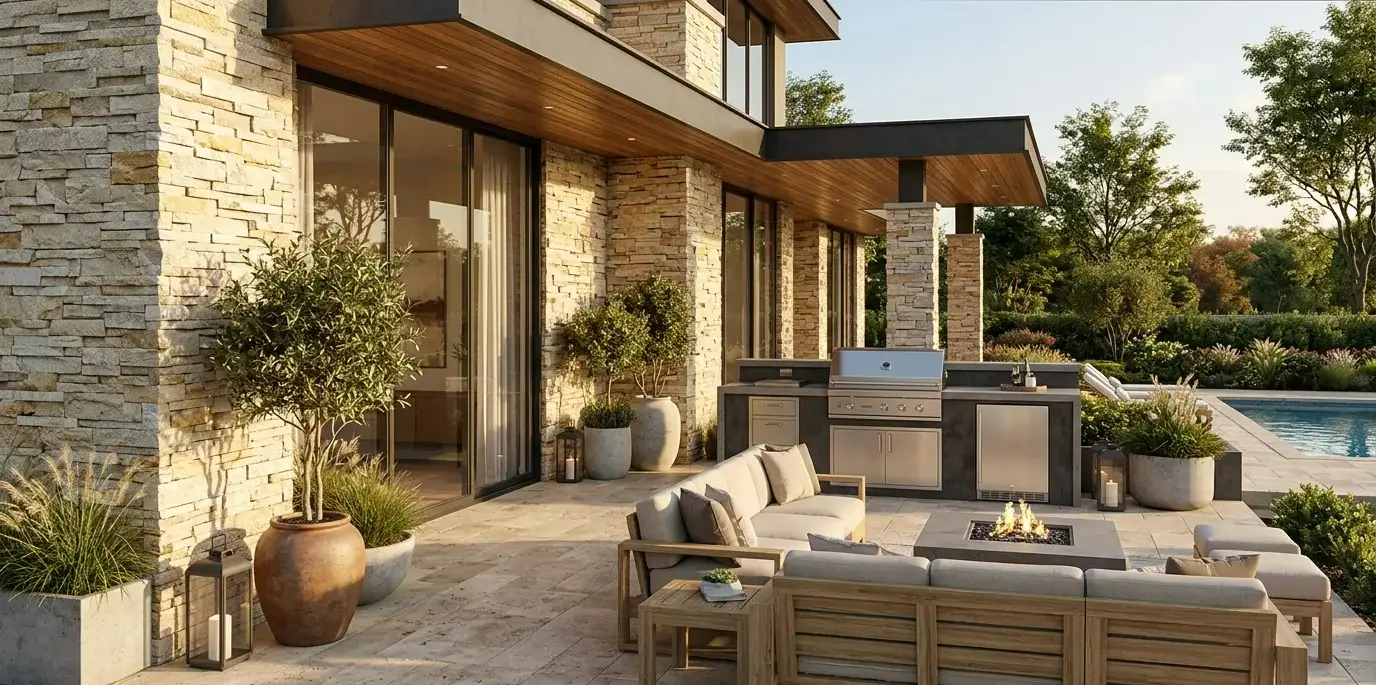
Read Each Elevation Before You Pick a Stone
Each side of a house, which builders call an elevation, gets a different amount of sun.
West and south walls are the ones to watch in summer. The U.S. Department of Energy’s home landscaping guide recommends shading south and west walls from direct summer sun where overheating is a problem, and it singles out the west side for afternoon sun.
North walls are the opposite case, with little direct winter sun, while east walls get morning sun and afternoon shade.
Before choosing stone, note which sides of your house get late-afternoon sun in summer and which stay shaded on winter mornings. Our stone facade placement ideas cover common spots such as entries, columns, and chimneys, and your exposure notes tell you which of those spots need the toughest material.
Which Stone Is Best for a West-Facing Wall?
For a west-facing wall, we recommend granite, quartzite, or porcelain. Granite and porcelain are UV resistant, but performance may vary by color and finish. Quartzite suits outdoor walls, and its whites, creams, and silvers are exactly the lighter colors we favor on a sun-facing wall.
Afternoon sun shapes the choice in two ways. A darker stone absorbs more sun and gets hotter to the touch, which matters on a wall beside a patio where people sit in the evening. A polished face reflects more light, so it can throw glare straight into that seating area.
That is why, on a west wall near outdoor seating, we lean toward a lighter stone in a leathered or honed finish.
Granite suits every exterior use in this guide, from the facade itself to the outdoor kitchen beside it, which makes it our easiest pick for one stone across the whole house. It comes in polished, honed, leathered, and specialty finishes, so the finish can match each wall.
Quartzite works especially well on a modern exterior with clean lines and minimal trim. Our live slab inventory shows quartzite and granite side by side, so you can compare tones before you visit.
Porcelain comes in looks such as granite, quartzite, travertine, slate, limestone, and concrete. You can browse our porcelain and natural stone selection to see what is available.
Travertine is where we draw a line in snow country. It is suitable for outdoor use, but its natural pores and voids can hold water, which is the freeze-thaw risk covered below, so in the Reno area we keep it to covered entries where it stays drier. Sacramento rarely freezes, so travertine can work on an open wall there, though granite, quartzite, and porcelain remain our first picks for a west wall.
Marble and dolomite are not on our list for any exterior wall. Both are carbonate stones, and acidic rain can etch and dull the finish over time, so we save ours for interior features such as a fireplace.
Here is how we place each stone on a facade, wall by wall.
Stone | Where we use it on a facade | Finish we lean toward |
Granite | Any wall, including west and north | Leathered or honed |
Quartzite | Any wall; lighter colors on sun-facing walls | Leathered or honed |
Porcelain | Any wall, including walls that collect snow | Honed (matte) |
Travertine | Covered entries in the Reno area; open walls are an option in Sacramento | Honed |
Marble and dolomite | Interior features, not exterior walls | Any, indoors |
How Does Freeze-Thaw Affect a Stone Facade?
Freeze-thaw affects a facade through absorbed water. The same course material notes that a stone that readily absorbs water may be more susceptible to damage in freezing weather, and it points to absorption rate as a possible indicator of freeze-thaw performance. That is why we use absorption as the first filter for any north-facing or snow-exposed wall.
Granite and quartzite have low absorption when properly selected, sealed, and maintained, which puts both at the top of our list for Reno-area north walls. Both are built for lasting use, but each application should be evaluated individually, because natural stone varies from one block to the next.
Porcelain is held to a measurable standard. Tile can only be certified as porcelain at 0.5 percent water absorption or less, which is why we shortlist it for walls that collect drifting snow. It is moisture resistant, but standing water at the base of a wall should not be left for long periods.
Whichever stone you choose, flashing and drainage behind it matter as much as the stone itself on a cold wall.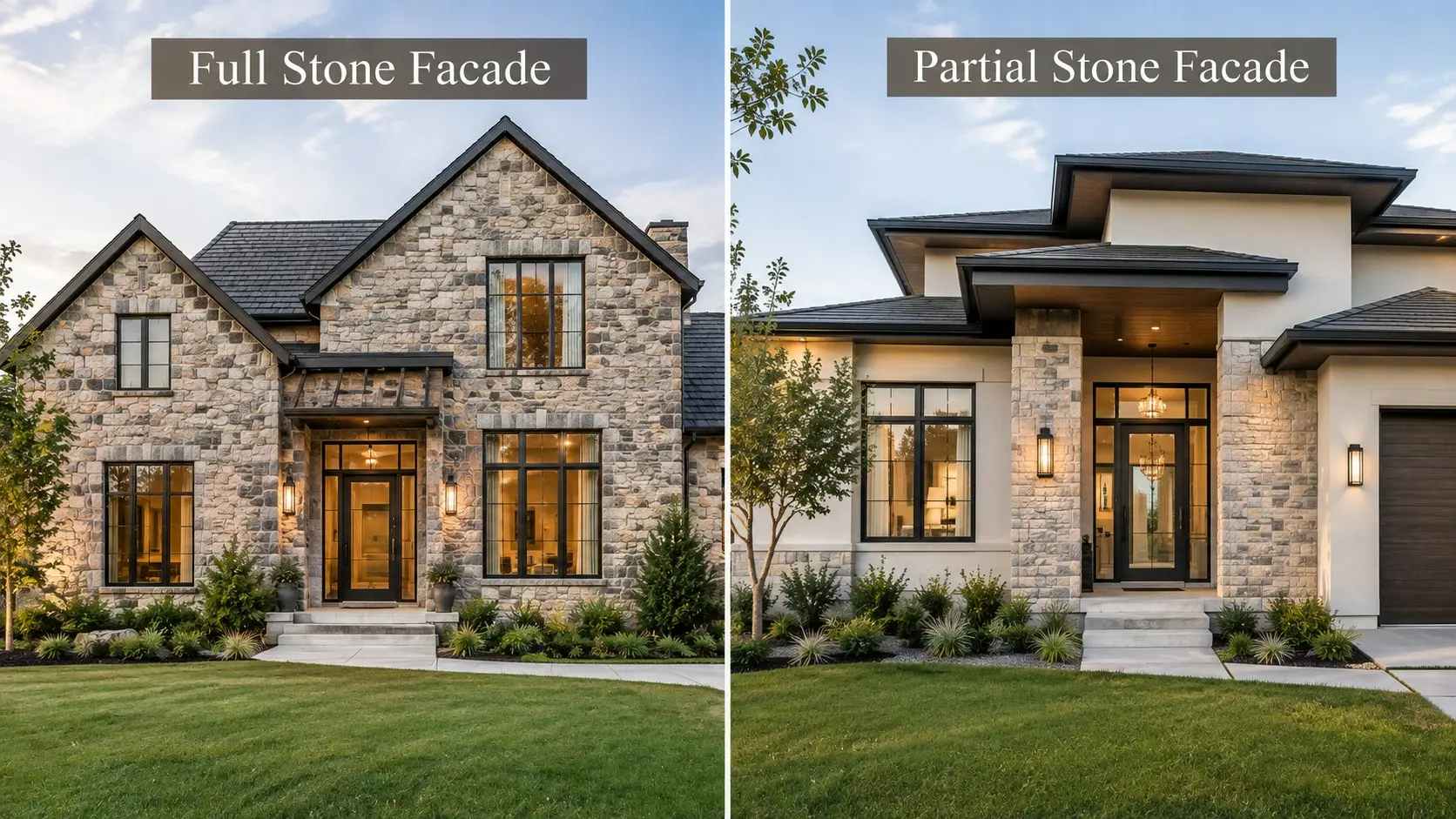
Full or Partial Stone Facade: Which Is Right for Your Home?
A full facade asks one stone to handle every exposure at once, from the hot west side to the colder north side. In our region, that makes a full wrap a granite, quartzite, or porcelain decision almost by default.
A partial facade gives you more room to choose. You can put the toughest stone where weather is harshest and save travertine for a deep covered entry, and our overview of full and partial stone facades walks through the layout options.
Picture a Reno home whose street-facing front looks west, with a shaded north side facing the neighbors. Stone on the entry and front gable, in granite or quartzite, puts the material where it is seen most and where the afternoon sun hits hardest. The north side stays in siding, so the stone skips the snowiest wall entirely.
A Sacramento version looks different. On a single-story home with a west-facing garage, stone on the garage face and entry columns in light quartzite or porcelain is a good fit for that sun-facing side, while the shaded side walls can stay in siding or stucco.
We recommend judging stone at full scale before deciding. Walk our exterior stone selection at one of our four showrooms, then take tile samples home and hold them against the wall in afternoon light.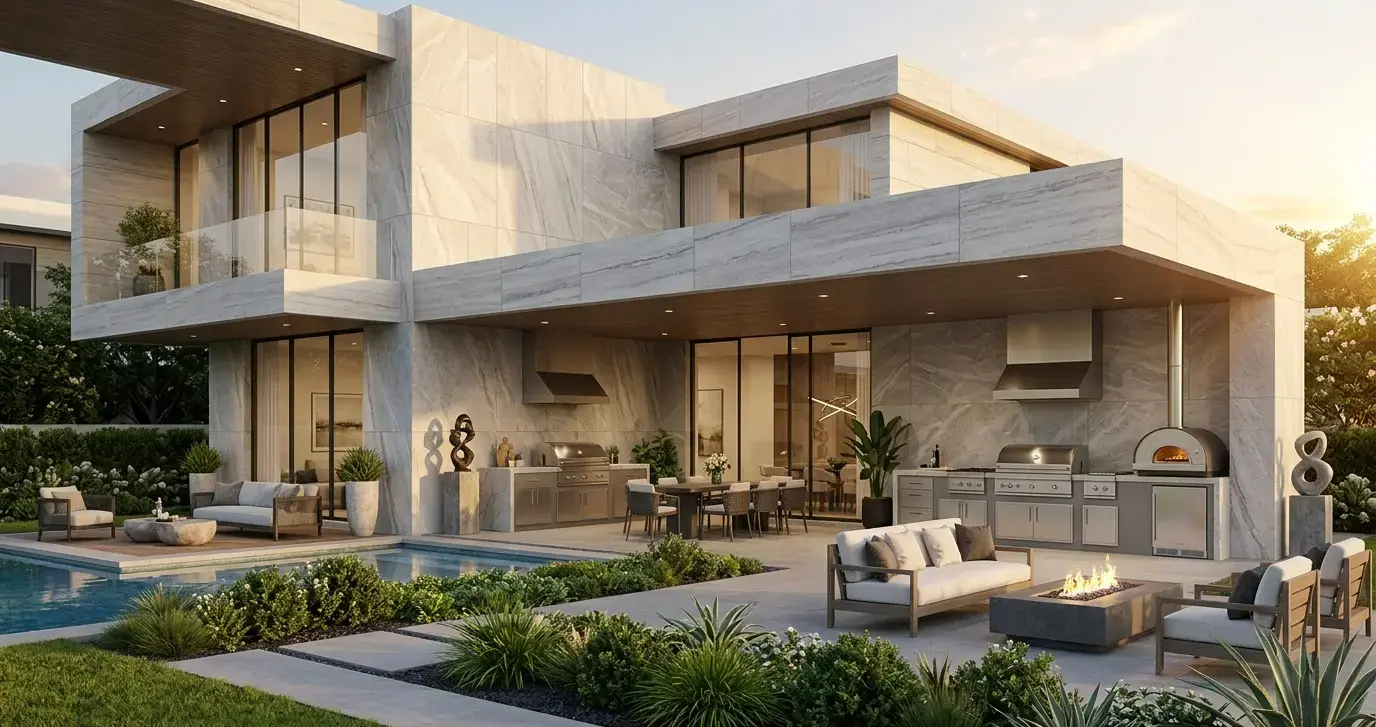
Conclusion
In our view, a facade looks more cohesive when the same stone appears again nearby. A granite slab on an outdoor kitchen counter beside a granite-clad wall ties the two together.
Quartzite works for an outdoor fireplace surround set into a stone wall, carrying the facade’s color onto the patio. We’d keep any counter or surround within one shade of the wall stone, because a close match looks planned and a near-miss looks like a mistake.
Porcelain carries a look from wall to ground. Because it suits outdoor floors as well as walls, the same granite look or concrete look can run up the facade and across the patio in front of it.
Once you have picked a slab from our inventory, a slab quote request starts the process for that exact slab. Nova Tile and Stone also offers a free design consultation, and photos of each side of the house, marked with where the afternoon sun lands, make that conversation more productive.
Note: Some images on this page may be conceptual renderings created to illustrate design possibilities and may not depict actual installations.
Frequently Asked Questions
It depends on where you live. In Reno, Minden, and Fernley, the north wall is hardest because it holds snow and stays cold through winter. In Sacramento, it’s the west wall, which takes the strongest afternoon sun.
In Sacramento, where freezing is rare, travertine can work on an open wall, though granite, quartzite, and porcelain are our first picks for full sun. In the Reno area, its natural pores and voids can hold water in freezing weather, so we recommend it only for covered entries there.
Yes. Porcelain is suitable for outdoor walls, and it comes in granite, slate, limestone, and concrete looks, which helps it match stone used elsewhere on the house.
Often, yes. Homes in the Reno area deal with snow and freezing temperatures, so we put low absorption first, while Sacramento averages about 23 days a year at 100 degrees or hotter, so we put sun exposure first.
We don’t recommend our marble or dolomite for exterior walls. Both are carbonate stones, and acidic rain can etch and dull the finish over time, so both are better suited to interior applications such as fireplaces and feature walls. For an exterior with a marble look, porcelain offers that appearance in a material made for outdoor use.